When it comes to beautiful views in Namibia, most people think of sand dunes. I didn’t make it to Sossusvlei – Namibia’s most famous sand-dune viewing destination – on my recent trip, although I did check out the dunes around Swakopmund and Walvis Bay (coming up in a future post).
The dunes are indeed beautiful. But the breathtaking view from the top of the Waterberg Plateau in northeastern Namibia will give even the most dramatic sand dune a run for its money.
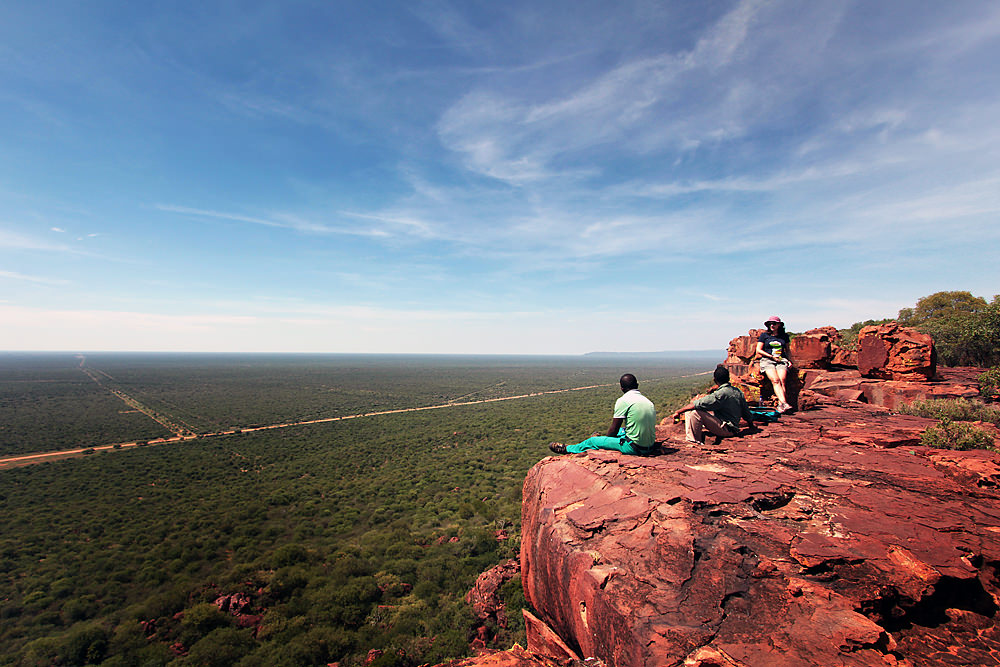
Beat that, Sossusvlei.
My friend Michelle and I spent two days in the Waterberg Wilderness at the end of our Namibia trip. The Waterberg doesn’t get much attention in Namibia’s travel books and guides; it’s overshadowed by Sossusvlei and Etosha National Park. But despite a few hiccups (including a near-death rhino encounter), Michelle and I were really glad we stopped in the Waterberg. The Waterberg is practically on the way from Etosha to Windhoek, and it gave us the chance to chill out and experience a type of geography that you can’t see elsewhere in Namibia.
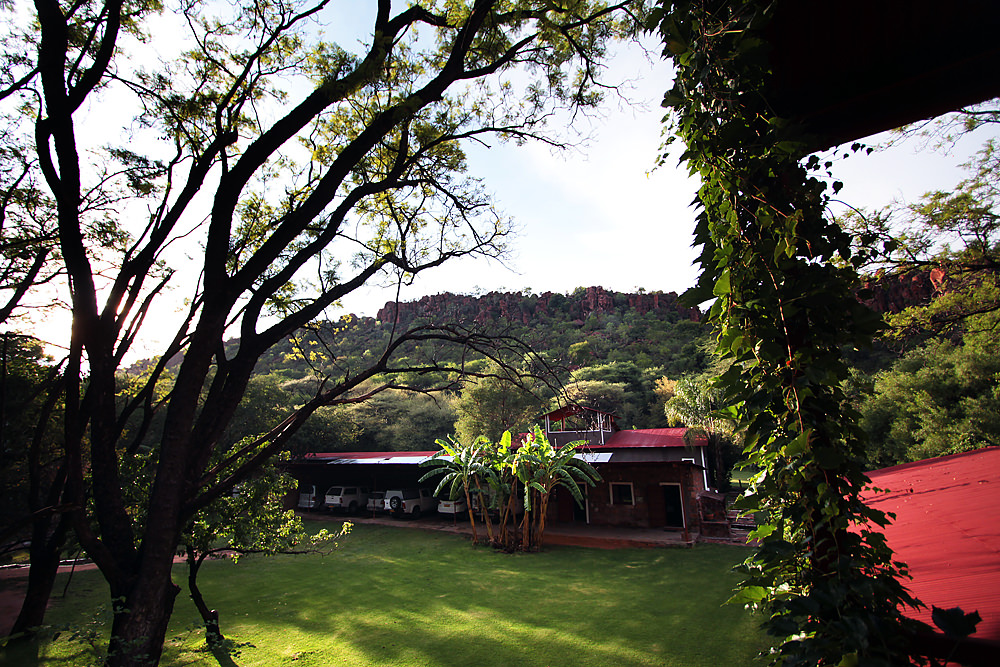
The Waterberg Wilderness Lodge.
The Waterberg Wilderness is a private nature reserve bordering the Waterberg Plateau National Park. It’s a beautiful, peaceful spot, and thanks to my generous travel companion we stayed in a lovely two-level suite at the Waterberg Wilderness Lodge. The reserve also offers a very nice campsite and a super-posh luxury lodge at the top of the plateau. The Wilderness Lodge, where we stayed, is the mid-range option.
We enjoyed our stay at the Wilderness Lodge. But we learned a hard lesson on our first night: Do NOT leave your windows open after dark, especially during rainy season. There are no screens on the windows, but also no air-conditioning or fans. We foolishly left the windows open during dinner to let in some cool air. And the cool air did get in, along with 1,000 giant brown moths and one huge, very noisy beetle. (Apparently the giant moth hoards come every summer to this part of Namibia.) Michelle and I spent the night cowering inside our mosquito nets, listening to the insects buzz and batter against the walls and dreaming fitfully of death-by-moth. It was not very pleasant. We would have appreciated a friendly warning from the staff.
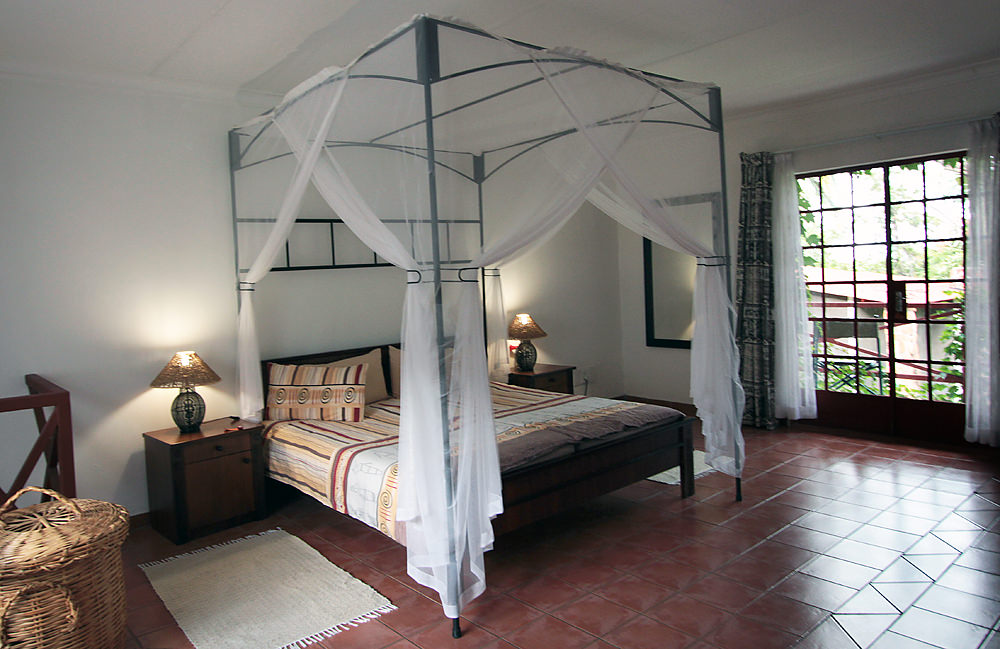
My upper-level bedroom in our suite at the Wilderness Lodge, looking peaceful before the onslaught of insects. Thank God for the mosquito net.
We weren’t in the best humor when we awoke the next morning. But fortunately we had booked a hike to the top of the plateau with two young Waterberg Wilderness guides: Uapindika and Astofel. Despite our best efforts to remain grumpy, Uapindika and Astofel turned our day around.

Uapindika (left) and Astofel (right), our Namibian plateau guides. We loved them. They were fun, enthusiastic and knowledgeable.
There are several self-guided hiking trails around the reserve, but you can only go to the top of the plateau when accompanied by a guide. The three-hour climb/hike wasn’t too strenuous – nothing like the Cederberg Wilderness hike that Michelle and I took last year – but it was enough to get us sweating and breathing heavily. Fortnately Uapindika and Astofel stopped often, pointing out interesting plants, animals, and geological formations.
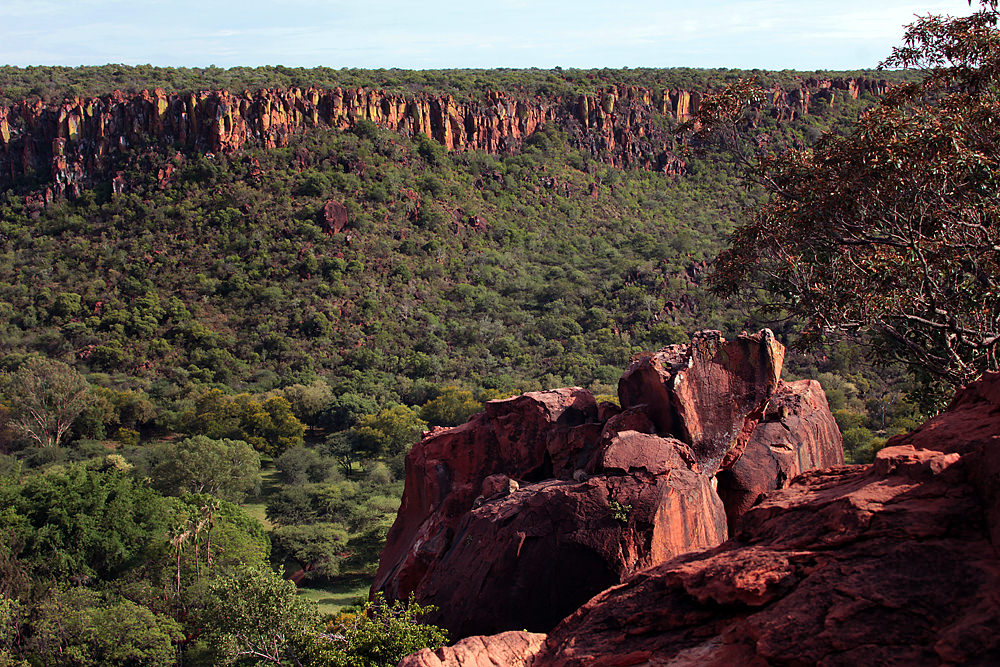
View across the valley to another section of the plateau. The plateau is about 200 meters high, between 8 and 16 kilometers wide, and 49 kilometers long. Due to the springs flowing beneath it, the plateau is less arid and more biologically diverse than the surrounding countryside.
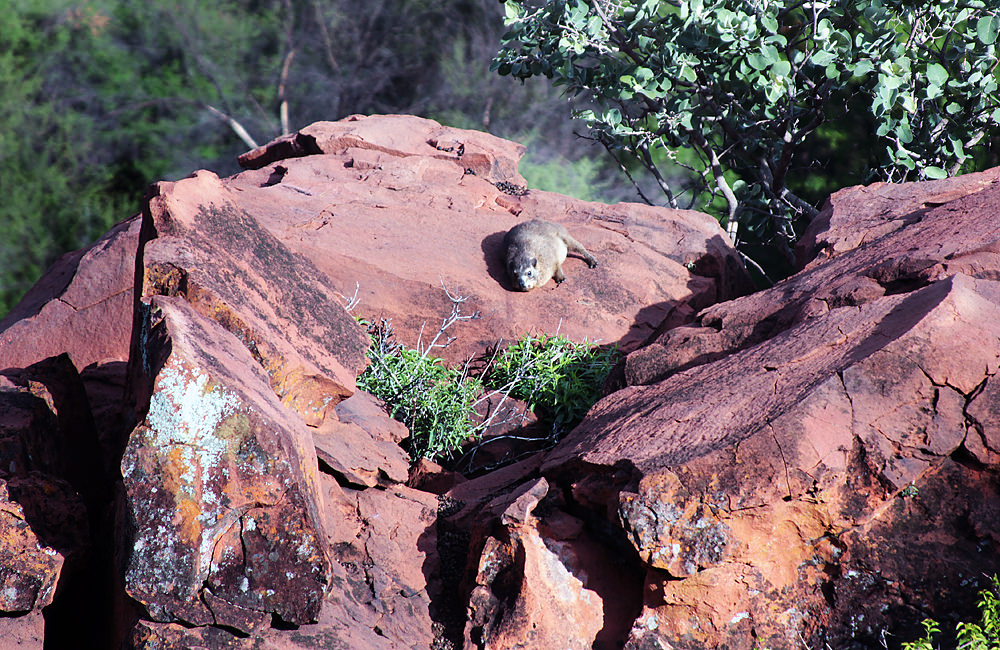
This adorable fat dassie (like a rat, but cuter) found us more interesting than the striking view behind him.
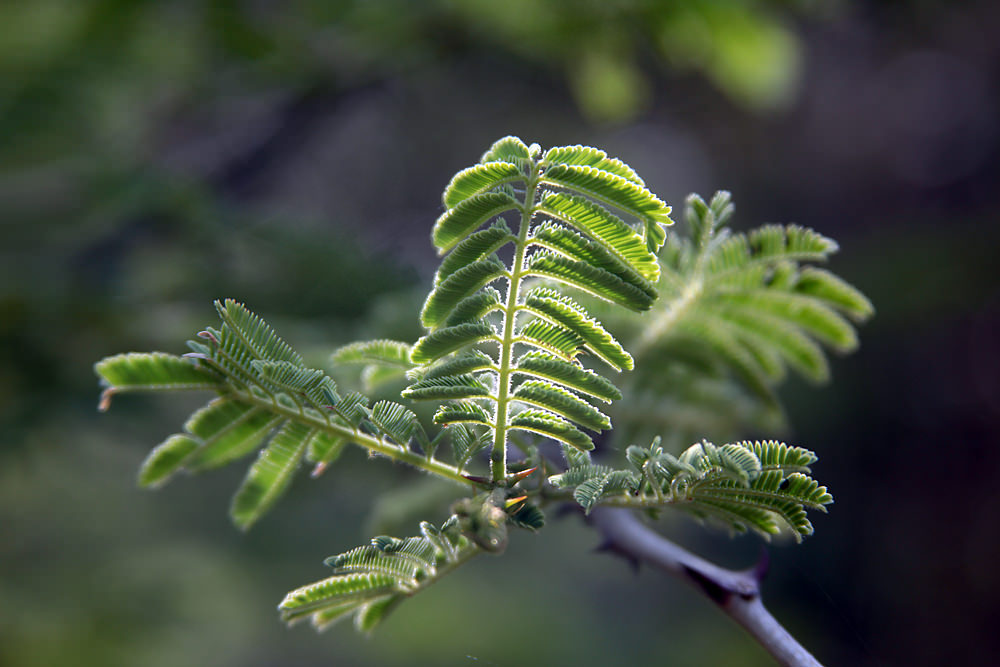
Acacia leaves. Uapindika and Astofel also showed us a fascinating parasitic plant (can’t remember the name) that inserts poisonous thorns beneath your skin and makes you sick. I didn’t get a good photo of that one.
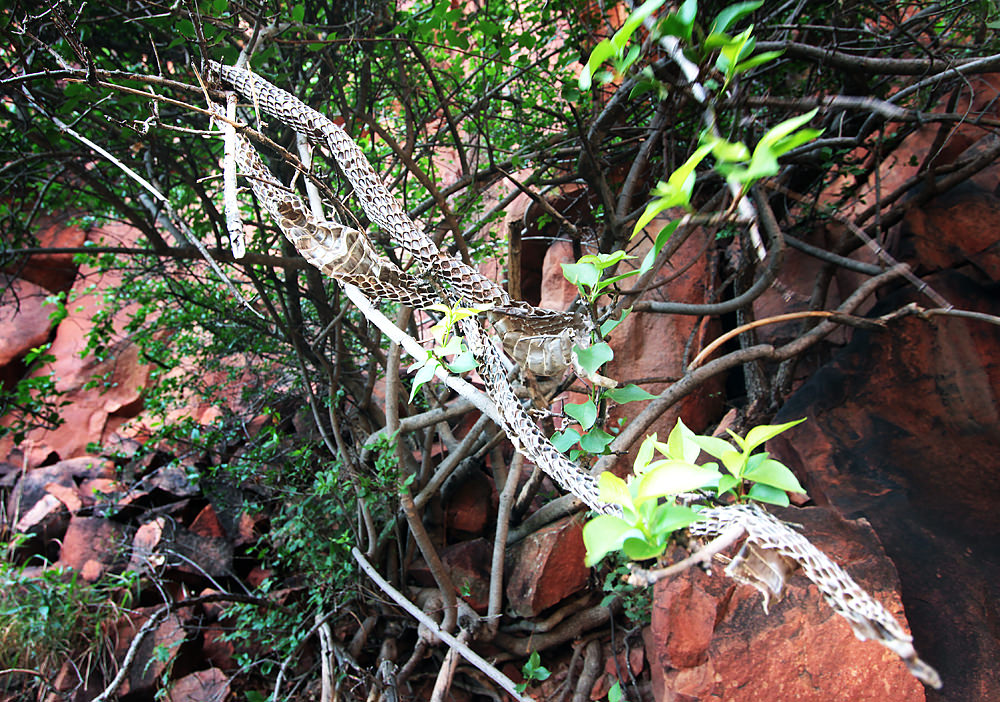
Huge black mamba skin. This is actually just one section of it. The rest of it wouldn’t fit in my frame.
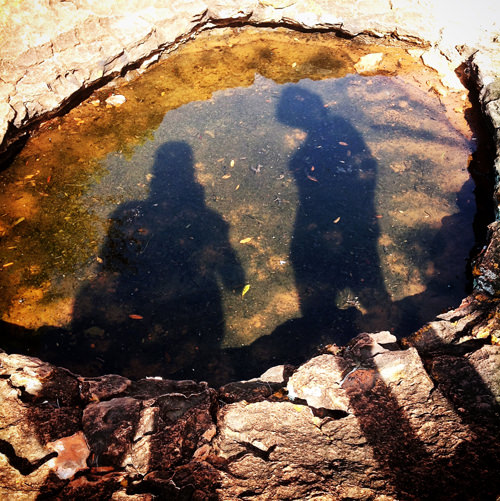
The top of the plateau is dotted with little waterholes. Astofel’s parents used to tell him that the holes were dinosaur footprints.
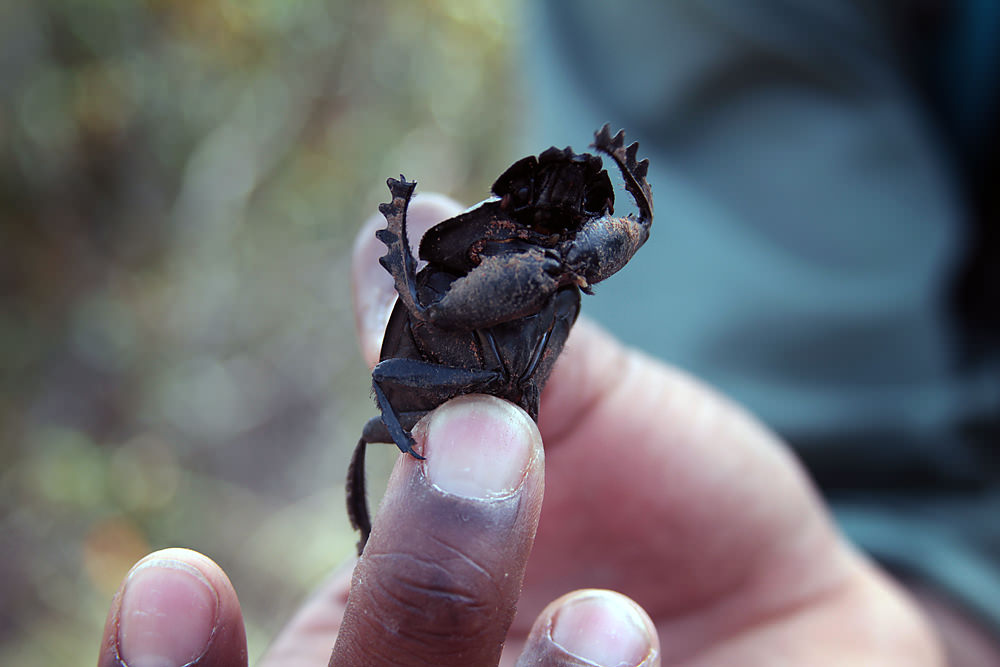
Giant dung beetle. Only slightly larger than the beetle that kept us awake the night before.
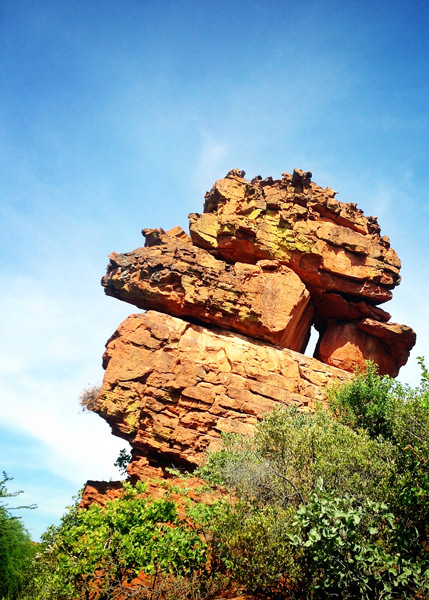
Uapindika called these “sliding rocks”.
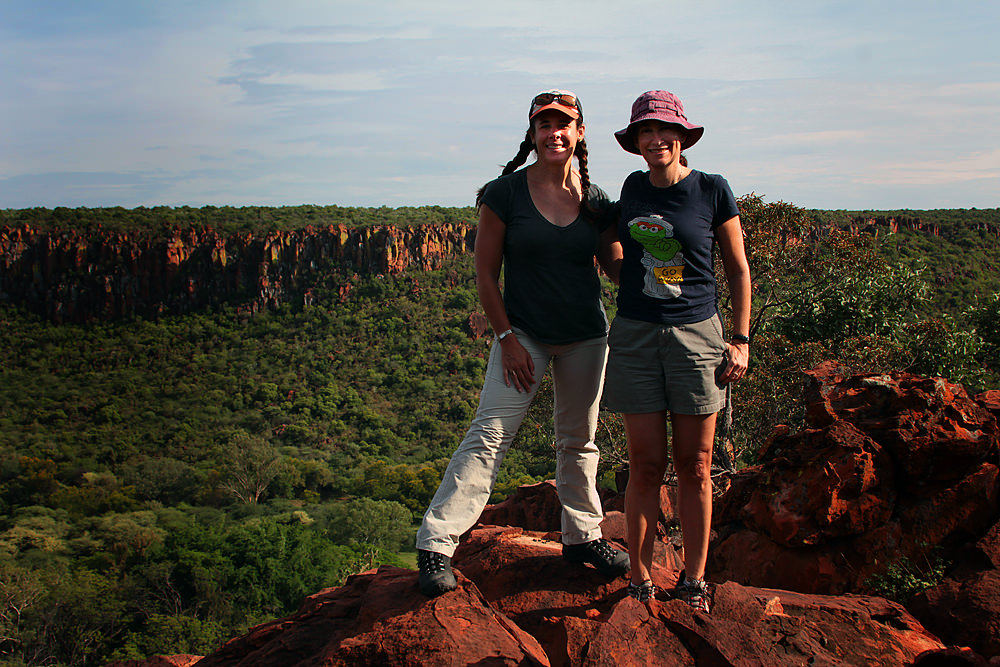
In addition to being a great assistant guide and aspiring microbiologist, Astofel is also a talented photographer.
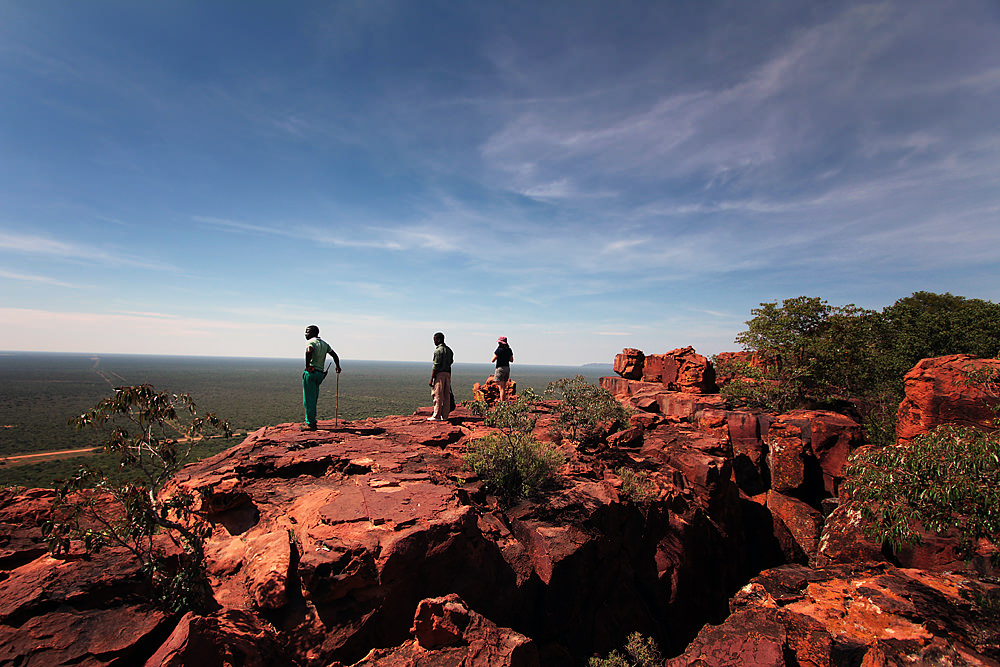
Kalahari sandveld, as far as the eye can see. Our jaws dropped when we first saw this.
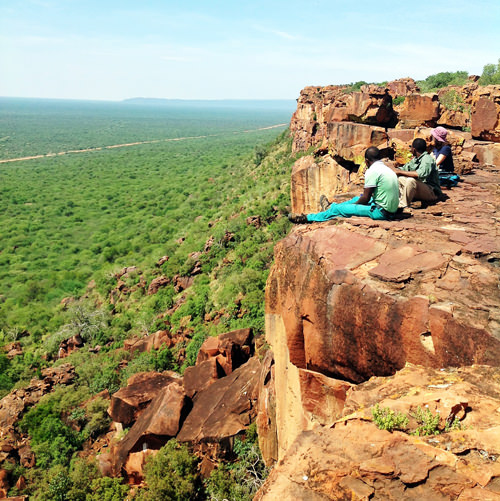
Instagram of The View.
If you go to Namibia and find yourself driving between Windhoek and Ethosha, don’t pass up the opportunity to check out the Waterberg. It’s well worth it, if only for The View.
Just keep your windows closed at night. And don’t get out of your safari vehicle when there are rhinos around, no matter what the guide says.
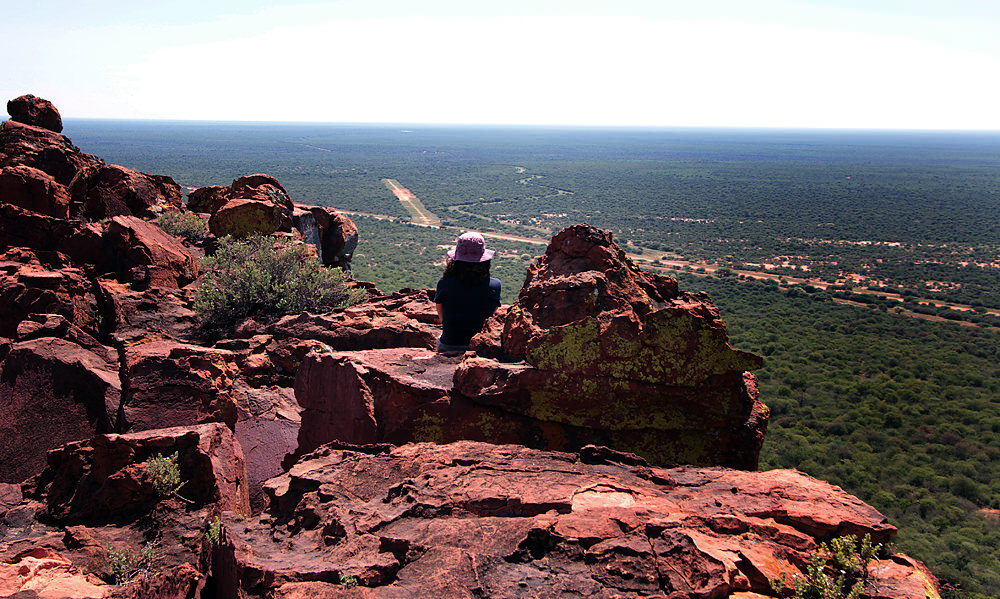
One more shot of The View.
Next up: Lions, giraffes, hyenas and stunning sunsets in Etosha National Park.
Use the share button below if you liked it.
It makes me smile, when I see it.