The Long March to Freedom National Heritage Monument
2summers |
07 January 2018
UPDATE (JANUARY 2019): The Long March to Freedom National Heritage Monument has moved, from the Fountains Valley Resort to Maropeng in the Cradle of Humankind. Read about my visit to the new location.
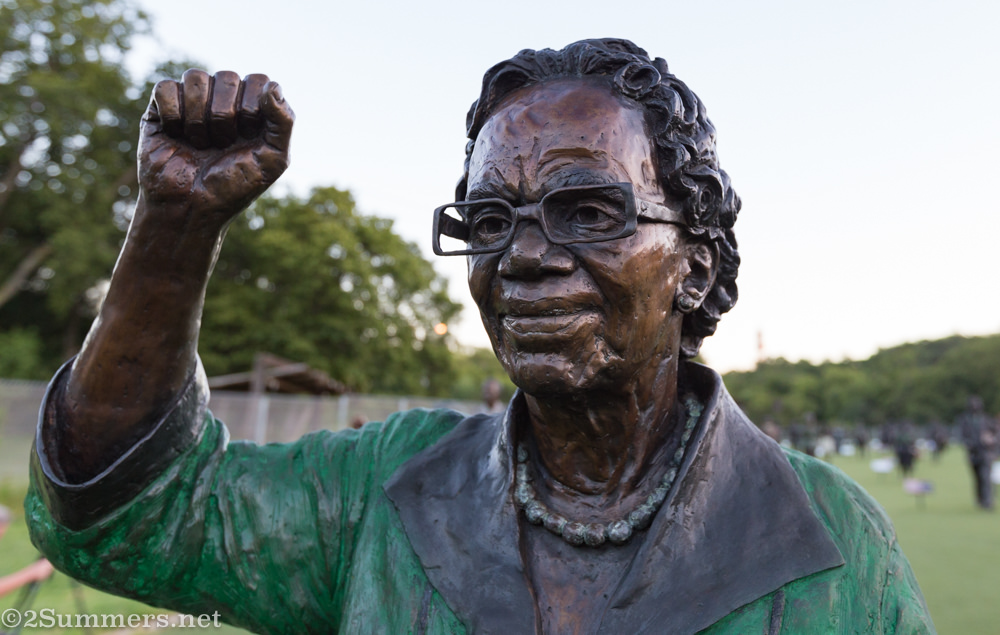
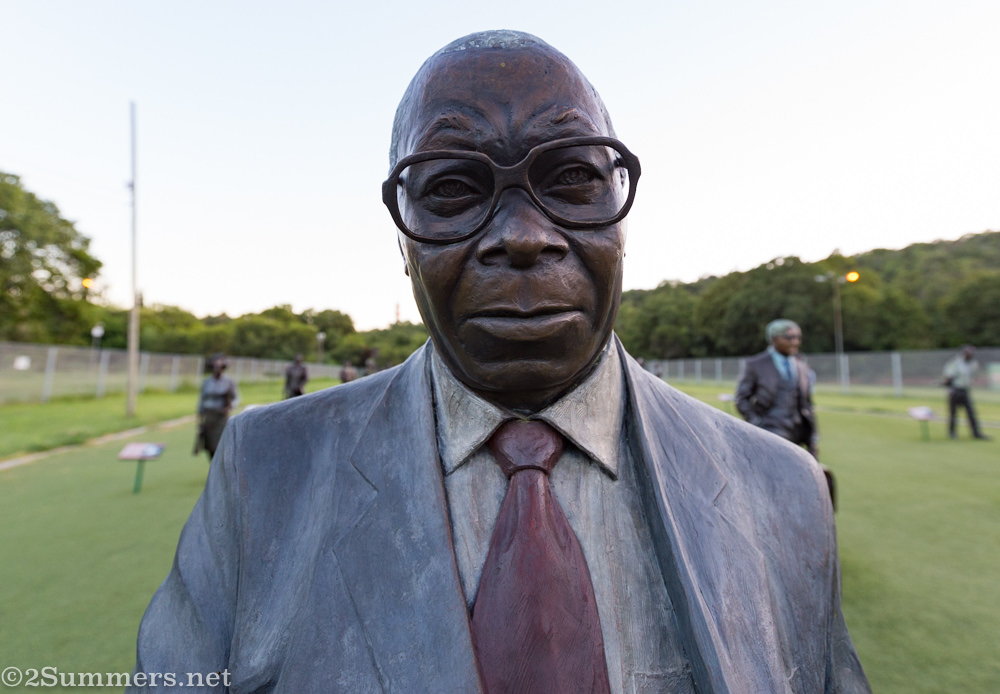
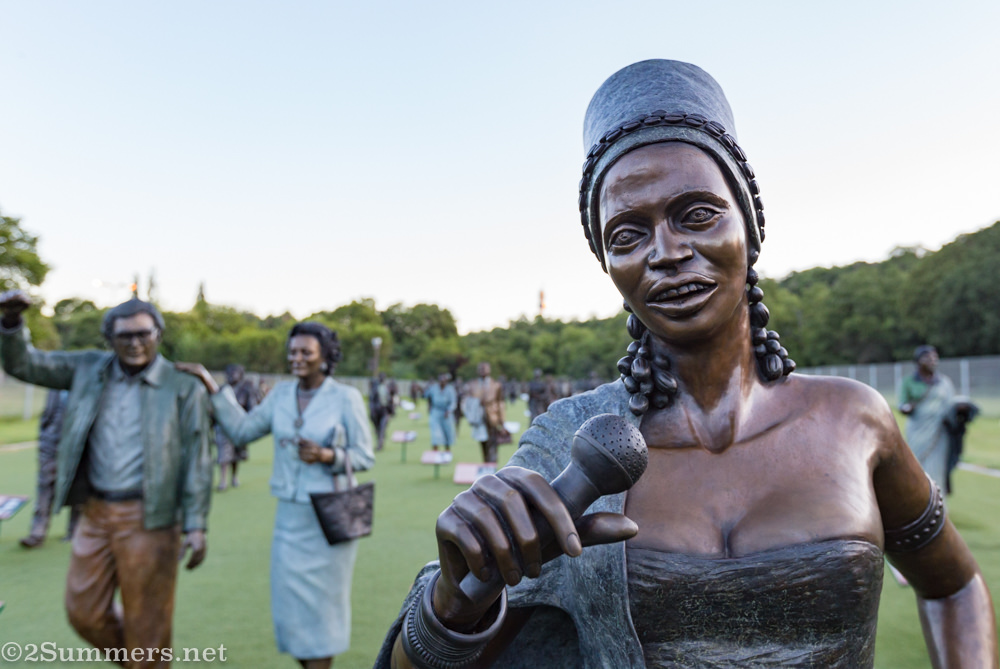
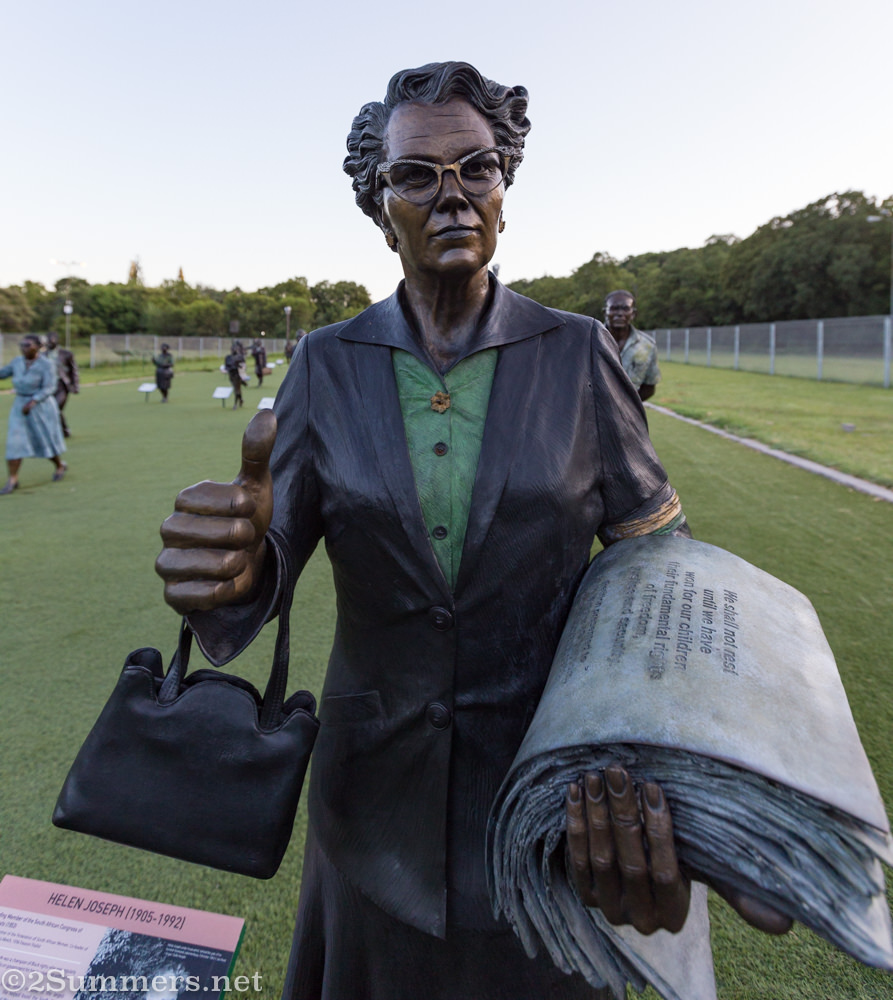
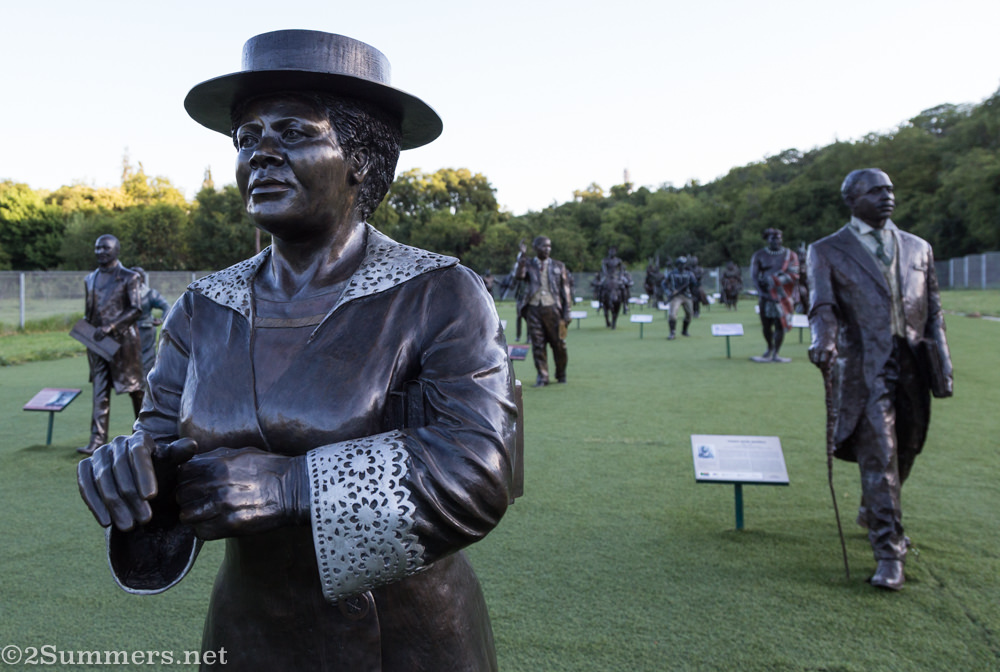
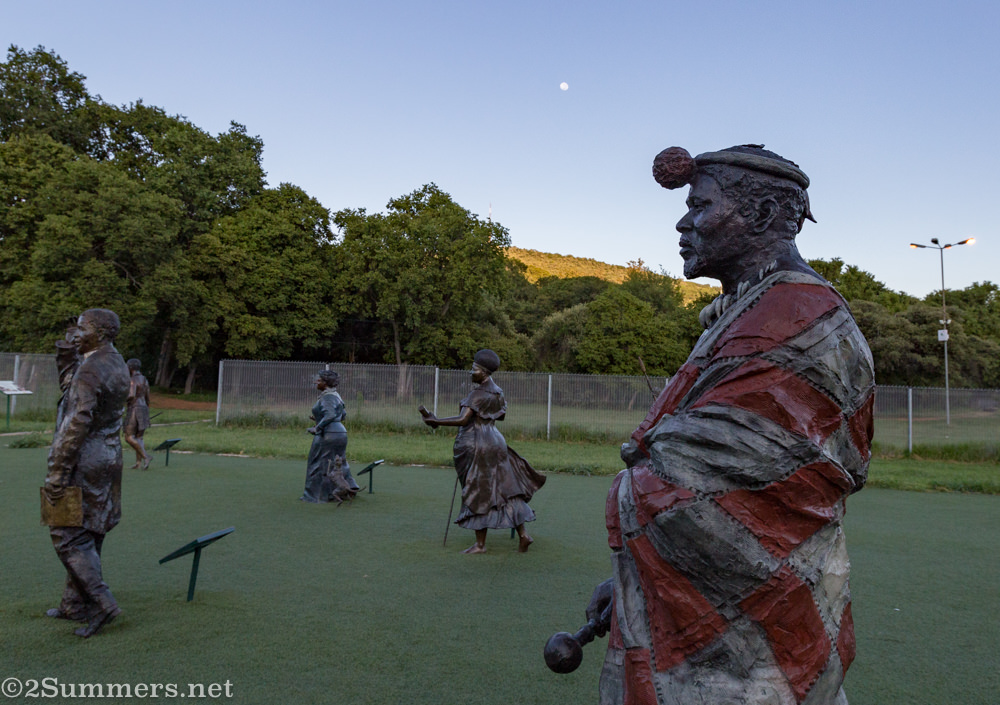
In Pretoria, just off the highway in a local park called Fountains Valley, is an army of life-sized bronze men and women walking toward freedom. This hidden bronze army, made up of heroes who fought in the South African struggle for democracy over the past four centuries, is the Long March to Freedom National Heritage Monument.
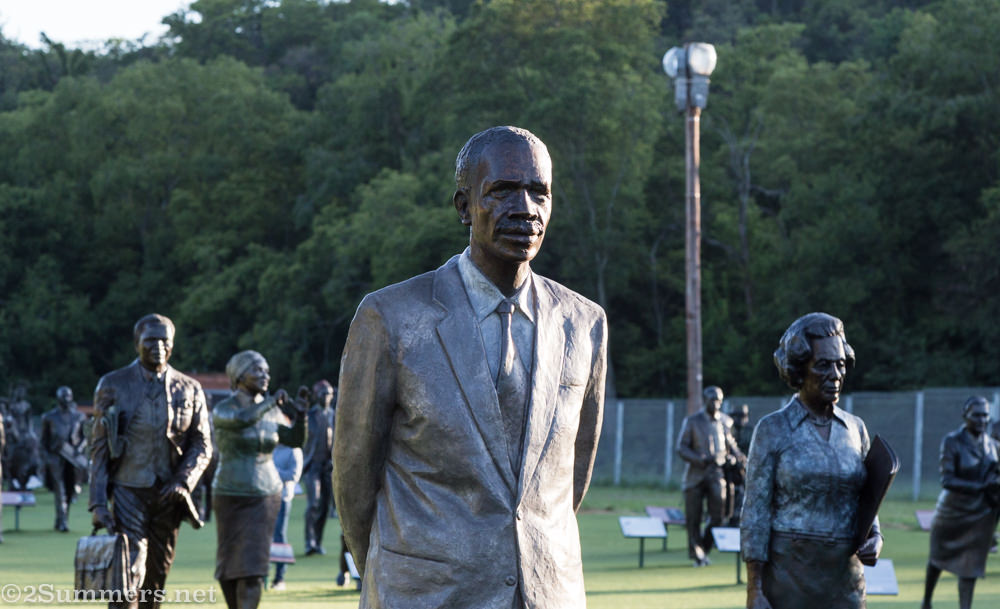
A bronze of Robert Sobukwe, made by artists Louis Olivier and Nkhensani Rihlampfu, on the Long March to Freedom. The woman to Sobukwe’s left is Helen Suzman.
I first encountered these sculptures in 2015, when about eight or ten of them went up in Walter Sisulu Square in Kliptown. I was disappointed when the sculptures later disappeared from Kliptown and someone told me they’d been moved to a field in Pretoria. That didn’t make sense.
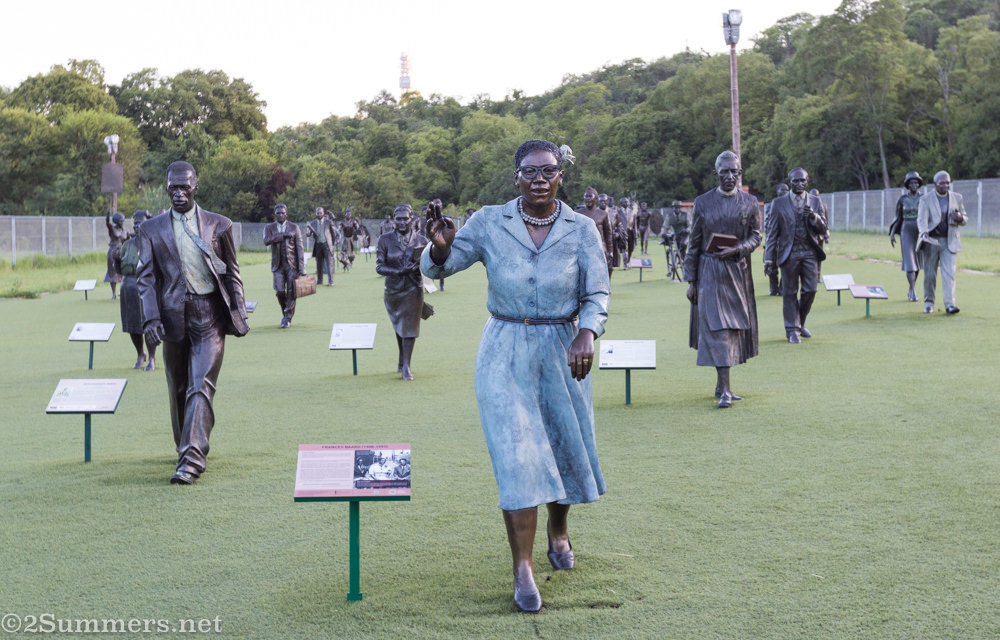
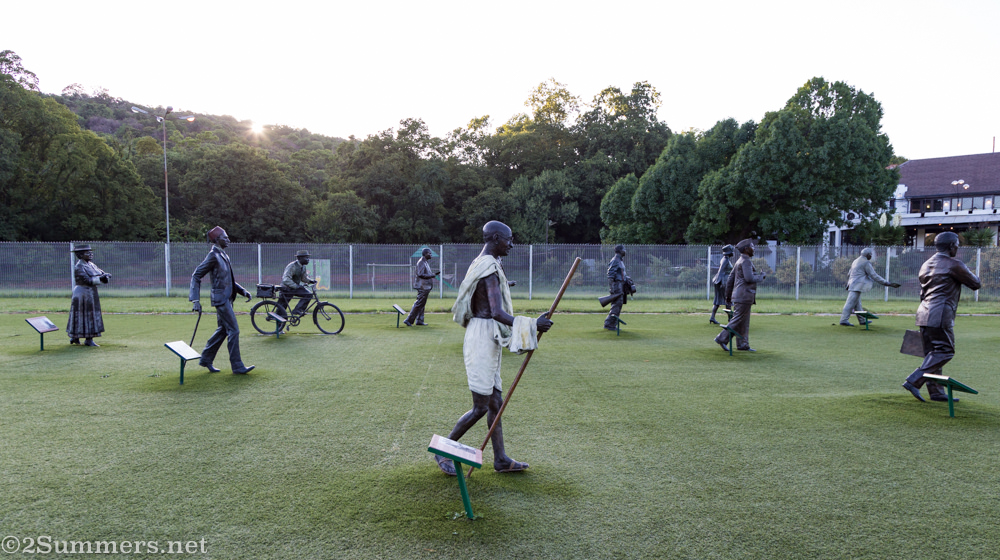
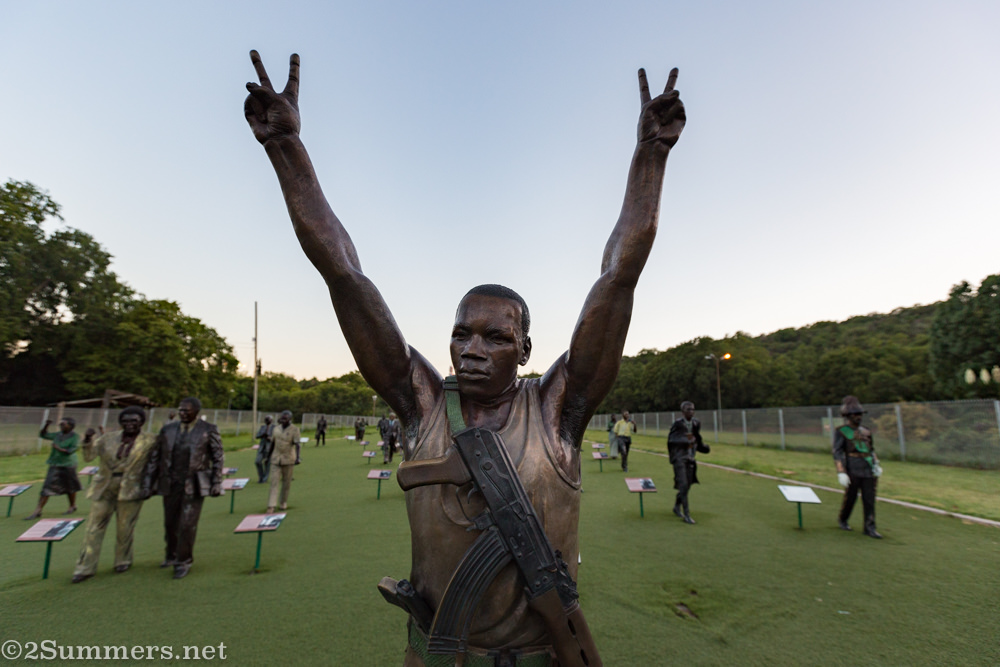
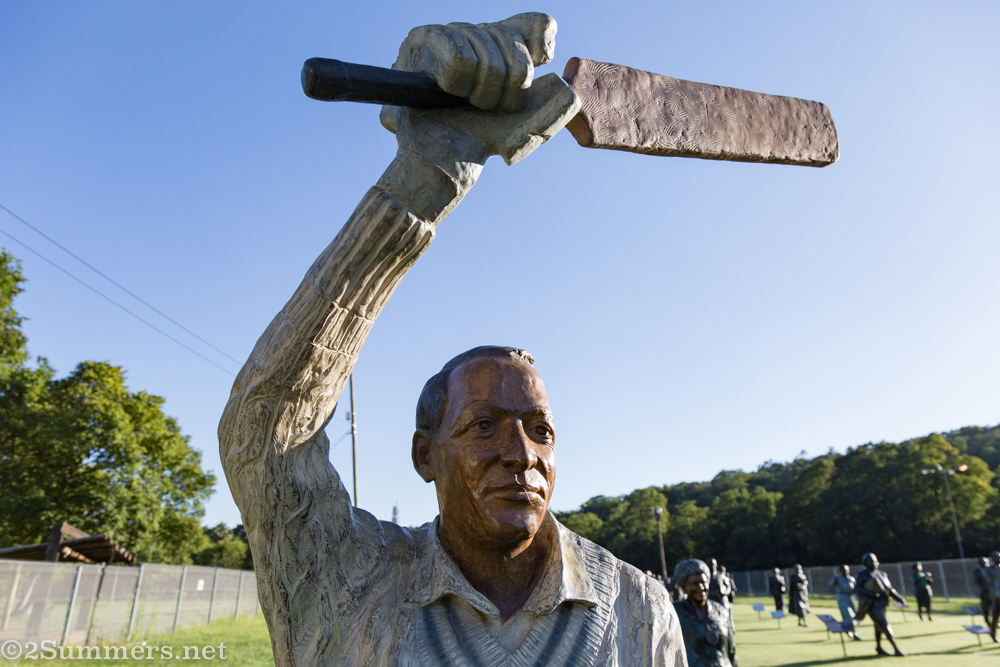
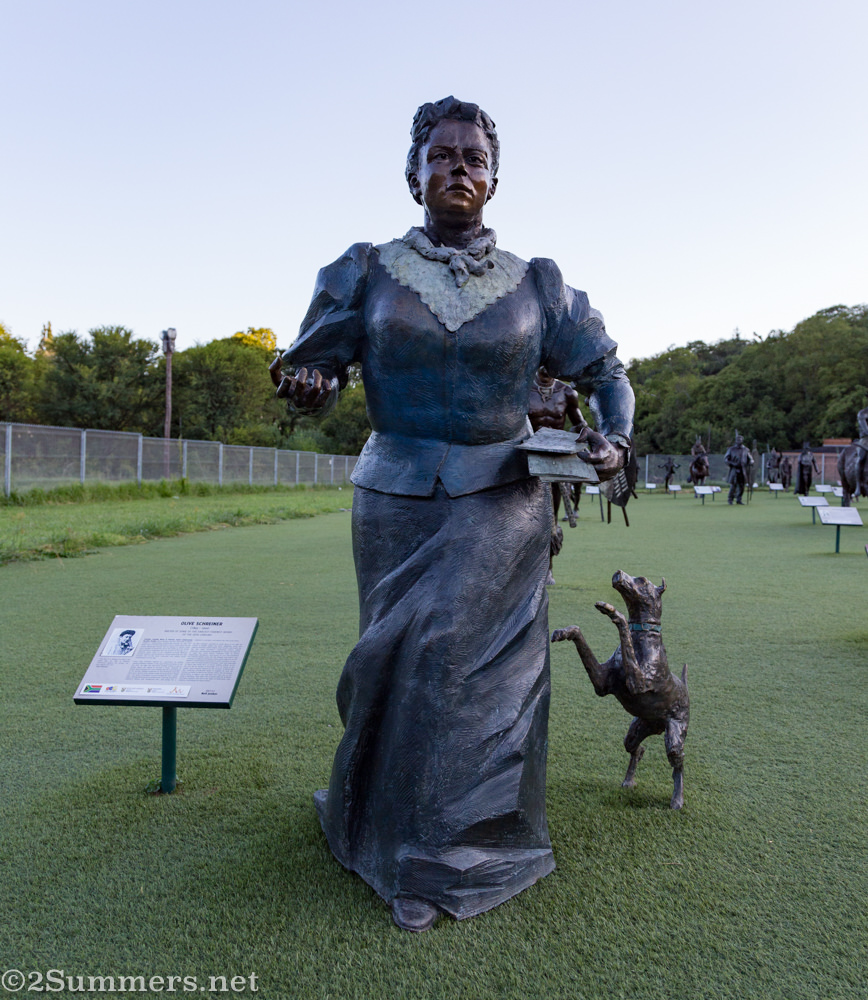
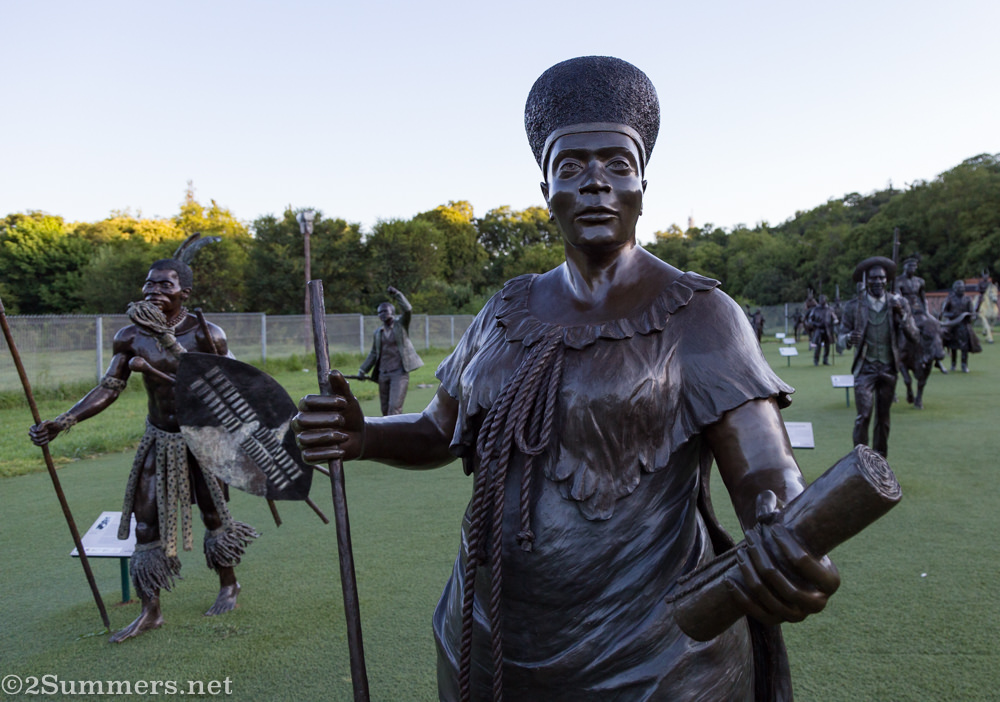
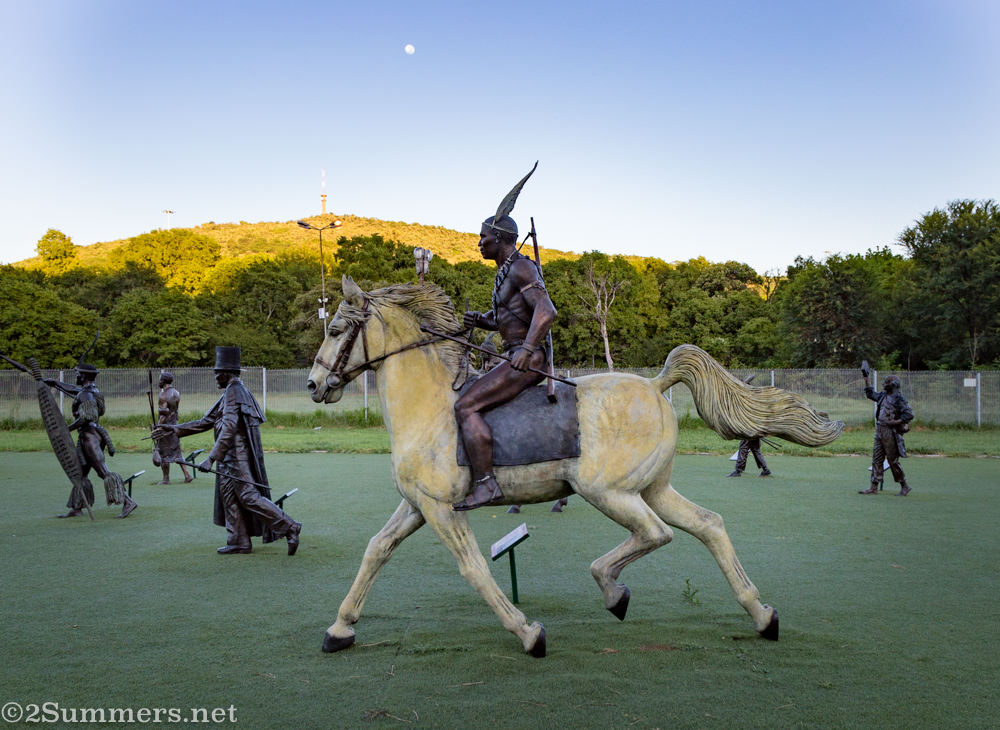
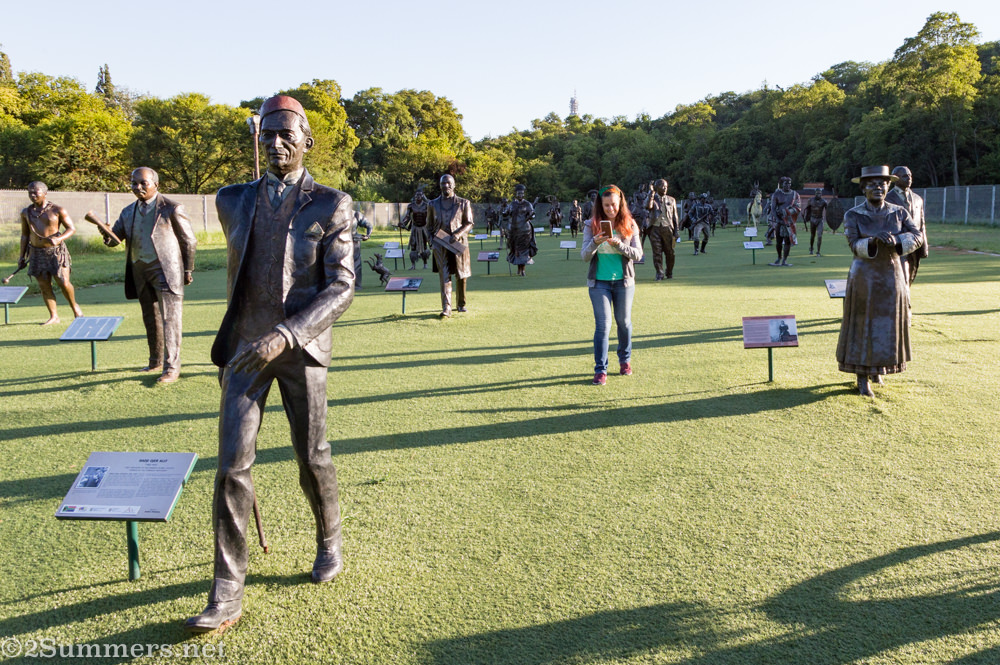
It took me a couple of years to get to the sculptures’ new home in Fountains Valley. Now that I’ve been there, and seen not ten sculptures but 100, all marching in the same direction – some with fists raised, one on horseback, one astride a bull, some carrying books or briefcases and others wielding rifles or spears – I get it.
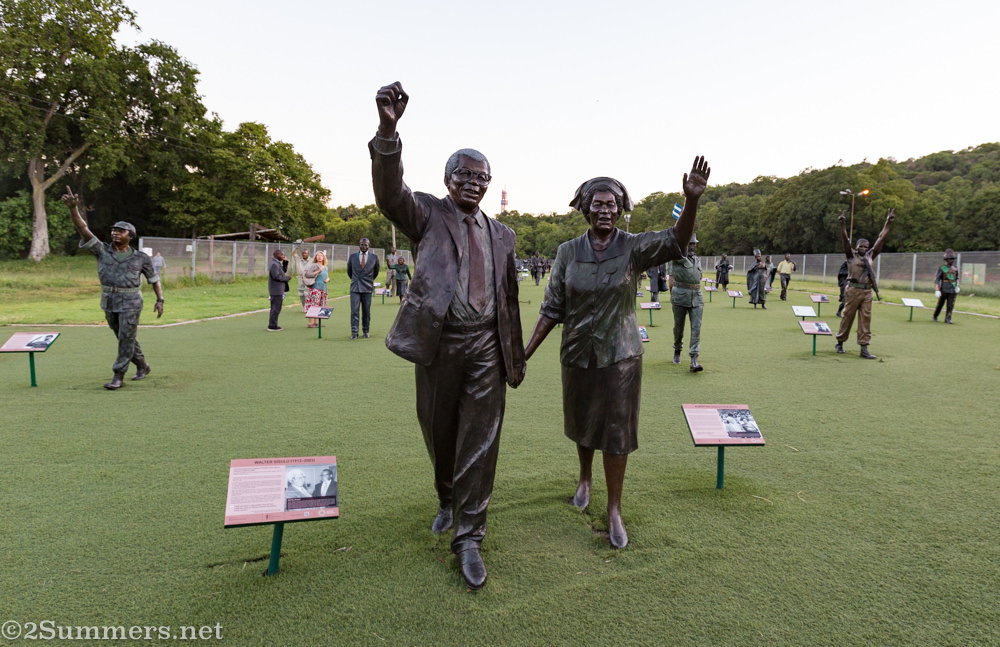
Walter and Albertina Sisulu, leading the charge. Chris Hani is behind the Sisulus to their right. (Rather than explain who each person is, I’ve linked to the heroes’ bios on the National Heritage Monument website.)
When viewed separately, these sculptures are just sculptures. But when viewed together, marching as one, they’re not sculptures anymore. They’re real people. Walking among them is like taking a literal journey through the human history of South Africa.
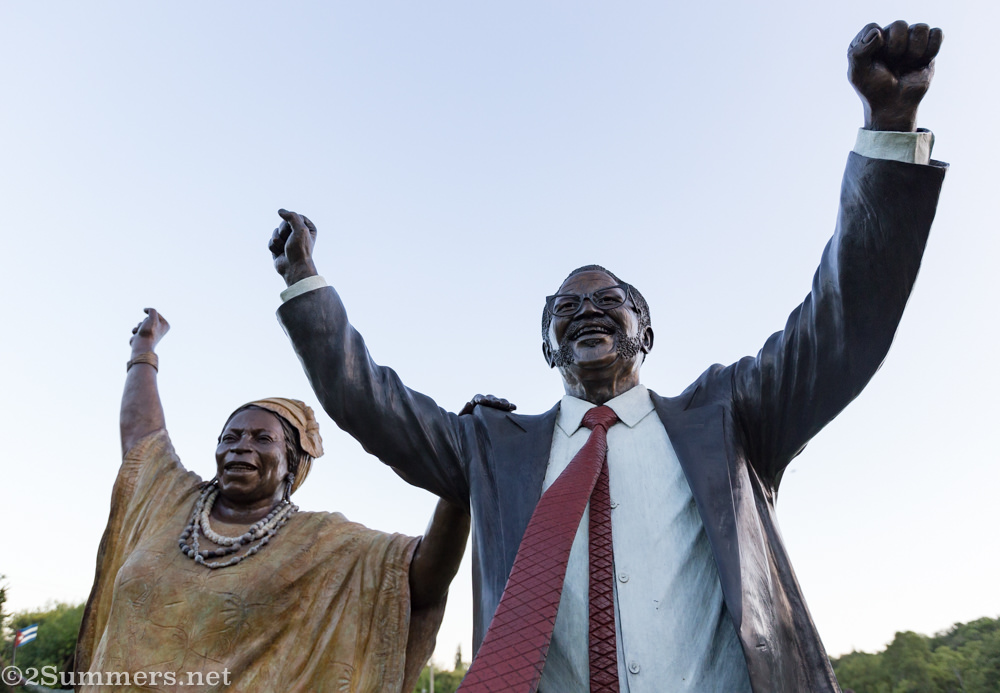
Oliver Tambo (one of the sculptures I originally saw in Kliptown) and his wife Adelaide.
The Long March to Freedom National Heritage Monument is the brainchild of Dali Tambo, son of Oliver and Adelaide Tambo. (Wikipedia has a pretty good description of the monument.) There are about 100 sculptures in the collection now and it’s increasing all the time. The eventual plan is to grow the army to more than 400.
The Long March to Freedom has commissioned 40 professional sculptors, many of whom partnered with and mentored a group of less experienced sculptors while creating the works for this exhibit.
Visiting the Long March to Freedom
I visited the Long March to Freedom at sunrise – I was tagging along with some people working on another photography project – and arrived at about 5:30 a.m.. It’s really not necessary to go that early, but I recommend going either early or late in the day because: 1) The light is better for photos; and 2) There’s no shade and I’ve heard it gets very hot in the middle of the day.
Although hardly anyone knows about it, the monument is easy to find. Type “Fountains Valley” into your GPS, or take the Eeufees Road exit off Ben Schoeman Freeway (near the Voortrekker Monument), turn right, and drive straight through the Fountains Valley gates. Once inside, there are signs directing you to the Long March to Freedom.
The sculptures are in a clearing next to the old Moyo restaurant. I was annoyed by the ugly metal fence surrounding the exhibit, which creeps into every photo, and could do without the artificial turf the sculptures are standing on. I understand the need though: The artwork must be protected against theft, and mowing real grass around hundreds of individual statues and plaques is totally infeasible.
None of that really matters because this army is so. freaking. cool.
Gandhiand friends march toward freedom. I love the statue of authorSolomon (Sol) Plaatjie, who is riding a bicycle with a typewriter on the back.
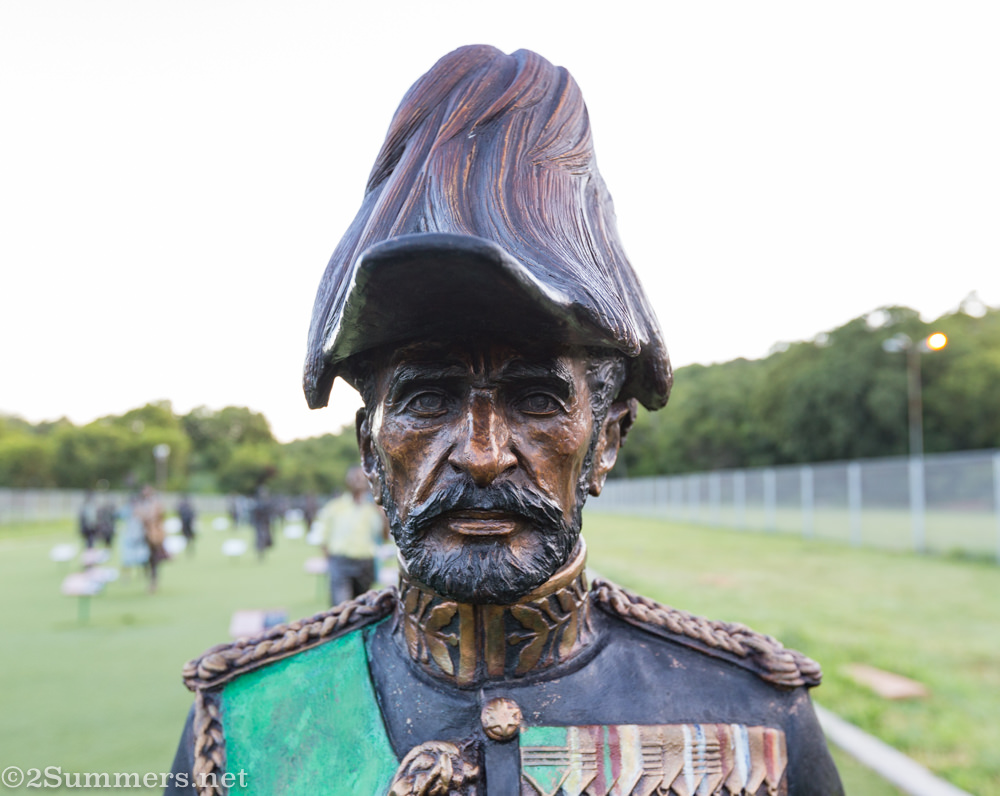
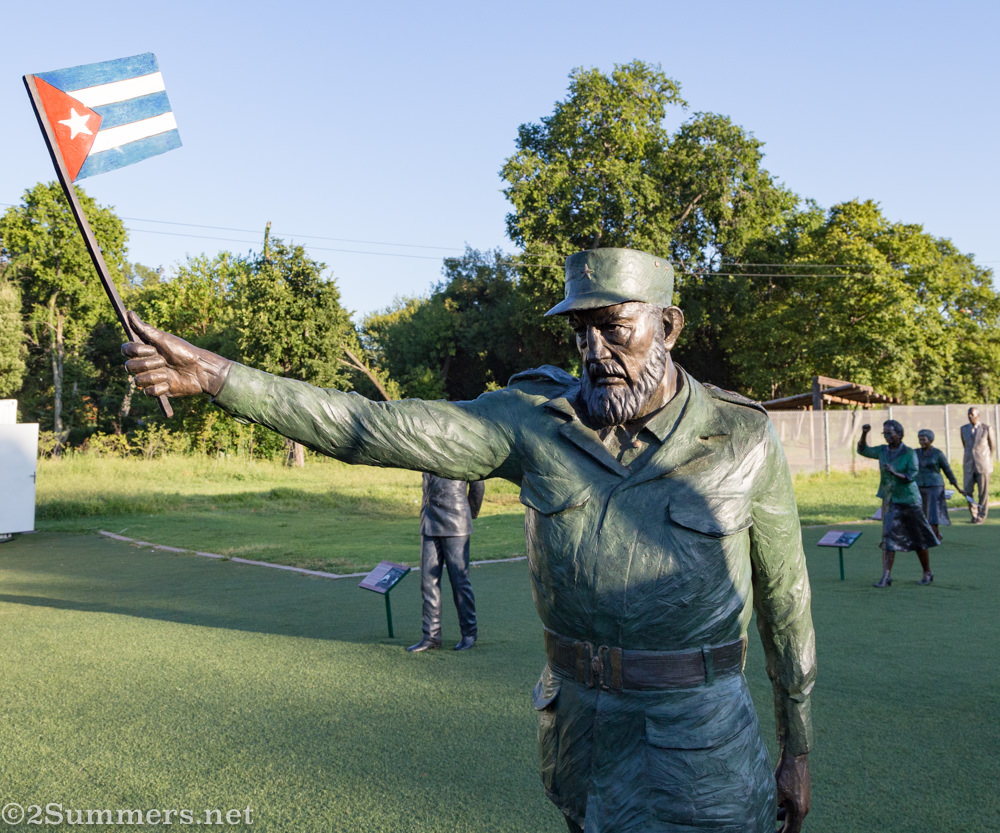
Solomon Mahlangu.Haile Selassie, one of a few non-South-African leaders represented in the Long March to Freedom. Selassie is a controversial figure, as are several of the other people in the monument. But I think that’s part of the point…Heroes can also be villains.Fidel Castro, another controversial leader. I love his sculpture.
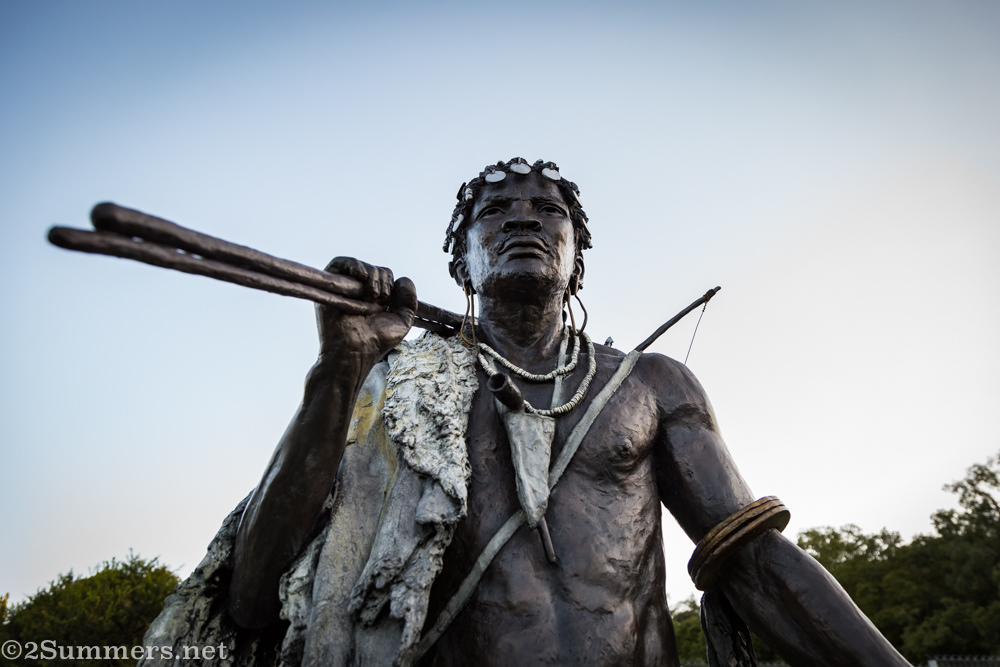
When I walked through the monument, I started at the front and moved toward the back. Time moved backward as I walked, and when I neared the rear of the army I met the heroes and warriors of the 19th, 18th, and 17th centuries. This was my favorite section.
Nommoä(Doman) Goringhaiqua, the “oldest” hero in the monument, was born in 1618. I’m particularly fascinated by Doman’s story: He was an interpreter for Jan van Riebeeck, the colonial founder of Cape Town, and later led the first Khoikhoi-Dutch War of Resistance. He is also credited, along with other Khoikhoi-Dutch interpreters of the time, for laying the foundations of the Afrikaans language.
Take the Long March to Freedom
I only spent about 90 minutes at the Long Walk to Freedom but I could have spent double that. I doubt I read even half the plaques. Plus the army will be growing all the time and there is a plan to add several other interesting features to the park. (Read more on the National Heritage Monument website.) I can’t wait to go back.
Take the Long March to Freedom now, while it’s still new and not many people know about it. The park is open every day during daylight hours. Fountains Valley admission fees (which are minimal) apply.
Walking the Long March to Freedom. I felt like I needed a prop, and since Marie-Lais had my camera I chose my phone. (Photo: Marie-Lais Emond)
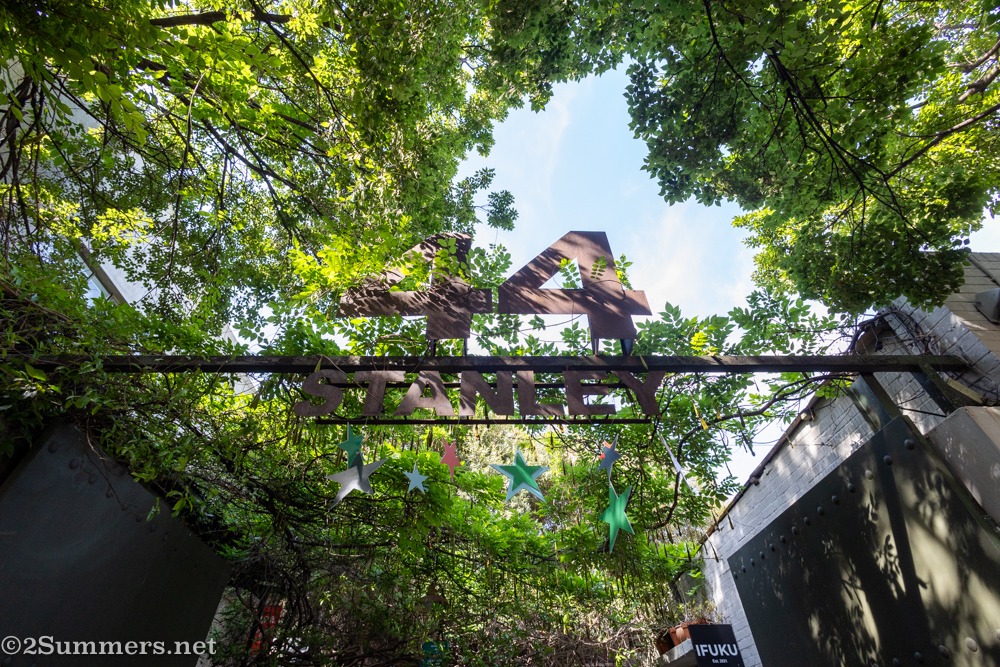
I guess it’s wrong to say I’ve never blogged about 44 Stanley; I’ve mentioned it countless times over the years (see here and here) when writing about specific restaurants or shops that are there. But I’ve never written a dedicated post about 44 Stanley as a destination and it’s about time I did – especially now, with the holidays upon us.
Use the share button below if you liked it.
It makes me smile, when I see it.