Last week I did an all-day tour of Soweto with Eenblond Tours. “Eenblond” means “a blonde” in Afrikaans, which makes sense because that’s exactly what Gilda Swanepoel is.
Gilda and I are kindred spirits – we’re the same age and our life stories have many parallels. Gilda spent lots of time traveling solo around southern Africa and used to write a travel blog. She loves getting to know Joburg’s people and cultures in a very intimate way. I’d been meaning to take one of her tours forever and she does lots of different ones, around Joburg and all over South Africa. But I was particularly keen to go to Soweto with Gilda.
I’ve been to Soweto – which is technically part of Joburg but really its own place entirely – countless times (browse all of my Soweto posts here), but I’ll never pass up an opportunity to go again. Soweto is so huge, so historic, and so diverse that no one visit is the same as another, even when you go back to the same places. My tour with Gilda was no exception.
A Day in Soweto
Gilda fetched me at my house and then we went to pick up her other guest, a young Spanish guy named Alex. (I must give Alex a shout-out for traveling all the way to South Africa just to visit Joburg/Gauteng. He didn’t even go to Cape Town or Kruger!) We then proceeded to Kliptown.
Kliptown
Kliptown is the oldest township in Soweto and the birthplace of the Freedom Charter, which later served as the blueprint for South Africa’s constitution. I’d been to Kliptown before but discovered many new things this time around.
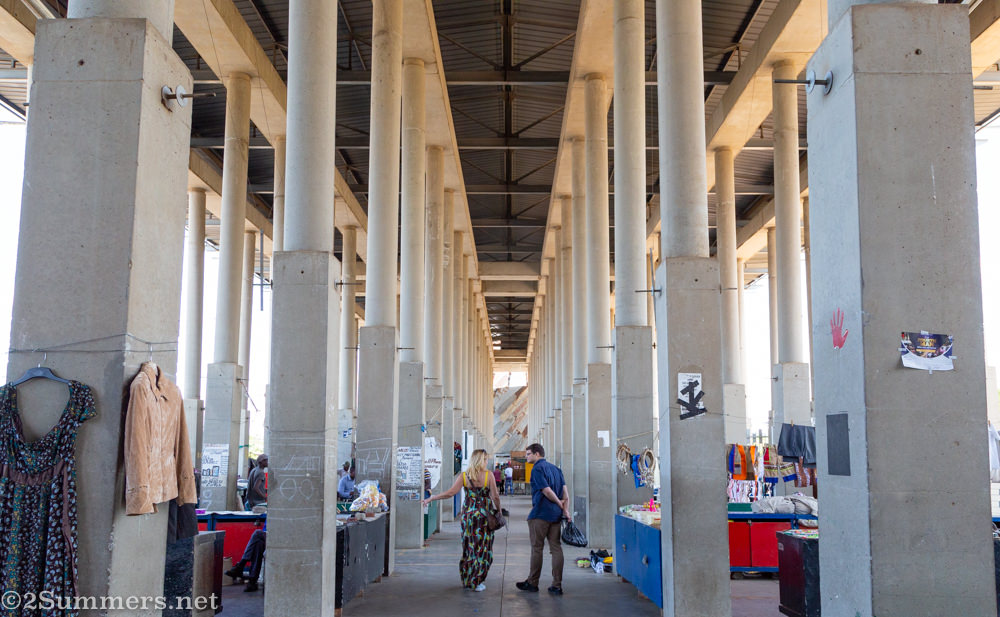
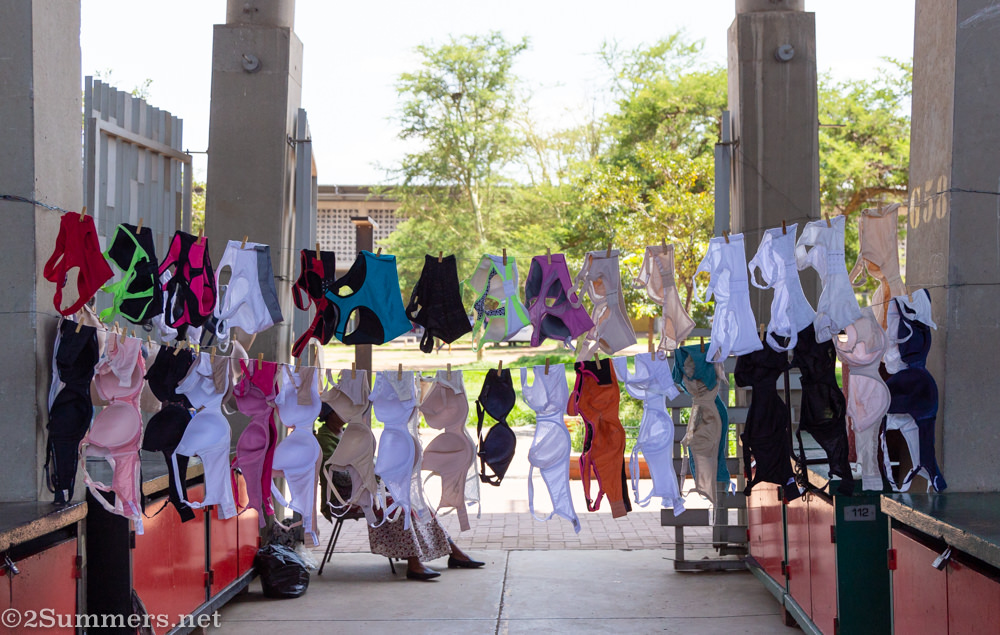
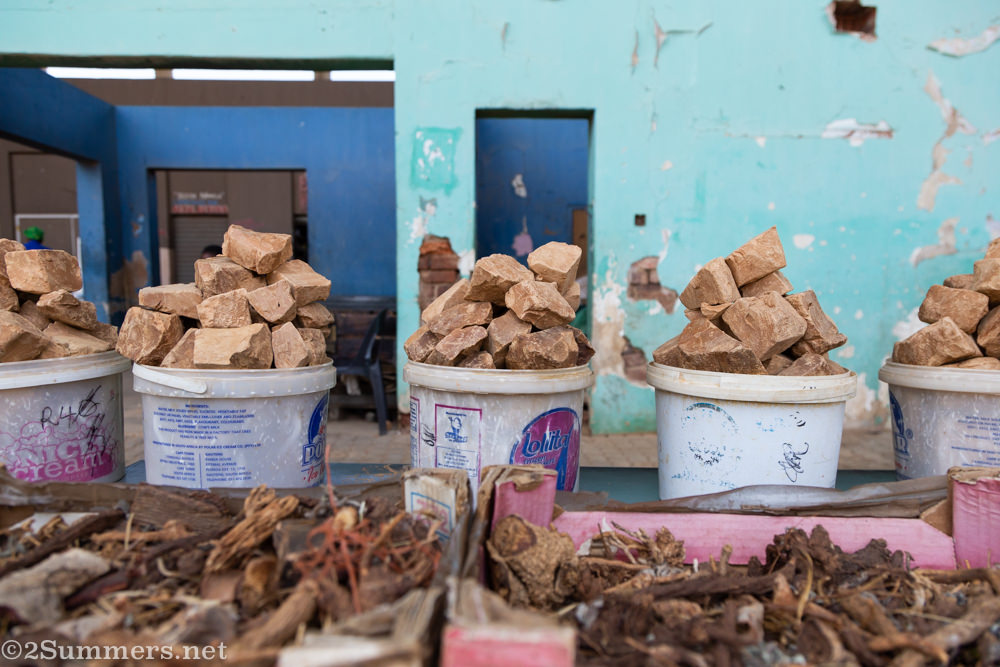
Gilda walks Alex through Kliptown’s outdoor market, which I had never walked through before even though I’ve walked past it many times.A rainbow nation of bras.Mud blocks for sale outside the market. Apparently pregnant women sometimes crave dirt (!) and gnaw on these to satisfy the craving.
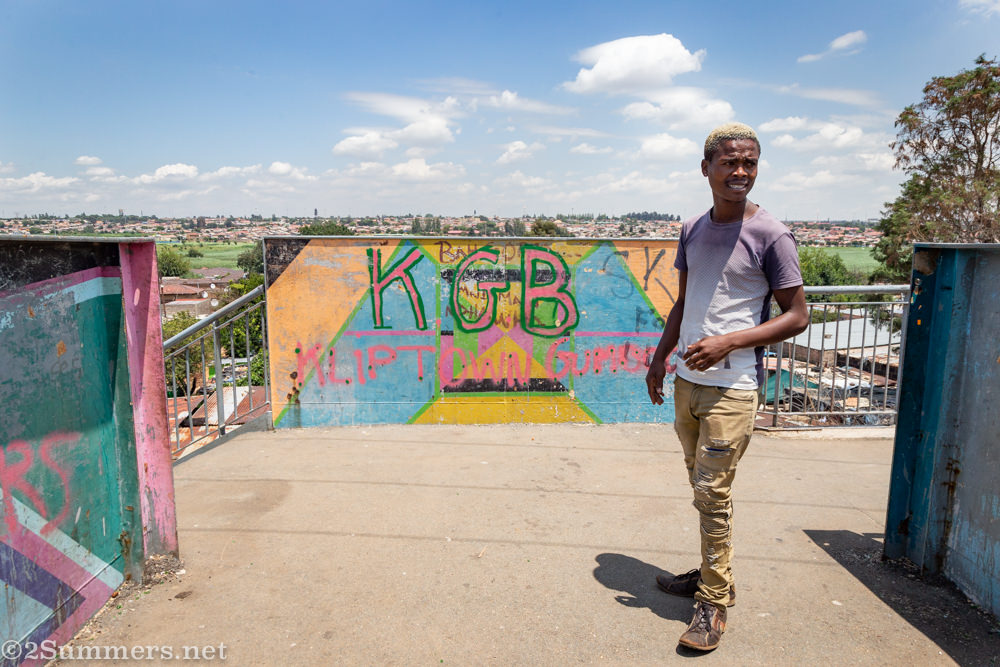
Over the course of the day, Gilda periodically hands her guests over to other guides who provide a more localized picture of Soweto. In Kliptown we walked around with Thulani Mhambi, who I’d met years ago at another Kliptown function but neither of us remembered until later.
Thulani leads us into Kliptown’s residential section. KGB stands for Kliptown Gumbooters in this part of the world. Google gumboot dance to understand why.
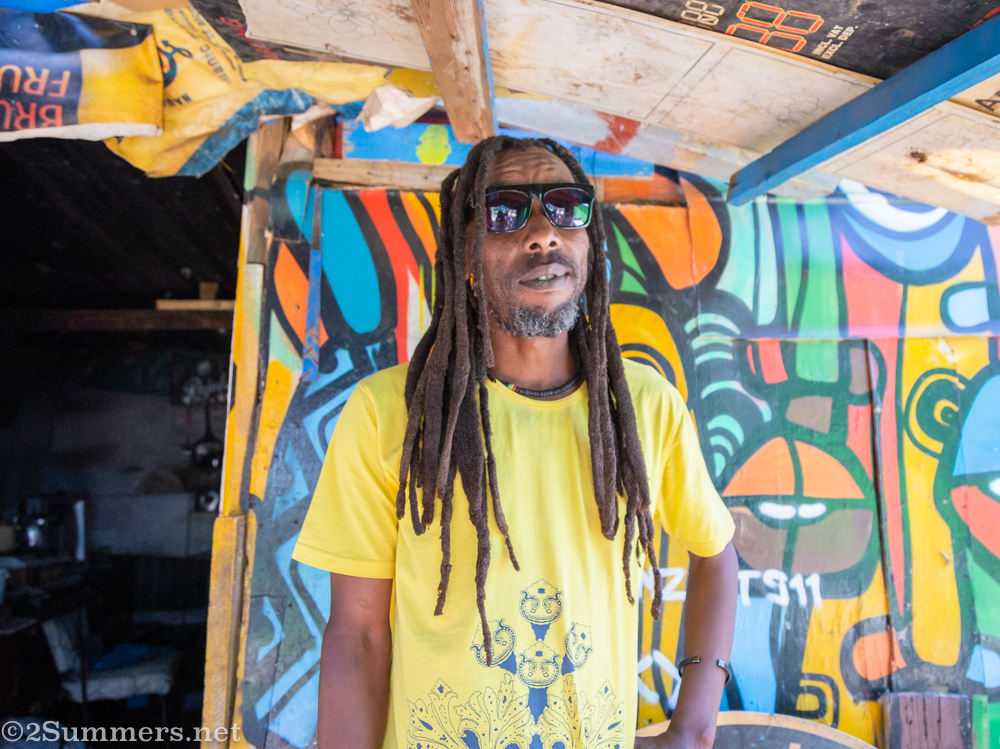
We met Bob Nameng, founder of the world-renowned Soweto Kliptown Youth program, and admired the art in his courtyard.
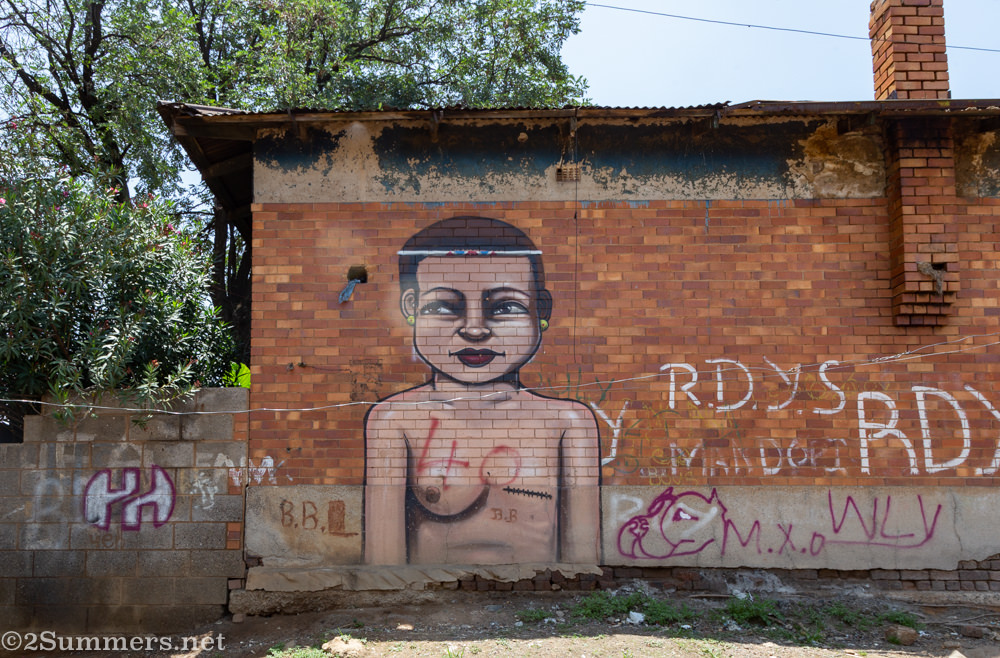
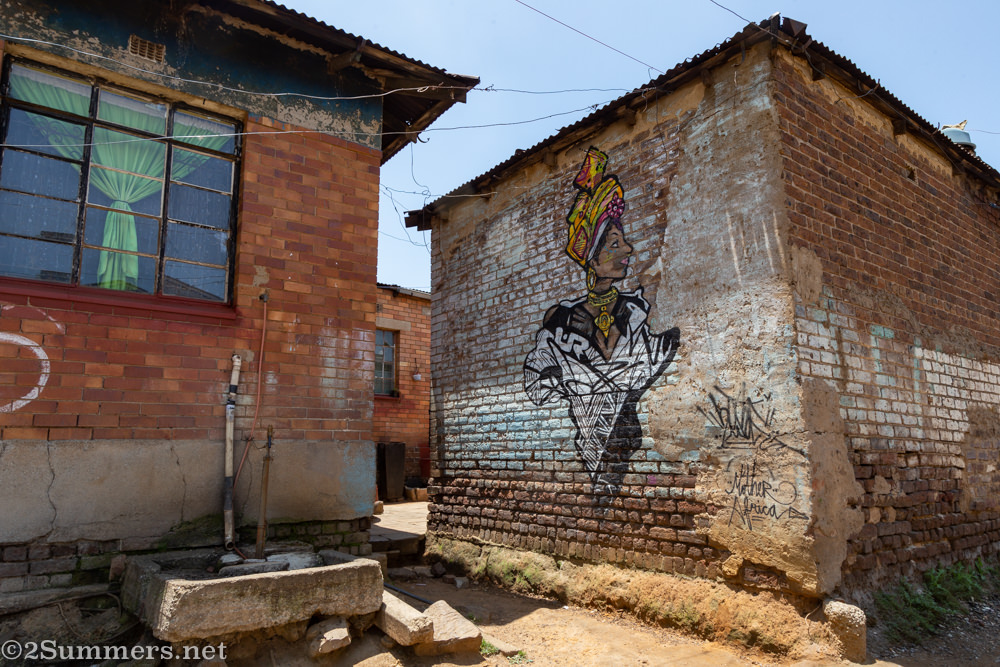
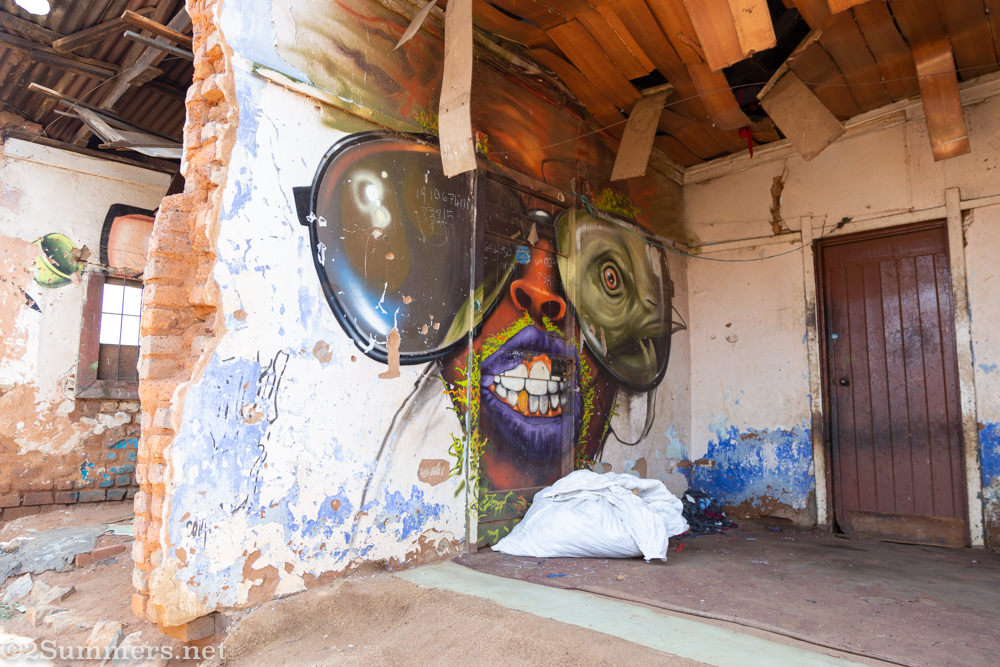
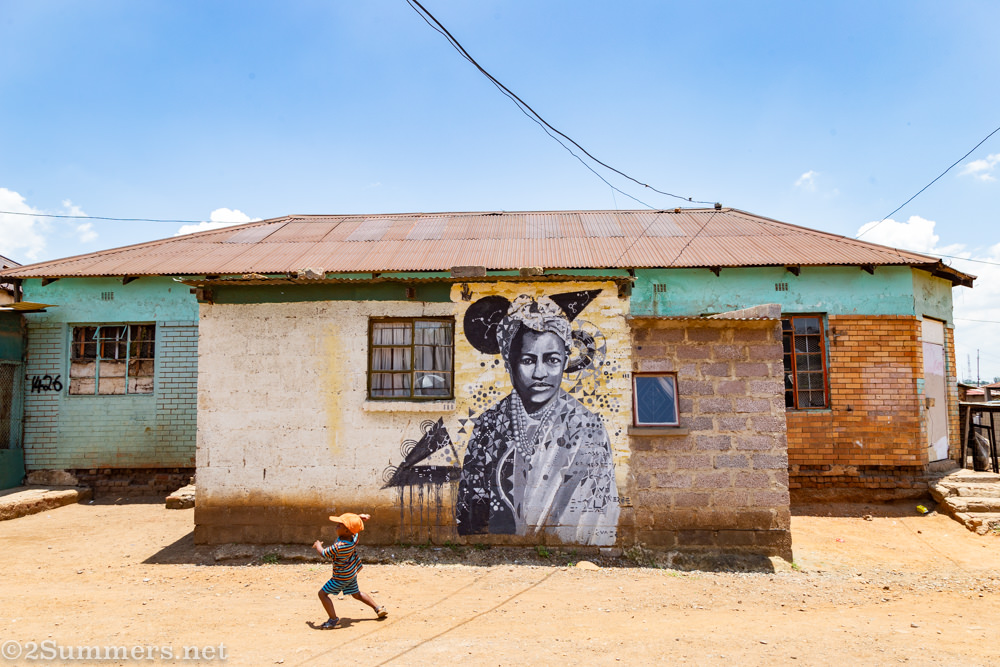
Then we walked around the neighborhood and I was reminded about how much beautiful street art there is in Kliptown – much more than the last time I was there a few years ago.
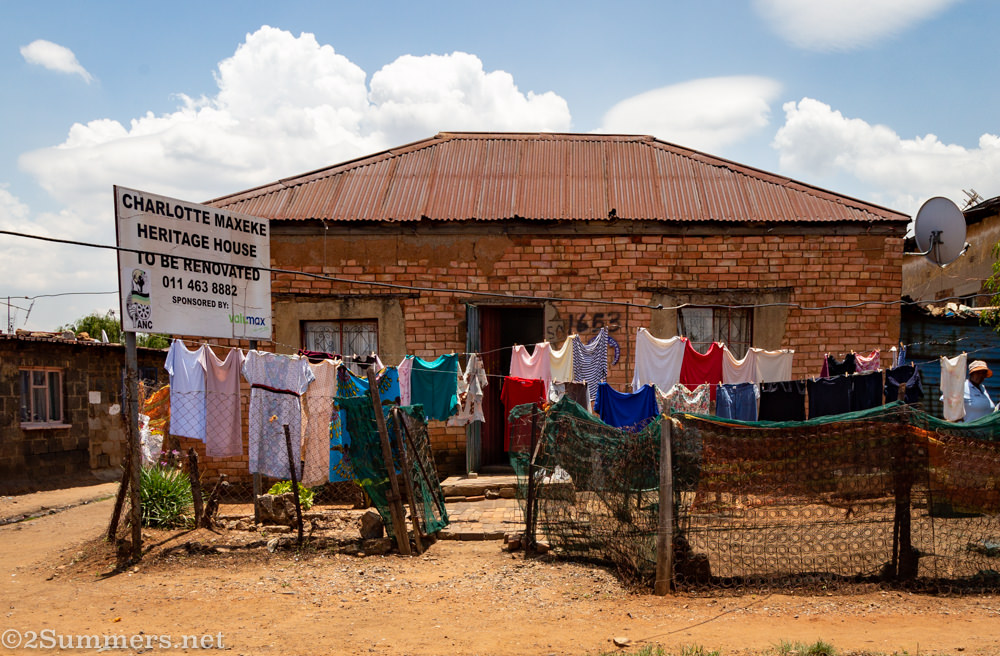
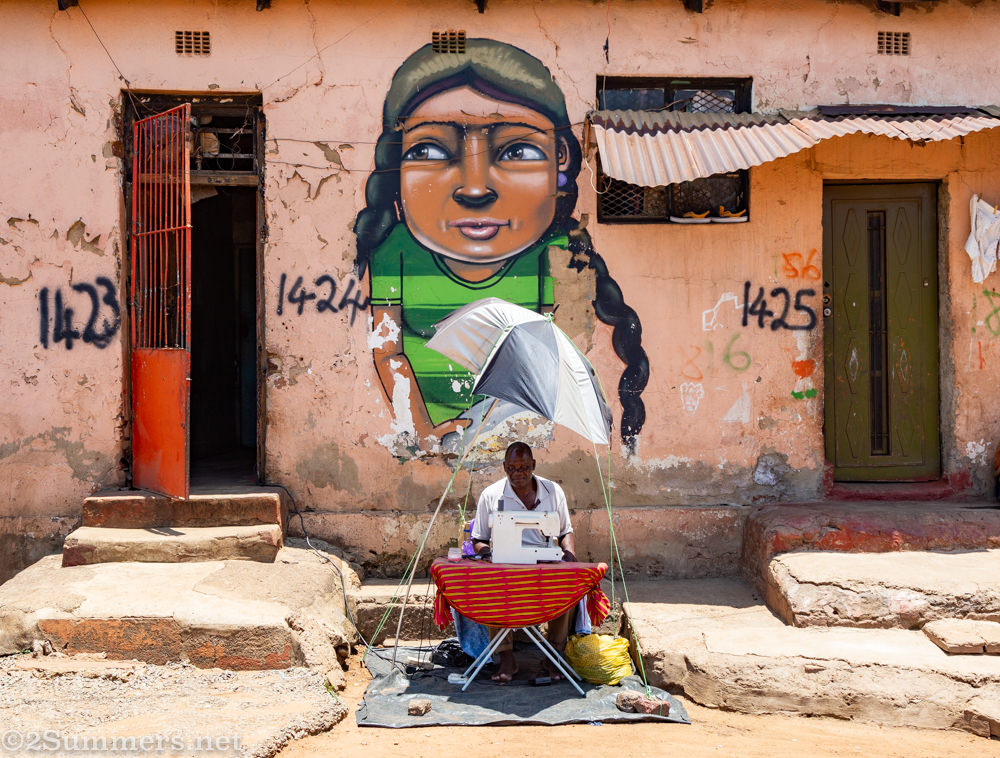
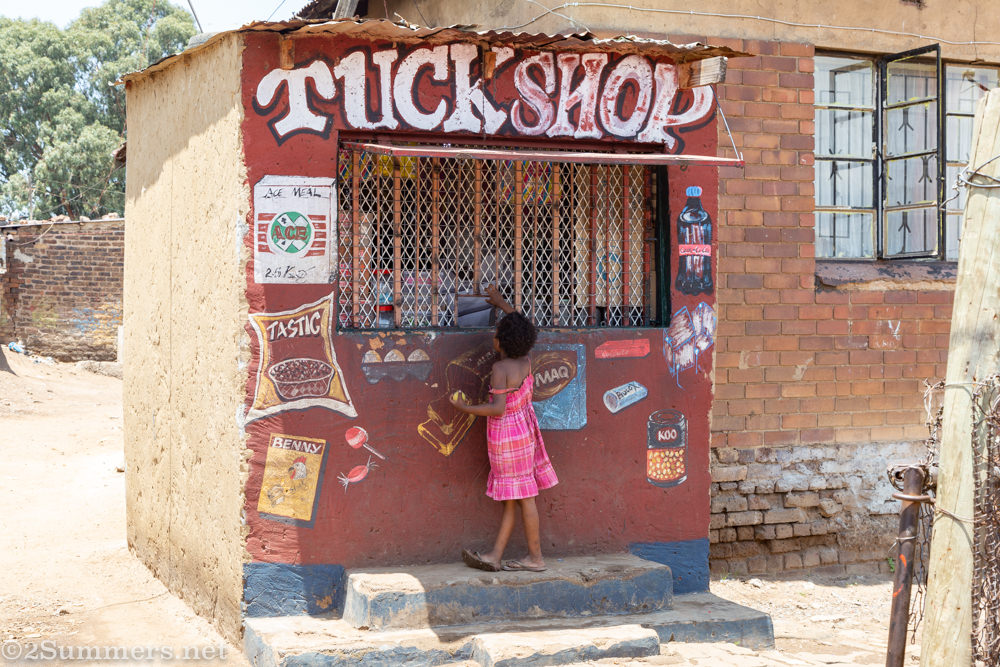
I’m not sure who painted this – maybe Falko? – but it’s beautiful. Too bad it’s been defaced.A depiction of Winnie Mandela.I don’t know who painted this but I’m sure someone will let me know.Activist Charlotte Maxeke lived in this house in the early 20th century.A recently painted tribute to Charlotte Maxeke.A tailor working in the hot sun. I believe the piece above him is by Falko.Traditional sign-painting is part of Soweto’s heritage, and as we walked through Kliptown I realized art like this is closely connected to the city’s more modern street art.
We finished our walk through Kliptown with a visit to the Freedom Charter monument in the middle of Kliptown Square.
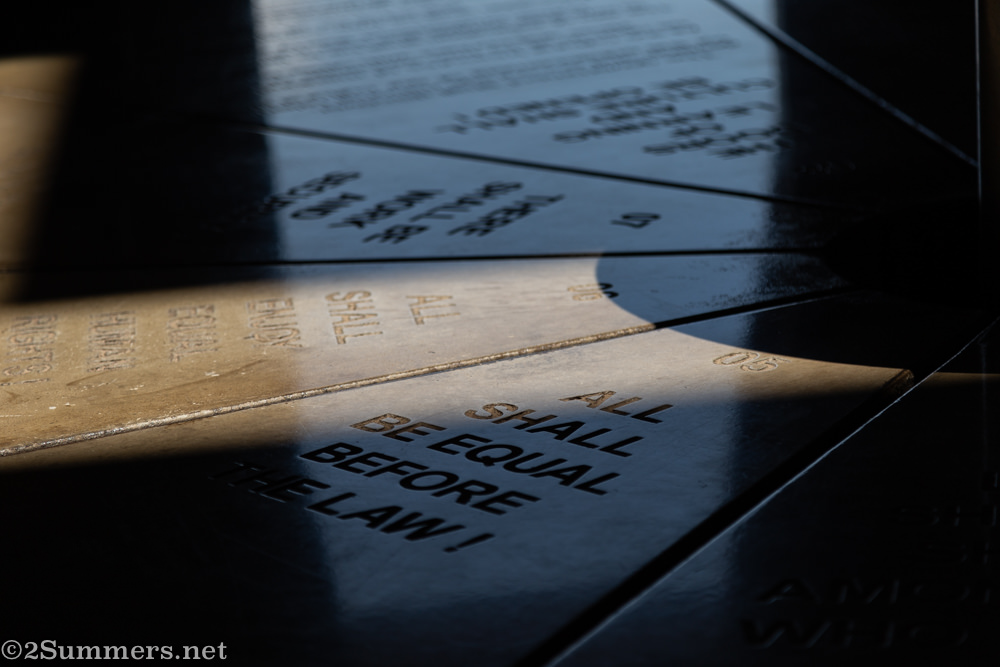
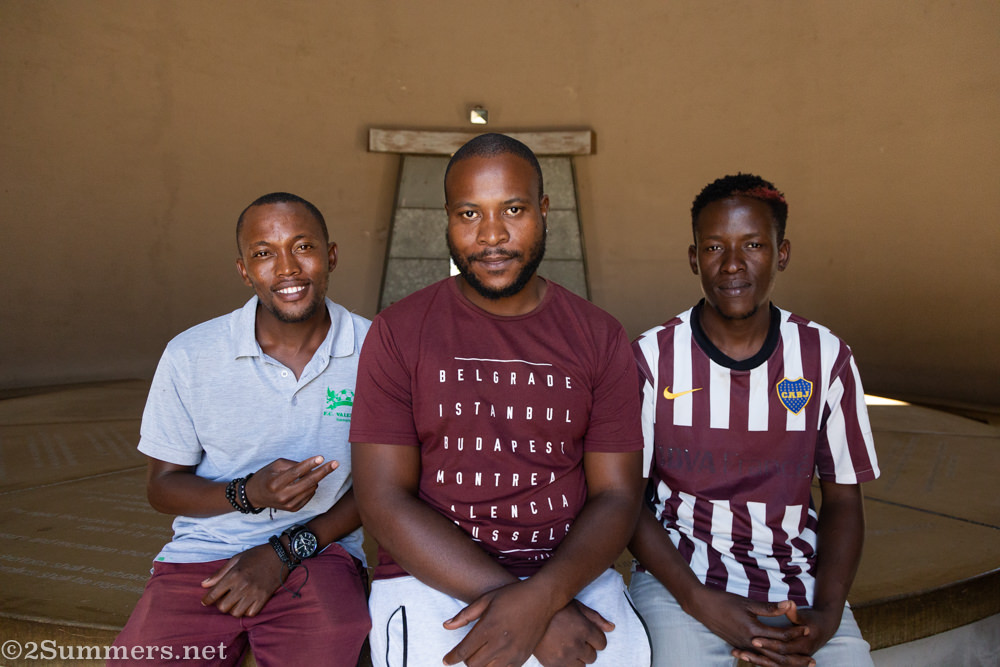
Inside the Freedom Charter monument, the center of which is a pie-shaped depiction of the Freedom Charter’s ten demands.Inside the monument we were serenaded by this fantastic a capella singing group, Together Soweto. They sang their own composition of Bob Marley’s One Love.
This post is already long but I haven’t even covered half our Soweto stops yet. Here’s a lightning-round recap of the rest of the day.
Traditional Beer
We headed to Soweto’s Jabavu Township to meet Mpho, a woman who makes umqombothi (traditional South African beer). Umqombothi is a bit sour-tasting for me but I’m sure I’d get used to it if I drank enough.
I only had a small sip. Alex downed a full glass in no time and also finished mine.
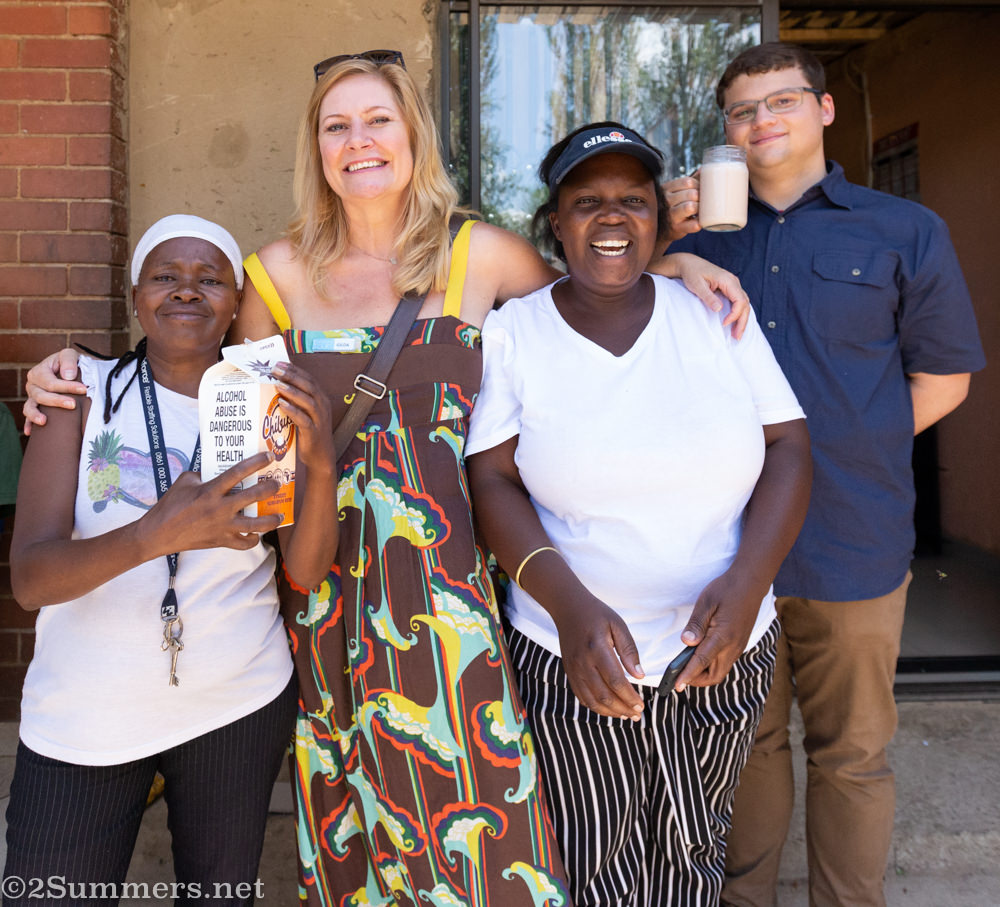
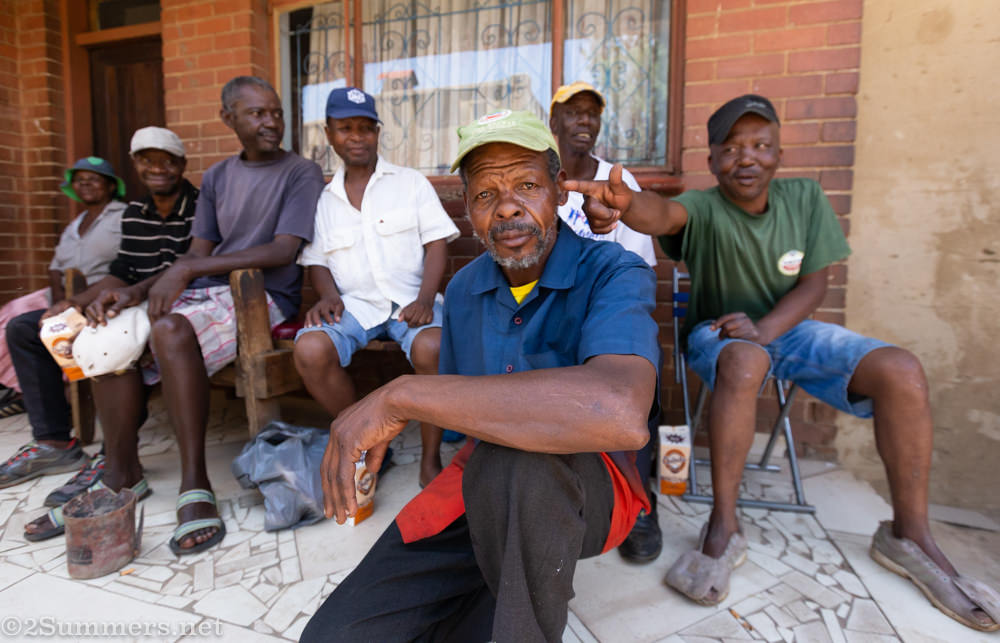
Left to right: Unnamed beer-making lady (reminding us alcohol is dangerous), Gilda, Mpho, and Alex.Beer-drinking men.
Native Rebels
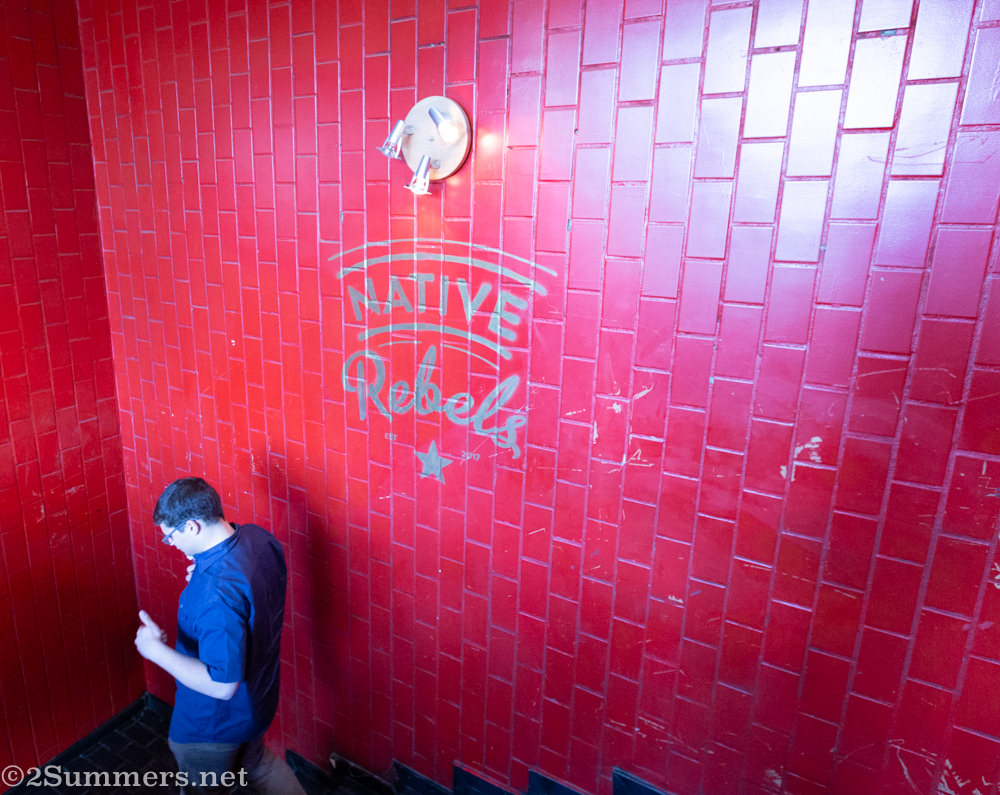
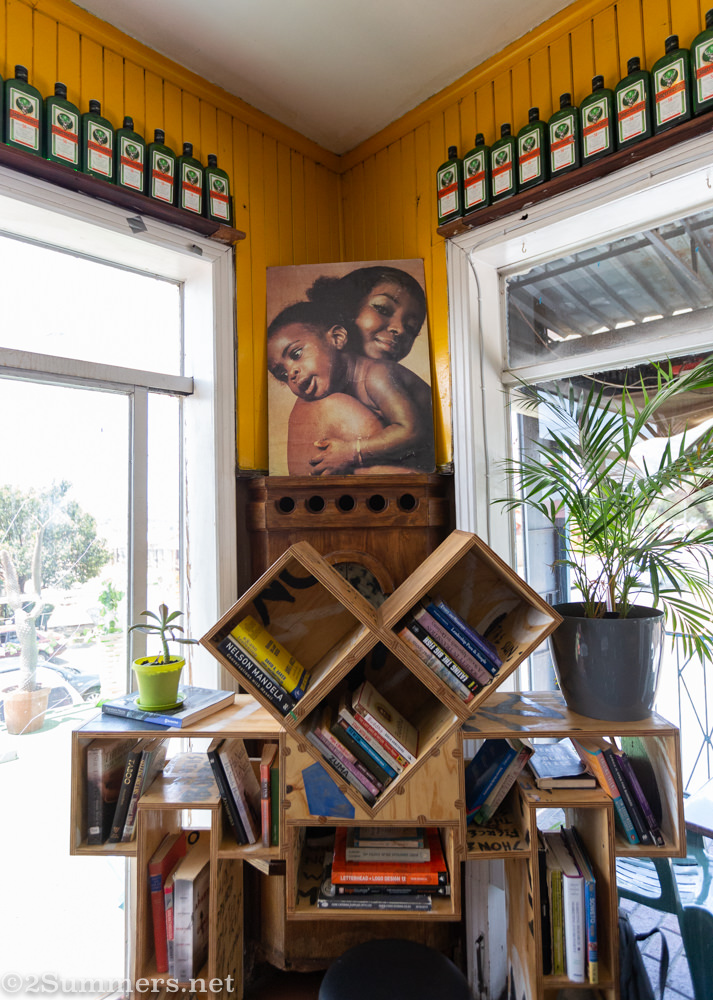
Native Rebels is a restaurant/bar/music venue in Jabavu that I’ve been wanting to check out for ages. We only had time for a quick drink on the balcony, but my suspicions were confirmed: This place is seriously cool and I need to go back for a proper meal and some music.
The stairway to Native Rebels.Artsy bookshelf and Jaegermeister display in Native Rebels.
Soweto Home Based Care Givers
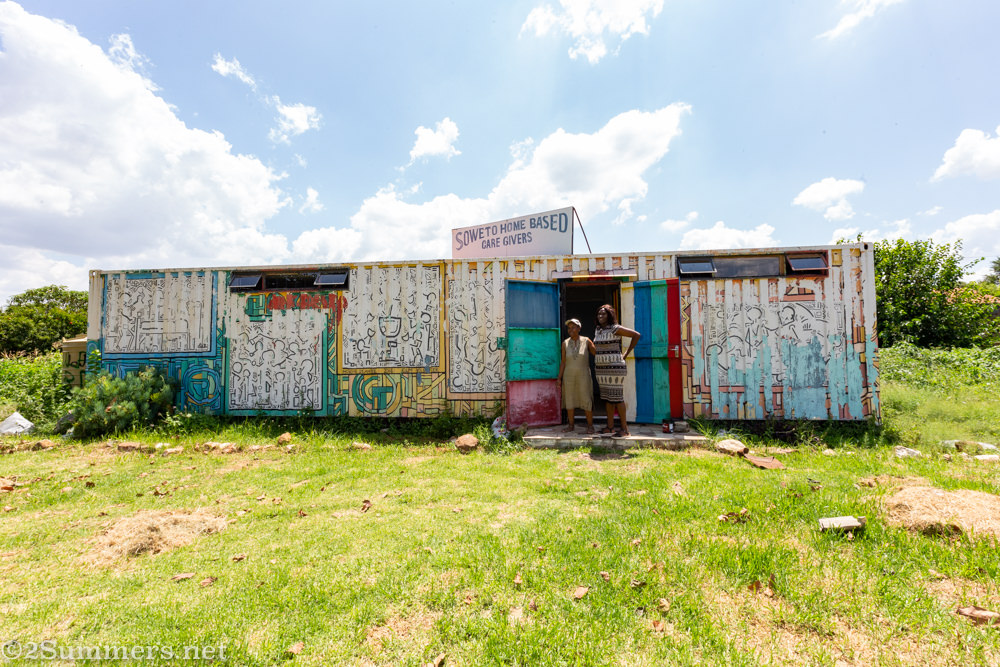
We made a very quick stop at Soweto Home Based Care Givers, a grass-roots program that provides after-school feeding to schoolchildren. Gilda needed to drop off some seeds for the program’s veggie garden.
Soweto Home Based Care Givers.
For more information about the Soweto Home Based Care Givers, please contact Gilda directly or go on her tour (recommended).
Lunch at Aggie’s
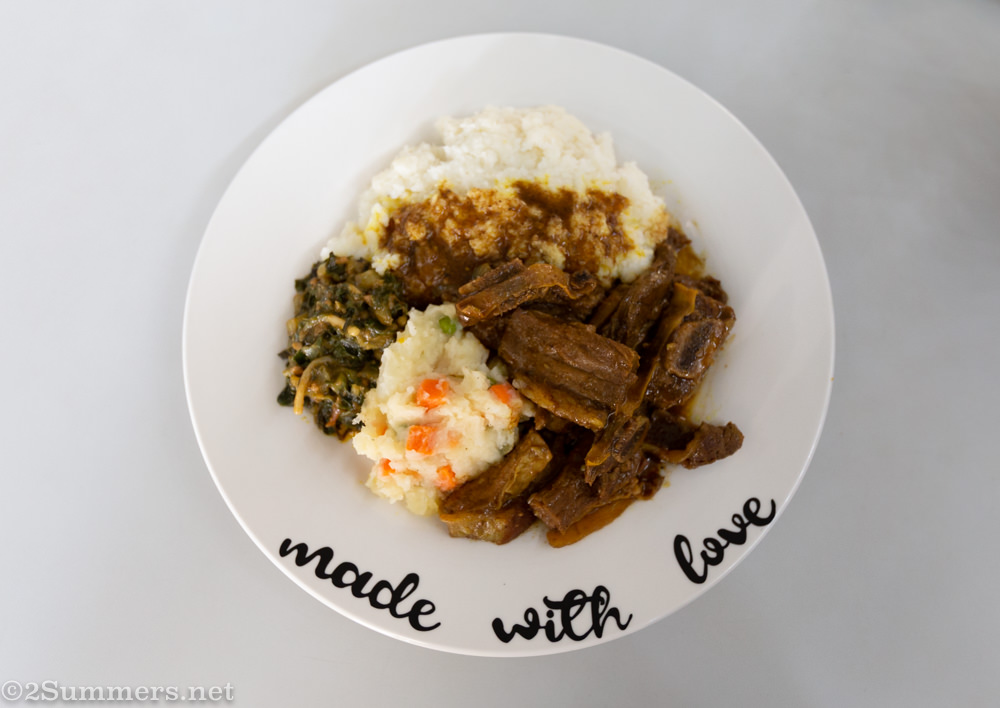
We were starving and went for lunch at Aggie’s Restaurant, also in Jabavu. Aggie’s is a classic South African food and watering hole, where we feasted on beef and chicken stew, pap (maize porridge), potato salad, chakalaka (spicy tomato relish), and African spinach.
Delicious.
Hector Pieterson Memorial and Vilakazi Street
The Hector Pieterson Museum/Memorial and Vilakazi Street, both in Orlando West, are the centers of Soweto’s tourist culture. I have been many times. But our guide, Mlungisi Tsabalala, told the story of the 1976 Soweto Uprising in a uniquely moving way.
Mlungisi at the Hector Pieterson Memorial.
I learned several new things, such as Benedict Vilakazi was the first black South African to earn a Ph.D., and that Nelson Mandela and Desmond Tutu only lived on Vilakazi Street for 11 days concurrently.
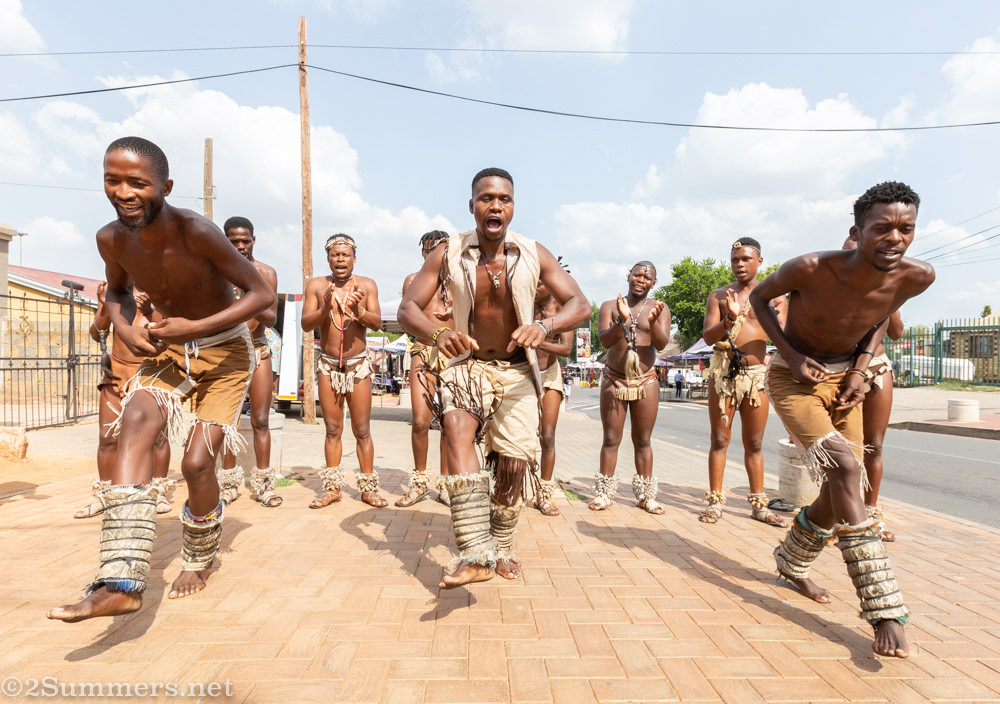
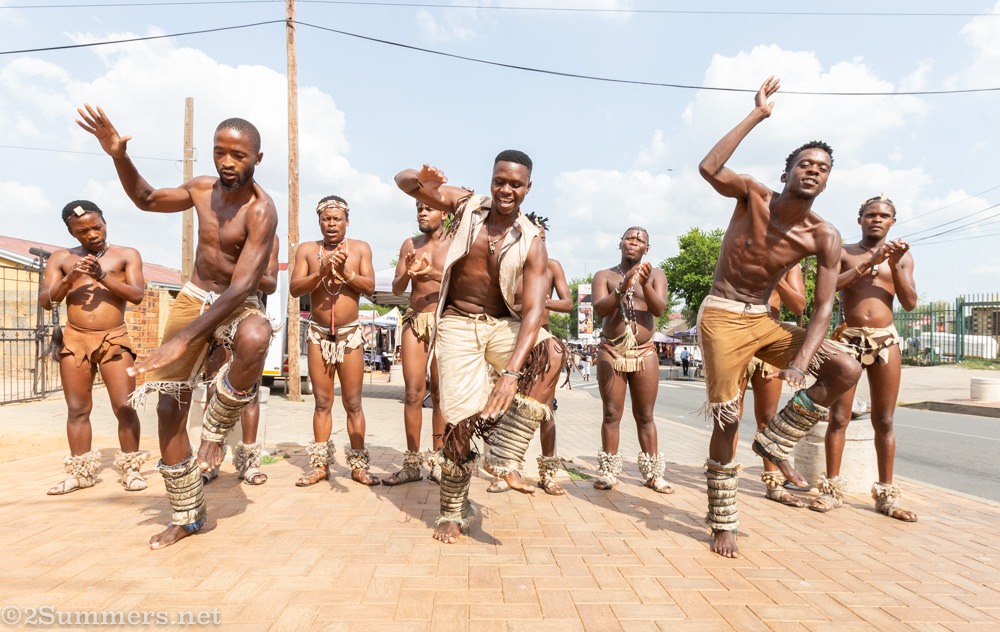
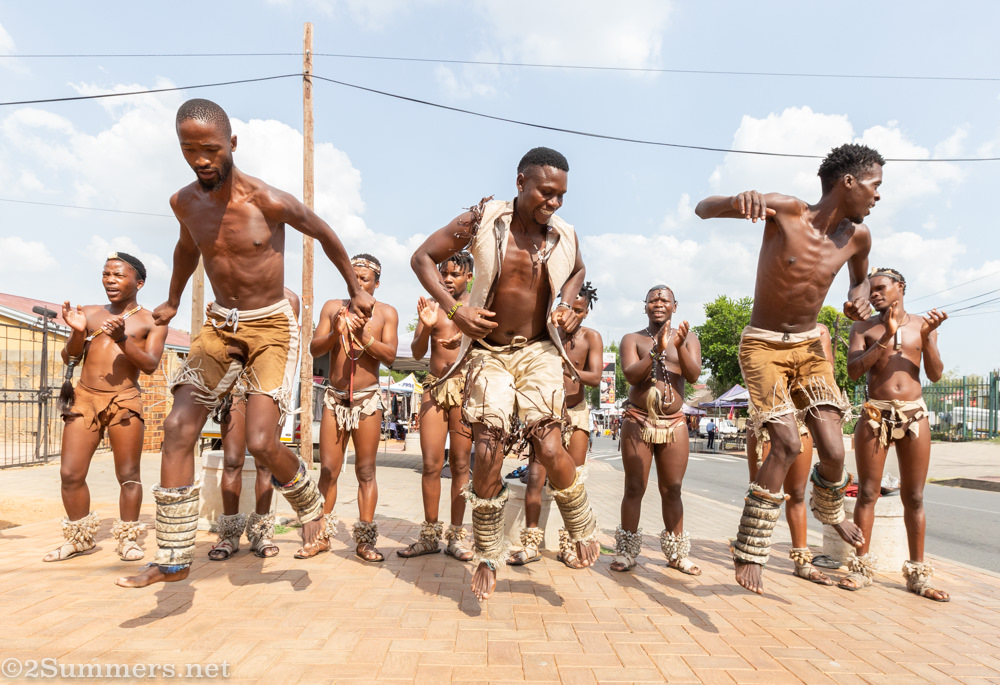
We also watched a performance by Ditsau Tsa Koma, the fabulous Tswana dance troupe that works on Vilakazi Street.
I never, ever get tired of watching traditional South African dance. If you see a dance performance like this happening on Vilakazi Street, don’t worry about looking like a tourist. Park yourself right in front, watch, listen, and take pictures. Then tip these amazing performers well – they deserve it.
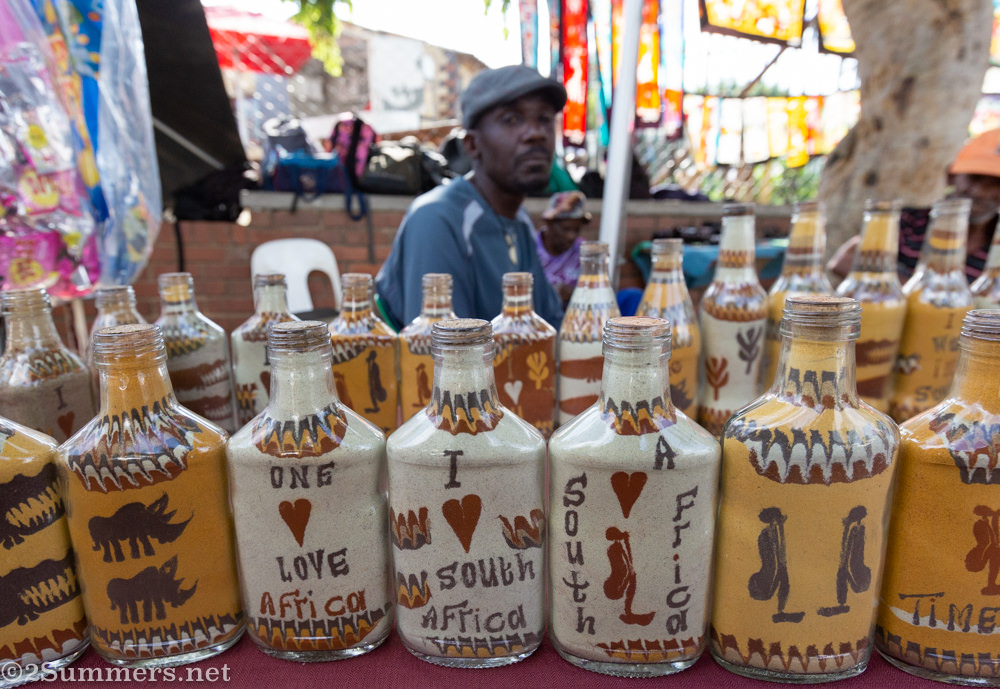
Before leaving Vilakazi Street we met “the Sandman” at the corner of Nbakane Street. The Sandman makes Soweto souvenirs using different-coloured sand from nearby mine dumps.
I don’t need any more South African souvenirs. But if I did, this is what I would have bought. Contact the Sandman at 060-420-8872.
Soweto Towers
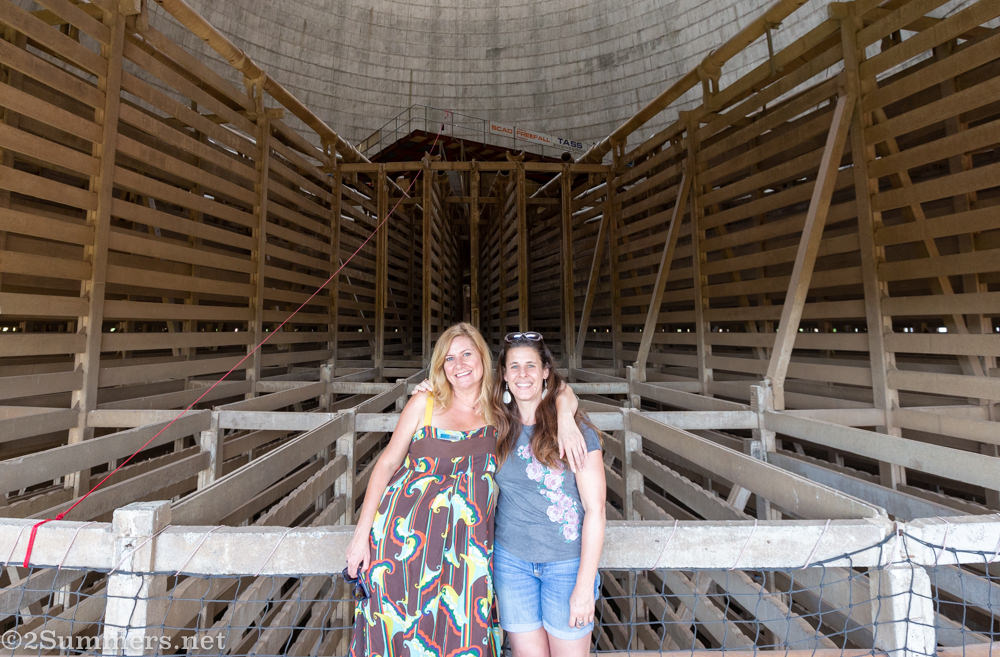
We finished the day at the old Soweto cooling towers in Orlando East. I’ve blogged about the towers many times and I even bungee-jumped off them once. So I will end my narration with this.
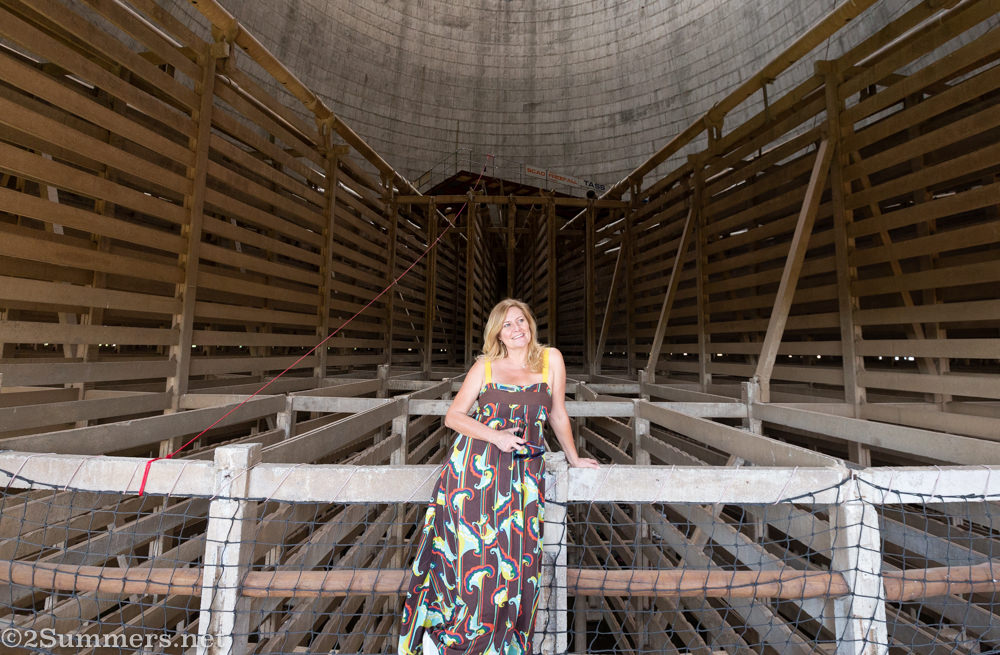
Inside the cooling tower with my kindred spirit. Photo by Alex.
Gilda’s tour of Soweto costs R1450 (about $100) for the full day, including transport, pick-up and drop-off, lunch, fees for the local guides, admission to Mandela House, and some other inclusions.
My tour was complimentary as a member of the media. All opinions expressed are mine.
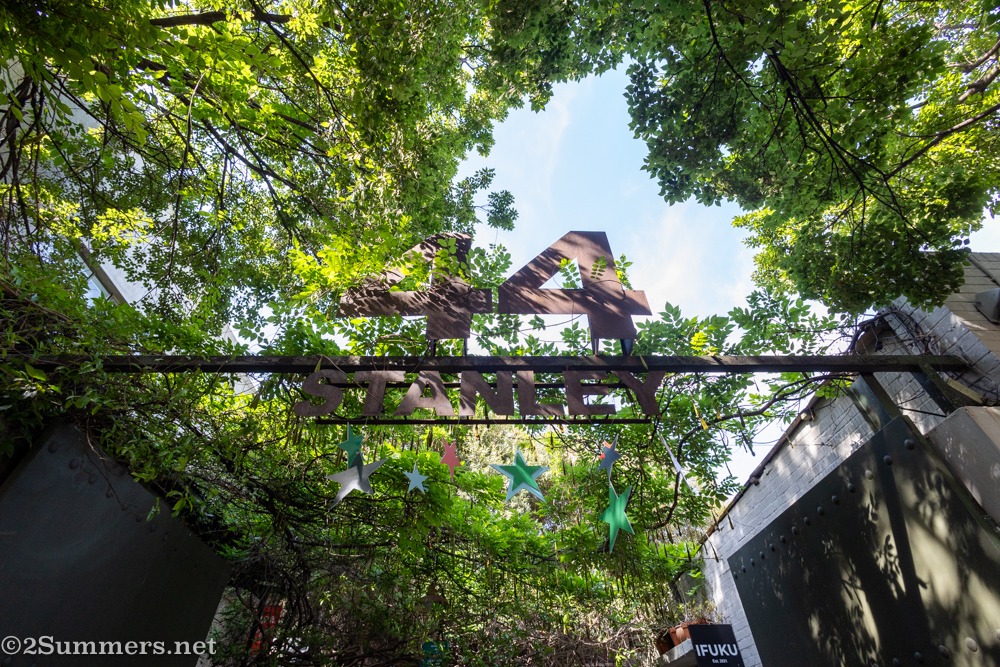
I guess it’s wrong to say I’ve never blogged about 44 Stanley; I’ve mentioned it countless times over the years (see here and here) when writing about specific restaurants or shops that are there. But I’ve never written a dedicated post about 44 Stanley as a destination and it’s about time I did – especially now, with the holidays upon us.
Use the share button below if you liked it.
It makes me smile, when I see it.