I had never heard of Rose Road. But the tour’s title was so evocative…My mind’s eye quickly filled with images of haunted mansions and stately gardens of a bygone era.
My mind’s eye was spot on. The Ruins of Rose Road were everything I could have imagined, and more.
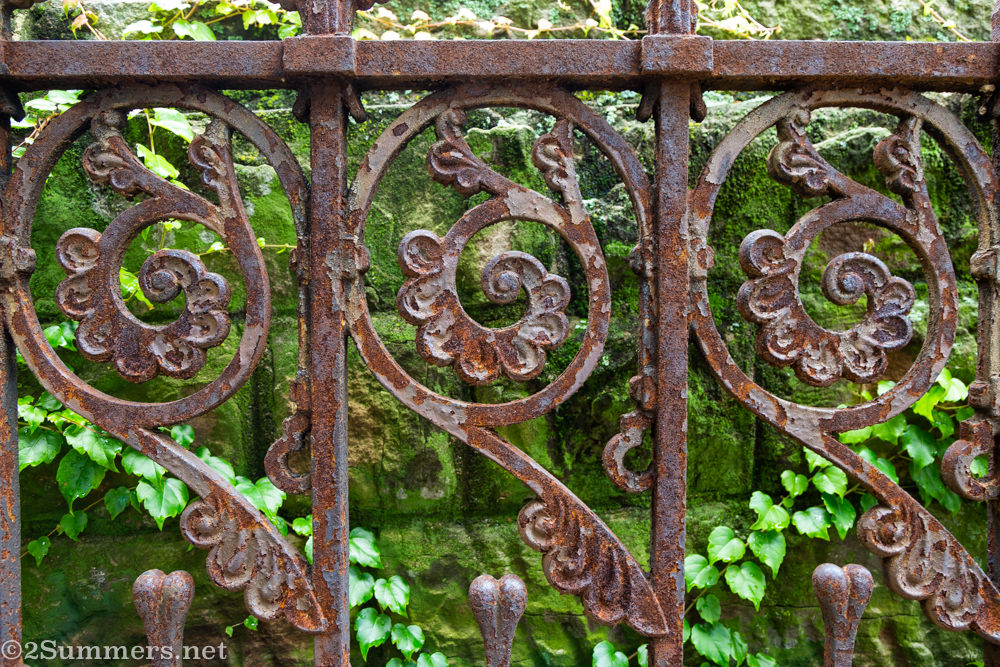
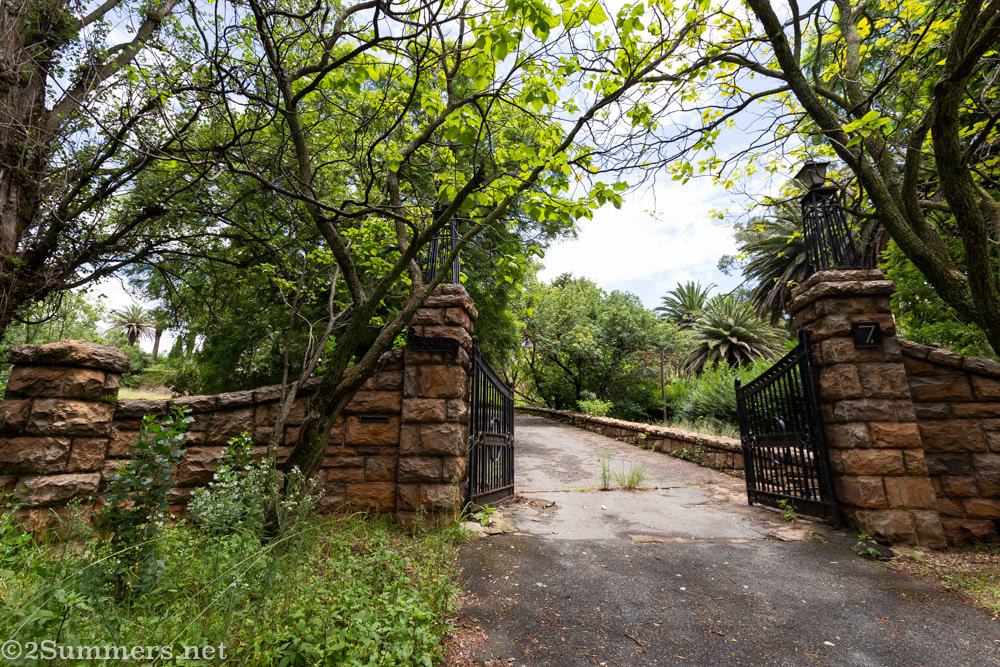
The ornate, rusty gate at the entrance to 3 Rose Road.
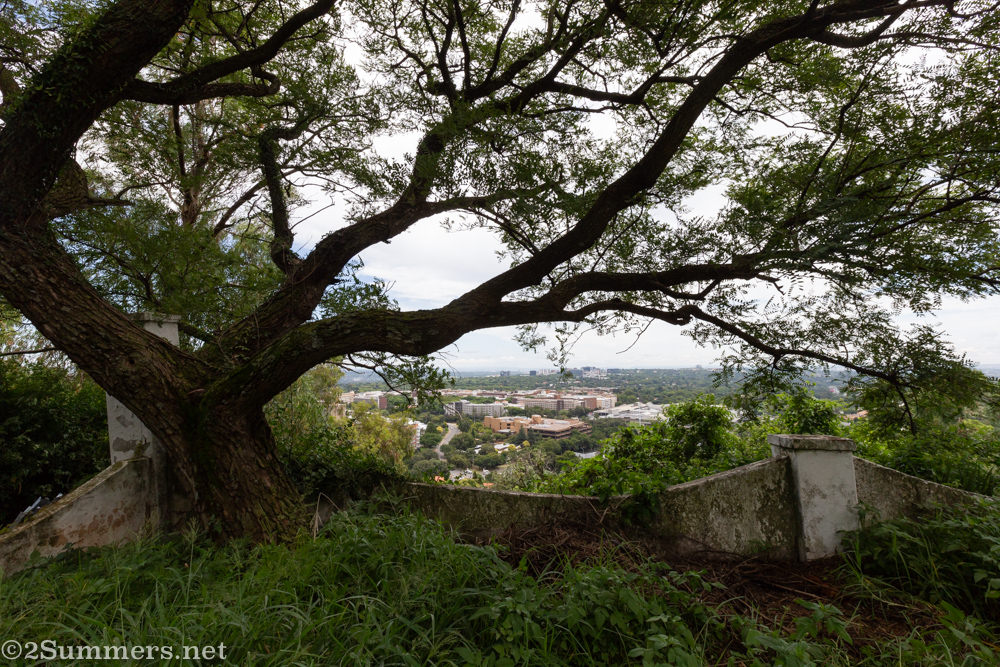
Rose Road is a dead-end street at the top of a ridge in Joburg’s wealthy Upper Houghton neighborhood, overlooking the Wilds Municipal Nature Reserve. All the north-facing mansions along the western end of the road, built between the 1920s and 1940s, are – for reasons I don’t completely understand – unoccupied.
The land is owned by a property development company and slated for redevelopment, taking into account the historic heritage of several of the homes. But due to South Africa’s stagnant economy there are no immediate plans for this redevelopment to begin.
Johannesburg heritage gurus Brett McDougall and Flo Bird took us on an exploration of three houses along the road, each of which required climbing a steep, winding driveway.
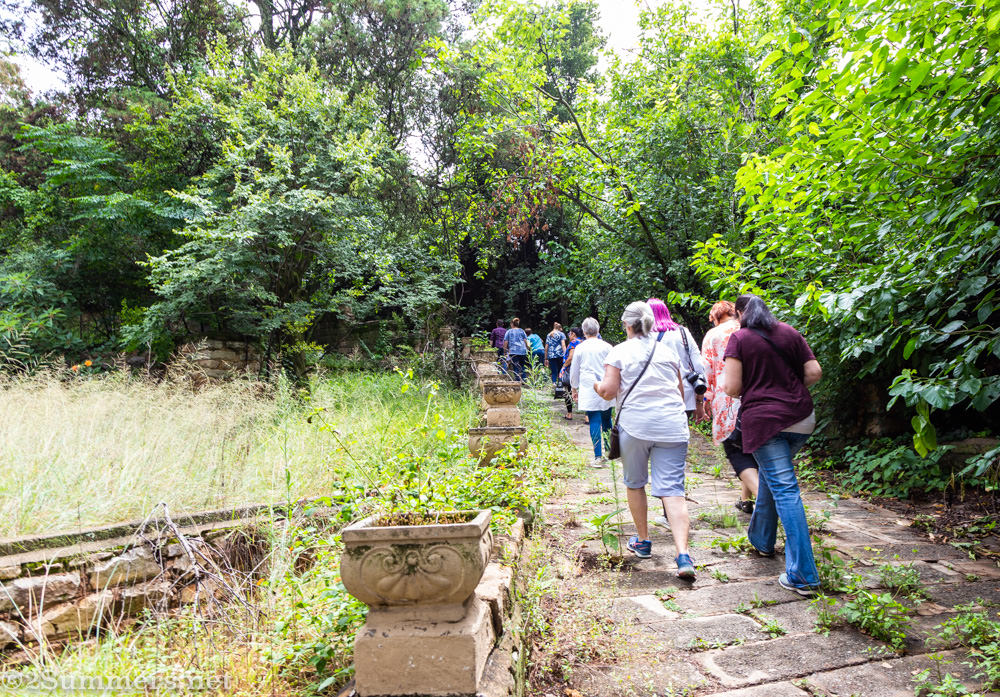
Walking up to 3 Rose Road.
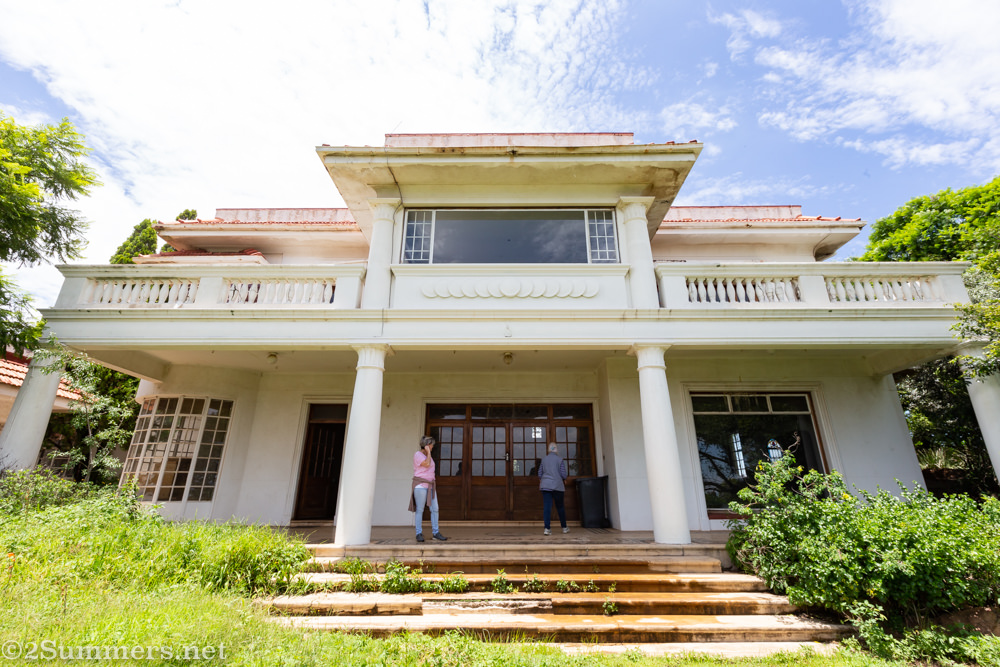
3 Rose Road
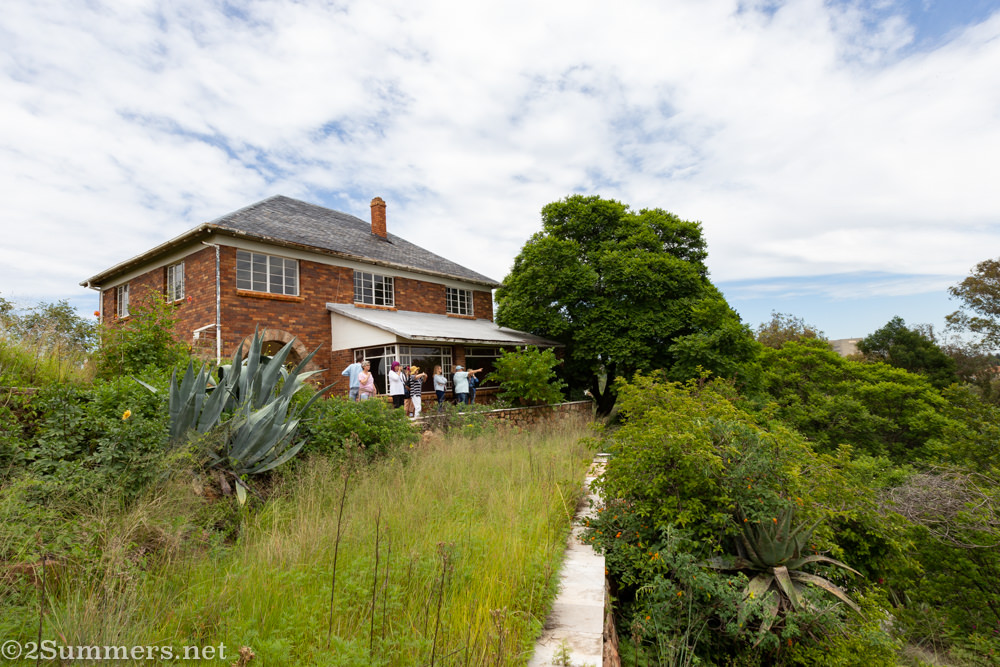
Number 3, the first house we visited, was built in 1935 by architect Frank Lawson. Alexander Proudfoot, the owner, was a Scottish engineer who moved to South Africa after the Anglo-Boer War. Proudfoot died in 1947. His wife, Adeline, continued living in the house until she died in 1979.
3 Rose Road.
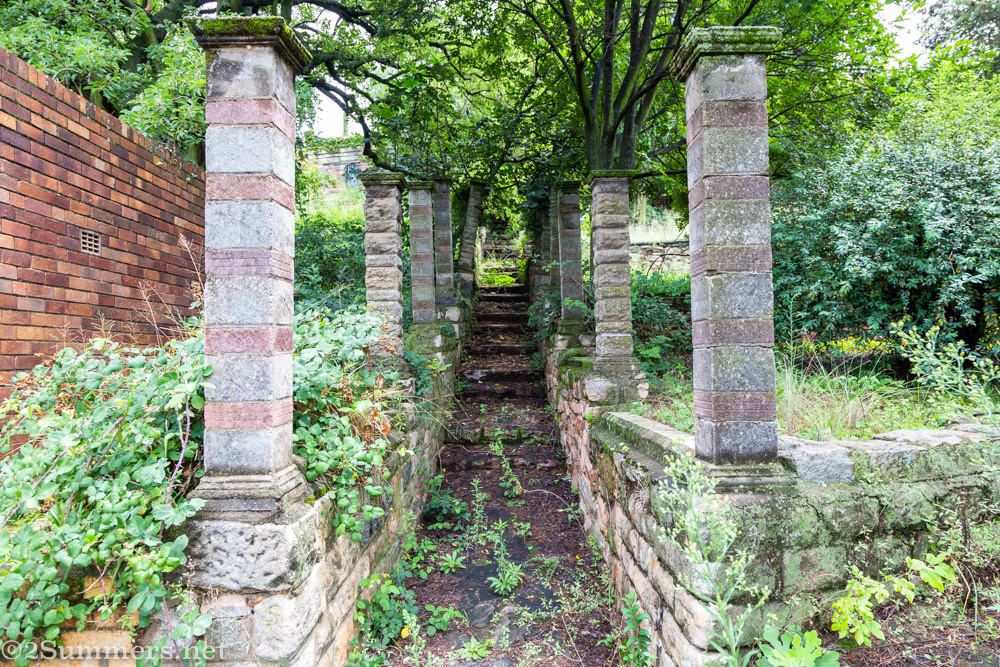
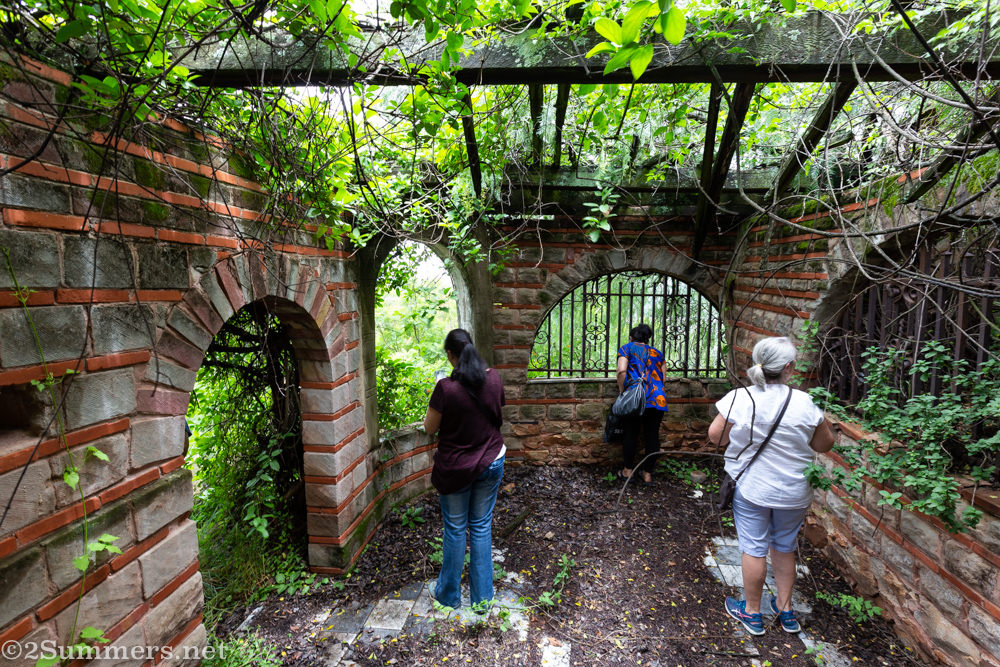
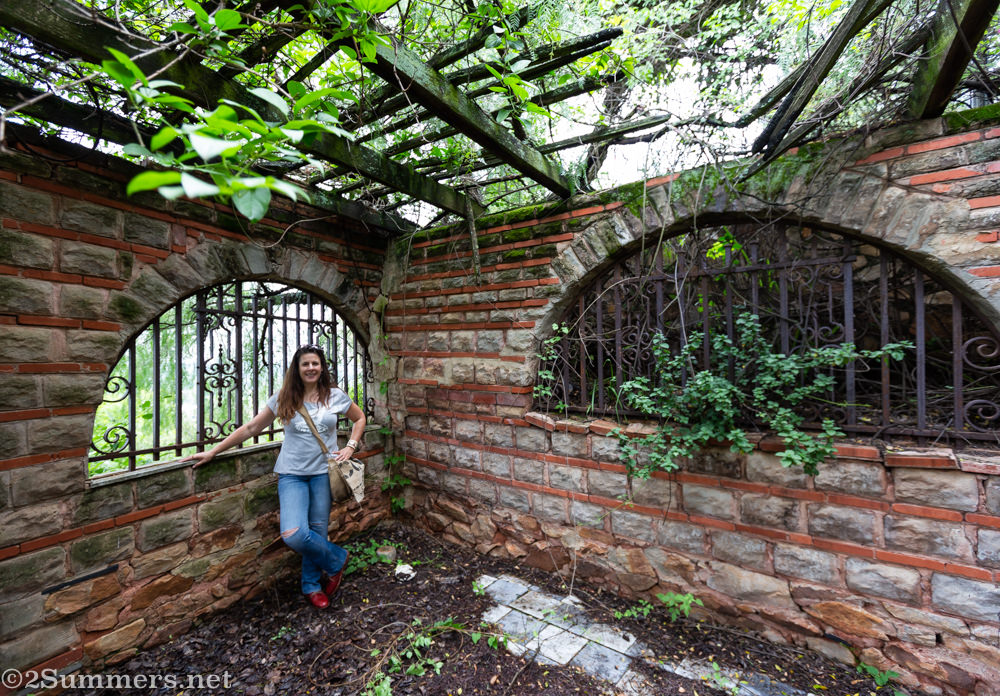
This house does not have historic heritage status but the sprawling gardens around it do, and will hence be preserved if/when the redevelopment takes place. I can see why: This garden was enchanting, especially since it had just stopped raining and the whole place had a mossy, misty, Midnight-in-the-Garden-of-Good-and-Evil kind of vibe.
I spent so much time exploring the garden that I never made it inside the house.
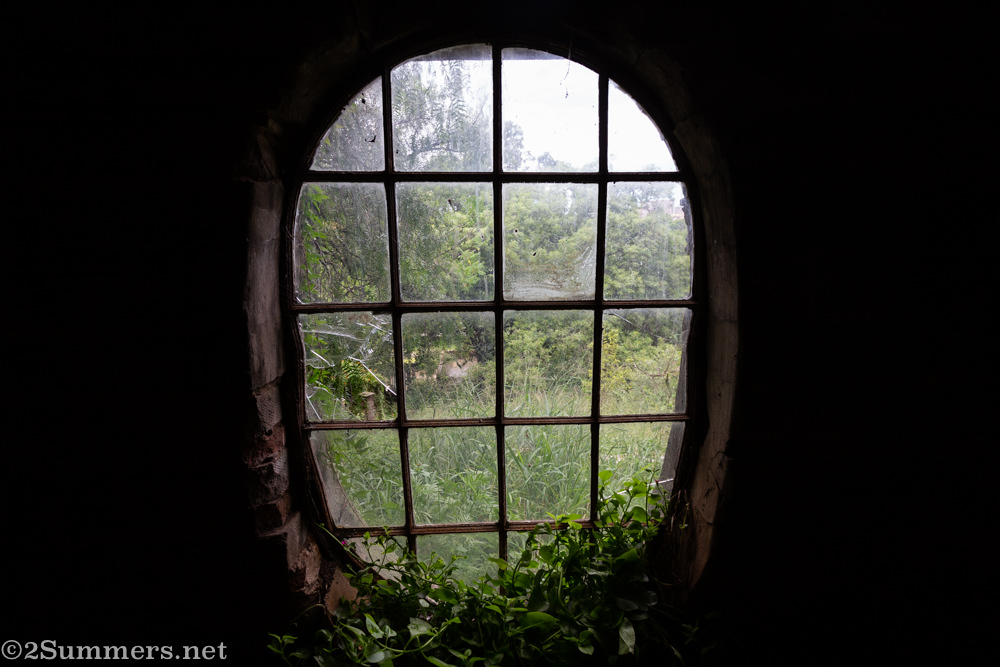
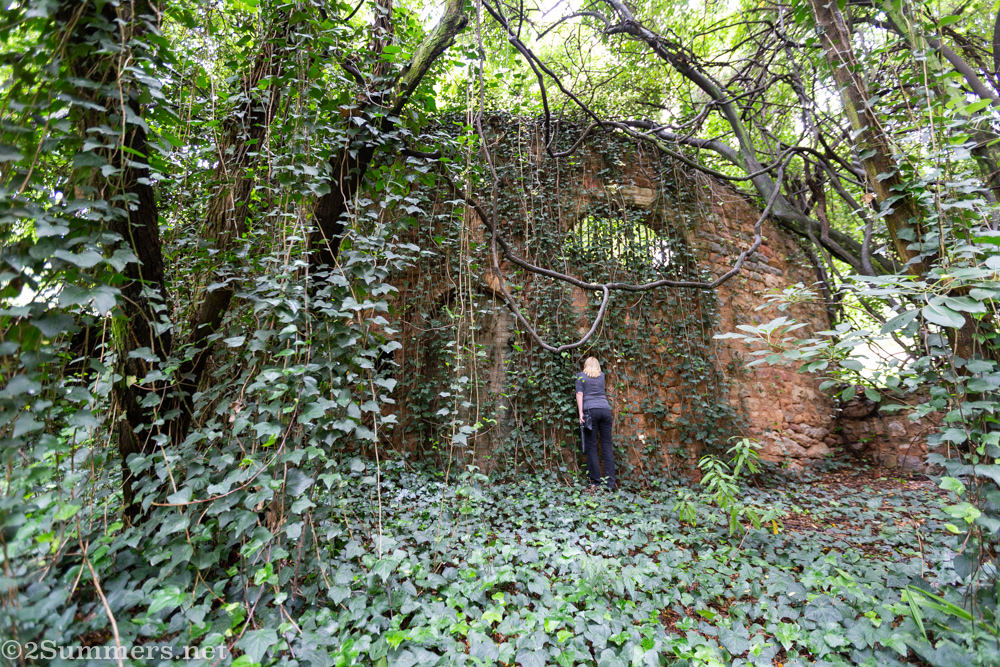
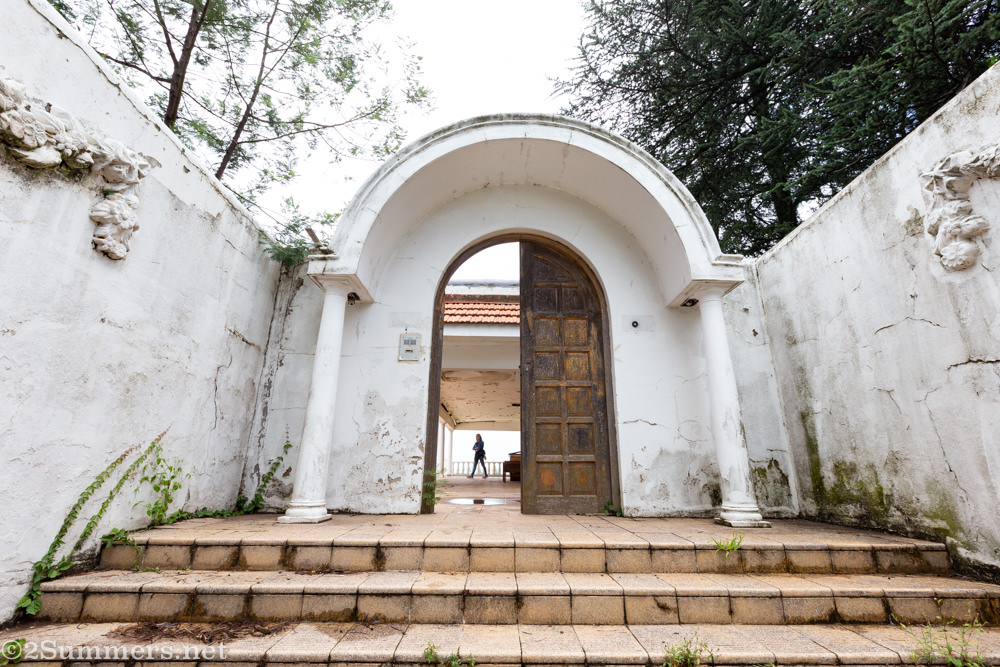
A stone pathway up into the garden. Unusually for the time, the Proudfoots used lots of reclaimed stone and other materials in the garden – presumably scavenged from Alexander’s work projects.A stunning stone gazebo overlooking Joburg’s northern suburbs.I loved this gazebo so much, I asked Fiver to take my photo in it.Misty window in an old garden cottage.A very old, ivy-covered wall. Can you spot the door?
Quisisana: 7 Rose Road
Quisisana, the second house we visited, is named after a hotel/sanatorium on the island of Capri. “Qui si sana” means “here one heals” in Italian.
The entrance to Quisisana.
Quisisana was built in 1936 (architect unknown) and owned by Robert Craib who, like his neighbor, was a Scottish engineer. Craib built the house for his wife Martha, who was dying of a terminal illness (hence the name Quisisana). Sadly Martha died a year after moving into the house. Robert lived there for another 20 years.
Quisisana.View from the garden beside the house.Side entrance.
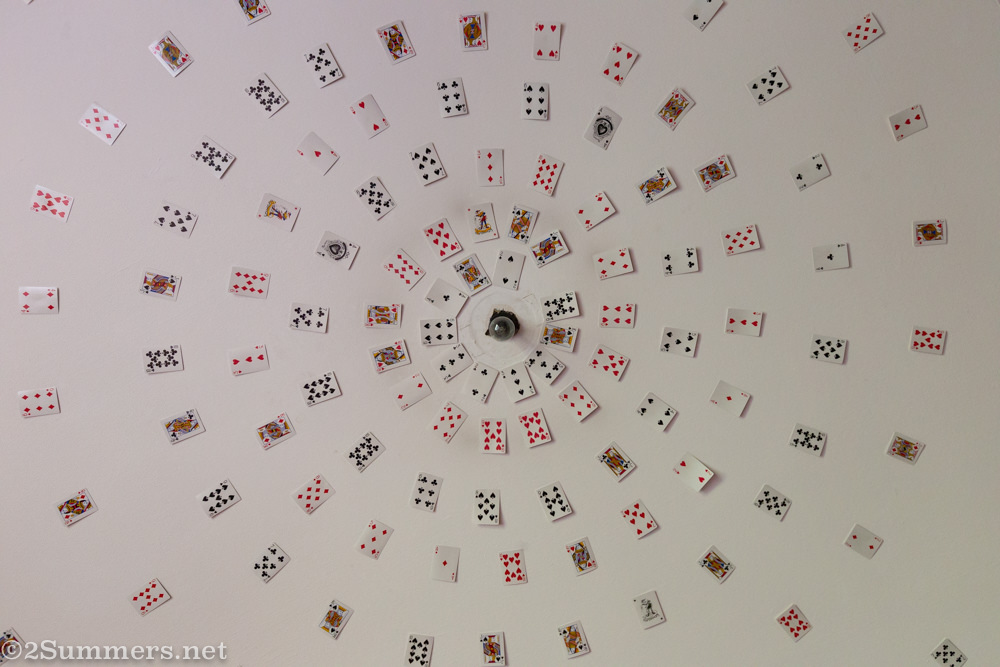
Quisisana had a series of owners after Craib’s death and, according to various Facebook rumors and stories, was once an illegal gambling house and the site of many wild parties. As recently as 2010, when South Africa hosted the Soccer World Cup, Quisisana was listed online as guest accommodation for rent.
At some point over the past decade, the house fell into disrepair.
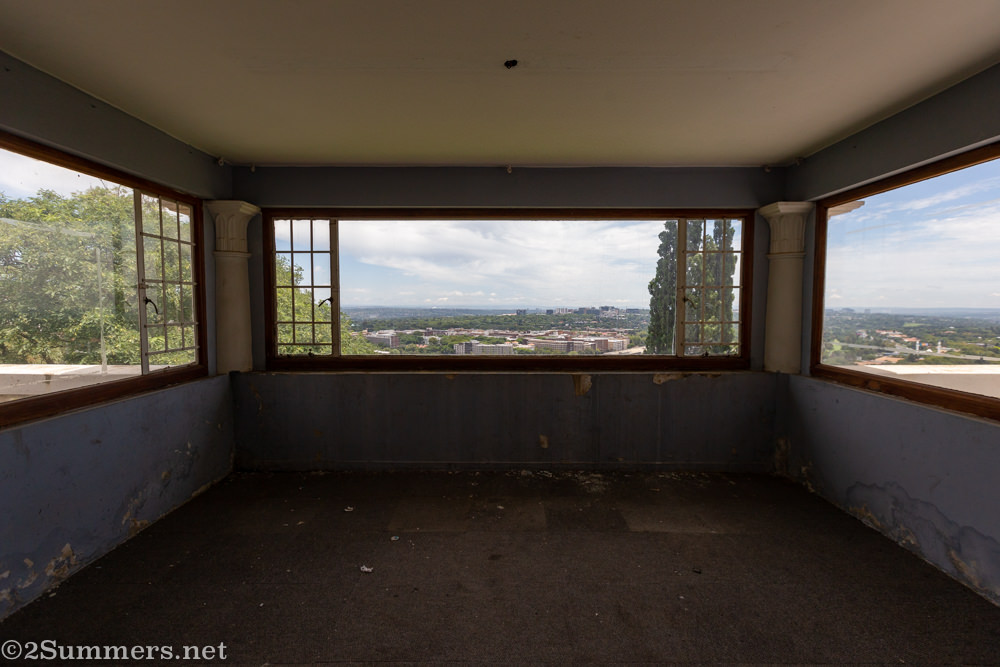
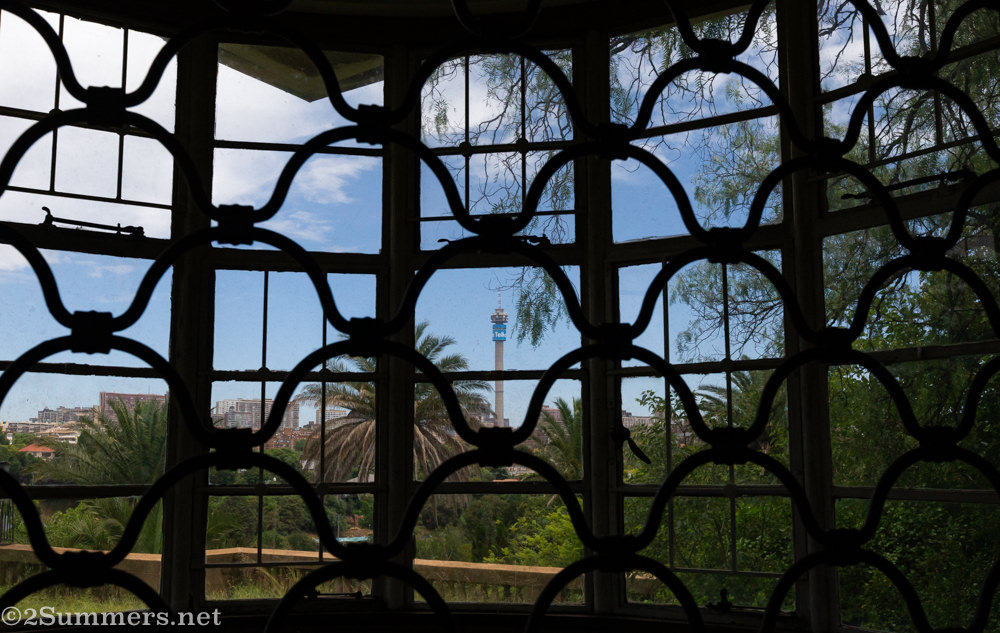
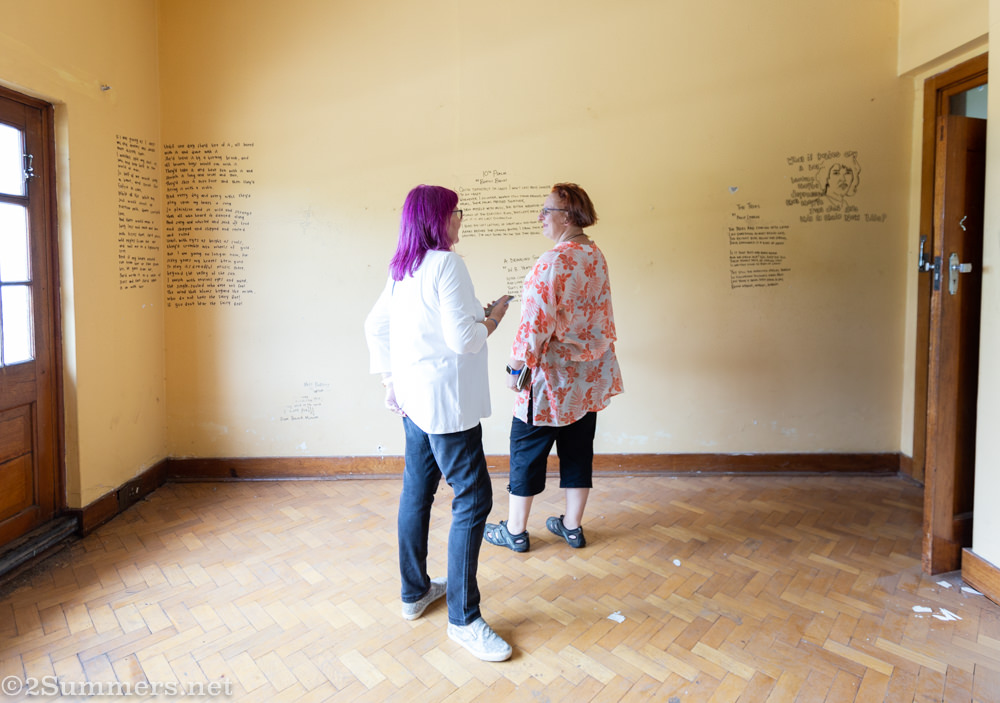
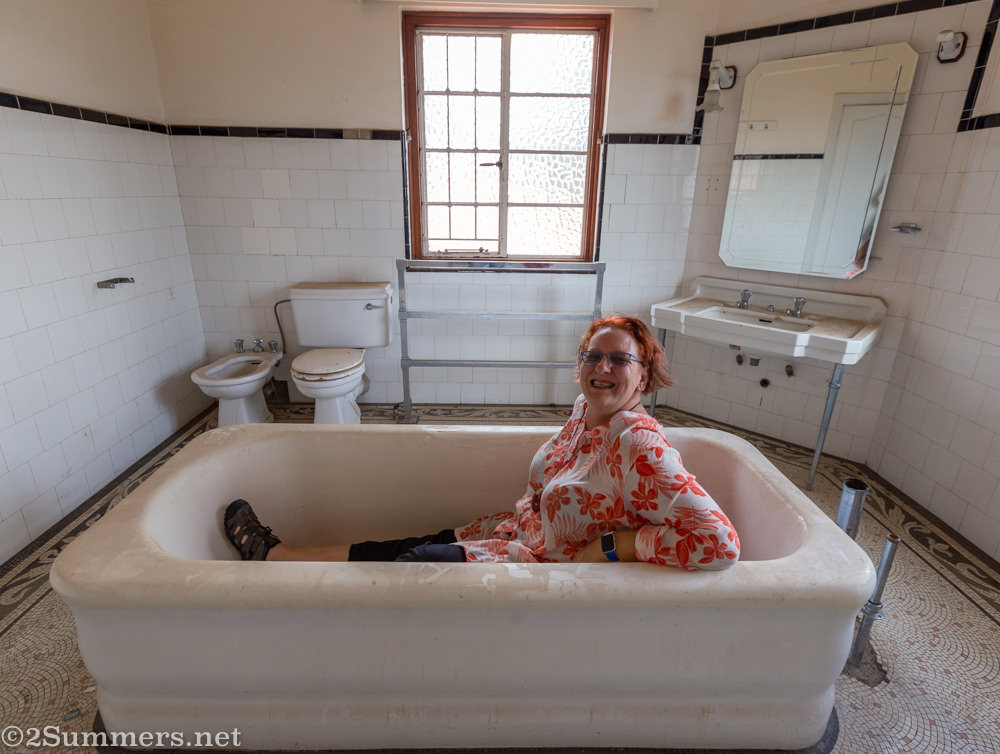
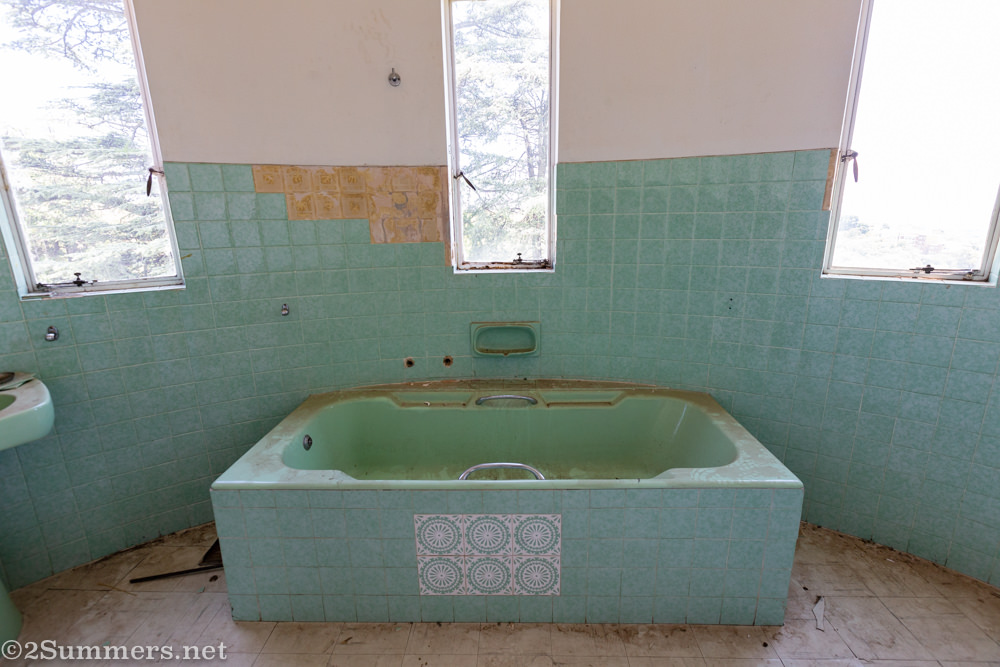
View from the first floor room above the front entrance.A view of Hillbrow through an elaborate security gate on Quisisana’s ground floor.Playing cards decorate the ceiling in this room, which seems to corroborate the gambling house rumors.This room has all kinds of interesting poems and drawings on the wall, which Gail and Fiver enjoyed.Fiver models in Quisisana’s glorious upstairs bath.
9 Rose Road
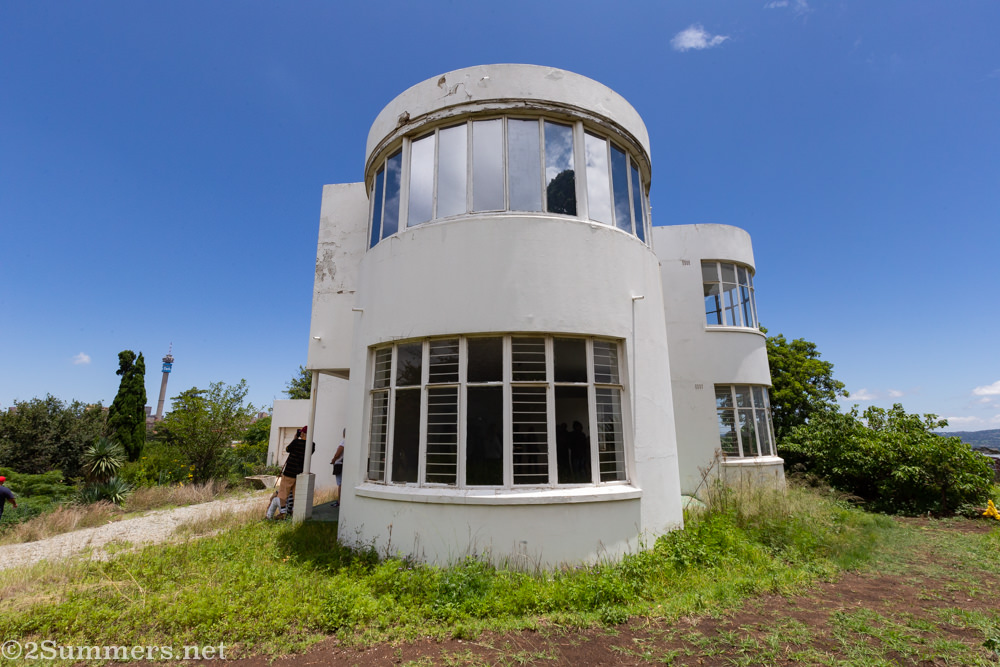
Number 9 was my favorite.
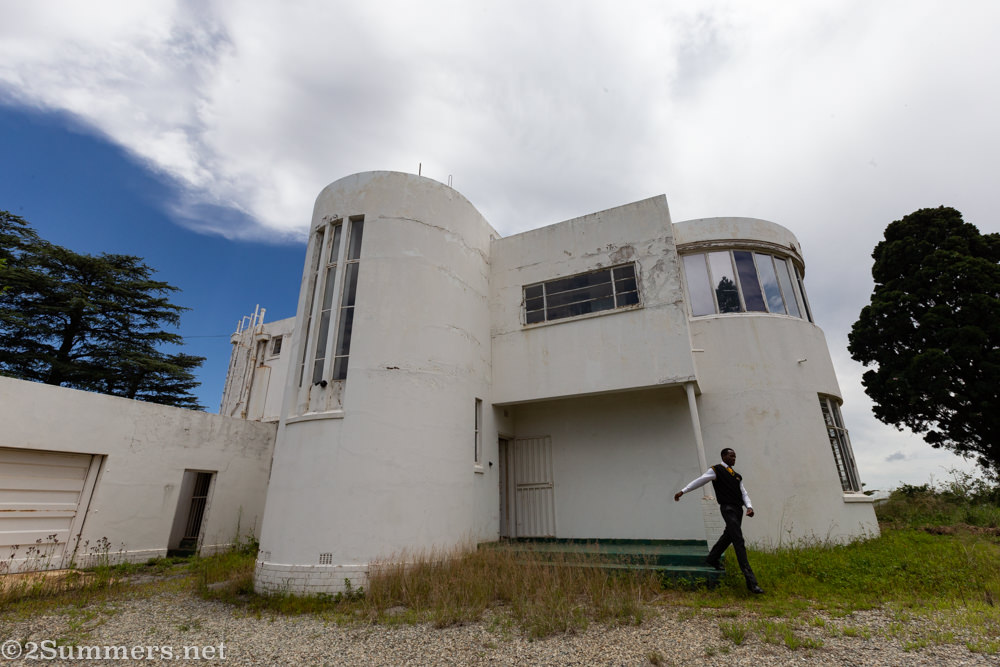
9 Rose Road.
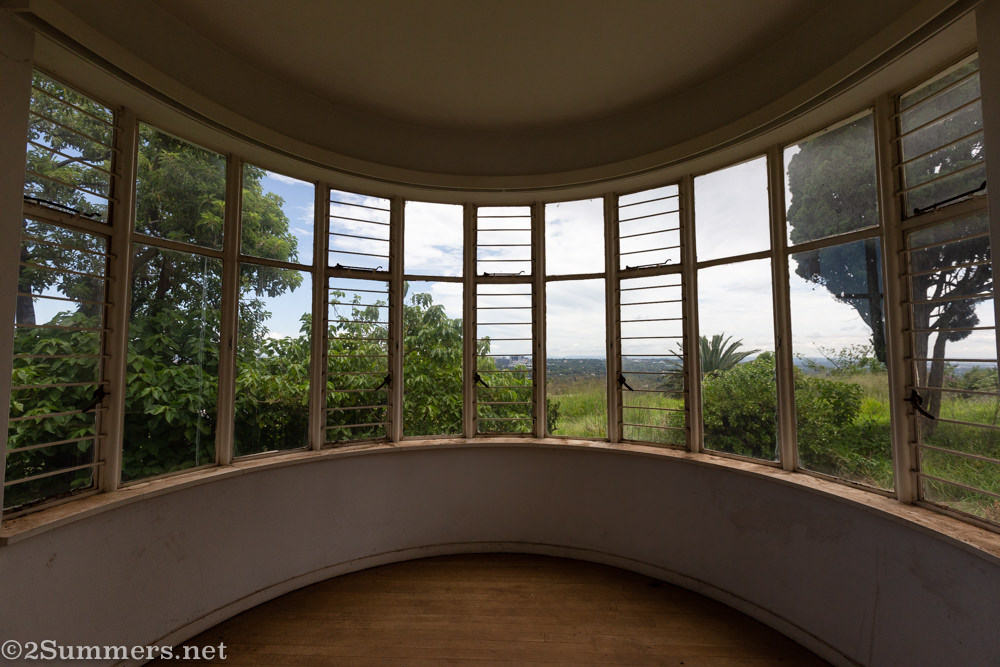
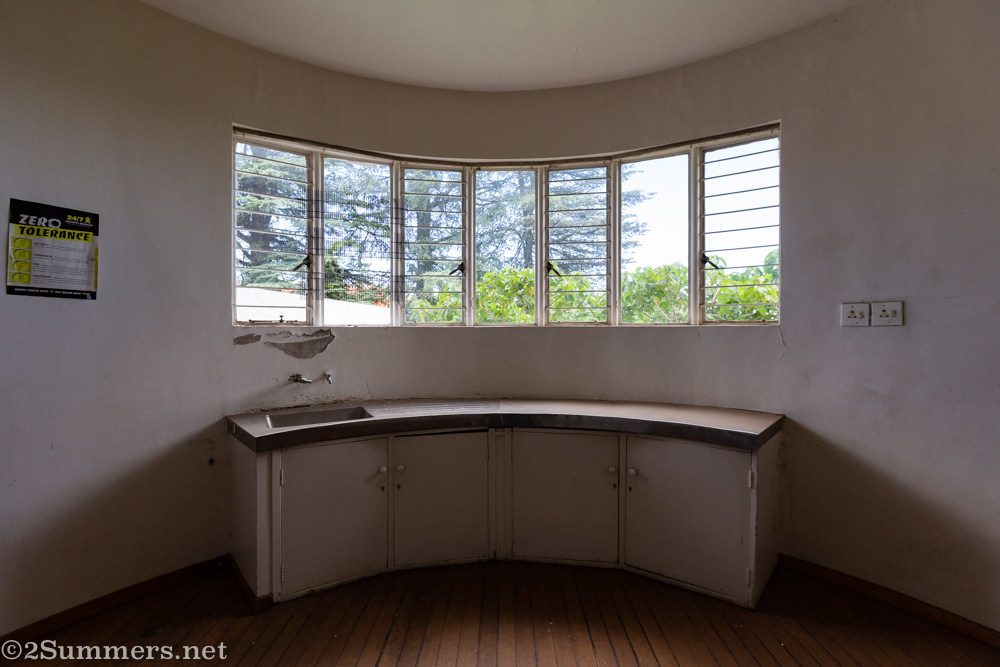
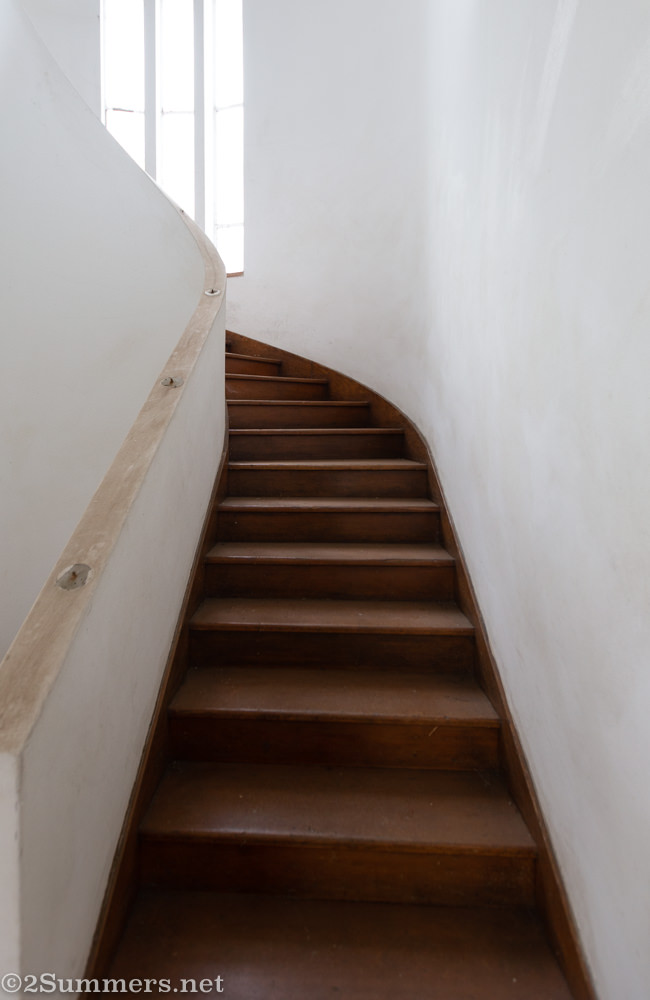
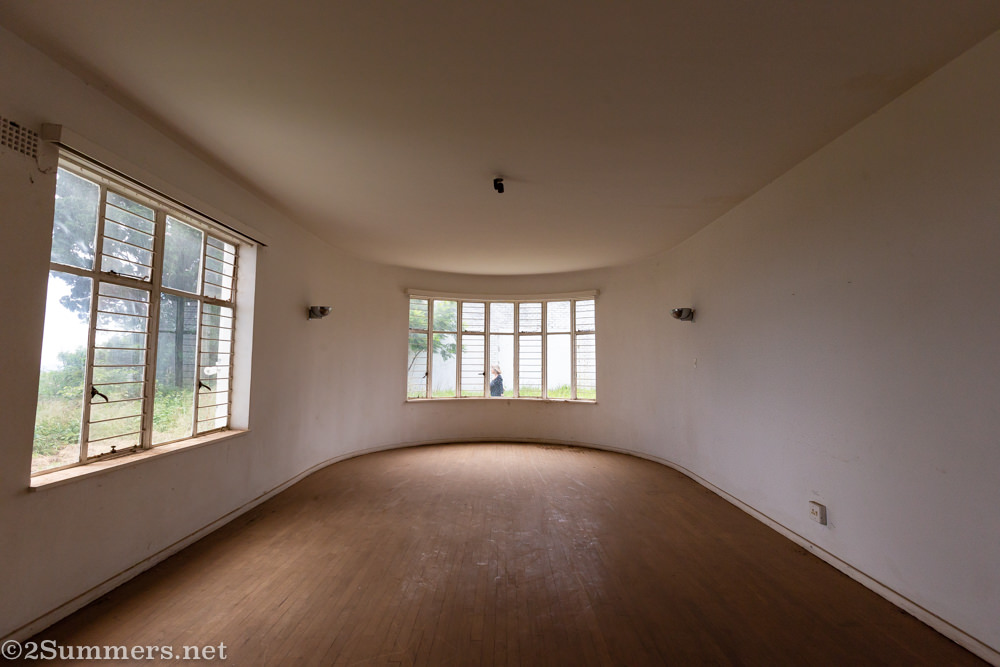
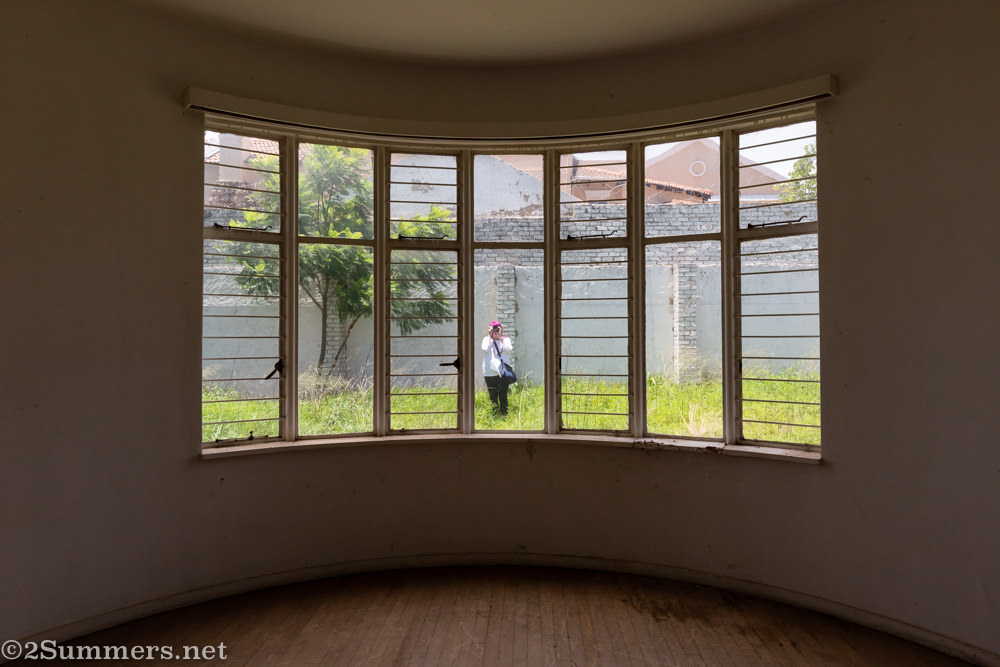
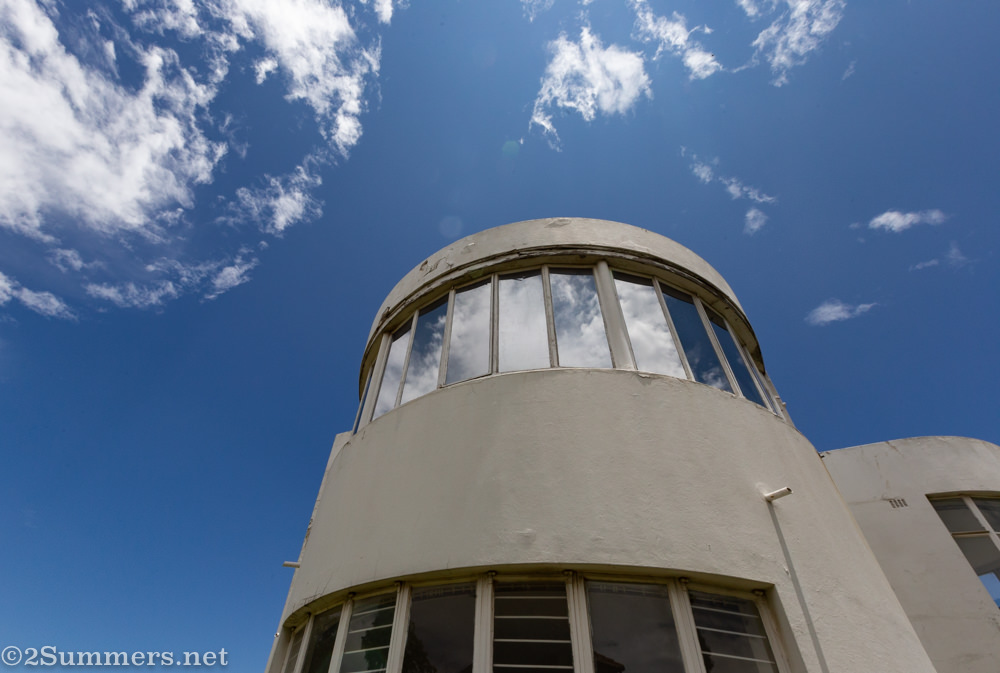
Built in 1939 by architect Duncan Sinclair for South African scientist Petrus Lategan, 9 Rose Road has an avant-garde nautical theme. Nearly every room is curved.
The front room.The kitchen.The staircase.The groovy upstairs bathroom.The living room, which looks and feels exactly like the prow of a ship.Oh look, there’s Gail.9 Rose Road from the side.
I walked round and round #9, shooting photos from every angle, dreaming about what it would feel like to live in this house, atop this ridge, in this weird, wonderful, confounding city.
The JHF tours are often once-offs so there’s no telling if/when this particular tour will happen again. But I urge you to follow the foundation online or on Facebook and keep an eye out for similar tours.
Not only is this a volunteer-run organization that does amazing work protecting Joburg’s historical and cultural heritage, but the tours are affordable – this one was R170 ($12) for non-members and only R100 for JHF members. Also you get to experience places and things, like the glorious ruins of Rose Road, that you won’t see any other way.
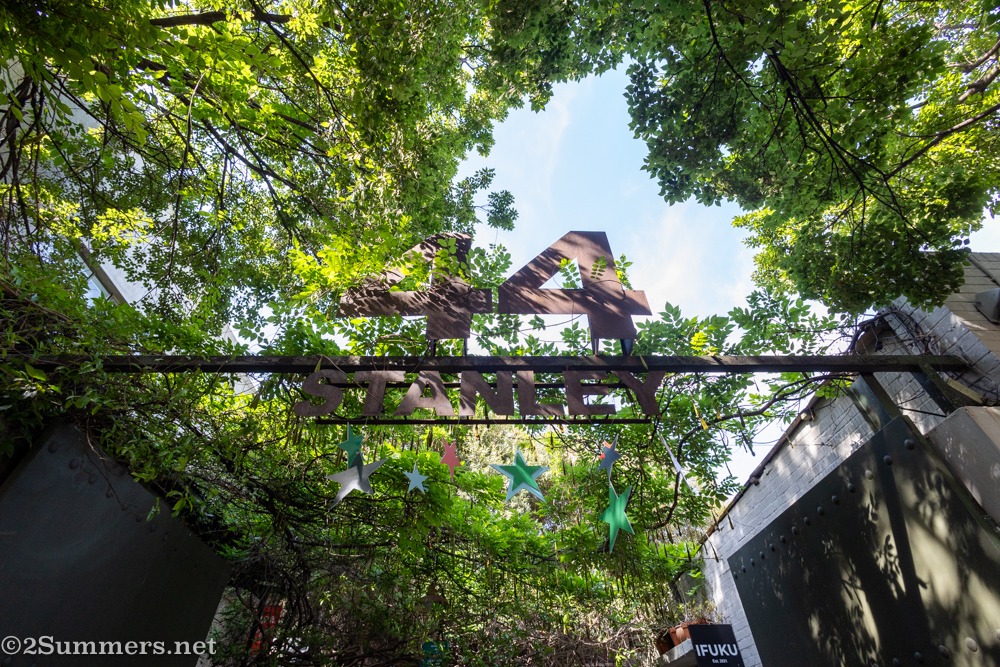
I guess it’s wrong to say I’ve never blogged about 44 Stanley; I’ve mentioned it countless times over the years (see here and here) when writing about specific restaurants or shops that are there. But I’ve never written a dedicated post about 44 Stanley as a destination and it’s about time I did – especially now, with the holidays upon us.
Use the share button below if you liked it.
It makes me smile, when I see it.