I have so much to tell you about Namibia. Our weeklong trip to this weird, wonderful country provided enough content to fill a book, and my head is throbbing with all the words (and pictures) clamoring to get out. But I can’t tell you everything at once so I’ll start with our visit to Kolmanskop, a ghost town in the Namib Desert.
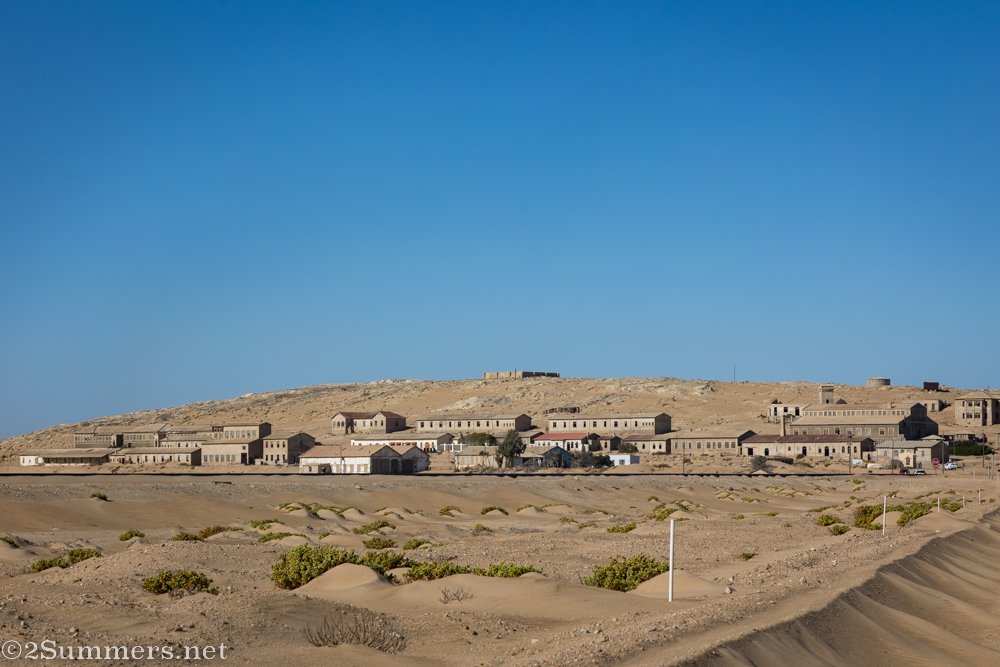
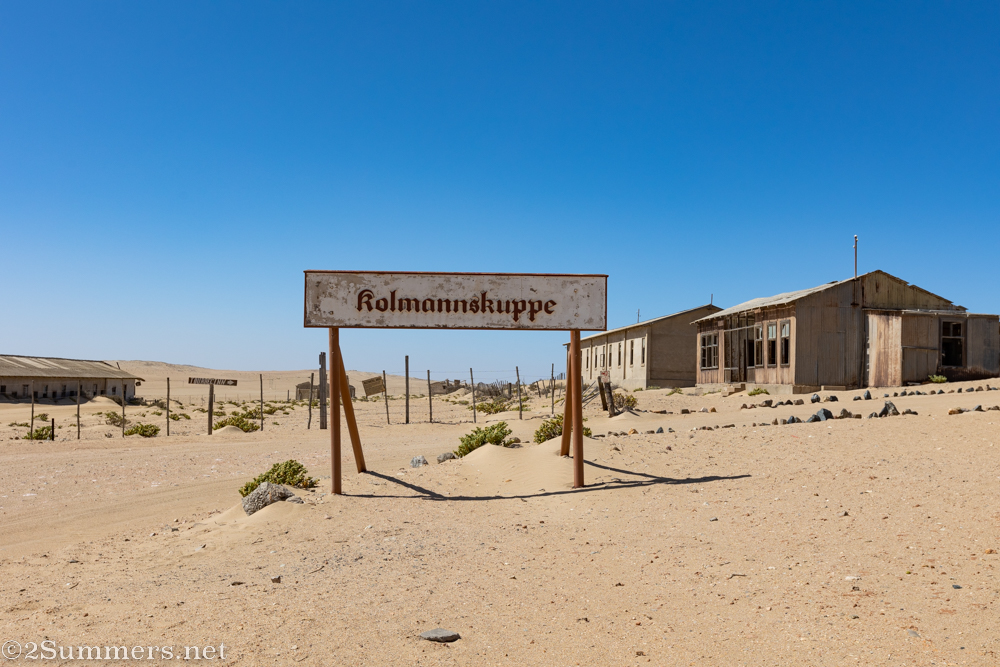
A portion of Kolmanskop, seen from the entrance off the B4 highway.
Kolmanskop, which is about ten kilometers from the coastal town of Lüderitz, was founded in 1908 when an African railway worker named Zacharias Lewala discovered a diamond and handed it over to his German boss. The German boss, August Stauch, made a fortune buying up land around Kolmanskop before the diamond rush began, while Lewala received nothing for his discovery. But that is a story for another blog.
The area quickly became a diamond-rush boom town, filled with raucous mine workers, stately homes, a huge hospital, a bowling alley, an ice factory, and a tram frequented by well-to-do ladies wearing Victorian hats and hoop skirts.
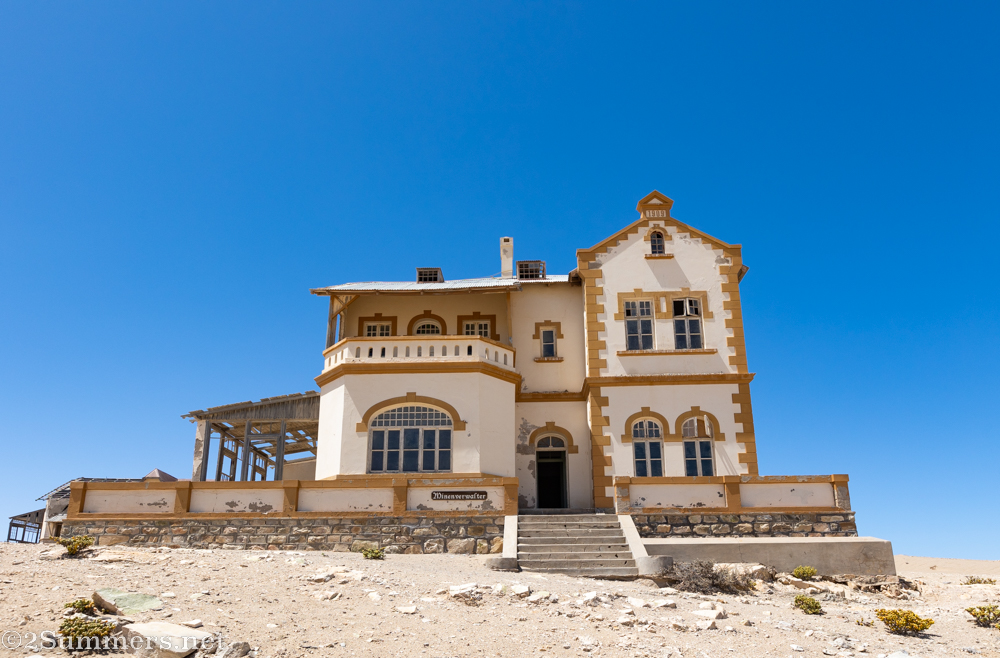
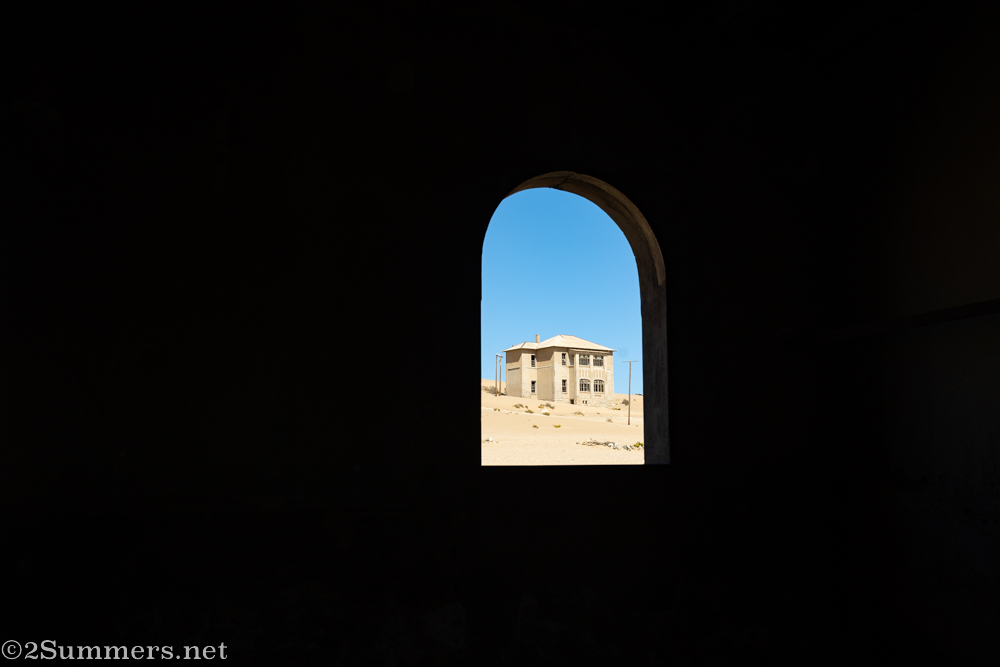
The mine manager’s house, which is "lightly renovated" and in much better condition than the other buildings, provides a hint of Kolmanskop’s former grandeur.
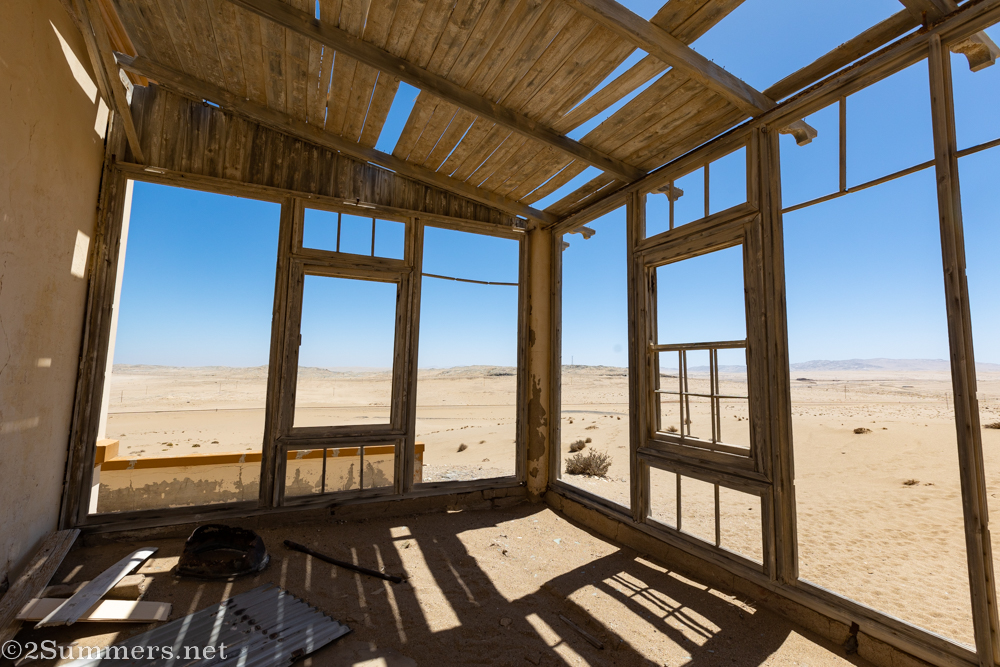
But the town’s heyday was short-lived. Kolmanskop’s diamond supplies were in decline by the 1920s, which also coincided with the discovery of much richer diamond fields a few hours to the south. The town emptied over the years and was totally abandoned by the mid-1950s, when the paint began to fade, doors and windows dropped off their hinges, and rooms slowly filled with drifts of sand. The town is now a museum of sorts, part of the Tsau ǁKhaeb (Sperrgebiet) National Park, and open to the public for a modest admission fee.
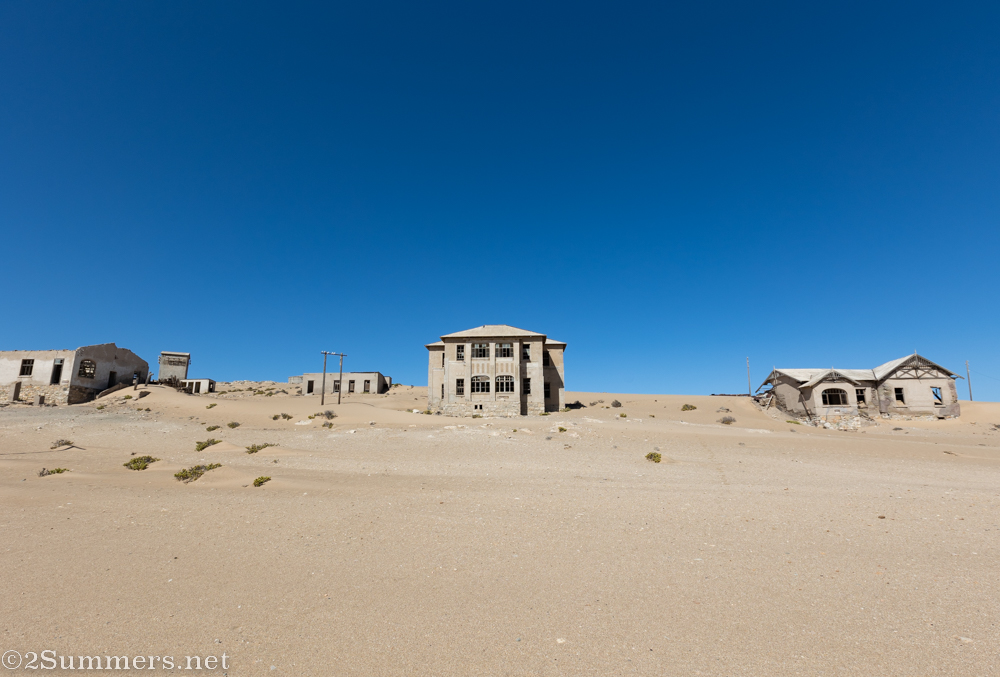
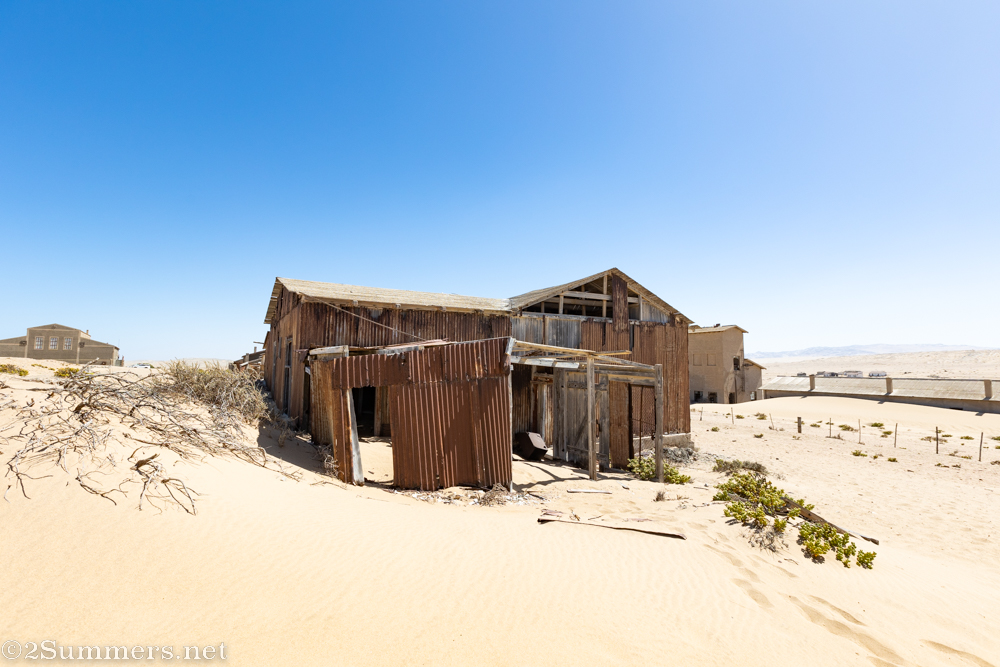
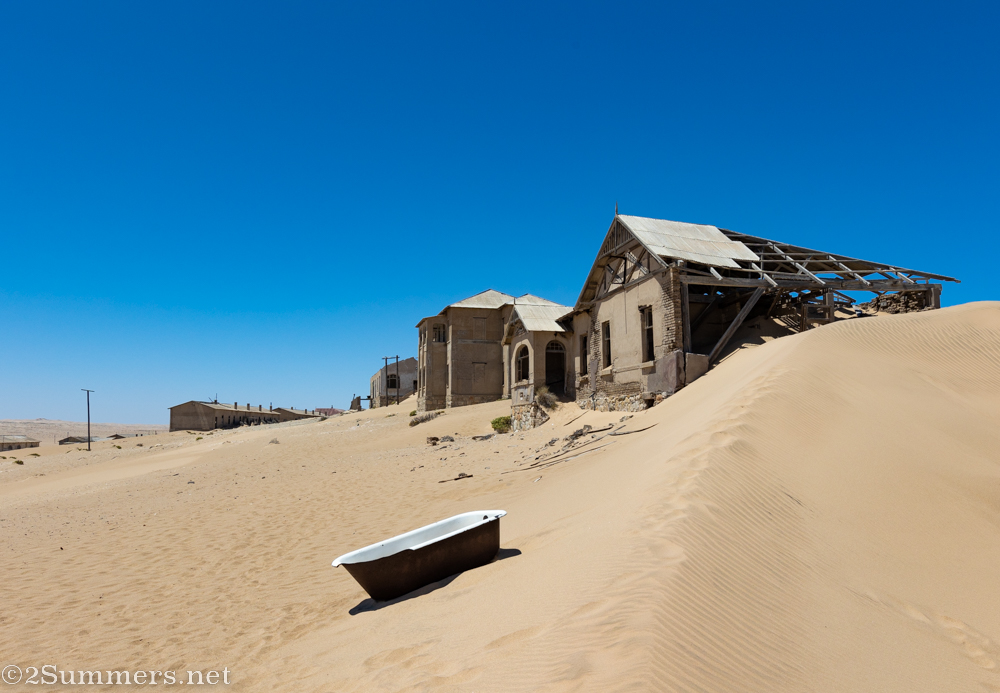
The house in the middle was the doctor’s house.Some buildings have held up better than others.
Kolmanskop probably isn’t the only abandoned desert mining town to be turned into a tourist attraction, and I haven’t been to any others so I have nothing to compare it to. But this place is on my list of the top five travel experiences – right up there with flying over an erupting volcano on Réunion. If you’re traveling anywhere near Luderitz, Kolmanskop is not to be missed.
How to Visit Kolmanskop
Welcome to Kolmanskop – or Kolmannskuppe in German. The town was founded in the early 20th century, when Namibia was a German colony called German South West Africa.
Kolmanskop is easy to get to by Namibian standards. It’s just outside a town with decent accommodation and tourist services, and it’s accessible via a very smooth, paved highway. You can buy a permit in Luderitz in advance. Or do what we did and just rock up at the gate during the museum’s opening hours of 8:00 a.m. and 1:00 p.m. and buy a permit on the spot. We paid N$260 (the equivalent of R260, or about US$15) for two people and a car. Be sure to bring cash – there is a card machine but it wasn’t working on the day we went.
I can’t seem to find an official Kolmanskop website. But for more information about how to visit, especially if you want to arrive early to take photos at sunrise, check out this handy blog post by Travelationship.)
The admission fee includes a one-hour guided tour, offered in both English and German; tours take place at 9:30 and 11:00 a.m. daily (except Sunday, when there is one tour at 10:00 a.m.). The tour covers a couple of the main town buildings, and then guests are encouraged to walk around and check out the rest of the buildings at their leisure. There is also a historical museum exhibit, a gift shop, and a nice-looking café. (We didn’t have time to eat there.)
The doctor’s house again.
I enjoyed the tour – it was informative and provided a great overview of the town’s history. I recommend doing it. But I also fidgeted for the entire hour, counting down the minutes until Thorsten and I could head out on our own and I could photograph the crap out of this eerie, sand-filled relic.
Exploring the Ghost Town
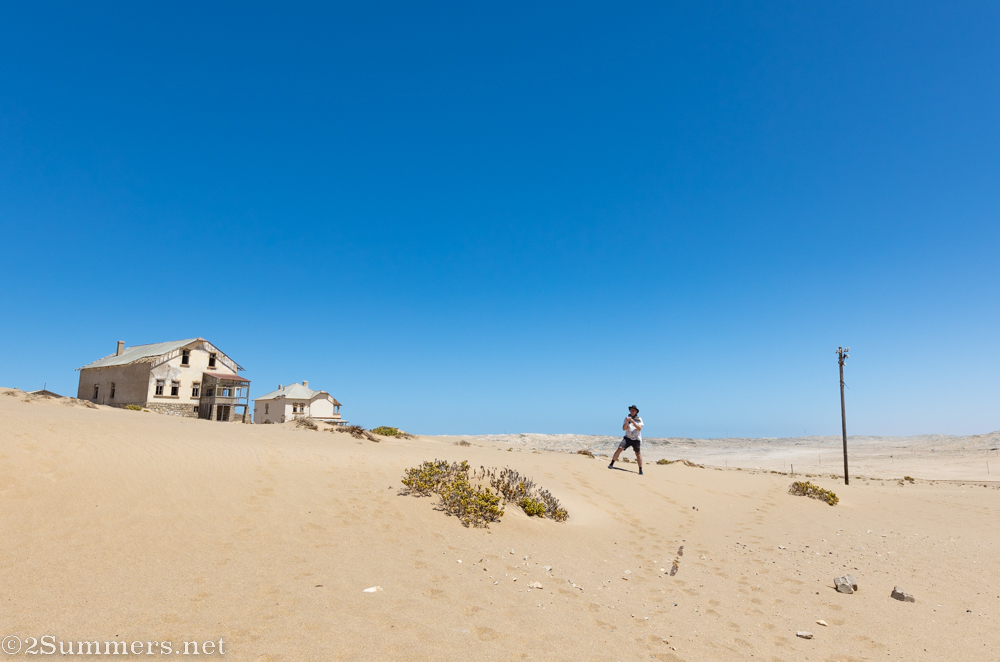
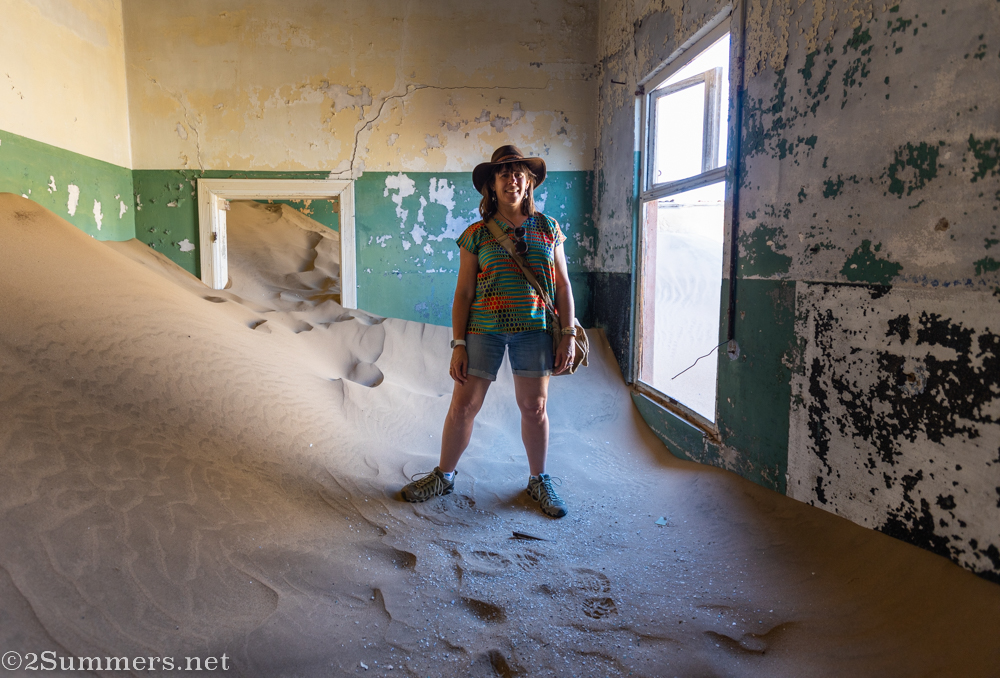
Tiny Thorsten in the hot, bright desert. This goes without saying but bring sunblock, closed shoes, and a hat.
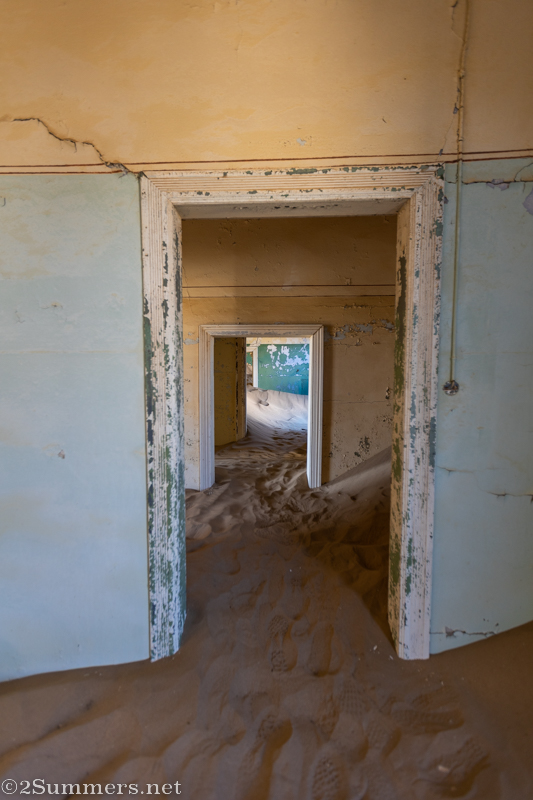
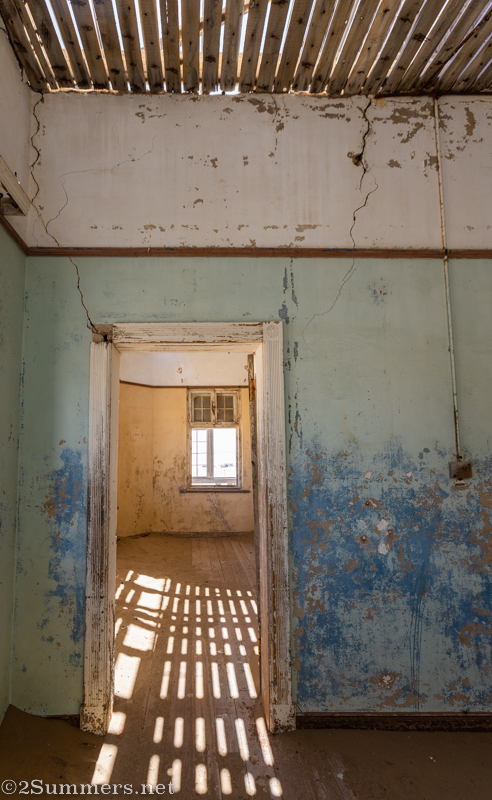
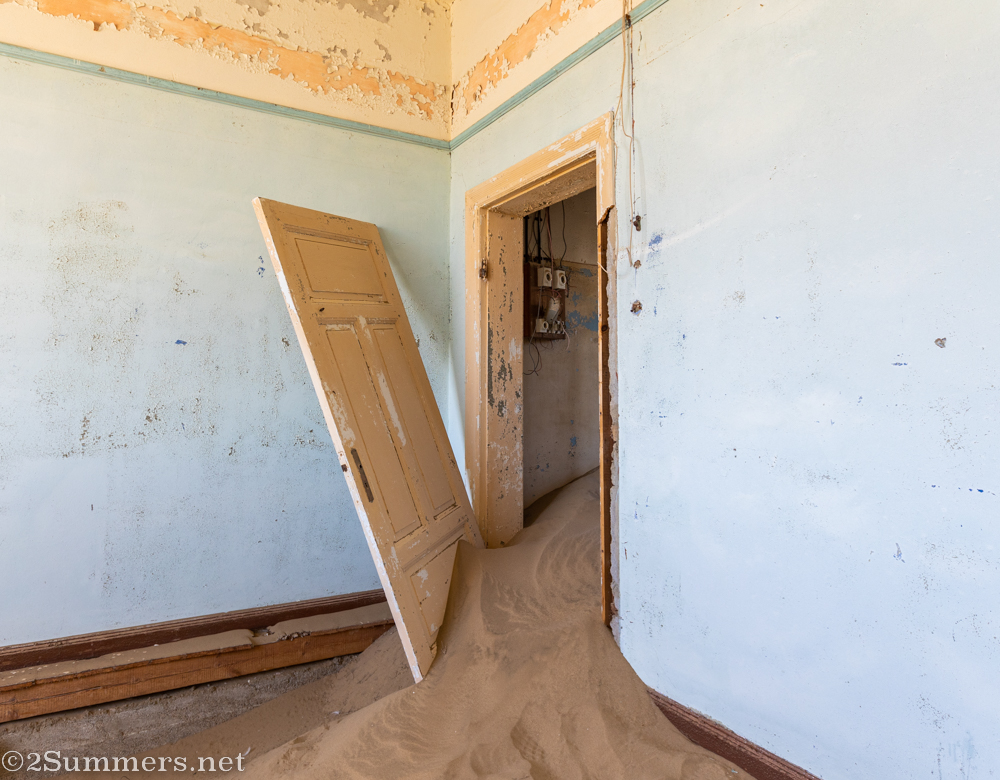
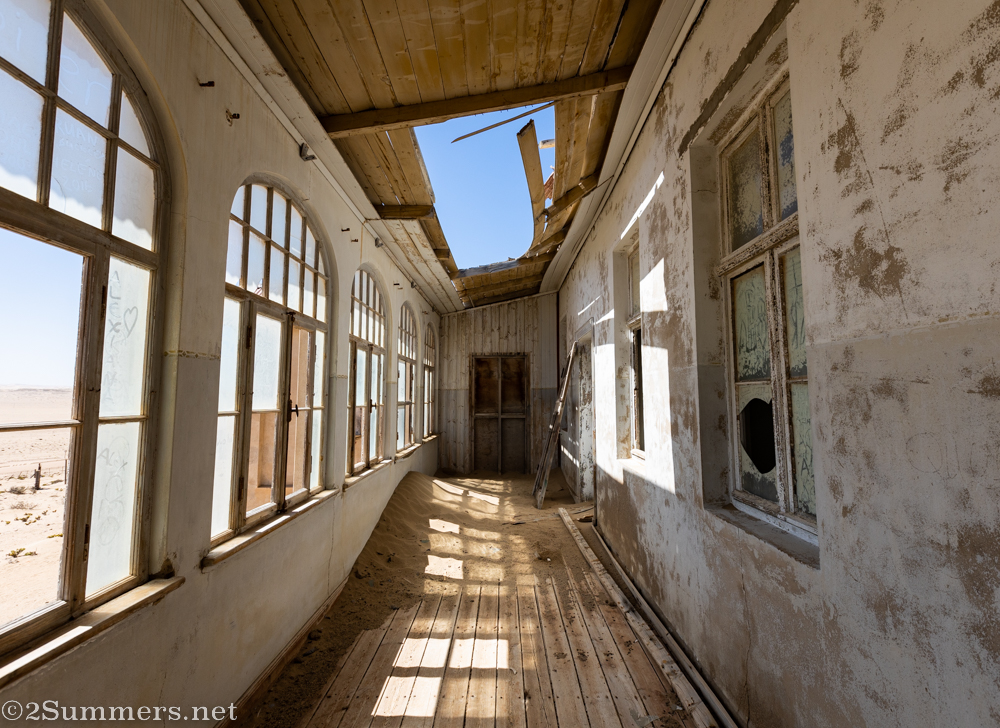
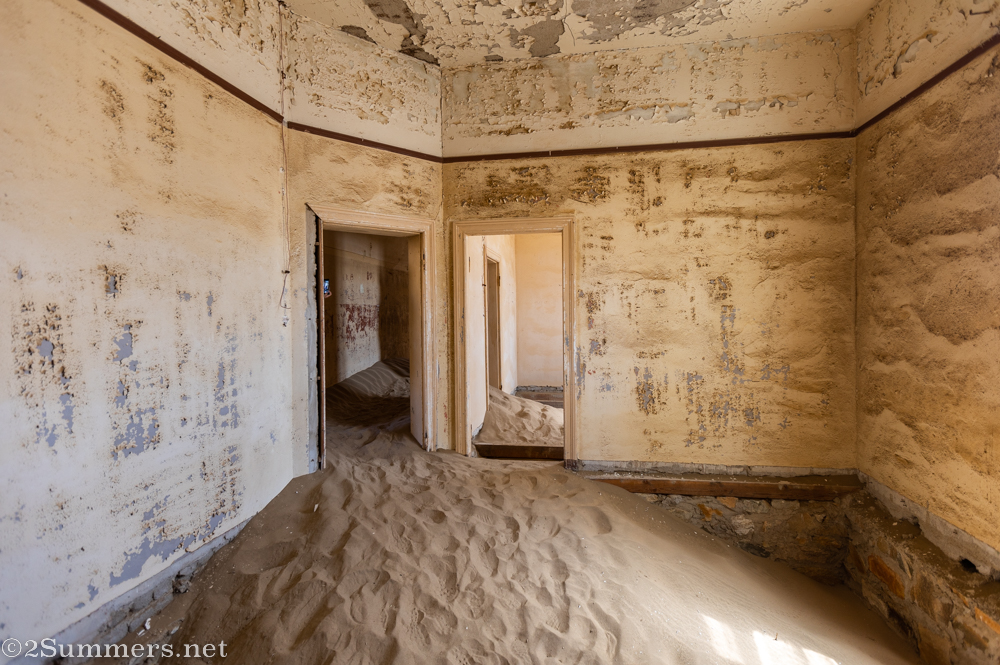
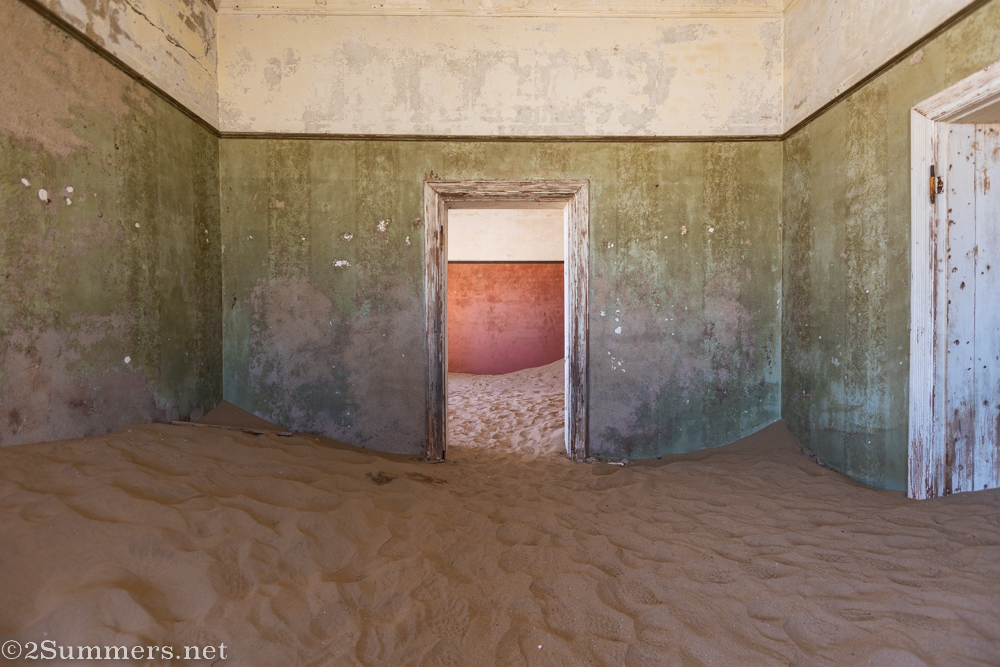
I found Kolmanskop incredible in many ways. The whole place is such a surreal combination of colors, textures, and light. Strange angles play with your eyes and mind in a way that’s difficult to describe.
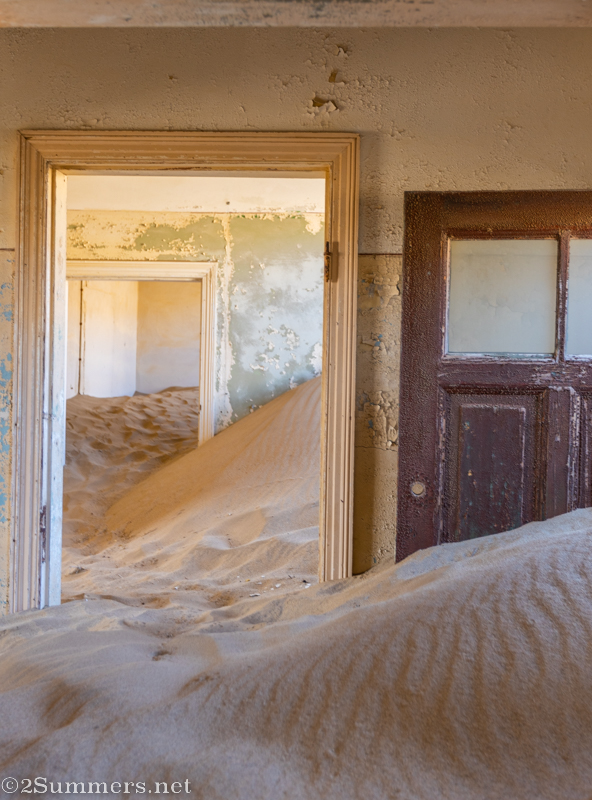
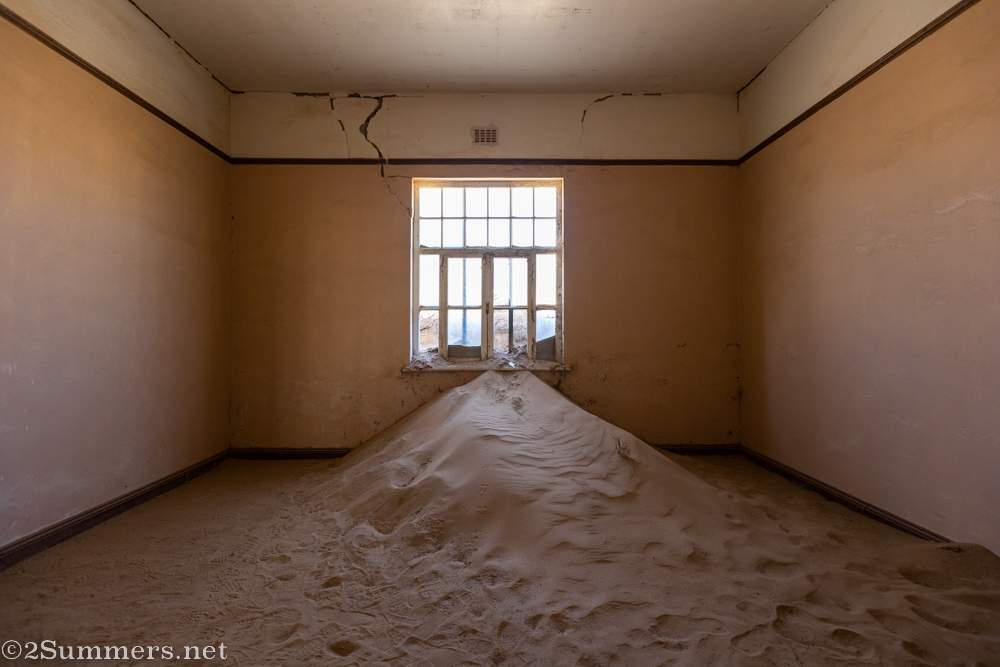
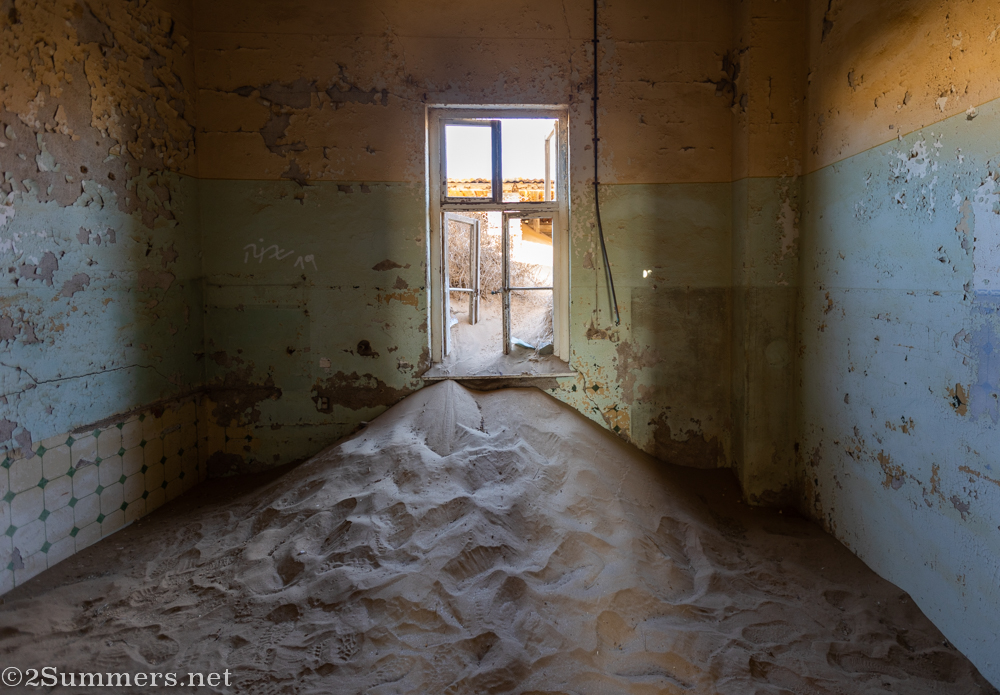
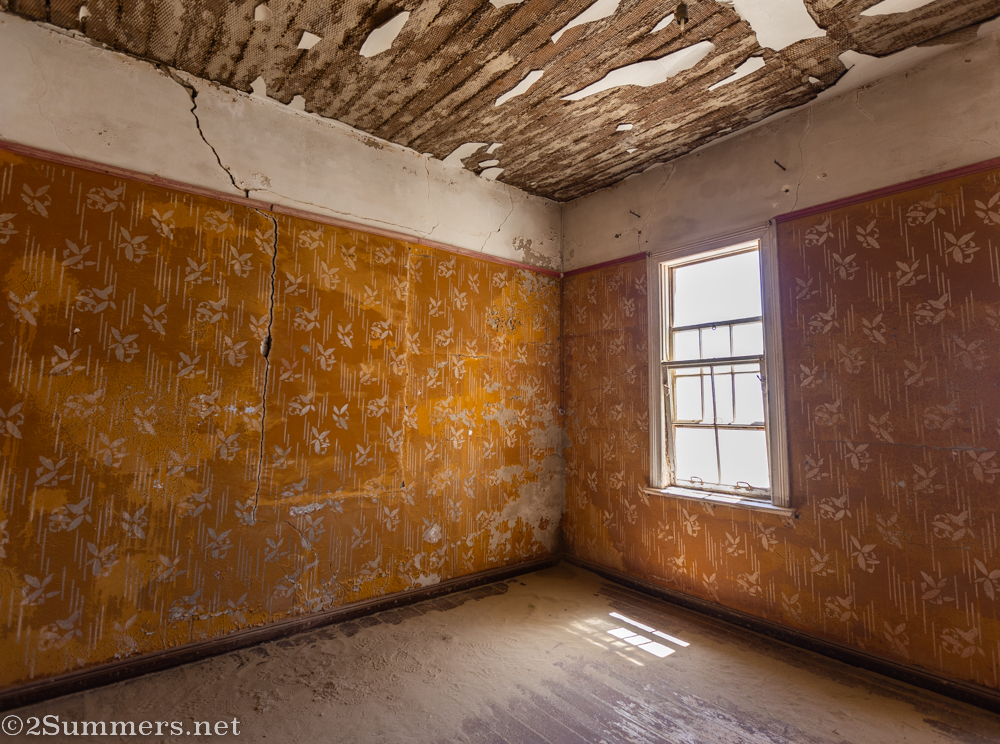
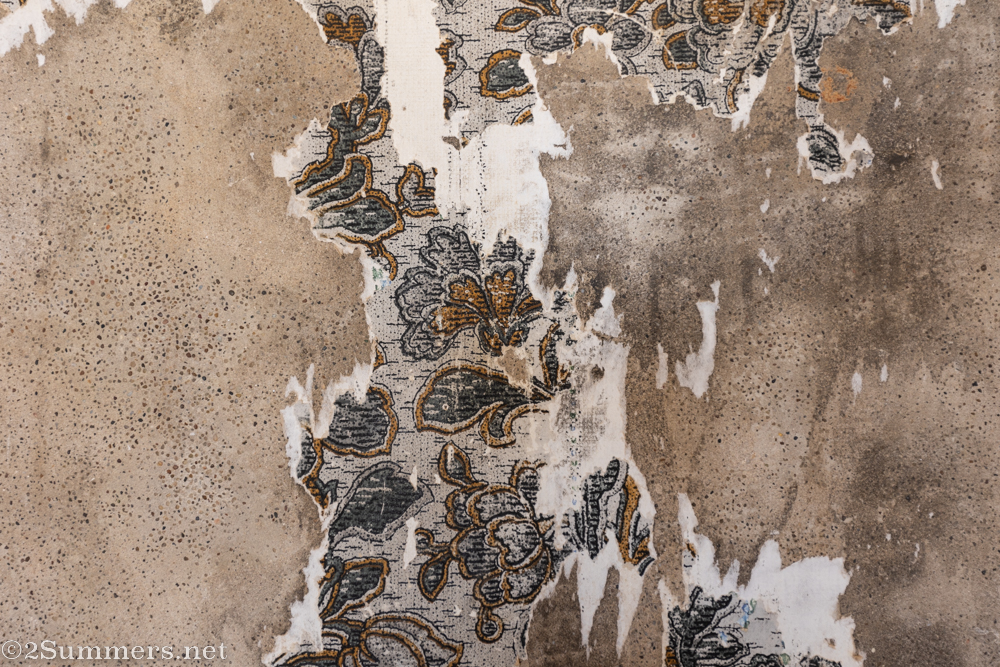
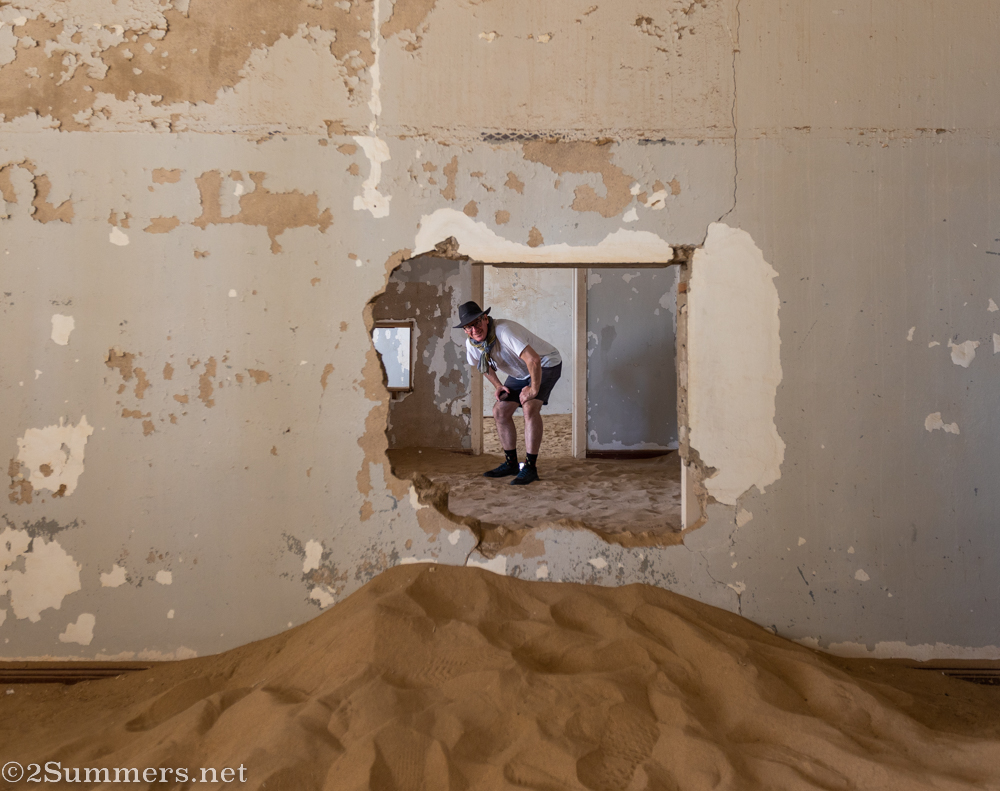
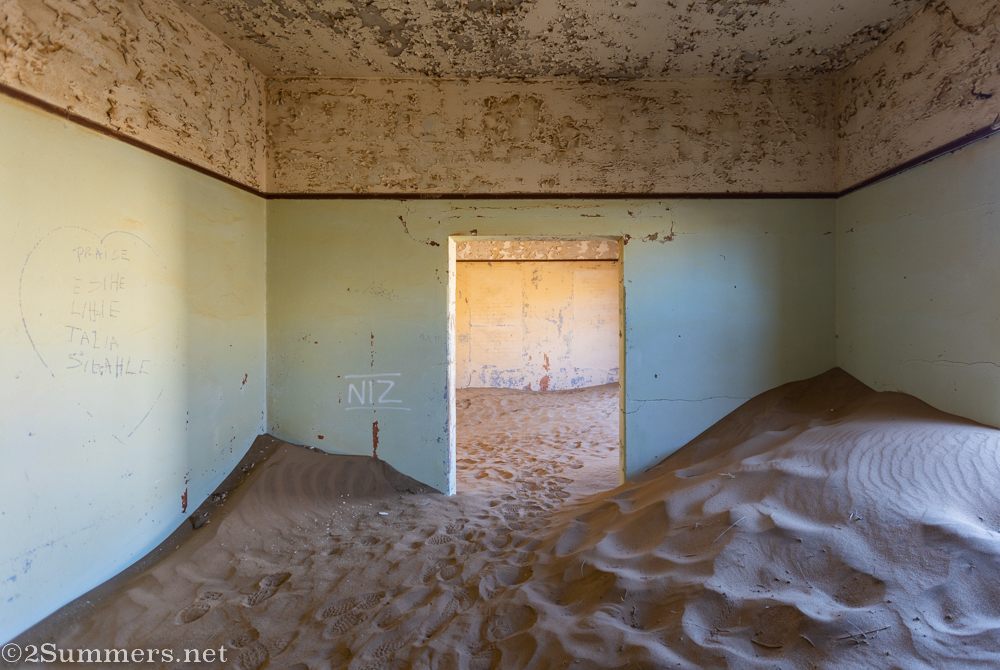
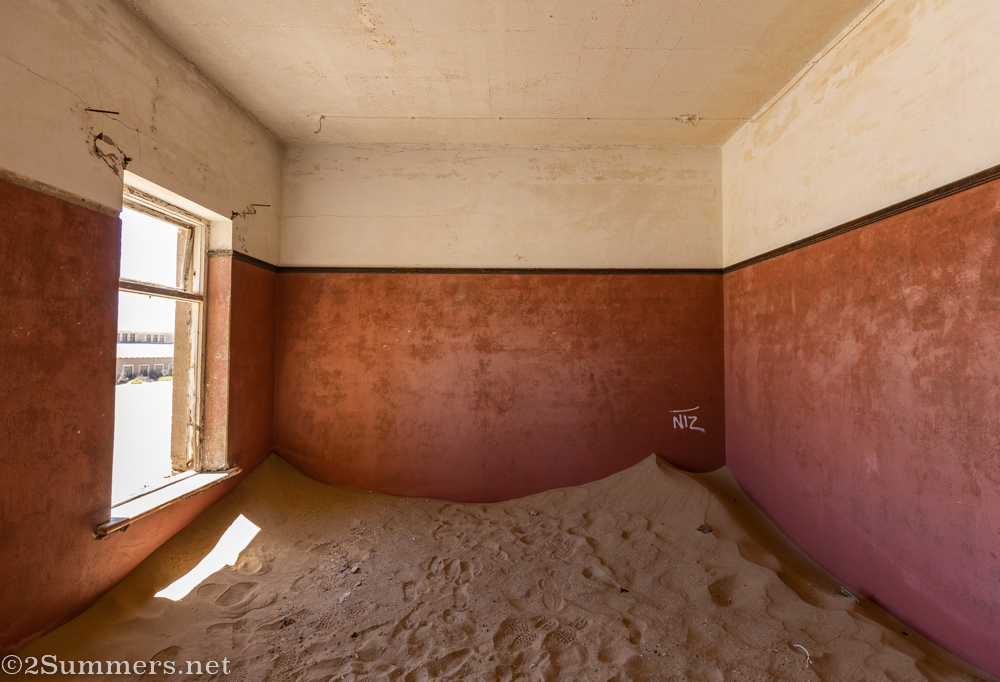
I often found it hard to make sense of what my eyes were seeing.I particularly enjoyed rooms like this, where sand blew in through a single, narrow window pane and created pyramid-shaped mini-dunes inside.Some rooms in the fancier houses have pretty stencils painted on the walls, or even peeling wallpaper: little reminders that these ghost houses were once actual homes.I know I’m spamming you – #sorrynotsorry. (Photo: Thorsten Deckler)
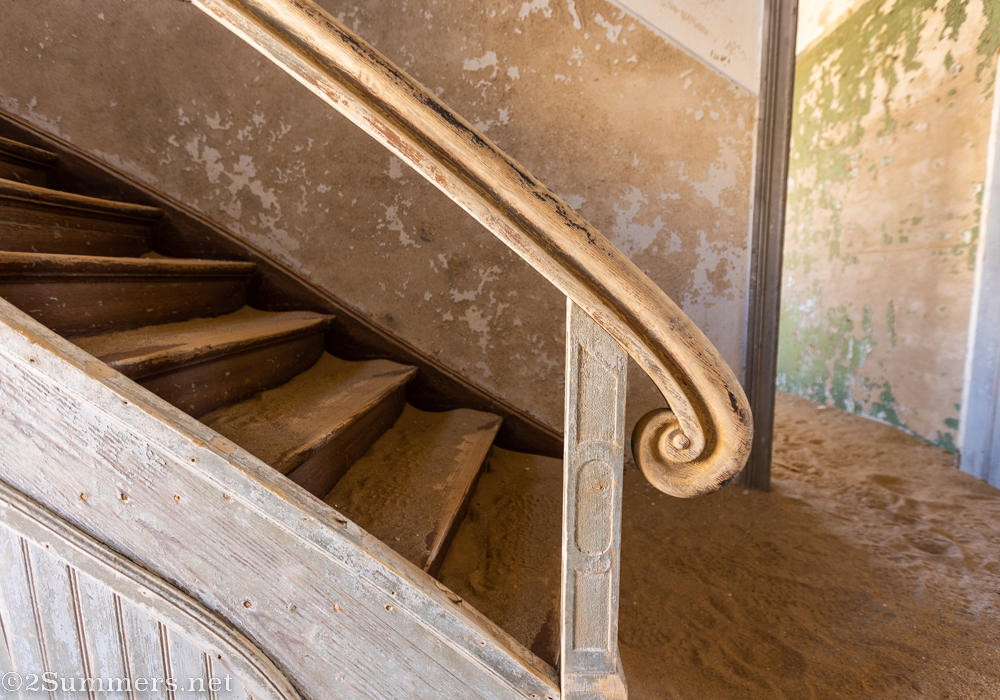
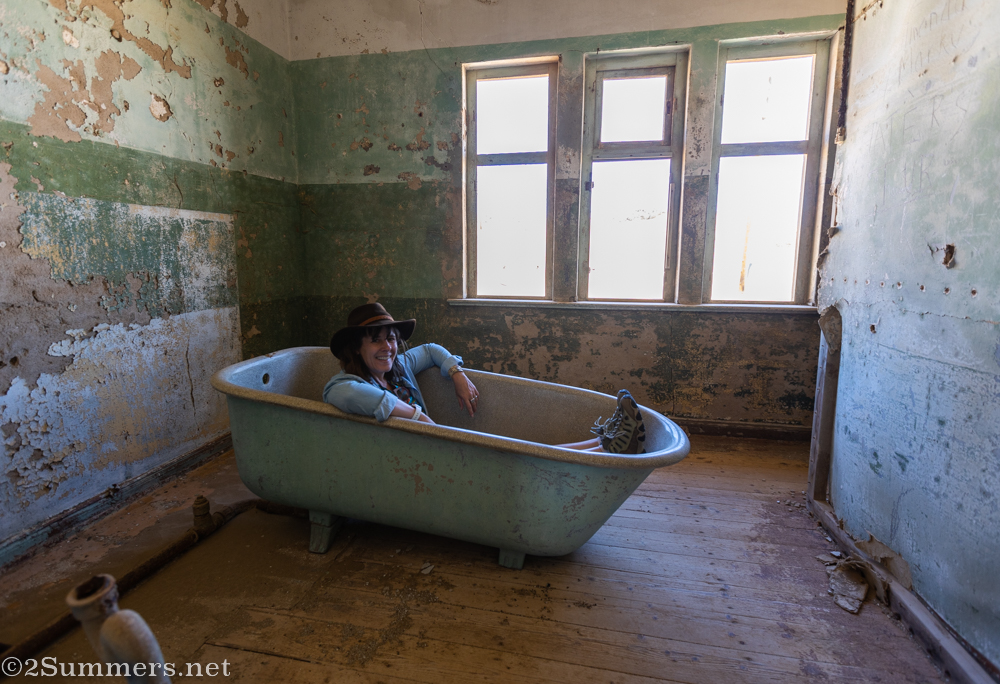
Also, it’s totally insane that dumb tourists like us can wander in and out of these old, disintegrating buildings with zero supervision – without even signing a liability form! – ascending rickety wooden stairways, climbing in and out of windows, lounging in abandoned bathtubs, etc. It’s also kind of awesome.
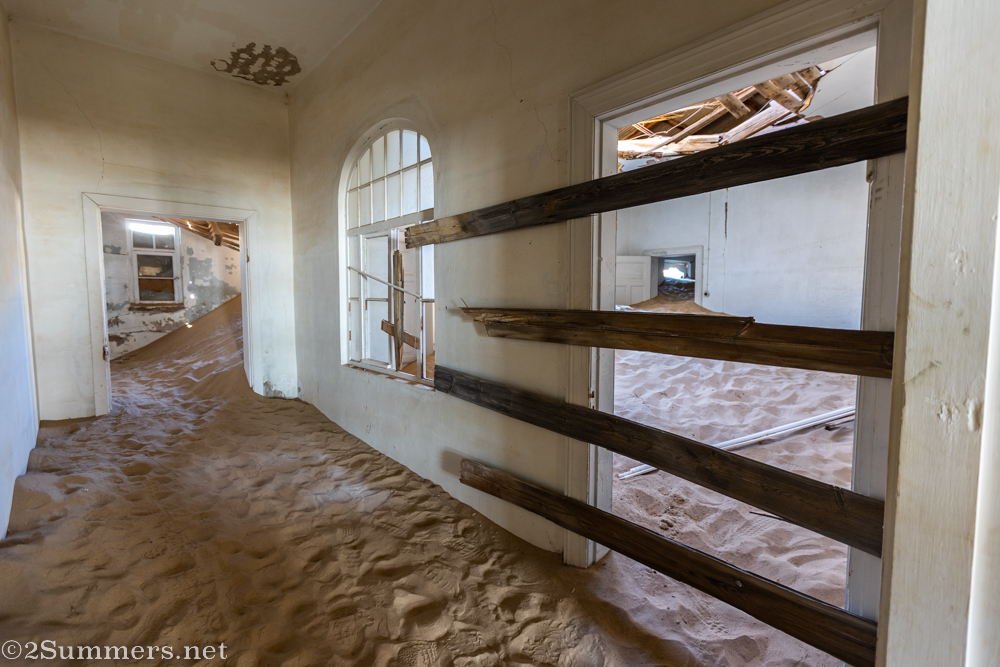
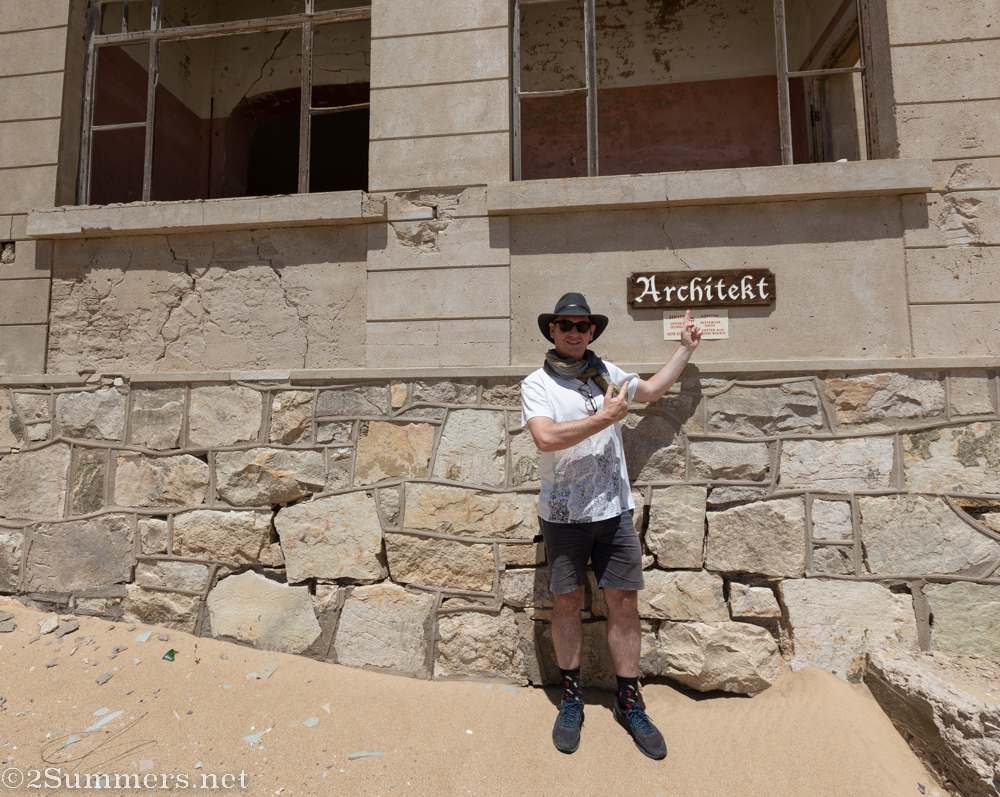
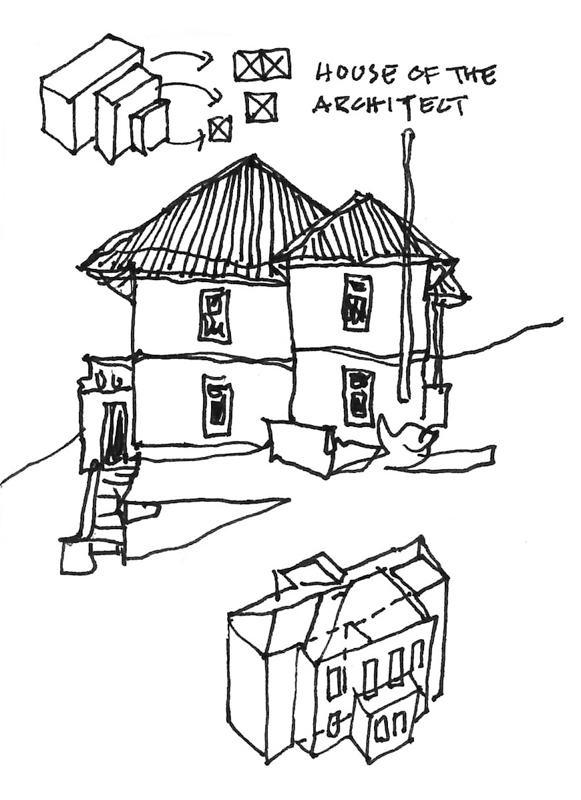
Rickety wooden planks, presumably positioned to discourage people from visiting a room with a collapsing ceiling.Hello.I couldn’t resist this opportunity to sit in a ghost town bathtub. (Photo: Thorsten Deckler)Thorsten outside his favorite Kolmanskop house – the architect’s house.@theThinking_Hand’s sketch of the architect’s house.There weren’t many other tourists there, and we were alone in our explorations most of the time. Occasionally we bumped into one or two other people.
I think we spent about 90 minutes wandering around on our own, but I definitely could have done another hour or two if we’d had the time. I’m almost glad we didn’t though – it’s already hard enough to figure out which photos to share.
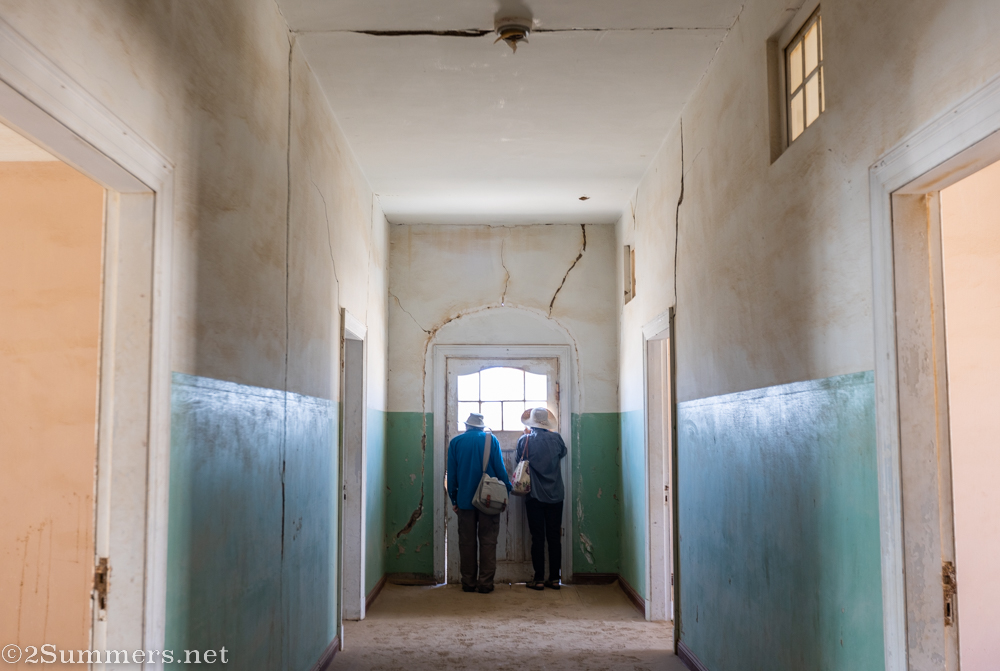
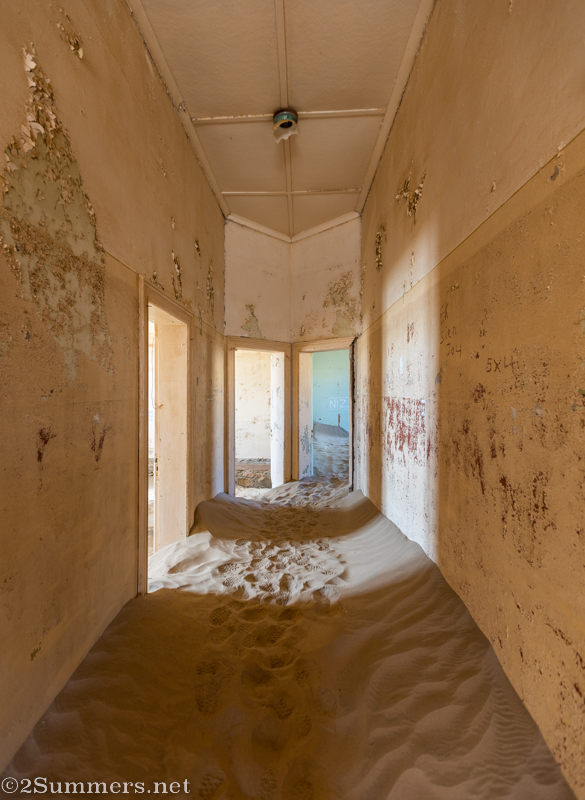
I liked the rooms with graffiti. The "NIZ" tag was a recurring theme.I also loved the many hallways and rooms with these twin angled doorways.
I could go on but I’m going to reel myself in now.
One more.Last one. I swear!
Comment if you have any questions or stories of your own about Kolmanskop. And don’t worry – I’ve got a lot more Namibia content coming your way.
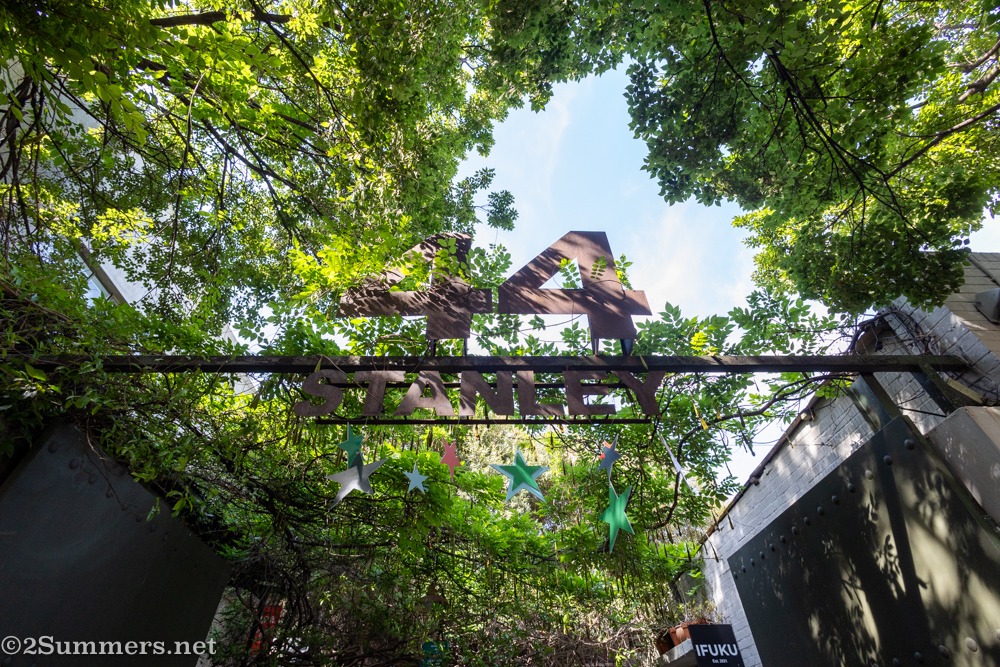
I guess it’s wrong to say I’ve never blogged about 44 Stanley; I’ve mentioned it countless times over the years (see here and here) when writing about specific restaurants or shops that are there. But I’ve never written a dedicated post about 44 Stanley as a destination and it’s about time I did – especially now, with the holidays upon us.
Use the share button below if you liked it.
It makes me smile, when I see it.