I’ve nipped around the edges of the recent trip Thorsten and I took to southern Namibia. But I haven’t gotten to the real heart of the journey yet because I don’t know how to explain it. Namibia captured my imagination and then ran away with it, leaving me with insufficient words to describe my impressions. But let me do my best.
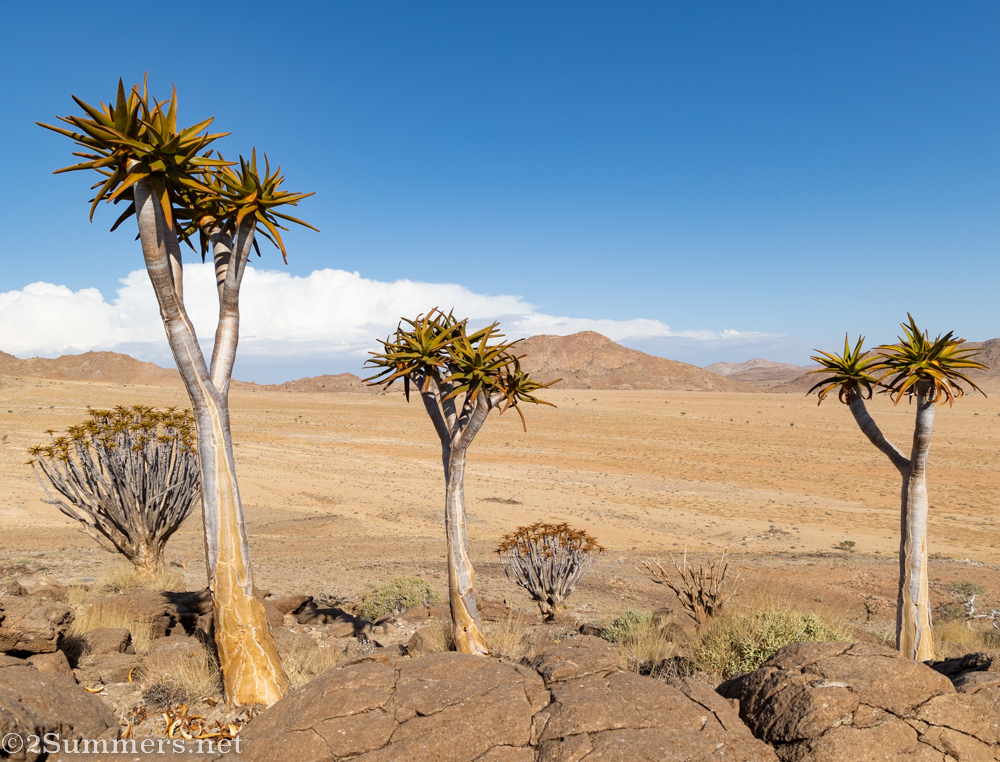
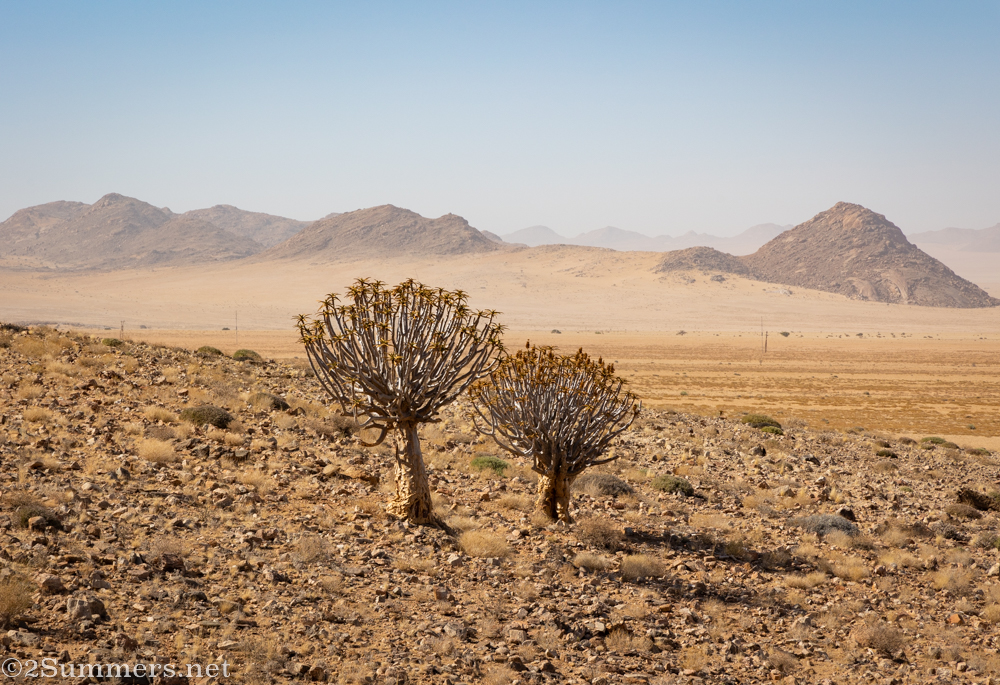
Quiver trees scatter across a hillside near Aus, Namibia. More on these beauties later.
The reason for the trip itself is hard to explain. Thorsten, who is from Aus, Namibia, was invited there as an architect, investigating a possible tourism project, and I was invited to come along. So it wasn’t exactly work (not for me at least) but definitely not a holiday, either. We were out in the blistering hot desert every day, driving and walking long distances. Every hour brought multiple new wonders – a mountain, a rock, a weird building, a tree, a funny sign – that I had never experienced before.
Duh.
I struggled to fathom how my boyfriend, a pale-skinned city dweller, sprung from this vast, bizarre, beautiful, yet inhospitable landscape. I struggled to fathom how any living thing can survive there at all.
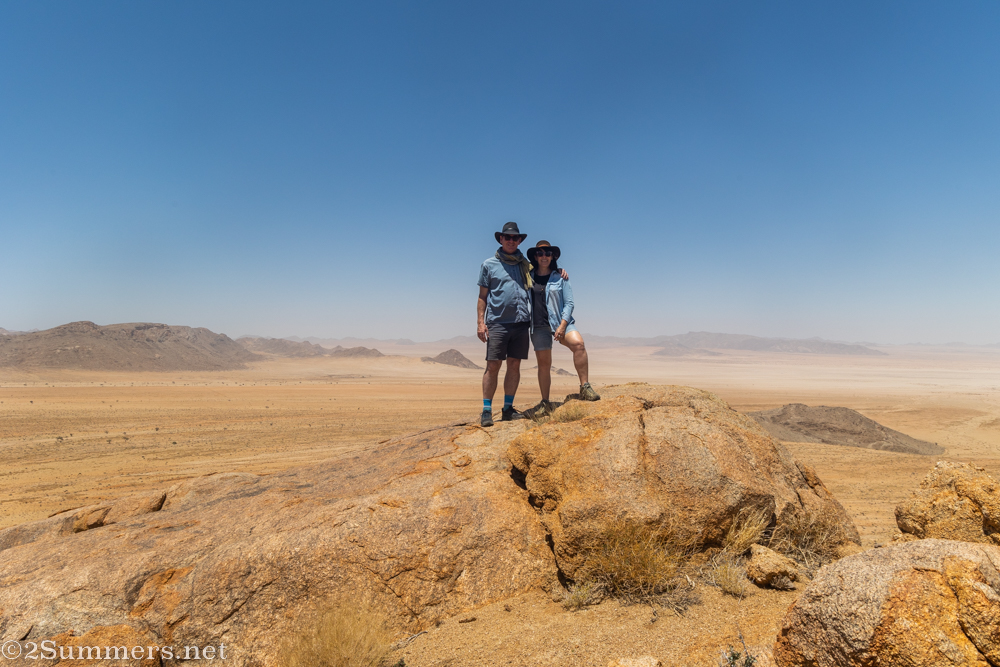
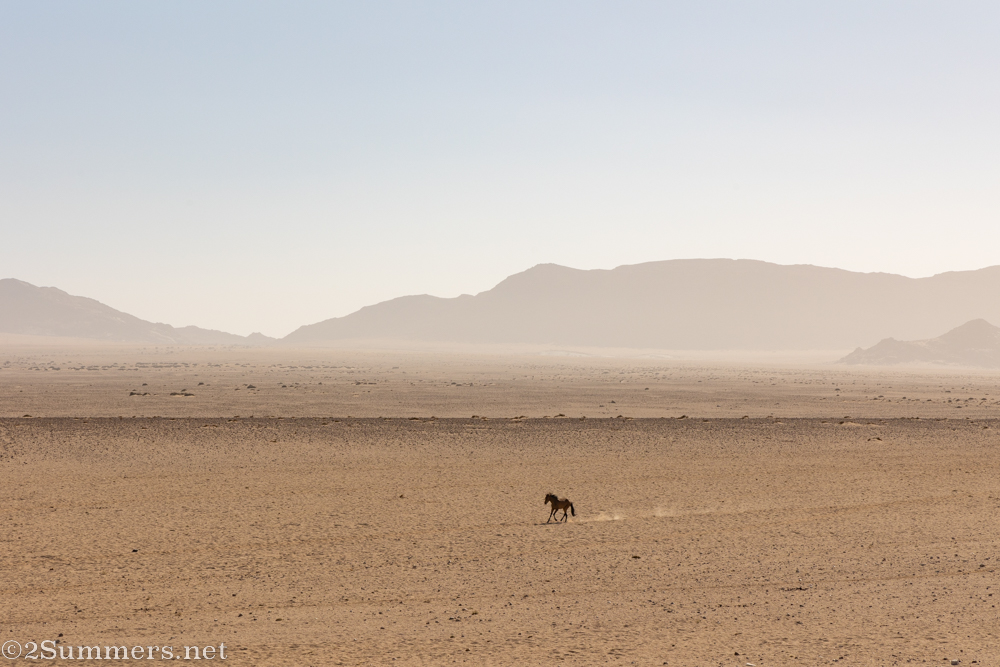
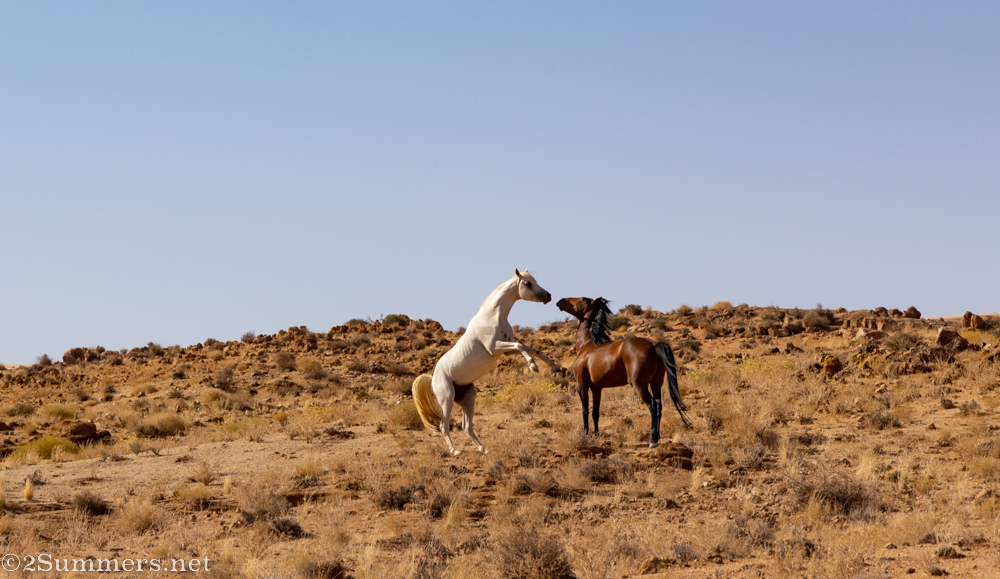
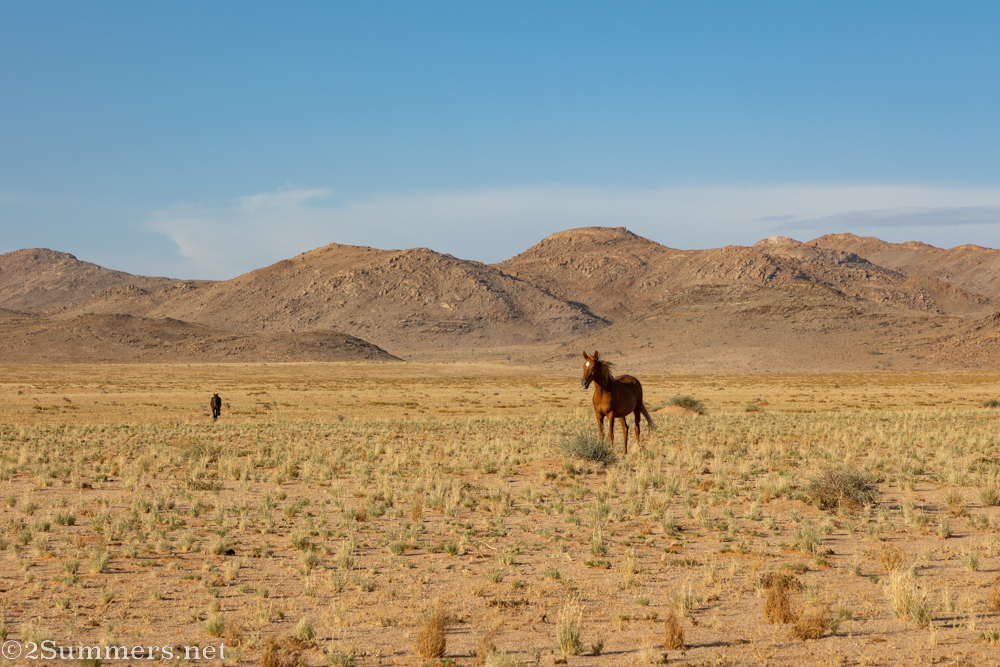
Thorsten and I in the inhospitable land of his birth. (Photo: Andrew Engelbrecht)One of a herd of wild horses, probably descended from horses brought to Namibia by the German army during WWI. Inexplicably, this herd has survived and thrived in the desert for more than 100 years.
I had been to Namibia once before, on a 10-day trip through the central part of the country, and I loved it. But nothing could have prepared me for southern Namibia. It felt like visiting another planet.
7 Days in Southern Namibia
Here’s a summary of our journey, supplemented by lots of pictures.
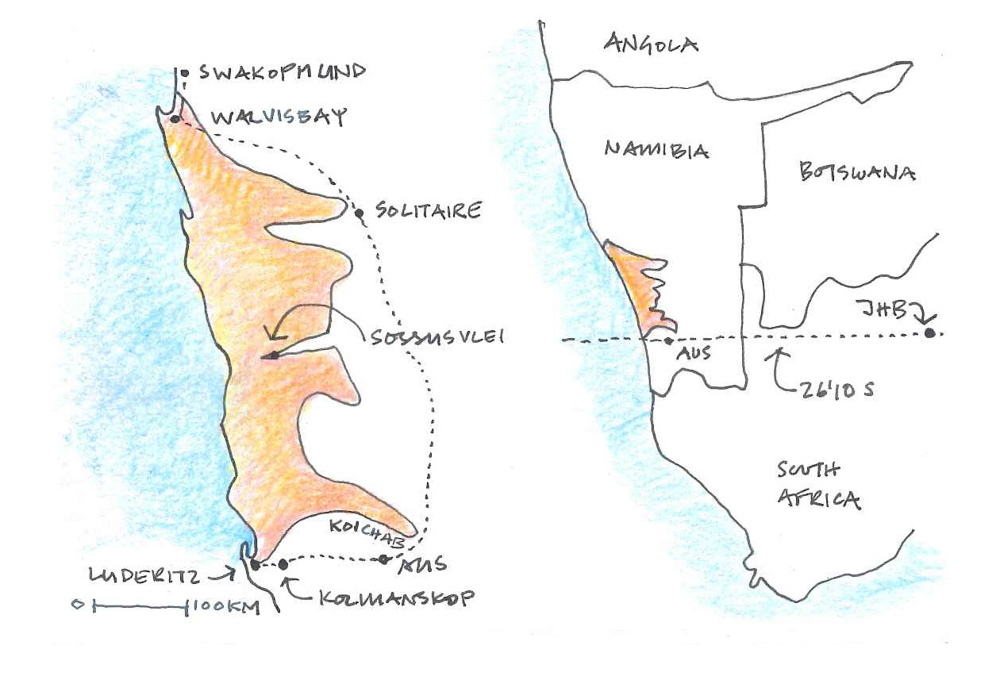
Thorsten drew a map that illustrates our trip. The sketch on the left shows roughly where we traveled – the brown shading indicates southern Namibia’s big sand dunes. The sketch on the right is a zoomed-out map of southern Africa, showing that Aus and Joburg are on the same latitude.
Day 1: Walvis Bay to Sossusvlei
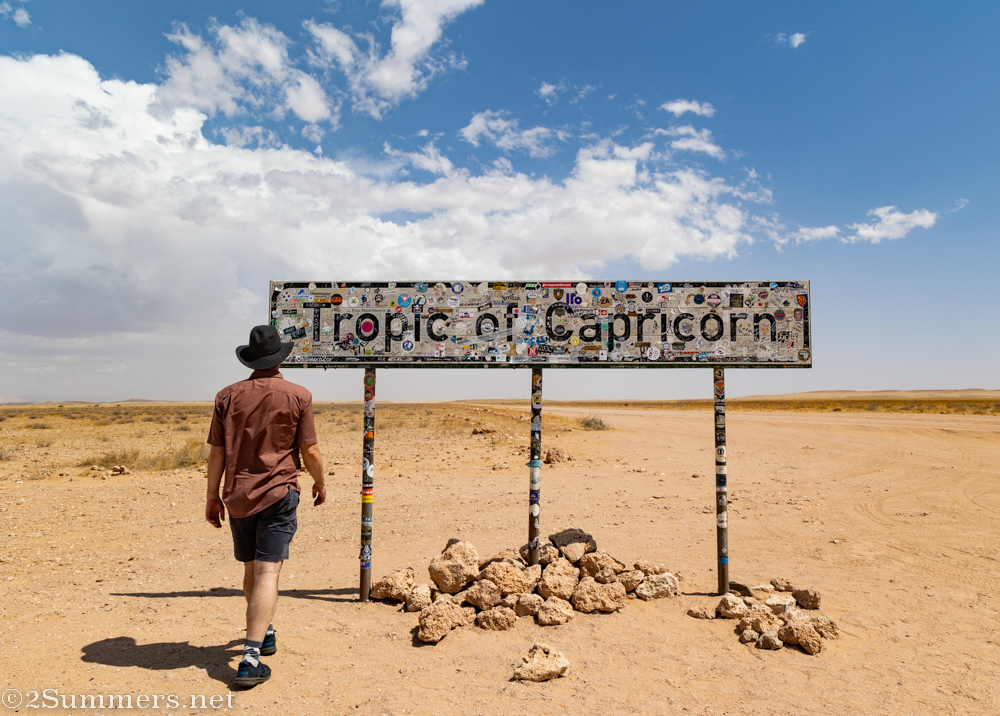
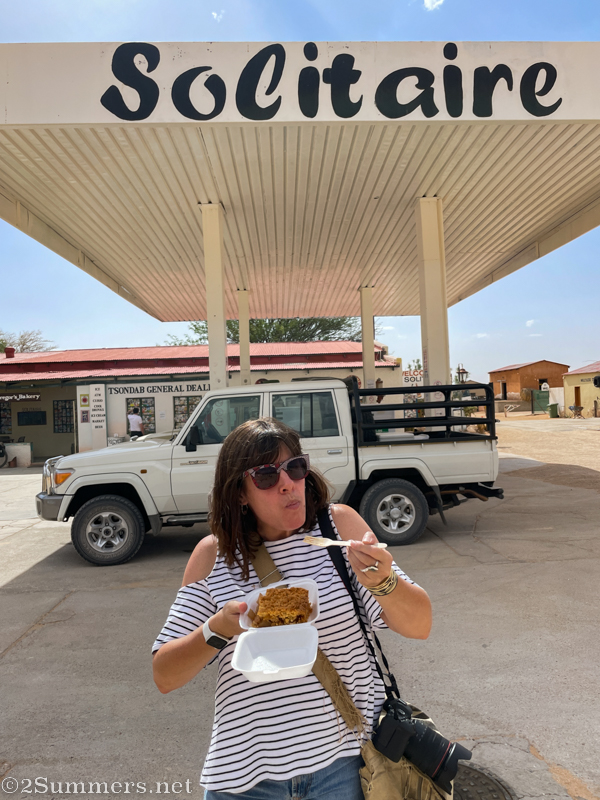
We flew into Walvis Bay, which is 30 minutes from the town of Swakopmund, and immediately headed south to Sossusvlei by car (about five hours’ drive). We didn’t make a lot of stops along the way, as there is virtually nowhere to stop on this route. But we did visit the Tropic of Capricorn sign and the tiny town of Solitaire, known for its apple pie.
Thorsten at the Tropic of Capricorn. Most of the roads are gravel in this part of Namibia; they are passable in a sturdy two-wheel-drive car but a 4x4 is preferable.This is not pie in the American sense – more like apple crumble or strudel. But it was indeed delicious. (Photo: Thorsten Deckler)
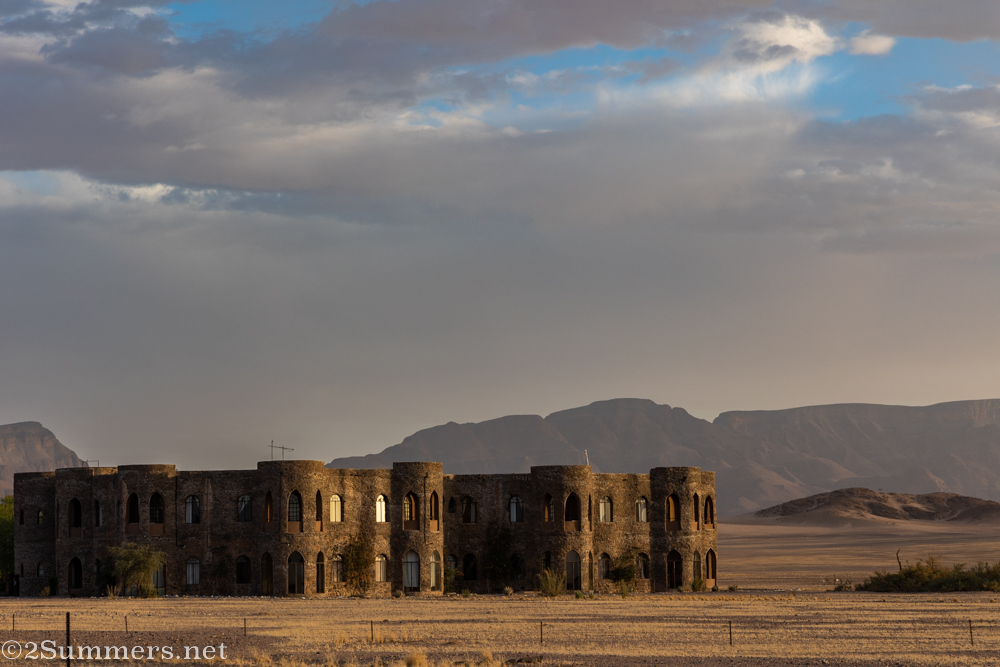
We didn’t have time to visit Sossusvlei, Namibia’s most famous dunes. (As discussed in a previous post, we went to the Koichab dunes instead.) We did, however, spend the night at a bizarre yet wonderful Sossusvlei hotel called Le Mirage.
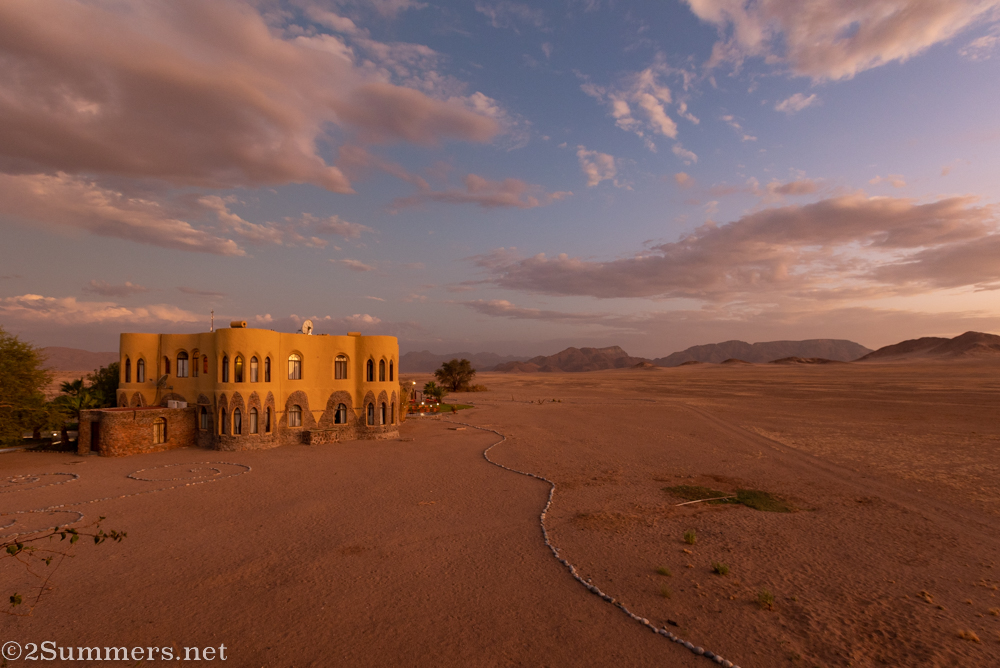
Le Mirage, which I think is a strange name for a fake-castle hotel.
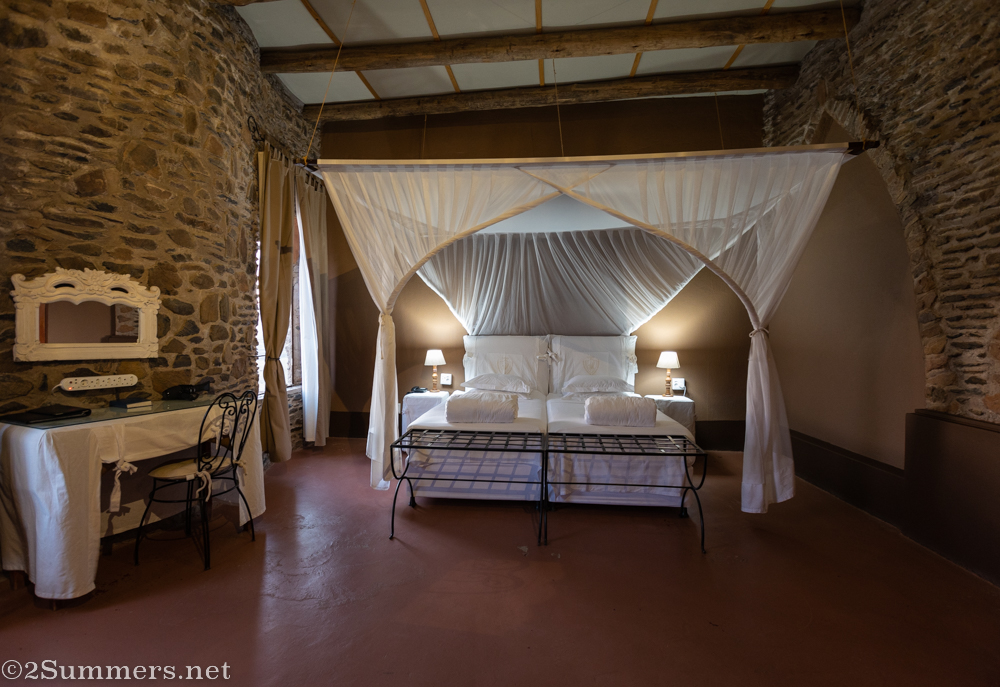
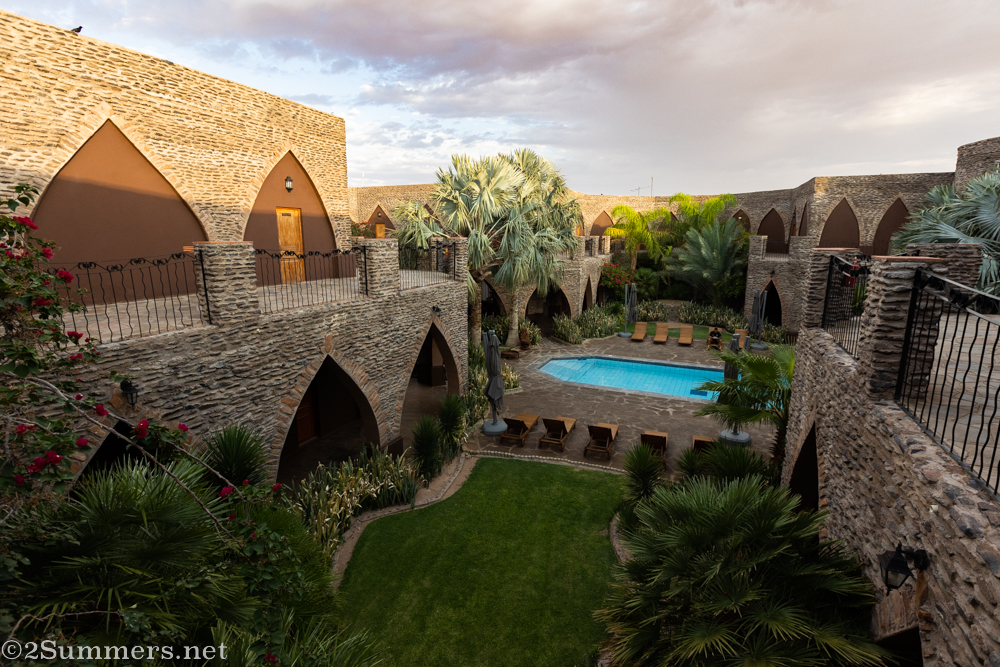
Le Mirage is a luxury hotel serving up Game-of-Thrones-in-Namibia vibes. The outside is a fake castle and the inside is a fake Middle-Eastern-style courtyard oasis. I loved it because it was so random and weird, but our room was extremely hot and the internet was frustratingly terrible. (There were a few other minor annoyances, too.) I would recommend staying there, simply for the novelty of the place, but not during summer.
Our huge but very hot room at Le Mirage. (It cost about US$125.)The desert oasis courtyard (beautiful and weird but also hot).We witnessed an unbelievable sunset at Le Mirage.
Days 2-4: Aus
The next day we drove about four hours from Sossusvlei to Aus, where we stayed for the next three days.
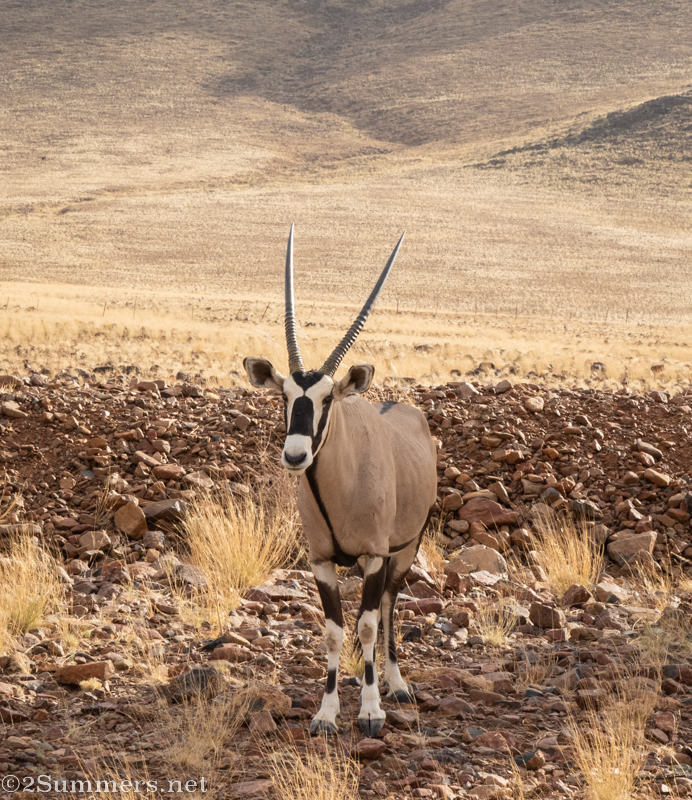
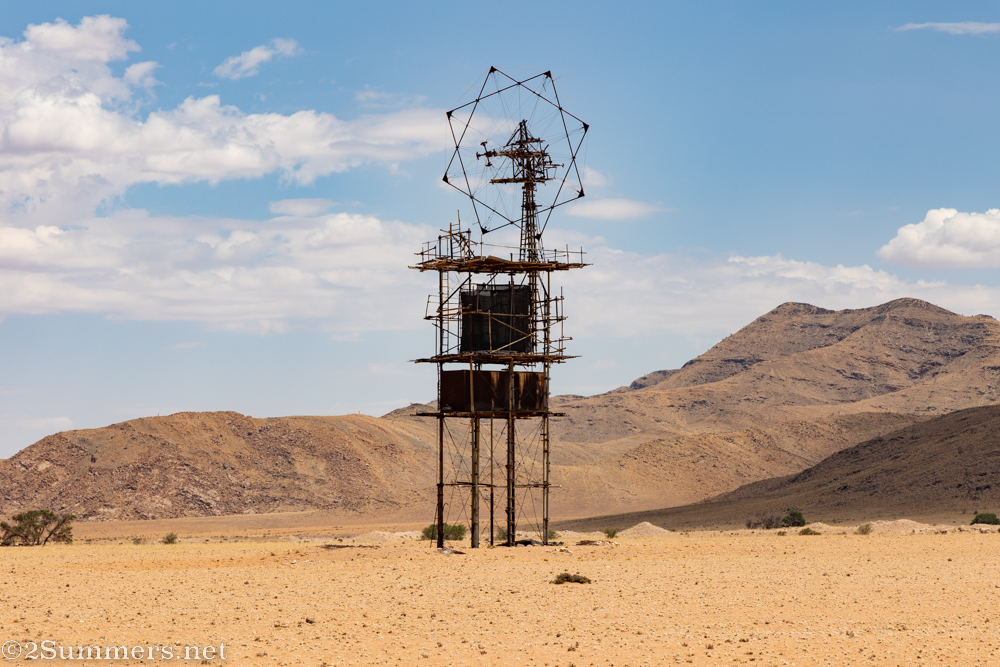
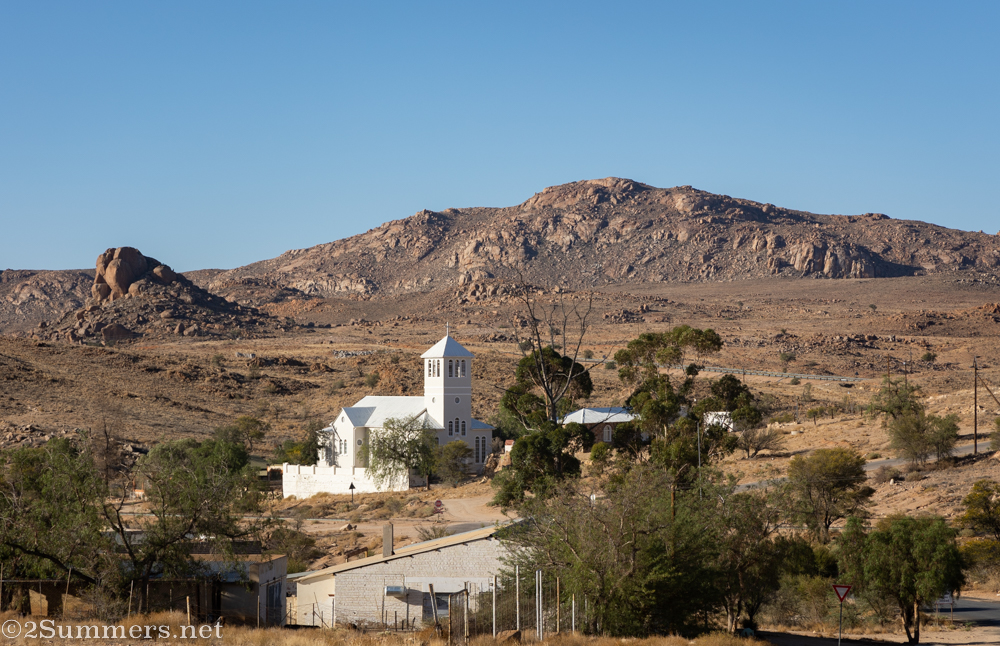
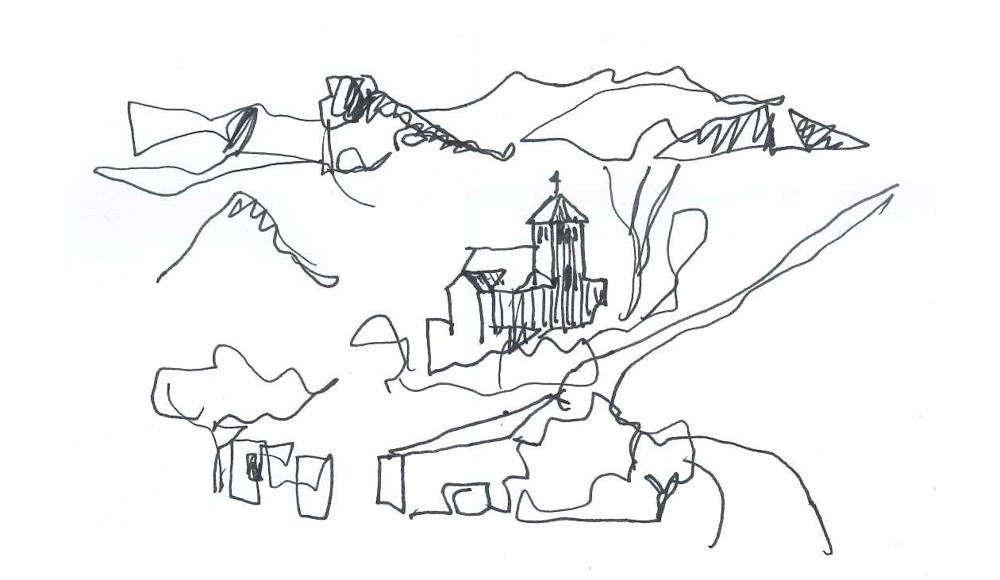
An unusually relaxed gemsbok (oryx) that we passed en route to Aus.A Mad-Max-style windmill outside Aus, apparently built many years ago by an engineer who died before he got it working and now it just stands there looking awesome.Aus, a quaint little settlement consisting of a church, a hotel/restaurant, a petrol station, a train platform, and a couple of shops.Aus as interpreted by its native son, Thorsten, a.k.a. @theThinking_Hand.
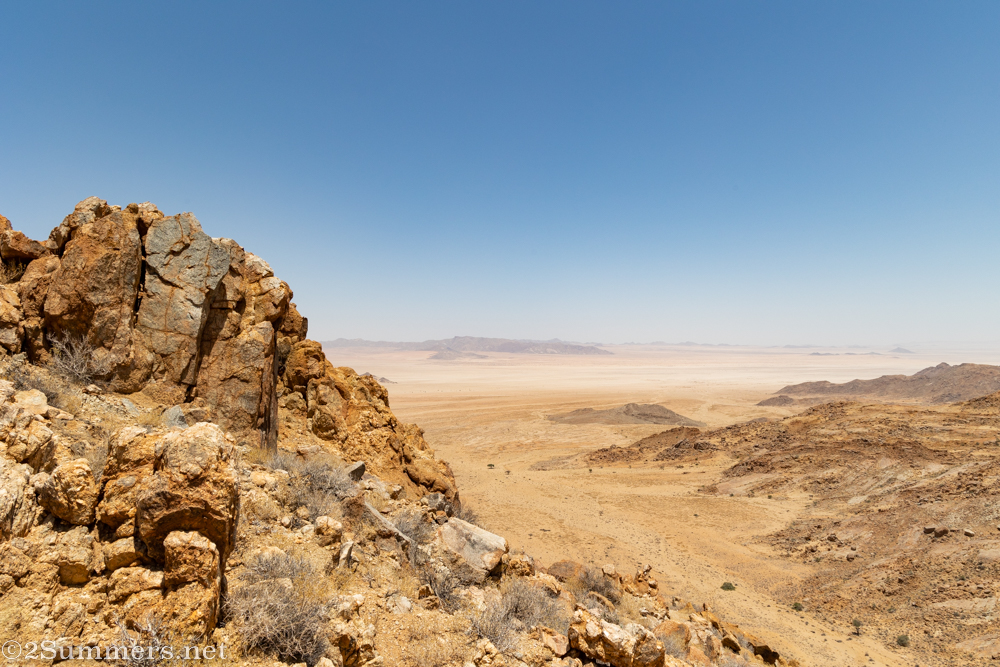
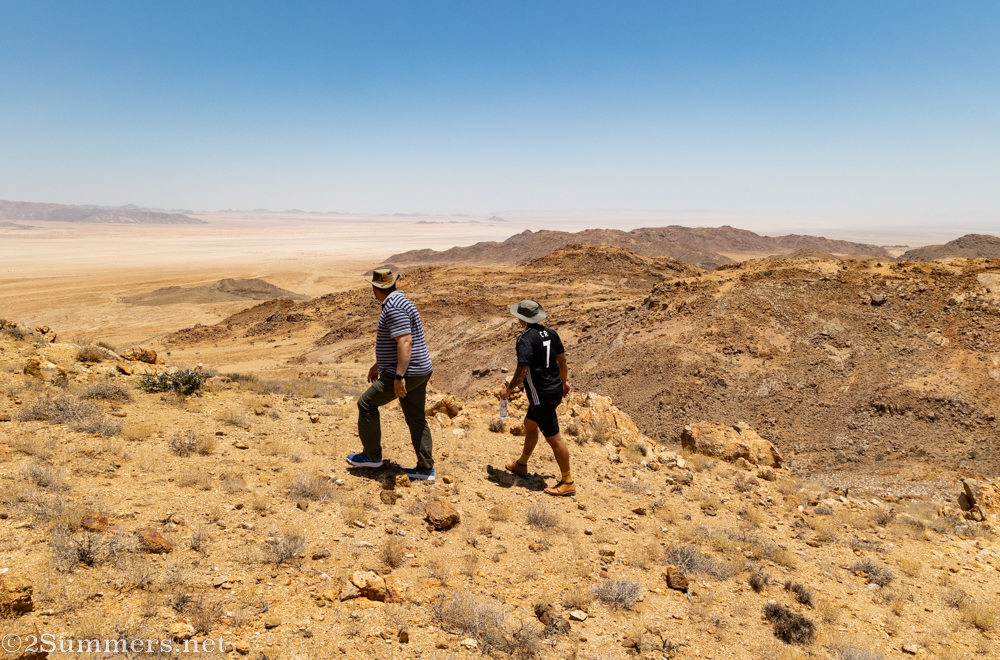
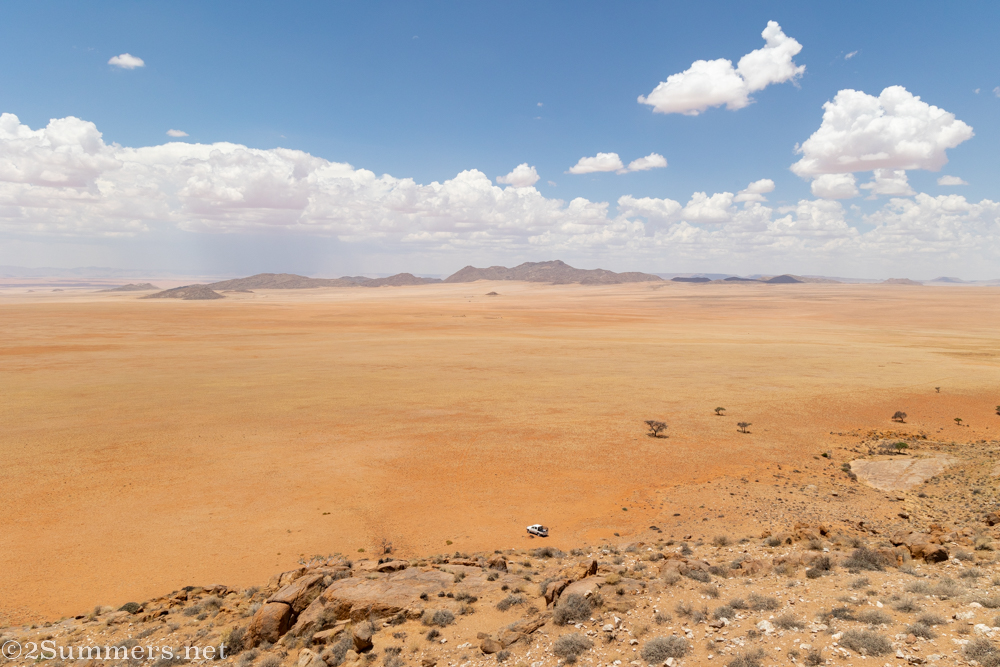
We spent most of our time in Aus exploring Thorsten’s friend Andrew’s ginormous farm, the Eureka Farm, where Andrew is planning to build a lodge. The Eureka Farm is insanely beautiful and desolate. I spent a lot of time walking around in the blazing heat with my jaw hanging open, gasping and exclaiming, “What?!?!” at one spectacular vista after another.
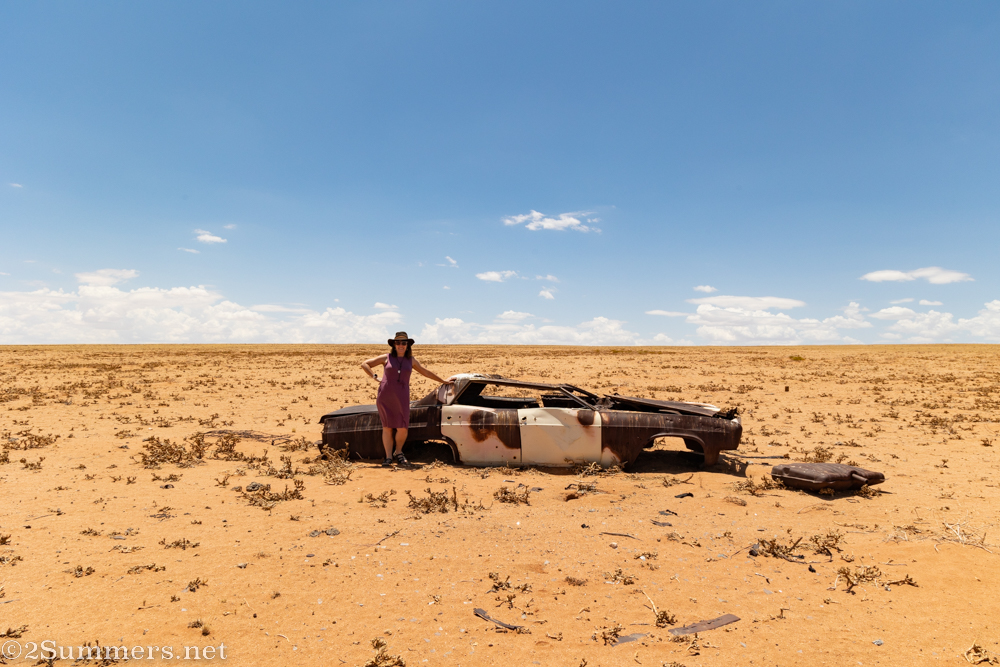
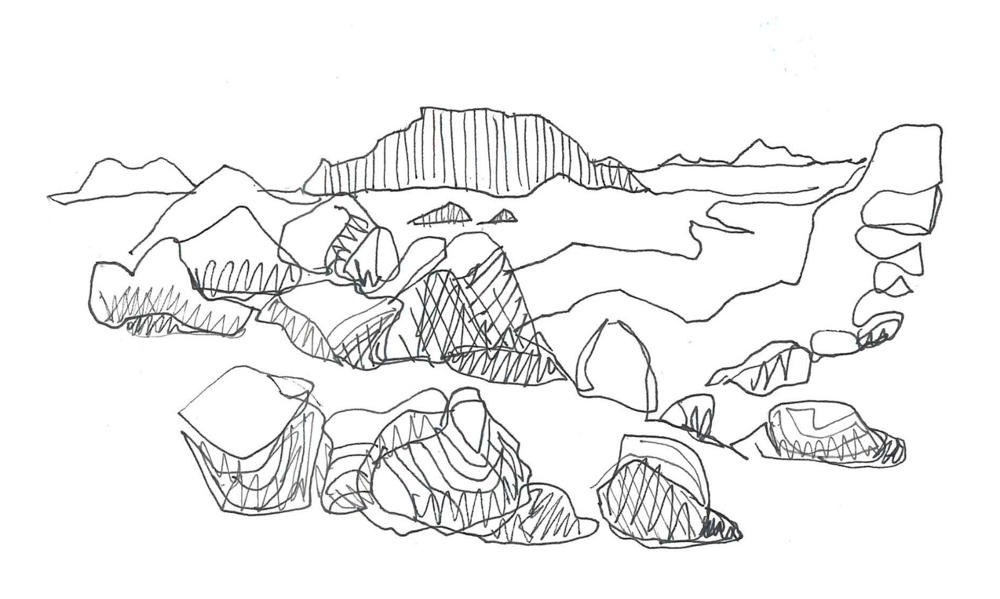
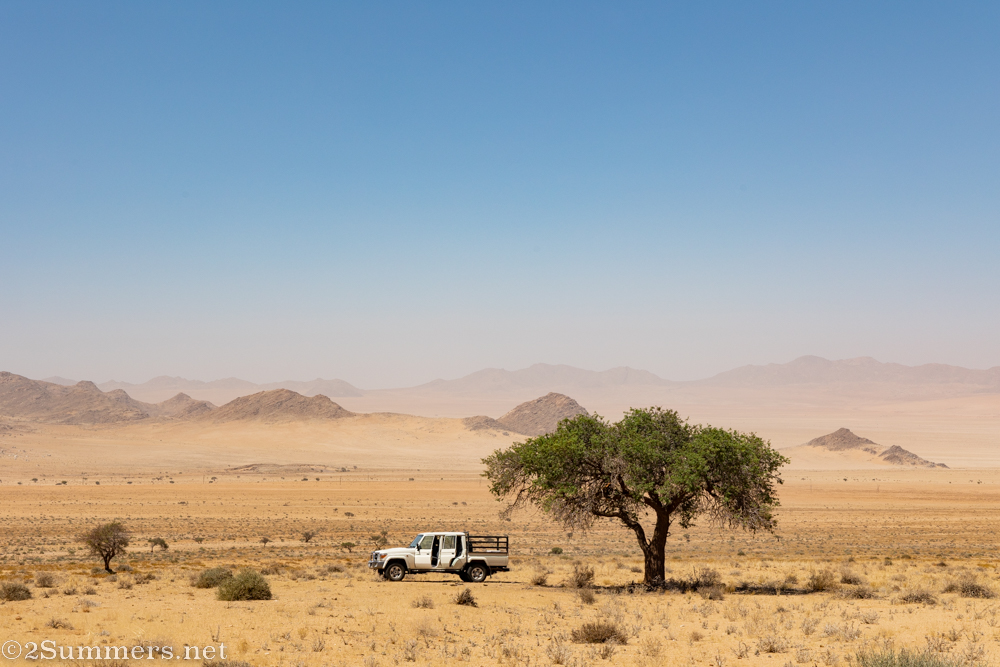
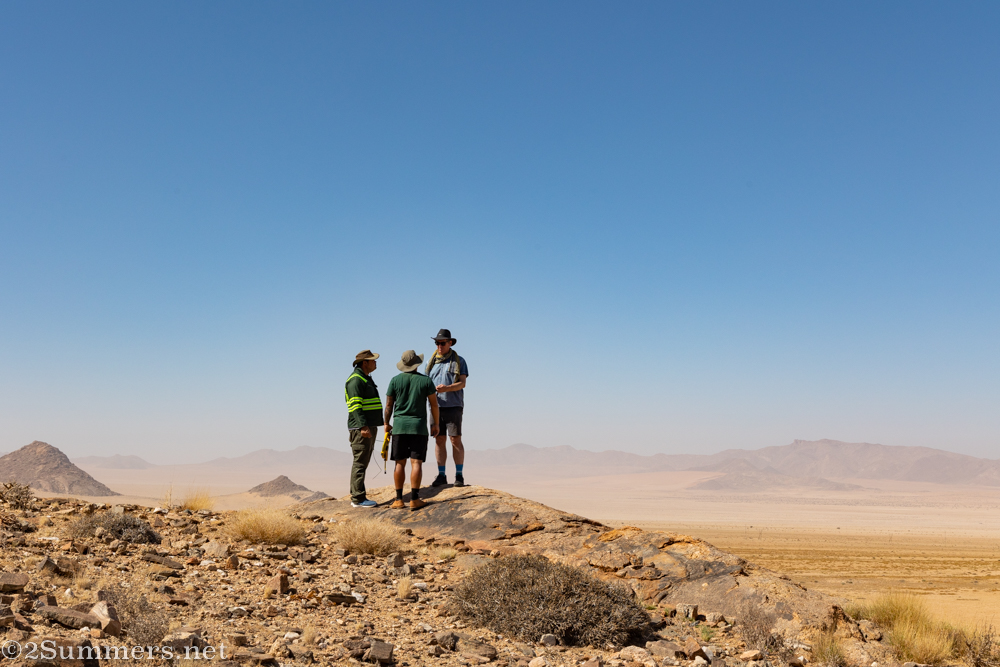
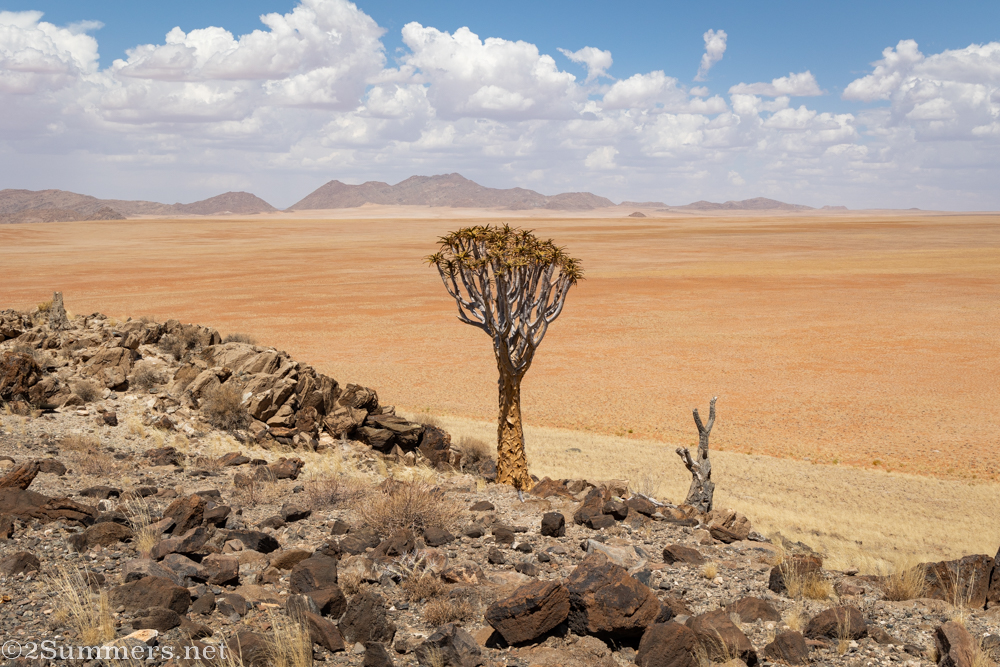
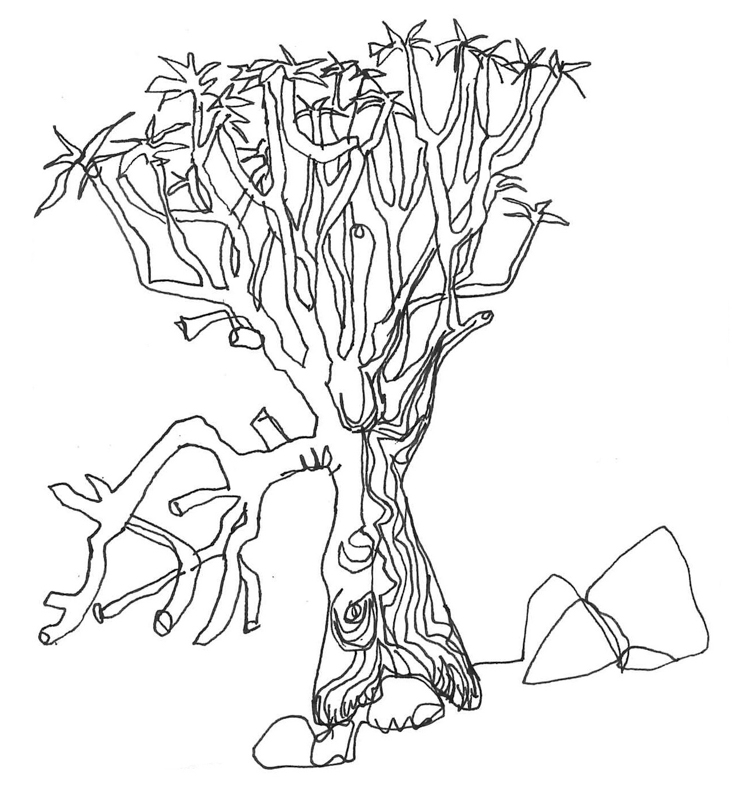
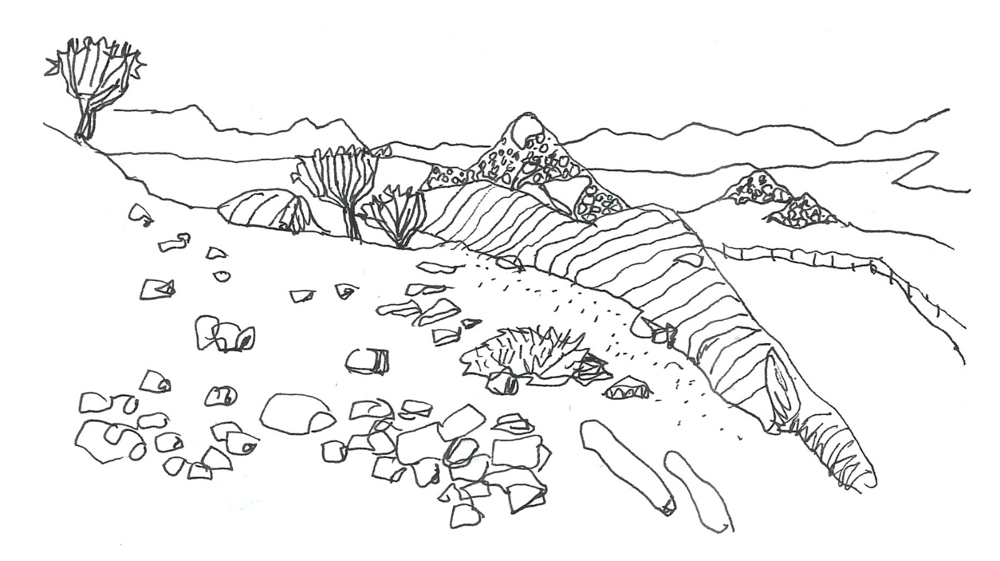
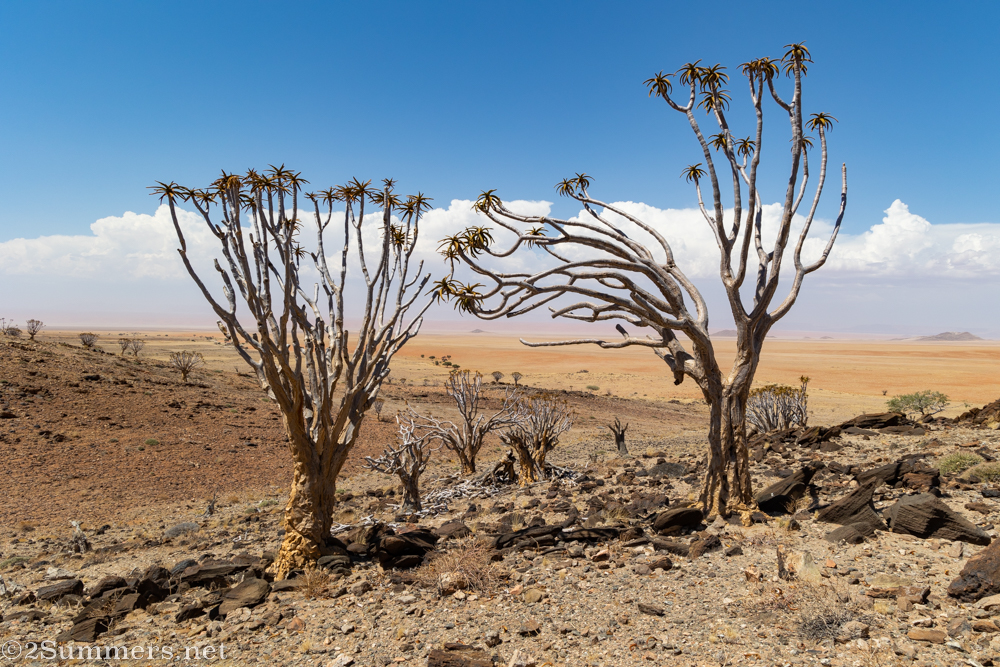
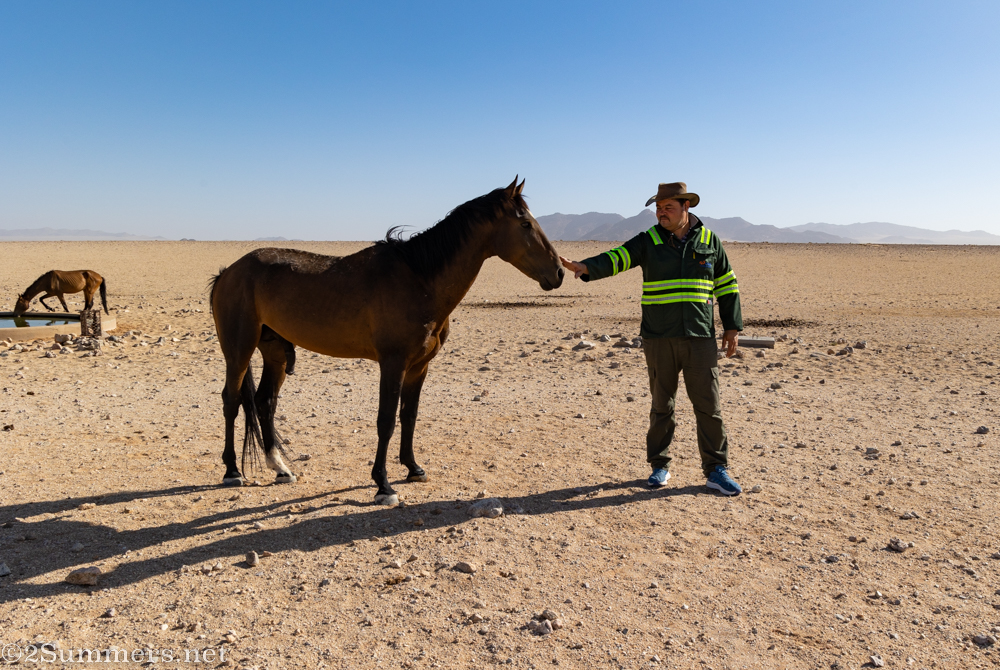
An old car on the Eureka Farm, which apparently broke down on its maiden voyage more than 50 years ago and hasn’t moved since.WHAT?!? A mountain we climbed on the Eureka Farm.Seriously…WHAT?!?! Andrew and his friend Owen walking on the summit of the mountain. It was so stunning and surreal, I could hardly breathe. My photos don’t at all capture the way it actually looked.A Eureka Farm sketch by @TheThinking_Hand.We climbed really high and it was hot. The skin on my arms broke out into a disturbing, sun-related rash. Eventually I wised up and realized that white people (maybe all people) should wear long sleeves in the desert.Andrew’s Land Cruiser provided great foreground for my desert pictures.Andrew, Thorsten, and Owen at a potential lodge site on the farm.For years I have been wanting to photograph a quiver tree(kokerboomin Afrikaans), a critically endangered desert tree that grows only in parts of South Africa and Namibia. I got my wish on this trip – there are hundreds of quiver trees on the Eureka Farm.I love the way Thorsten sketched the gnarly trunk.Quiver tree landscapes.Quiver tree lovers.Two beautiful horses playing on Eureka Farm. These are not wild horses – Andrew owns them.The wild horses do, however, graze very close to the Eureka Farm. Here are two of them.Andrew at the wild horses’ watering hole, which is close to the farm. Read more about the wild horses.
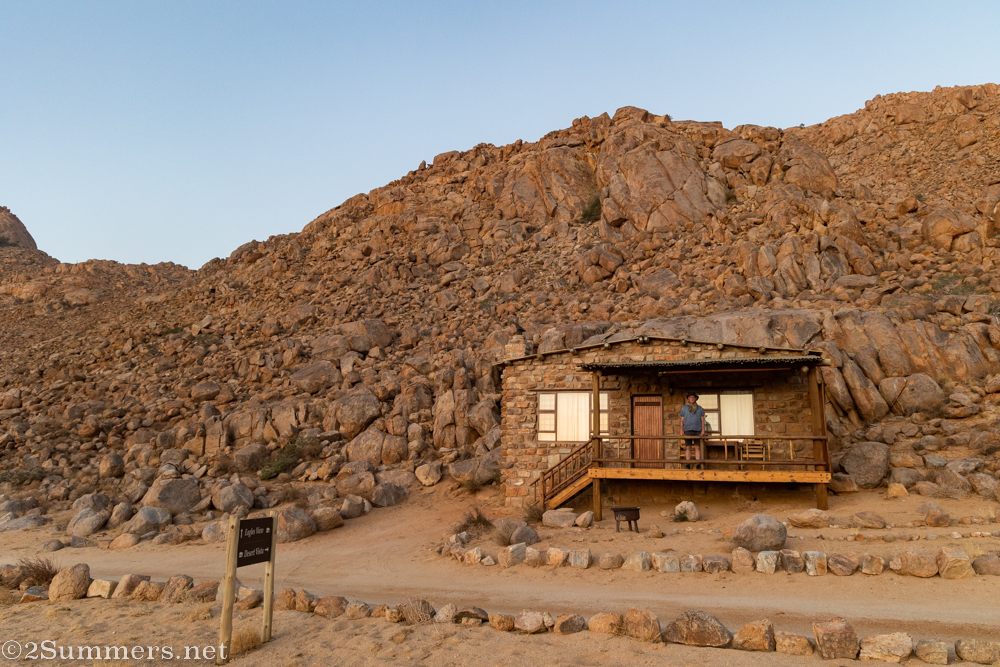
While in Aus, Thorsten and I also paid a visit to the Klein-Aus Vista Lodge. Someday I need to write a much longer story about this, but Klein-Aus was once a working farm that belonged to Thorsten’s grandparents and he spent several years of his childhood there. It was really cool to go back and visit with him.
Thorsten checking out one of Klein-Aus’ stone cottages, which are built right into the side of this rock face.
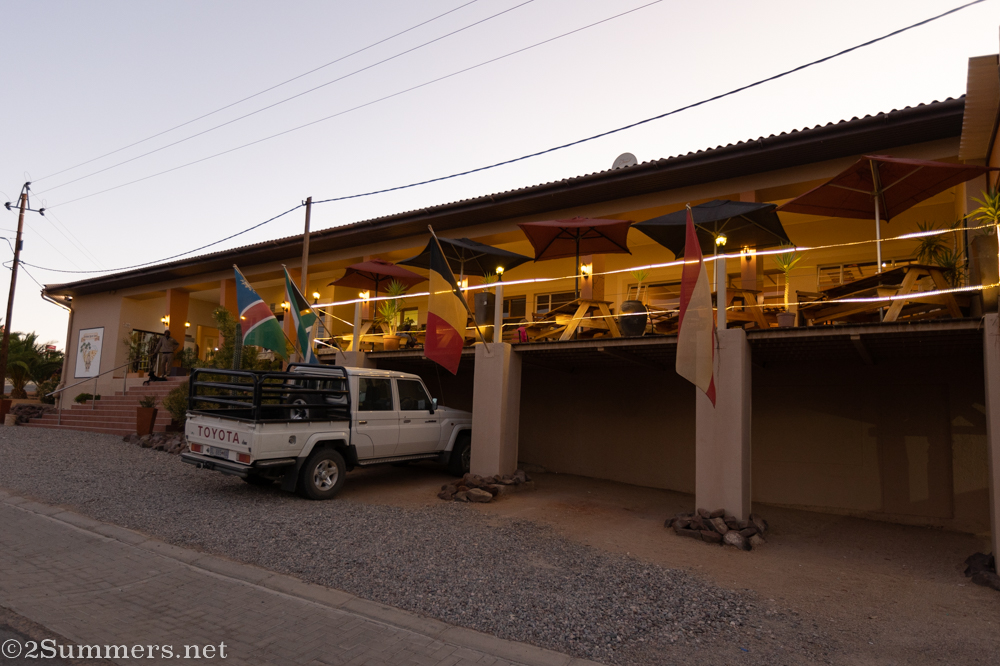
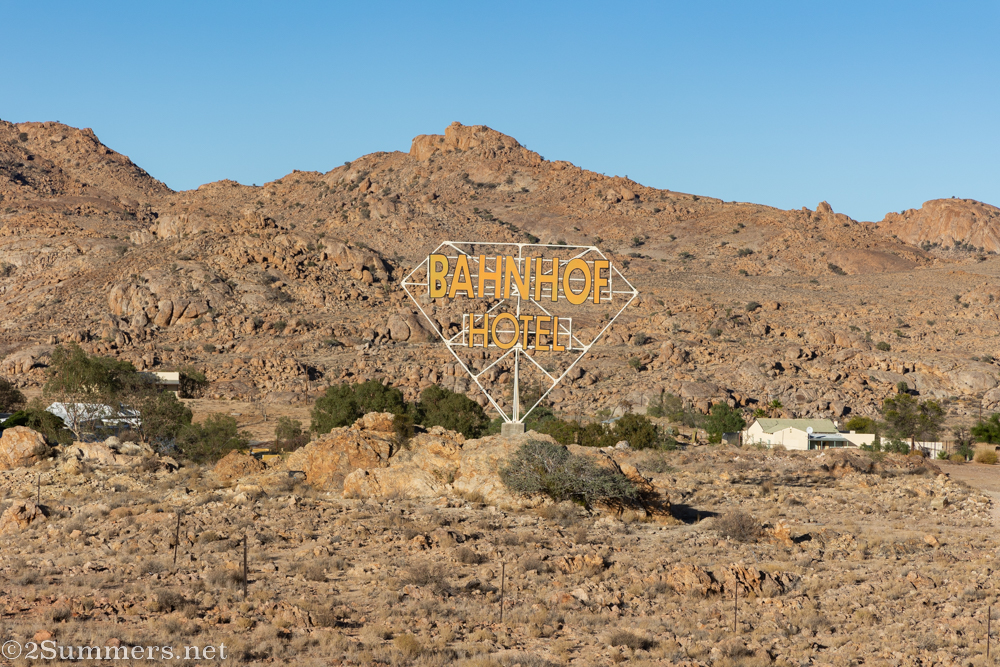
Thorsten and I slept in town at the Bahnhof Hotel. Thorsten also has fond memories of hanging out at this hotel as a child; his great aunt was once the manager there. The rooms are basic but nice, and I really enjoyed the German meals – particularly the spätzle – that we ate while sitting on the hotel terrace. (Namibia was once a German colony and there is still a lot of German cultural influence there.)
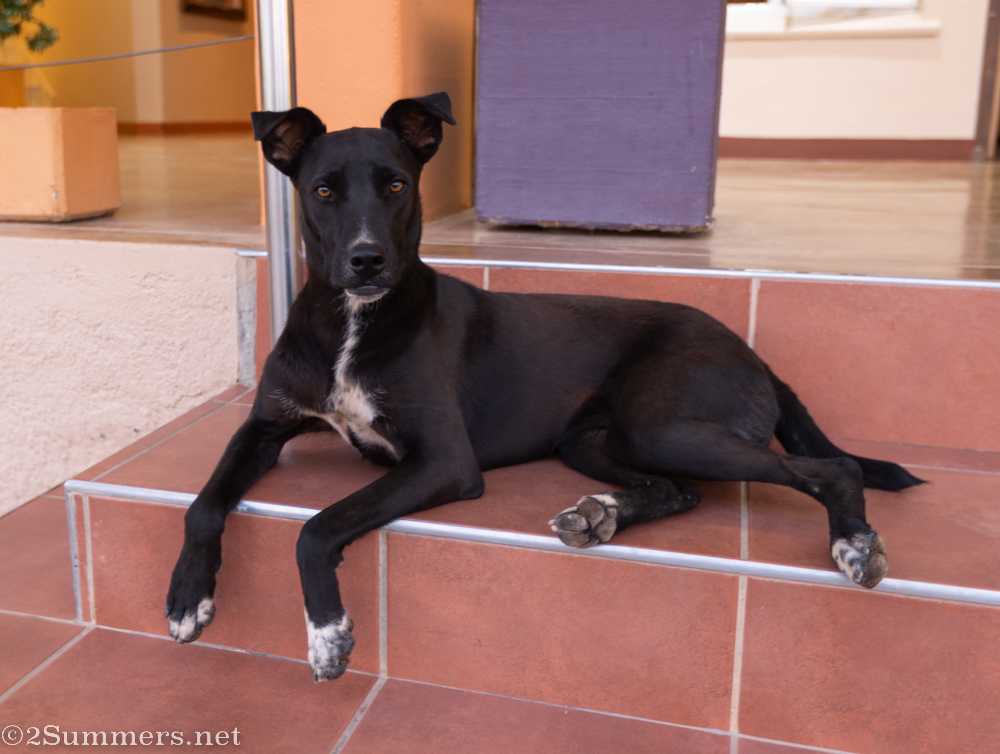
The Bahnhof Hotel.Blackie, canine mascot of Aus, loves hanging out on the Bahnhof’s front steps.The Bahnhof has an amazing sign that can only be seen from the highway.
Days 5 and 6: Luderitz
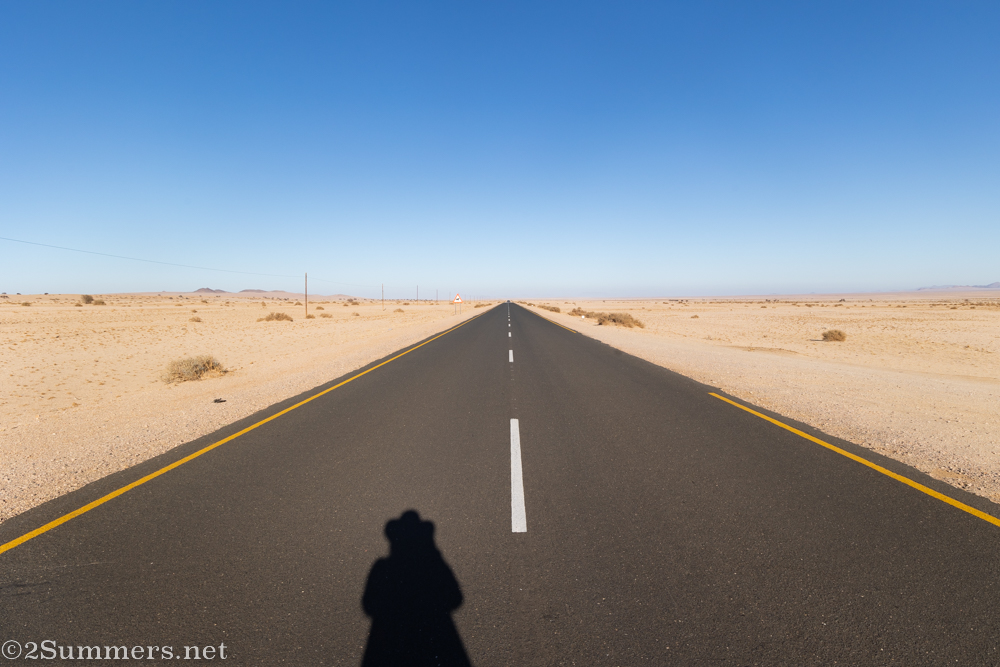
Luderitz is an Atlantic coastal town 125 kilometers due west of Aus – just a little more than an hour’s drive on the famous B4 highway.
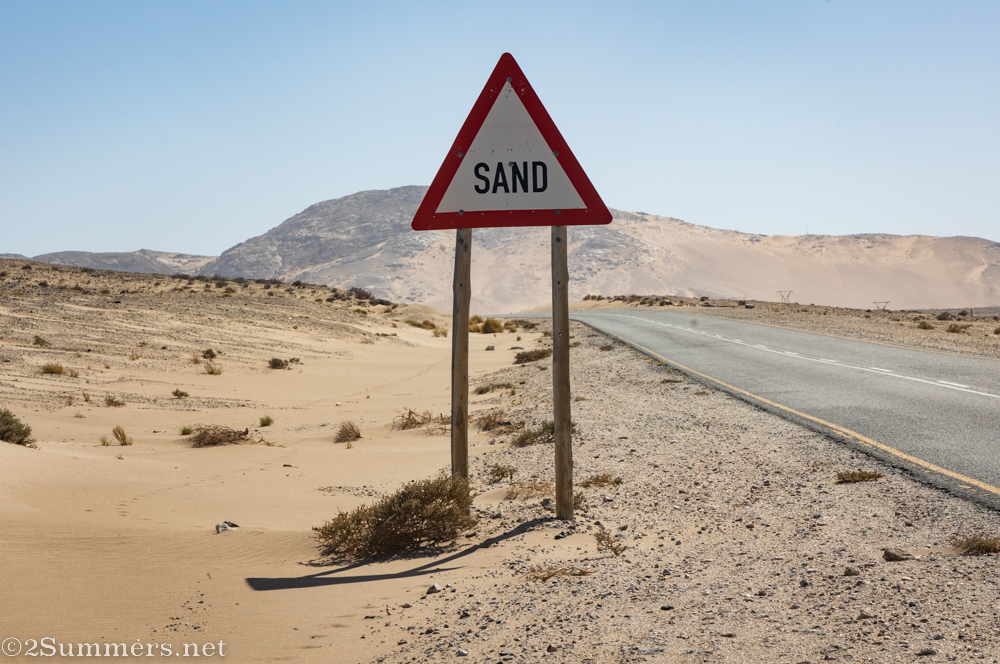
The B4 has to be the smoothest, straightest road in Africa, if not the world.
Thorsten also spent time in Luderitz as a kid and wanted to show me the town, so we spent a night there before heading back to Swakopmund with Andrew. We stopped to visit Kolmanskop (which you’ve already read about), a few minutes outside Luderitz, then headed into town.
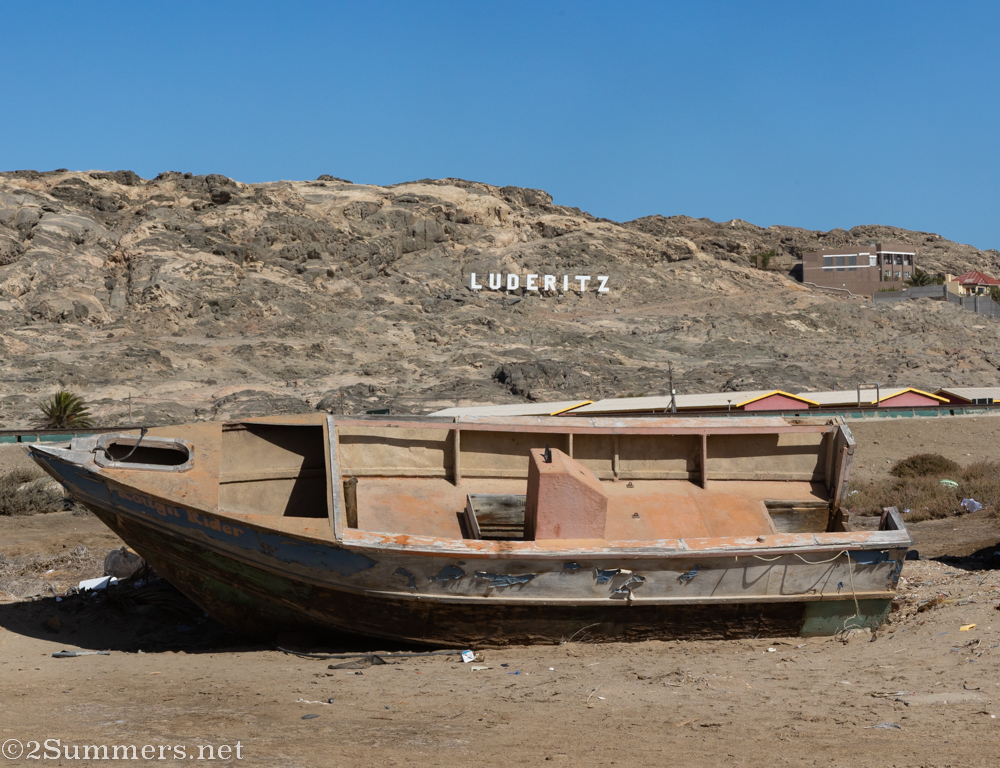
Quirky Luderitz.
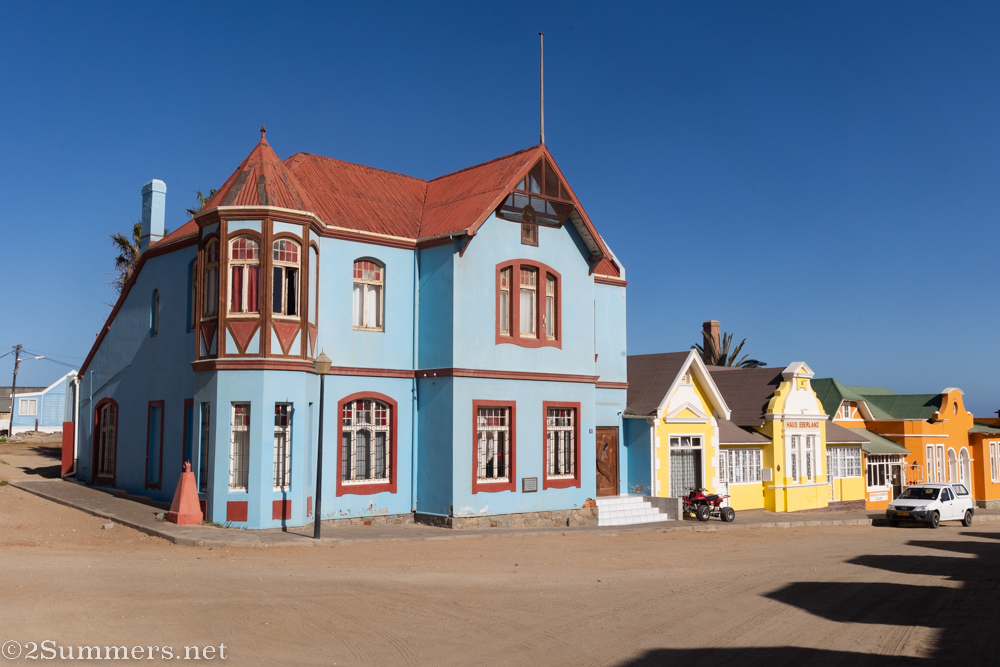
Luderitz is known for its stark gray coastline, which contrasts with its colorful German architecture, its windiness, its flamingos, and its oysters. We didn’t have any oysters and I didn’t get any good flamingo pictures, but we did manage to see quite a lot of Luderitz in the short time we were there.
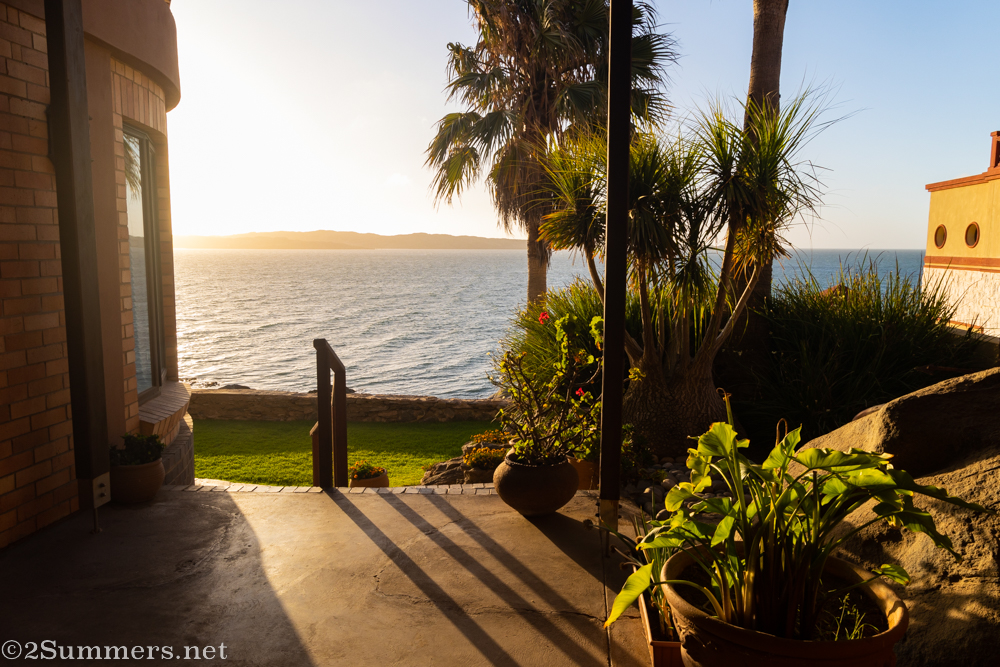
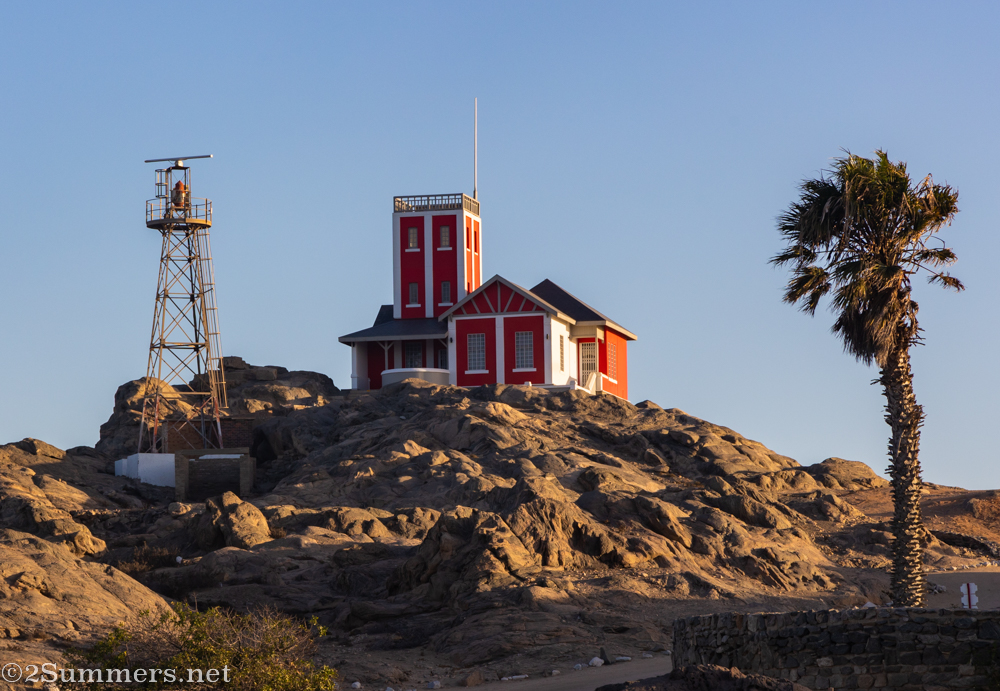
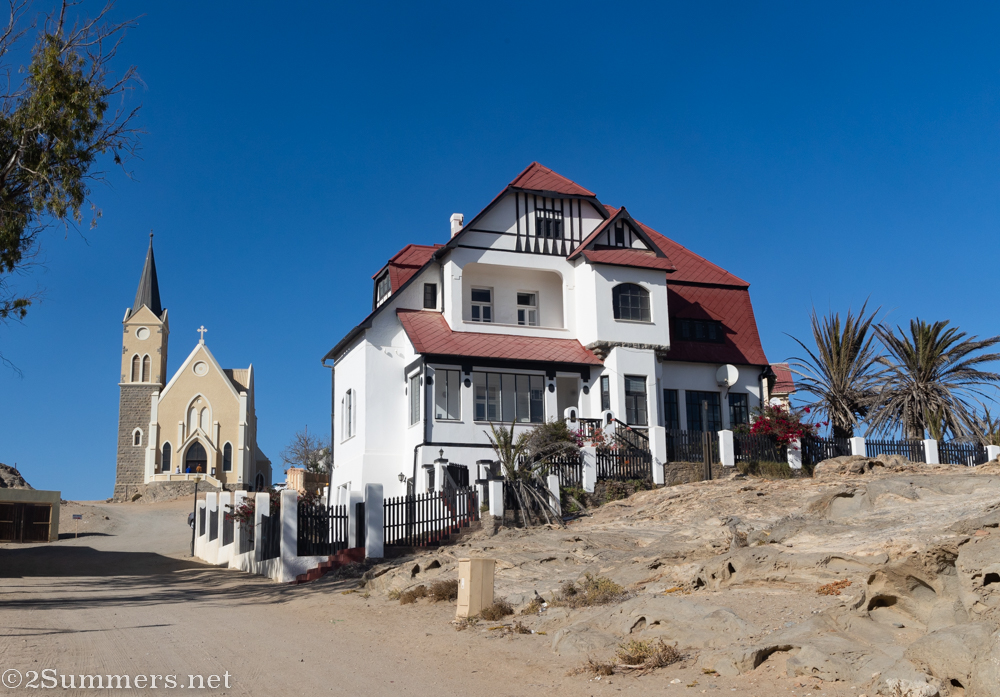
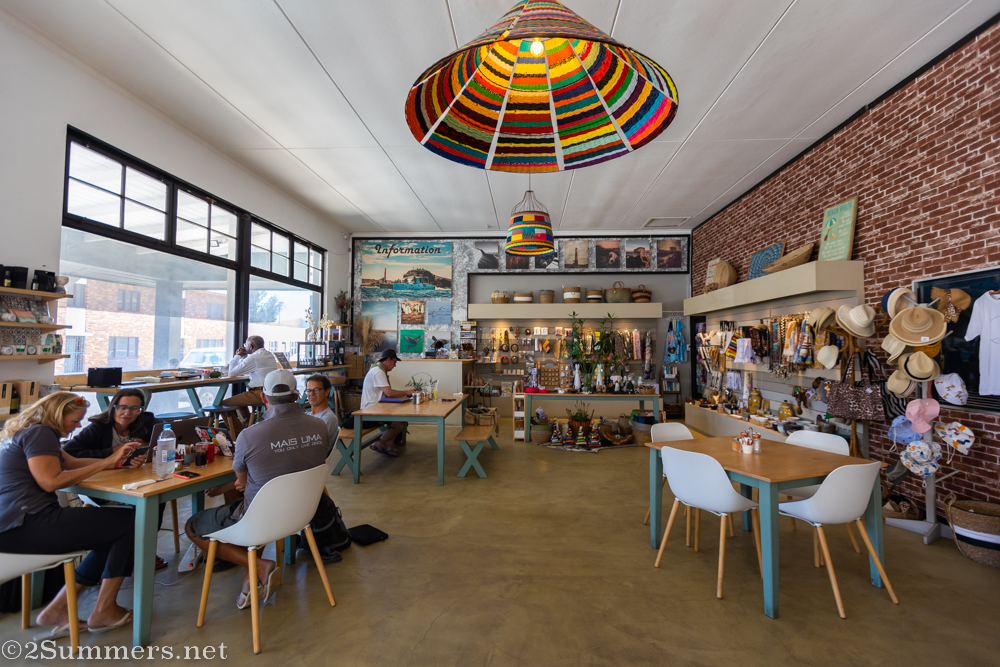
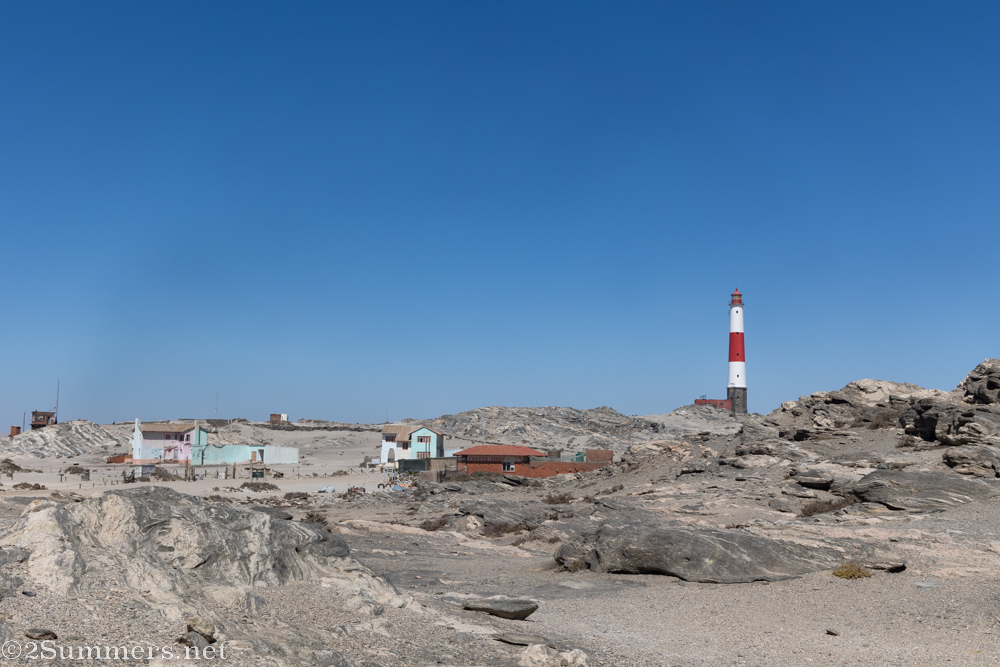
View of the ocean at the tiny but cute Airbnb where we stayed on Luderitz’s Shark Island. It’s actually not an island, but a small peninsula just north of the town center.Lighthouse on Shark Island. Shark Island has a gruesome history: From 1904 to 1908, it housed a German concentration camp where thousands of indigenous Herero, Nama, and Khoikhoi people were tortured and killed. I feel weird mentioning this horrific genocide in passing, in the middle of an otherwise happy-go-lucky travel post. But I also feel weird not mentioning it at all. Hopefully I can get back to Luderitz and spend more time researching this subject in the future.Luderitz’s version of the Bo-Kaap.Thorsten was confirmed at the church in the background.We had a couple of meals at this Luderitz coffee shop, the Desert Deli, and I highly recommend it.
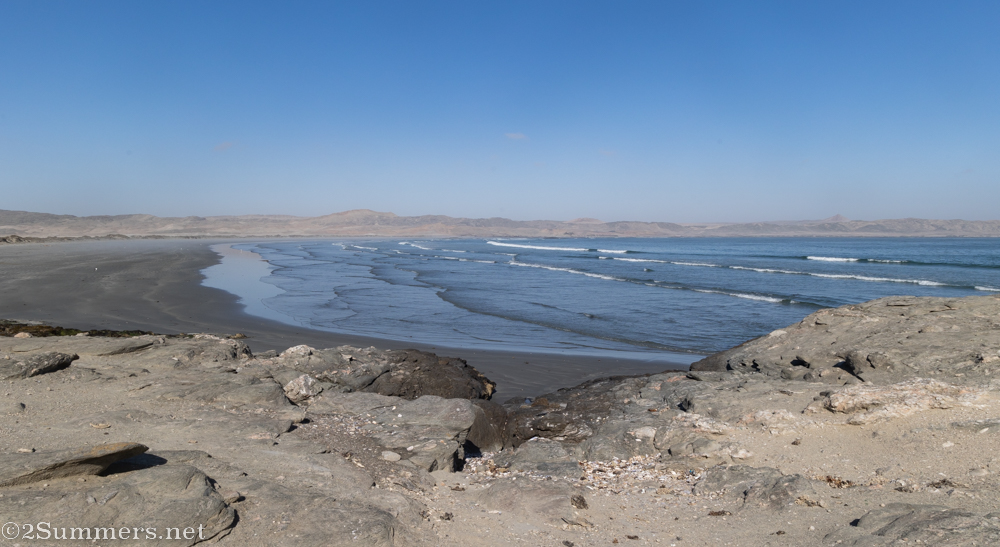
We spent most of our full day in Luderitz driving around the larger peninsula west of town, stopping for tea at the picturesque Diaz Point and taking a long walk on a huge, deserted beach called Grosse Bucht. (I recommend a 4x4 for driving around the Luderitz Peninsula.)
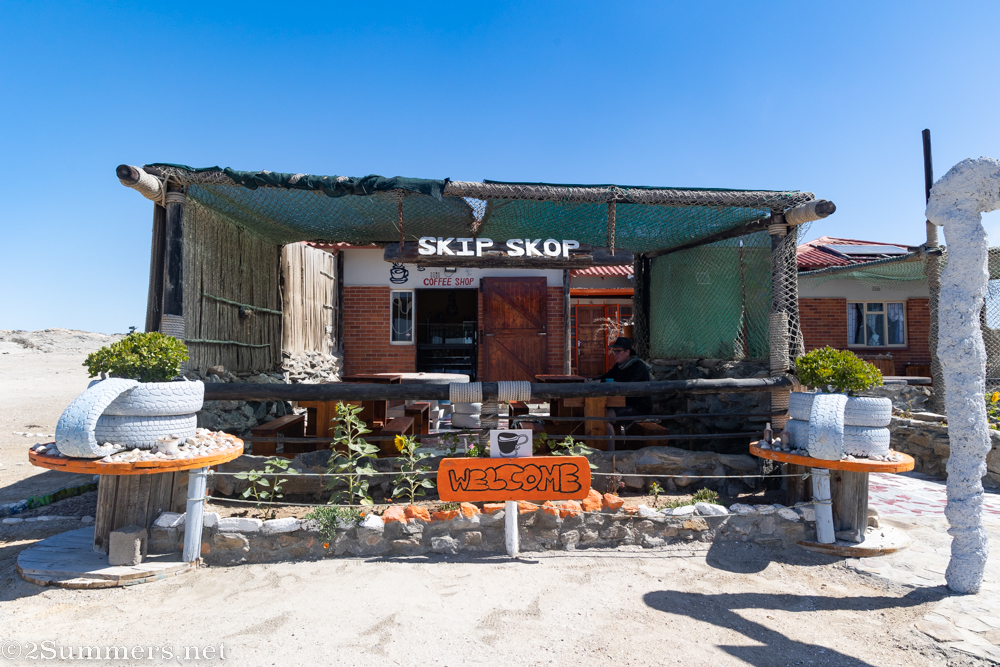
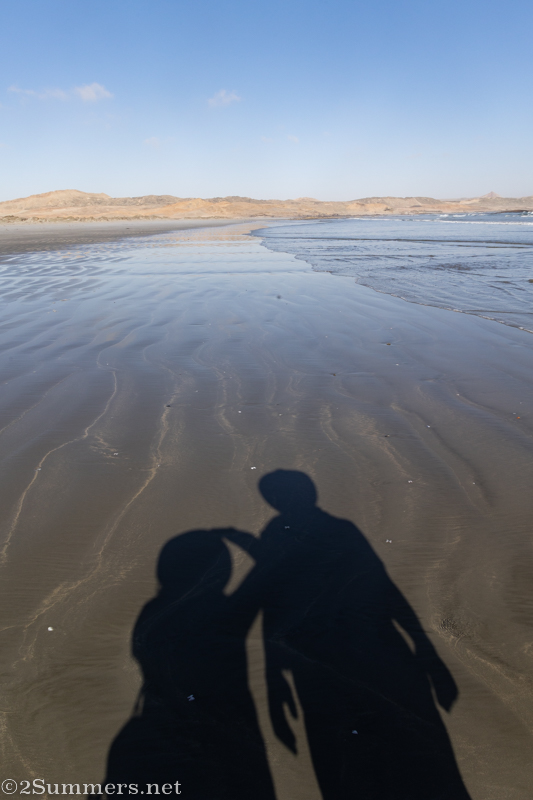
Diaz Point, where Portuguese explorer Bartolomeu Diaz landed and planted a cross more than 500 years ago.We had tea and cake at this tiny, wind-swept little café on Diaz Point.The beautiful beach at Grosse Bucht, where we walked for miles and met absolutely no one.
Day 7: Swakopmund
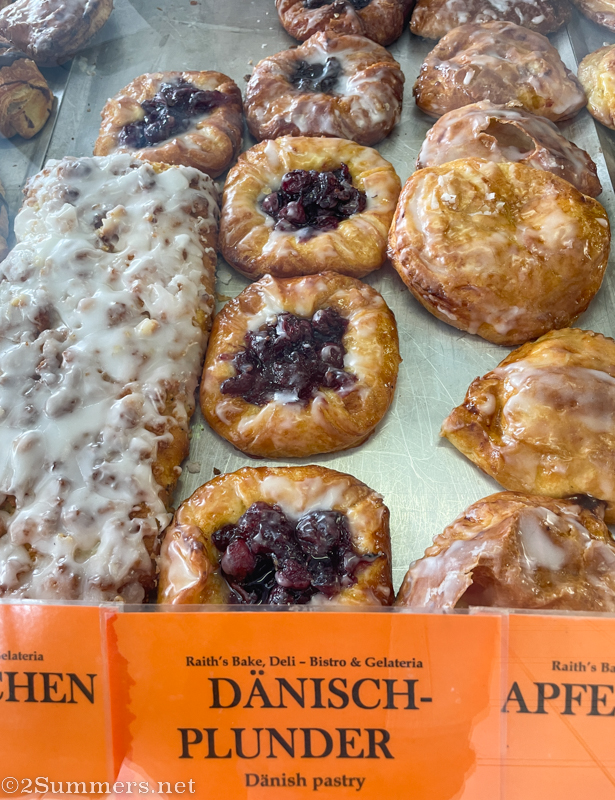
After Luderitz, we made the long drive back to Swakopmund and flew out of Walvis Bay the next morning. We didn’t have time to see much of Swakopmund before leaving. But I do want to recommend the Swakopmund Museum, which has incredible taxidermy, the Vellie Valley shoe shop (which I mentioned in my recent post about veldskoens), and Raith Bakery, where I bought an insanely delicious pastry on our way out of town.
My mouth is watering as I remember the taste of this cherry danish.
Thus concludes my rambling, photo-clogged description of the week we spent in Southern Namibia. I still can’t stop thinking about it and can’t wait to go back.
I covered a lot of ground here – questions are welcome!
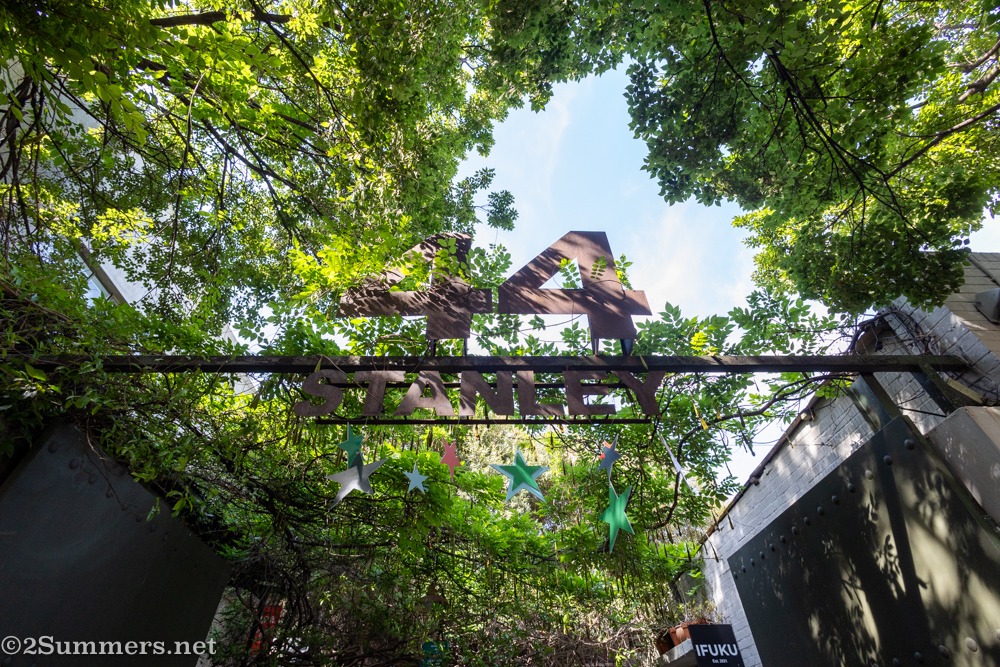
I guess it’s wrong to say I’ve never blogged about 44 Stanley; I’ve mentioned it countless times over the years (see here and here) when writing about specific restaurants or shops that are there. But I’ve never written a dedicated post about 44 Stanley as a destination and it’s about time I did – especially now, with the holidays upon us.
Use the share button below if you liked it.
It makes me smile, when I see it.