Joburg winters are harsh. Temperatures often drop below freezing at night but our houses aren’t insulated, windows don’t close, and central heating doesn’t exist. The air is punishingly dry. Our weather is close to perfect for ten months a year, but the other two months are cold and we hate it. There are a few upsides to Joburg winters, though: bright blue skies, warm sun in the afternoon, and – best of all – blooming aloes.
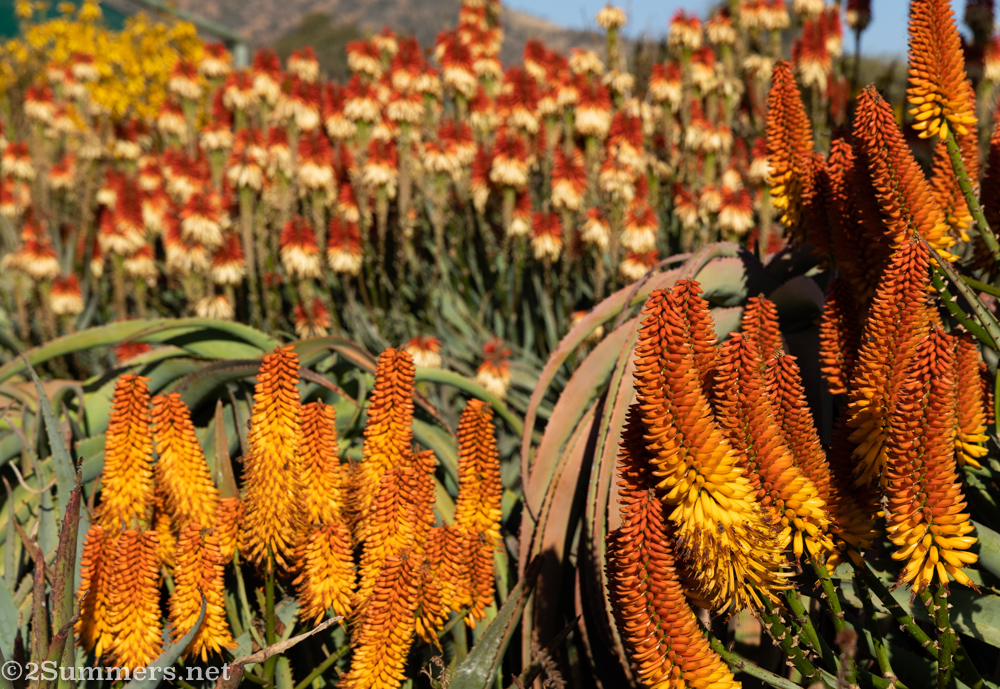
A colorful sea of aloes in bloom at the Aloe Farm.
Since then I’ve tried to do at least one aloe photoshoot each winter. And this year I finally made it to the Mecca of aloe photography: The Aloe Farm near Hartbeespoort Dam.
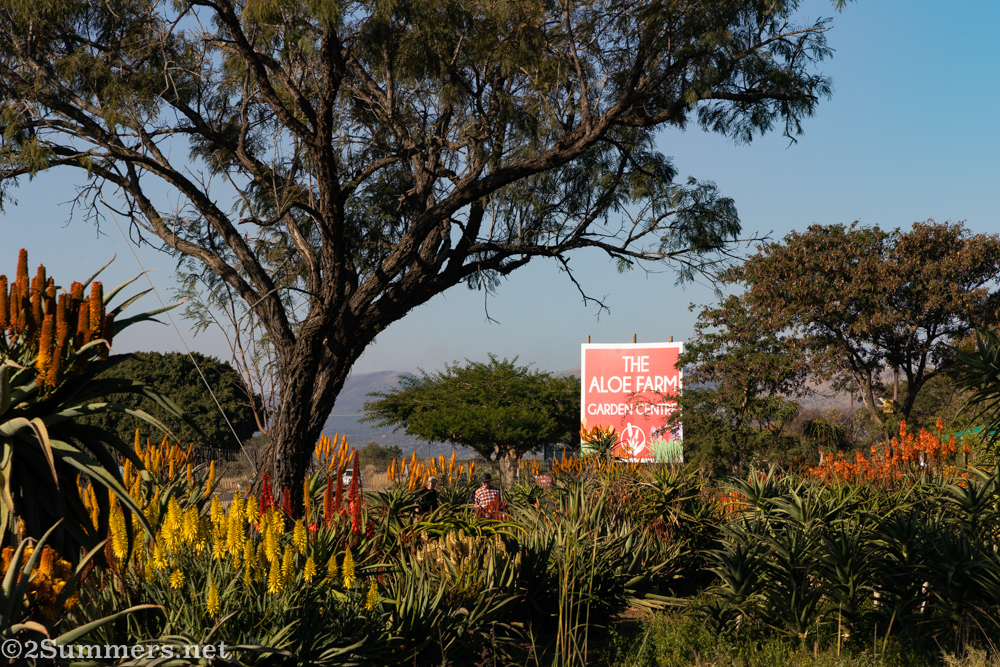
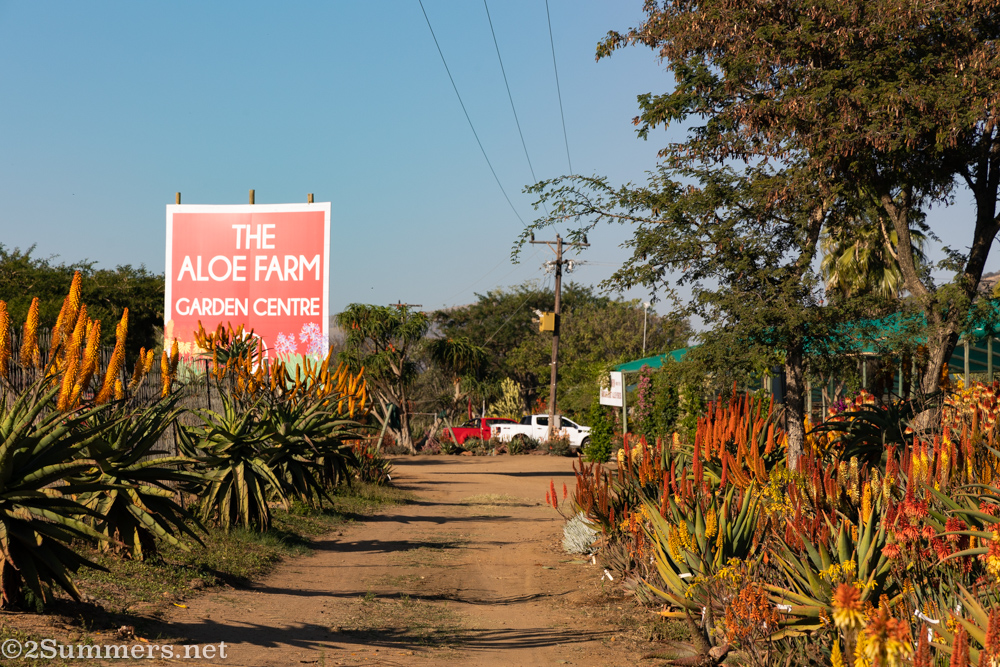
The Aloe Farm.
The Aloe Farm is to the aloe what Ludwig’s Roses is to the rose. It is THE place in South Africa to see, learn about, and buy aloes of every possible variety. And there are dozens, maybe hundreds, of varieties.
Every South African knows the most iconic flowering aloe, the aloe ferox, with its tall, dark-orange cones, but aloes occur naturally in a plethora of other shapes, colors, and sizes. The plant breeders at the Aloe Farm are constantly working to create new aloe varieties, just as the people at Ludwig’s are constantly creating new roses.
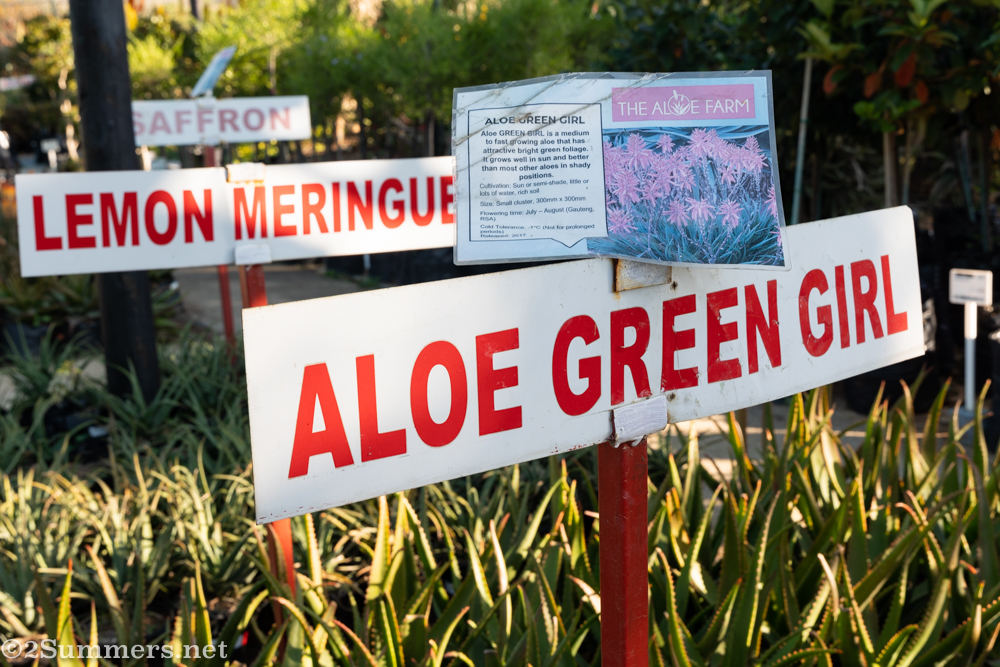
Interestingly named aloe varieties for sale in the Aloe Farm nursery.
Communing with Aloes
The Aloe Farm is about an hour and 15 minutes from central Joburg, not far from Hartbeespoort Dam. I went late on Sunday afternoon, when the light is best, with Thorsten and his mom. It was totally worth the drive.
The garden at the Aloe Farm.
The Aloe Farm is a photographer’s paradise. In addition to the traditional covered plant nursery that you’d find at a normal garden center, there is a huge outdoor garden bursting with aloes. At this time of year the garden is humming (and chirping) with feasting birds and bees – the Aloe Farm is paradise for them, too. The nearby Magaliesburg Mountains provide a perfect backdrop.
I ambled along the dirt track that winds through the garden for ages, taking a million pictures. It made me so happy.
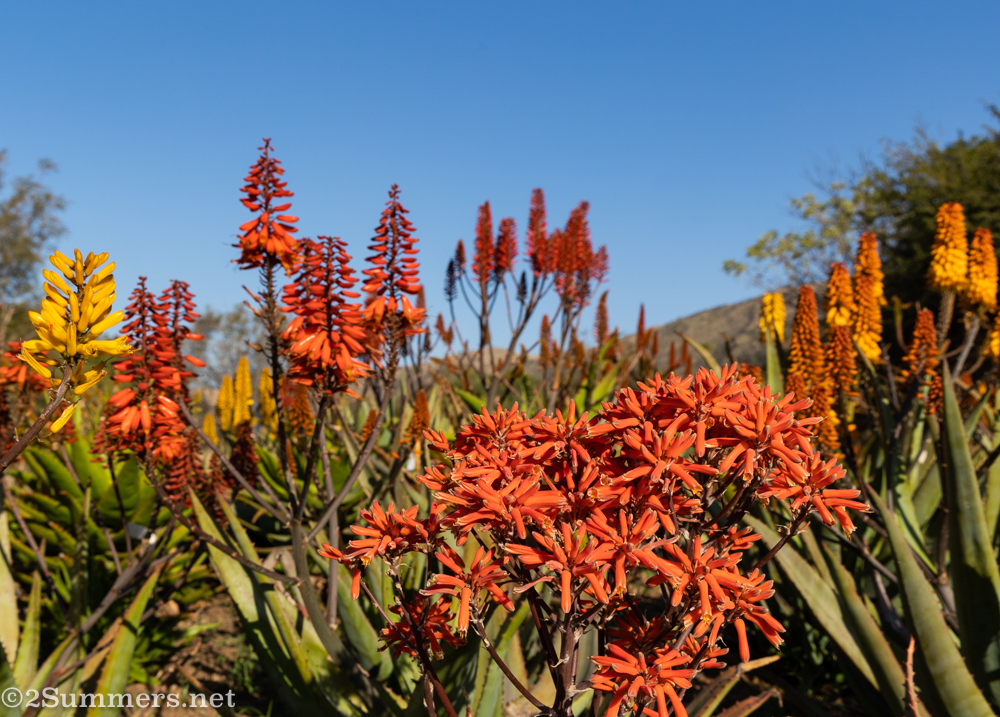
Typical aloe scene.
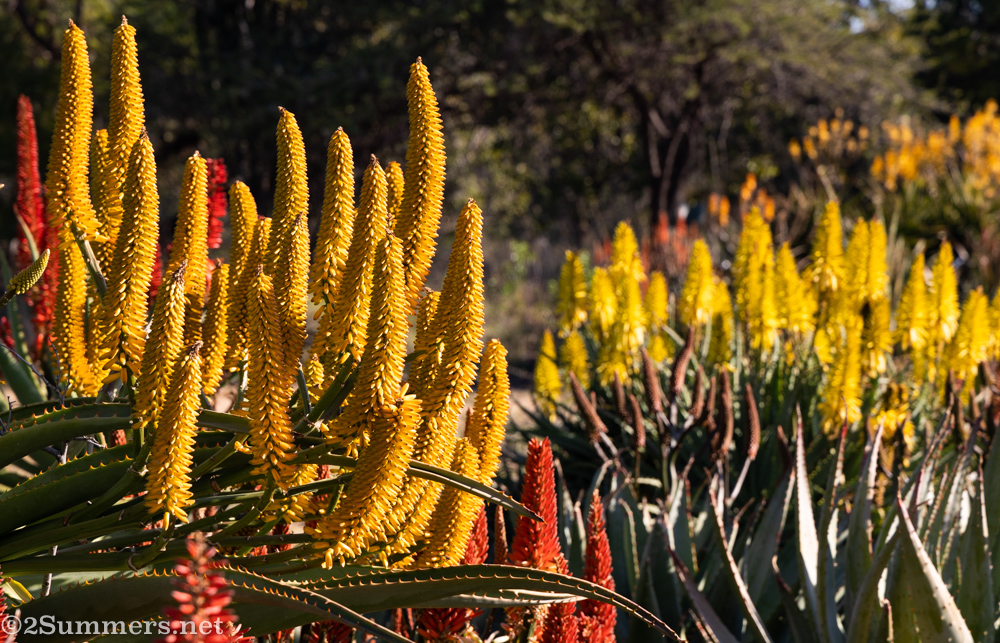
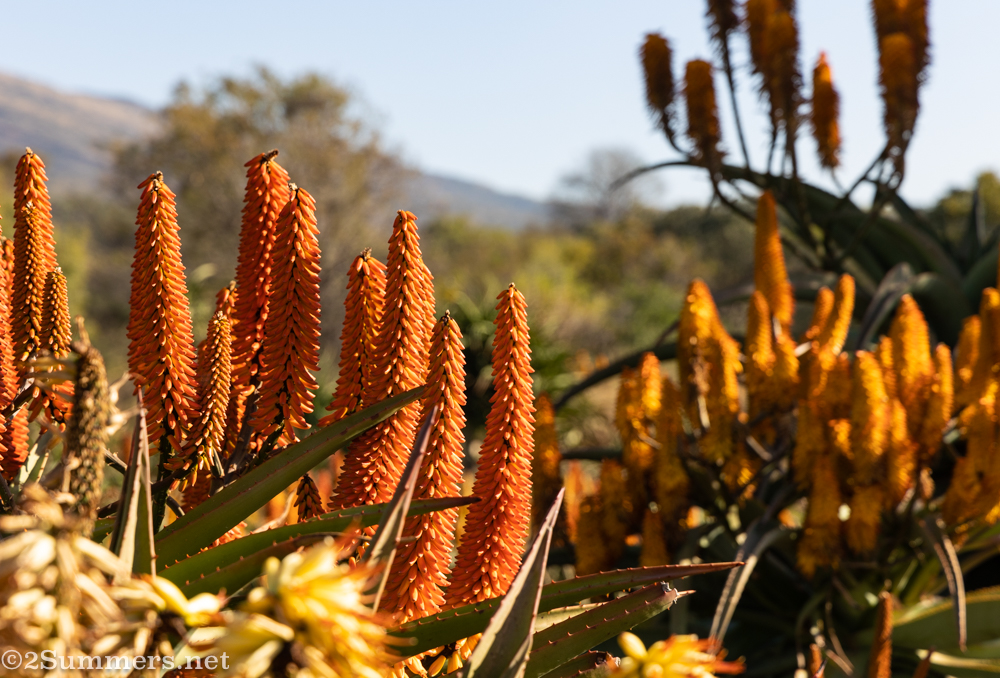
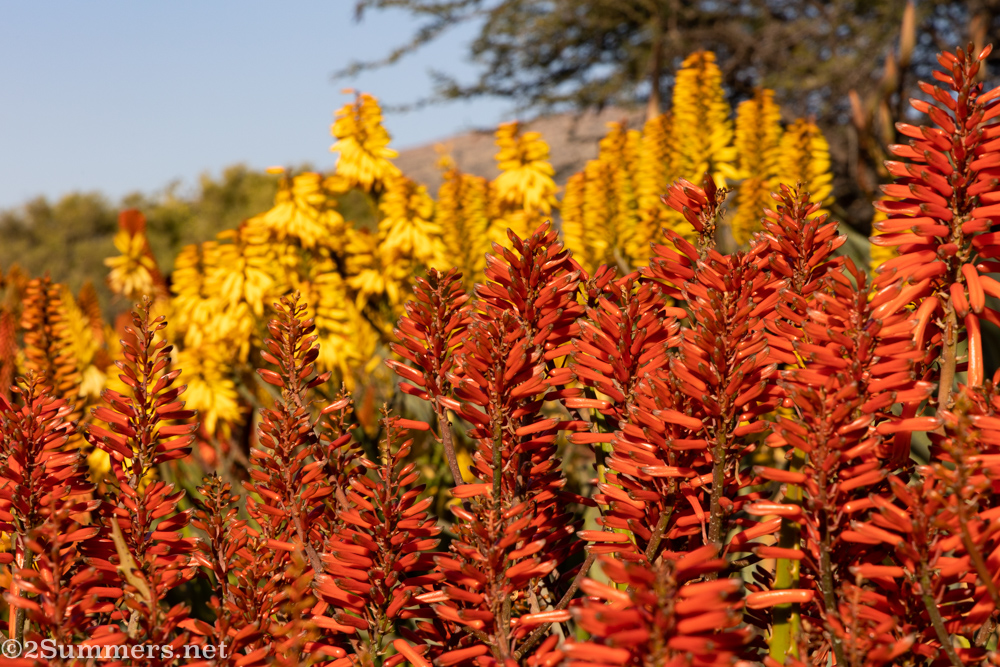
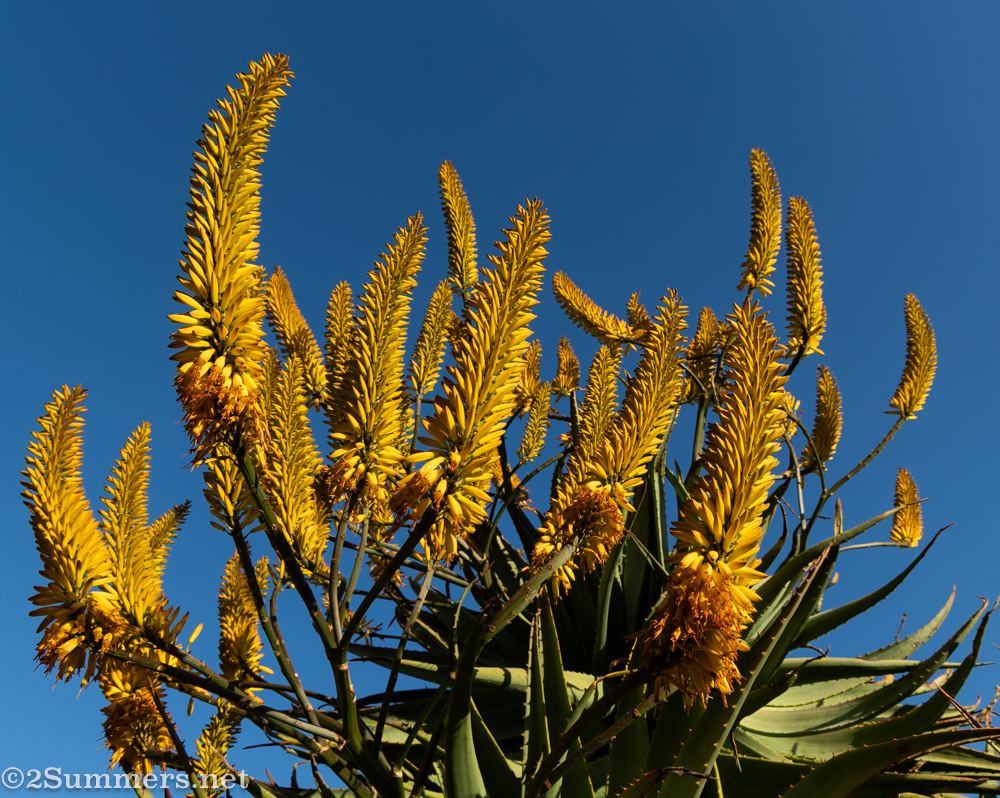
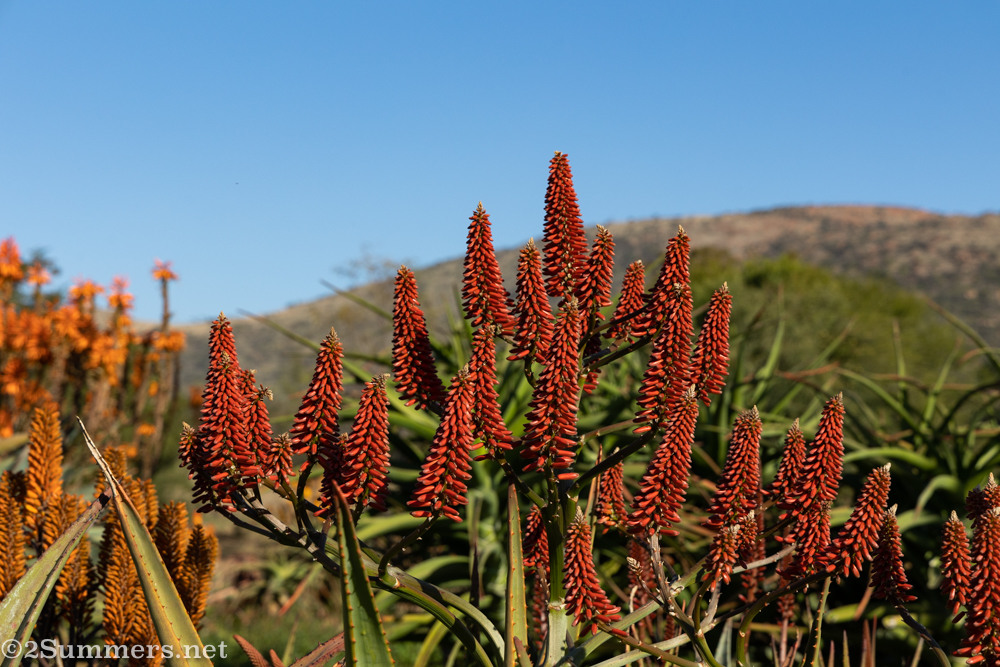
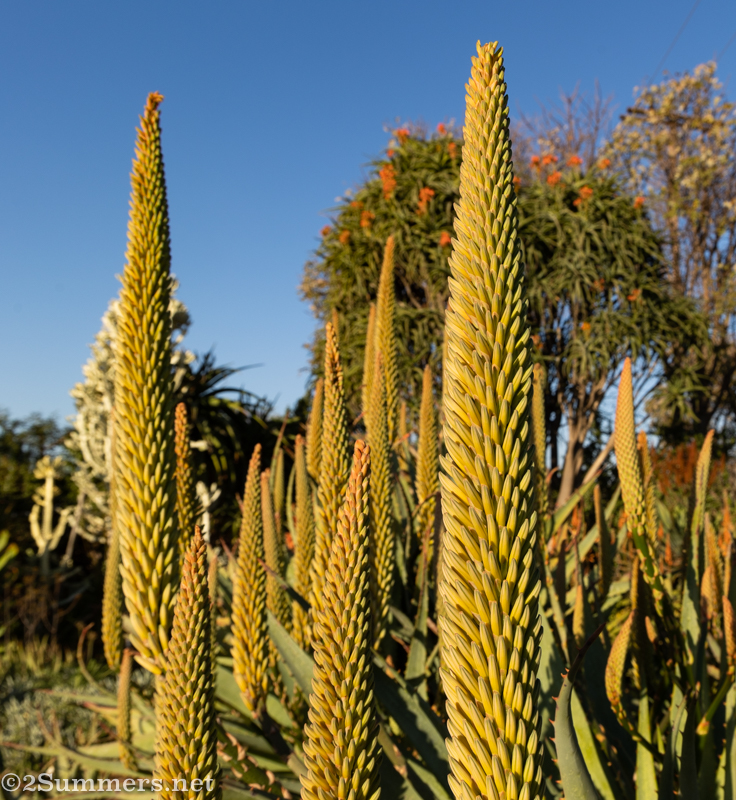
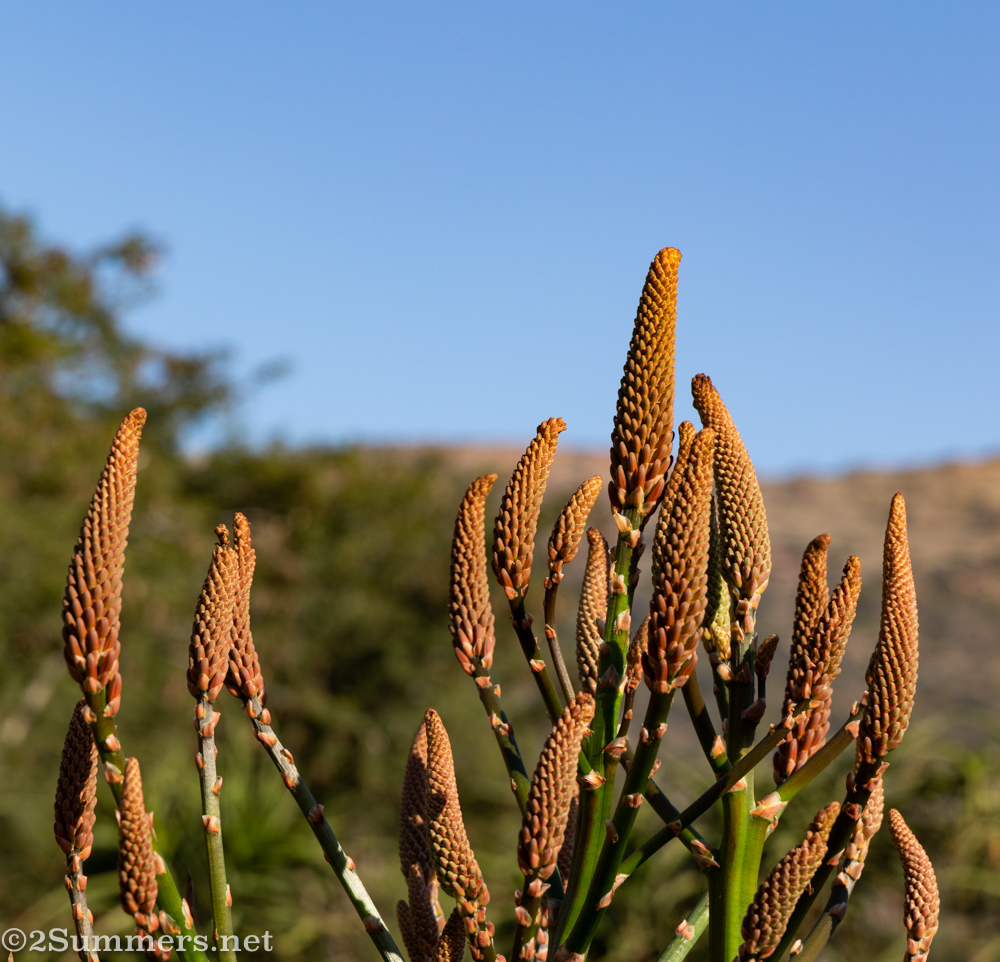
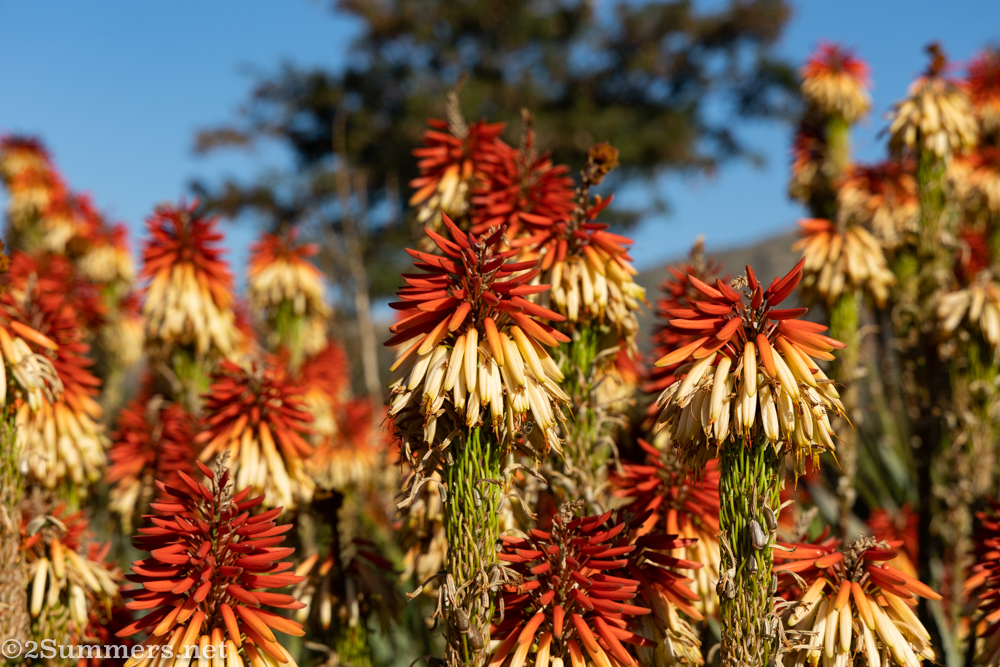
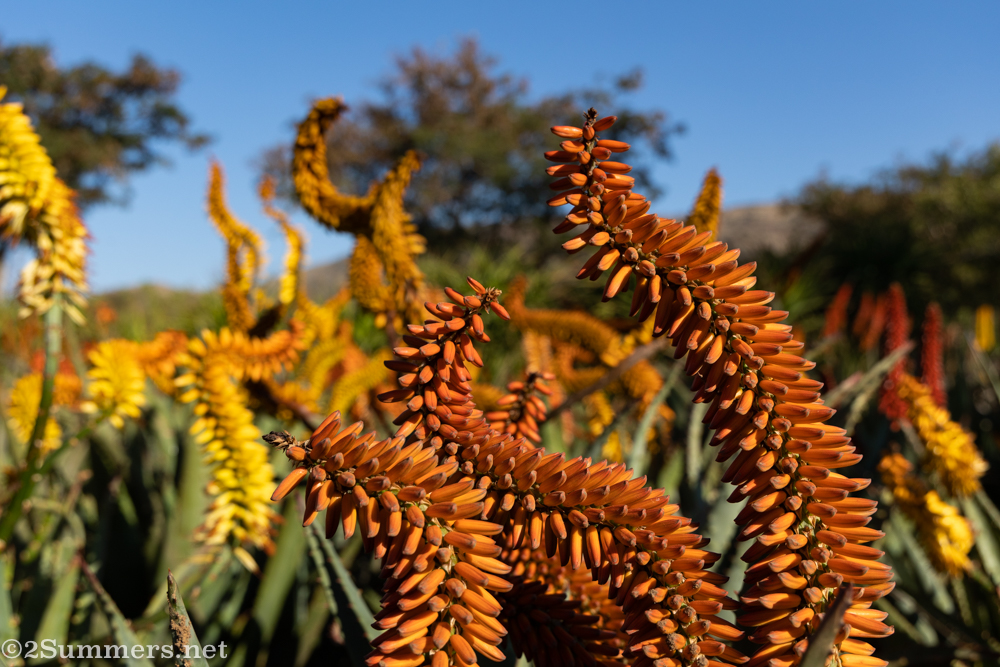
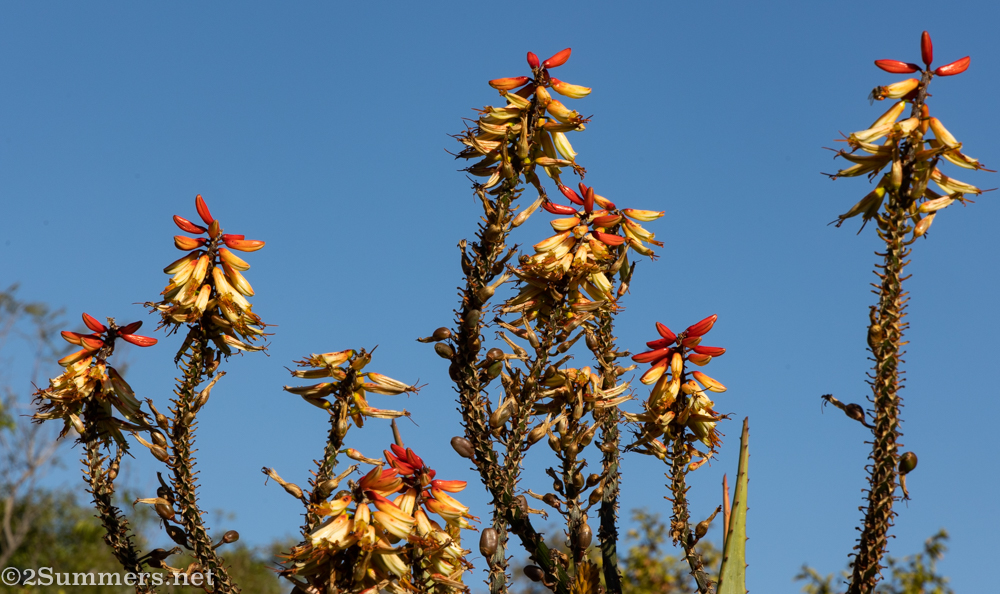
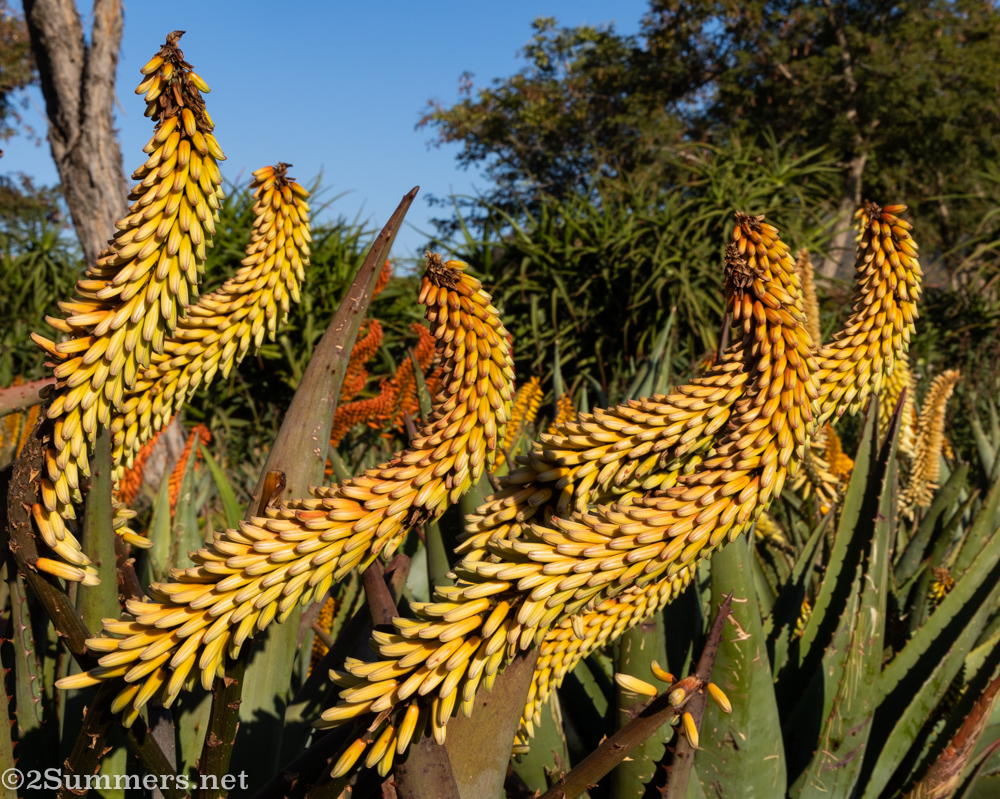
We think of aloe flowers as being mostly orange. But they are also red, yellow, brown, green, whitish pink, and sometimes even multiple colors. The bright yellow ones are my favorites.
A sea of orange and yellow.I don’t have a garden currently. But I want my next garden to have a yellow aloe tree.Red.Green with a tinge of pink.Brown.Burnt orange and white.
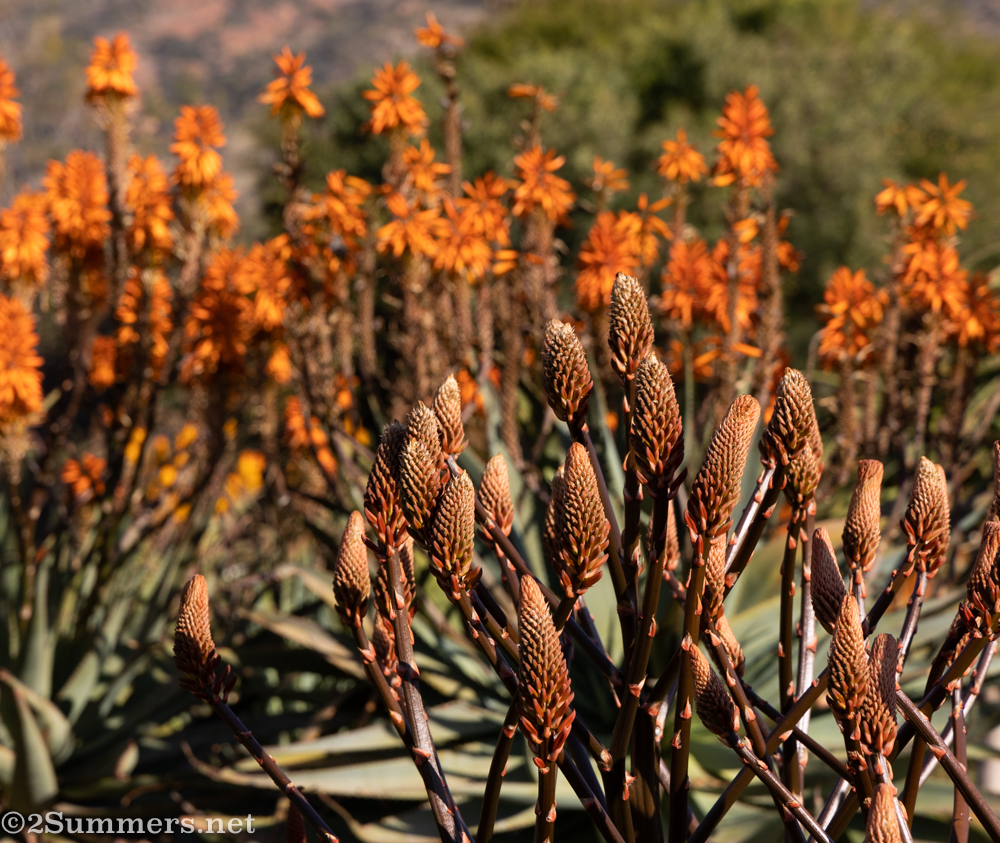
I’m also fascinated by the varying shapes of the aloe flowers.
I like the shrub-shaped one in the front.These remind me of pine cones.And these are doing a synchronized dance.
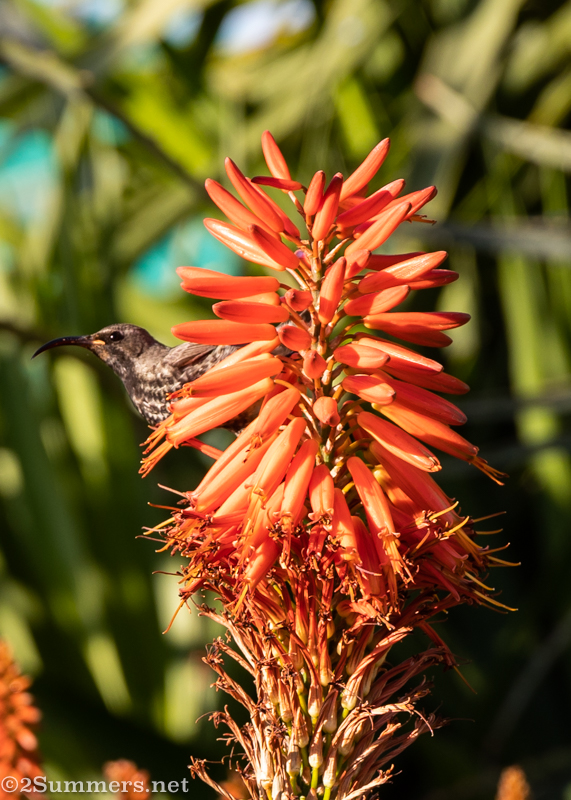
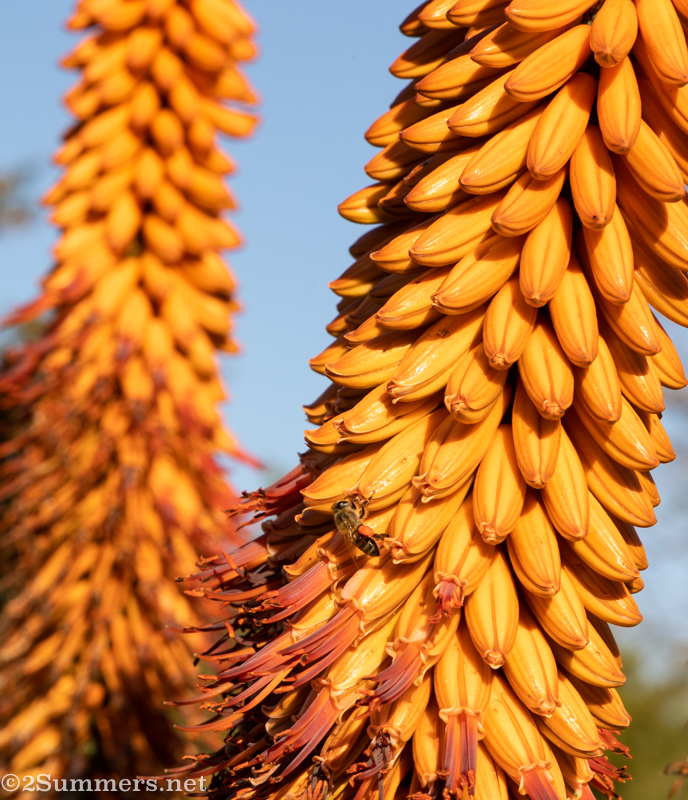
Many photographers go to the Aloe Farm specifically to photograph birds. I stupidly didn’t bring a good wildlife lens so bird (and bee) photography was challenging – those little guys move fast. But I did capture one or two.
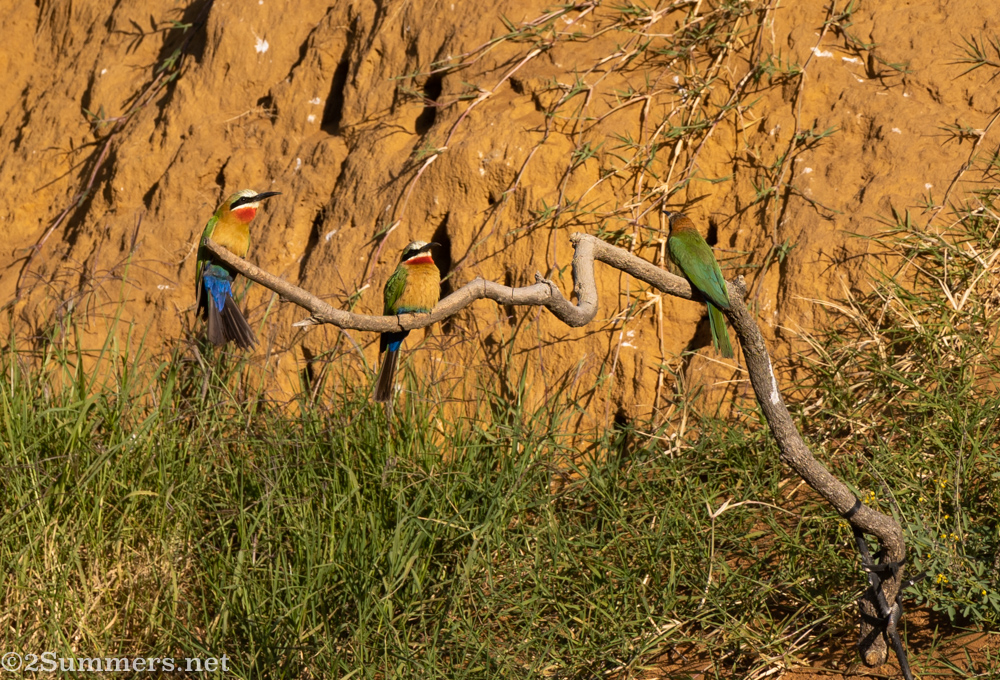
A sunbird of some sort.Happy bee (about three quarters of the way down the flower), living its best life. Look closely and you’ll see what appears to be a tiny orange knee pad on the bee’s leg. I noticed a lot of the bees had these…I wonder if it’s aloe pollen? Speculation or actual scientific facts are welcome.There is a large colony of white-fronted bee-eaters living in a cliffside behind the nursery. White-fronted bee-eaters are super interesting, beautiful birds – I will definitely bring binoculars next time.
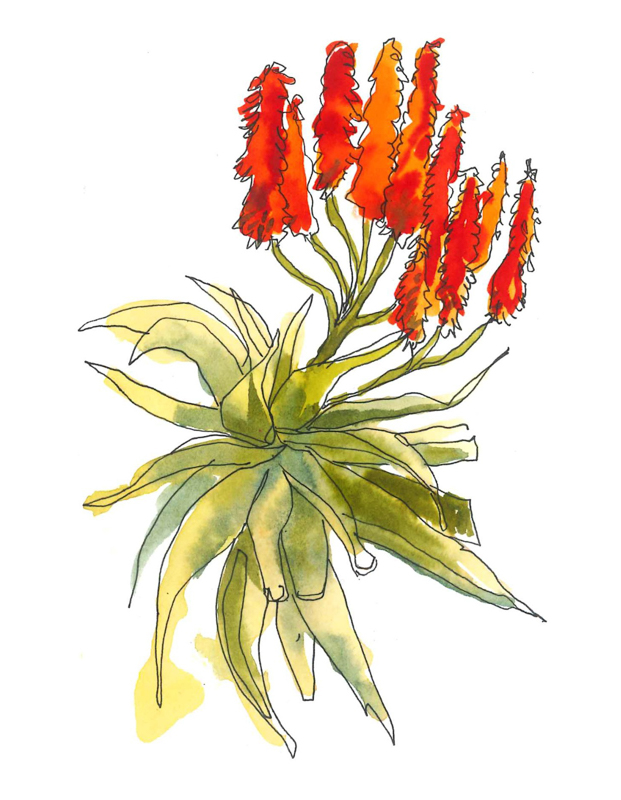
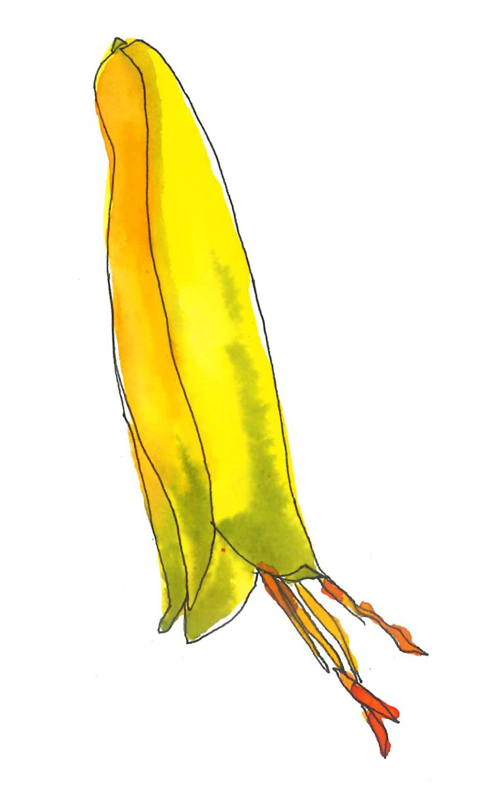
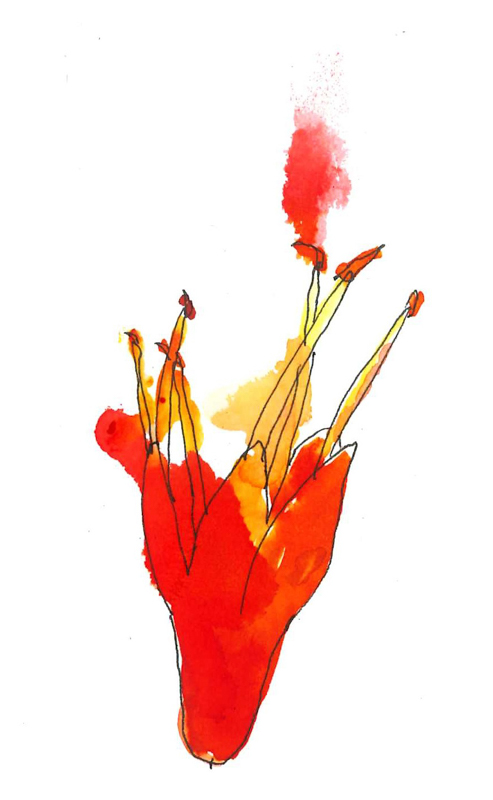
Oh, and of course @theThinking_Hand made beautiful aloe flower sketches.
My favorite.
And that was our visit to the Aloe Farm. Note there is a small snack bar at the farm but no restaurant. The farm is open from 7:30 a.m. to 4:30 p.m. The farm is also holding an Aloe Festival from June 24th to July 9th – details are on their Facebook page.
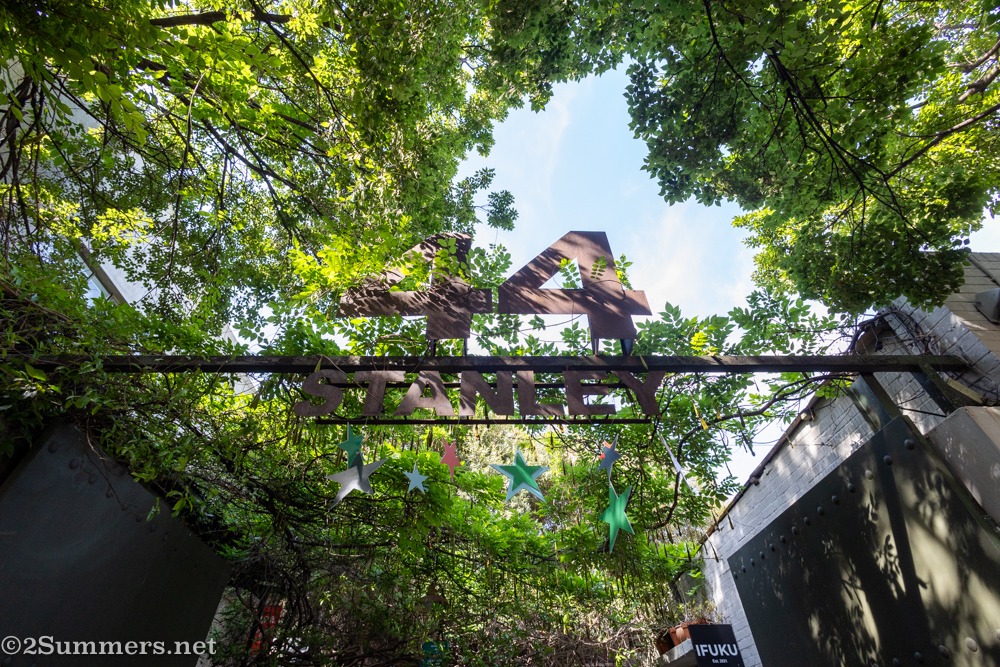
I guess it’s wrong to say I’ve never blogged about 44 Stanley; I’ve mentioned it countless times over the years (see here and here) when writing about specific restaurants or shops that are there. But I’ve never written a dedicated post about 44 Stanley as a destination and it’s about time I did – especially now, with the holidays upon us.
Use the share button below if you liked it.
It makes me smile, when I see it.