I know nothing about rugby. In 13 years of living in South Africa I’ve attended only one live rugby match. But I know a lot about sports and I know a lot about people. And I know that Saturday’s Rugby World Cup final between South Africa and New Zealand was something I’ve never seen before: An entire nation of 62 million people coming together – forgetting their gaping divides, forgetting their country’s problems and all the world’s problems – experiencing unadulterated joy while watching a sports team that belongs to all of them.
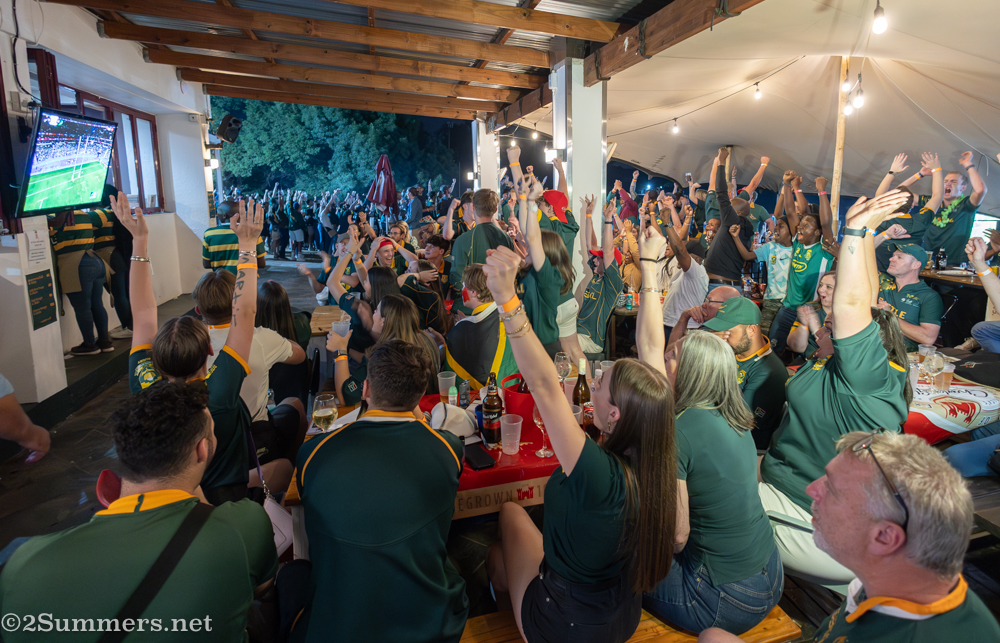
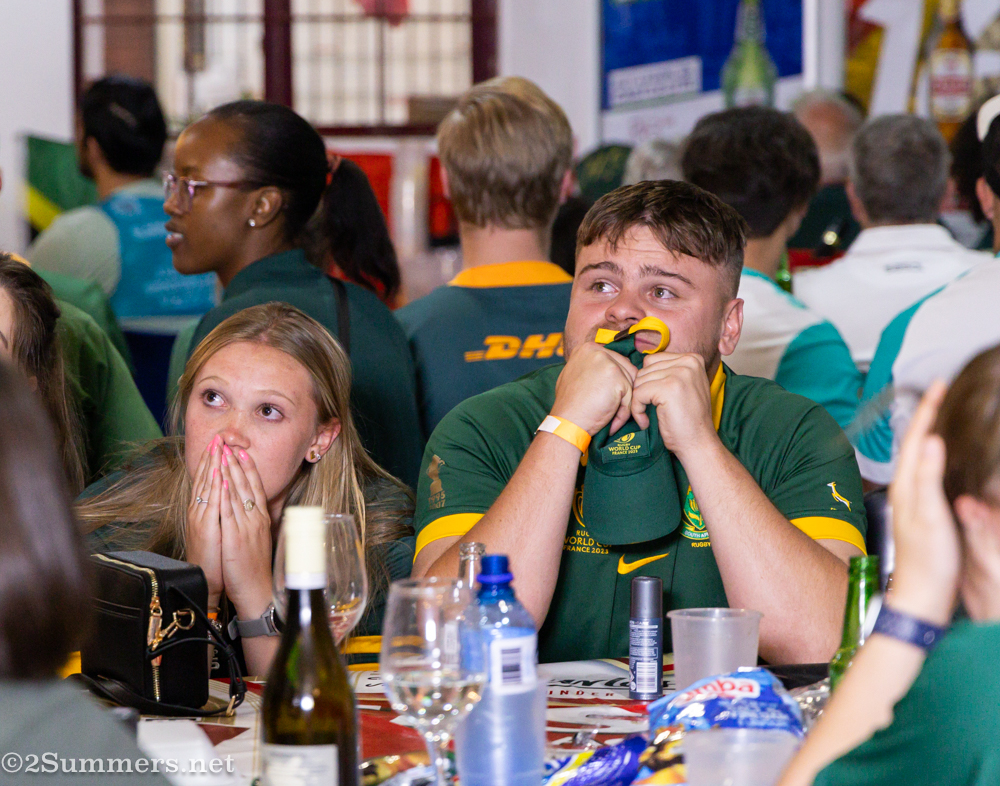
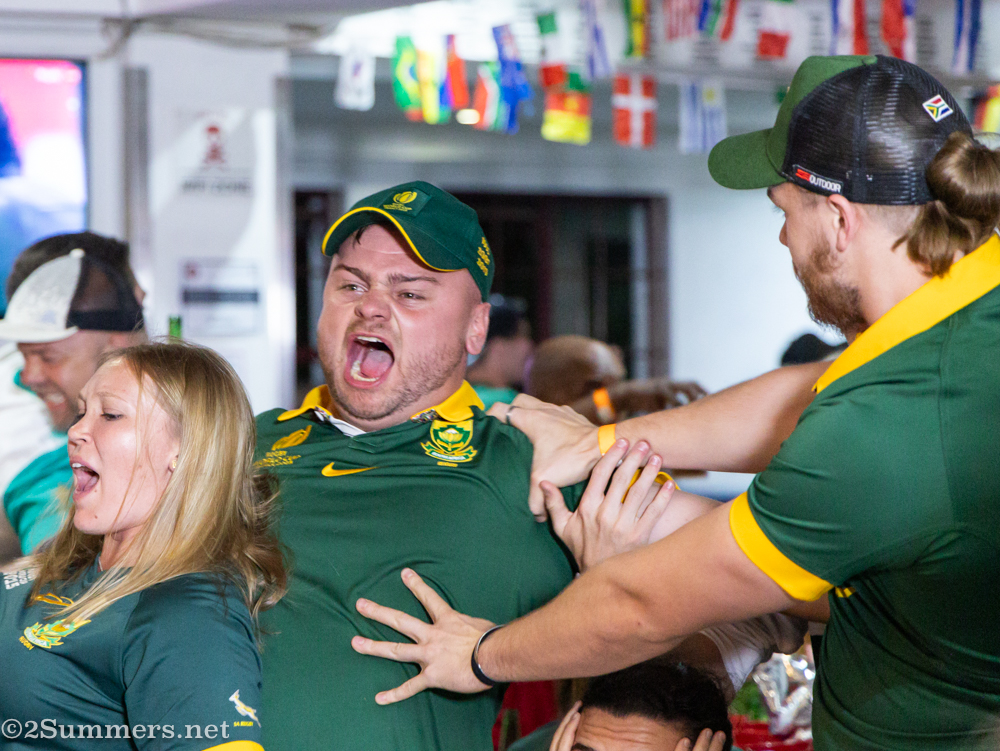
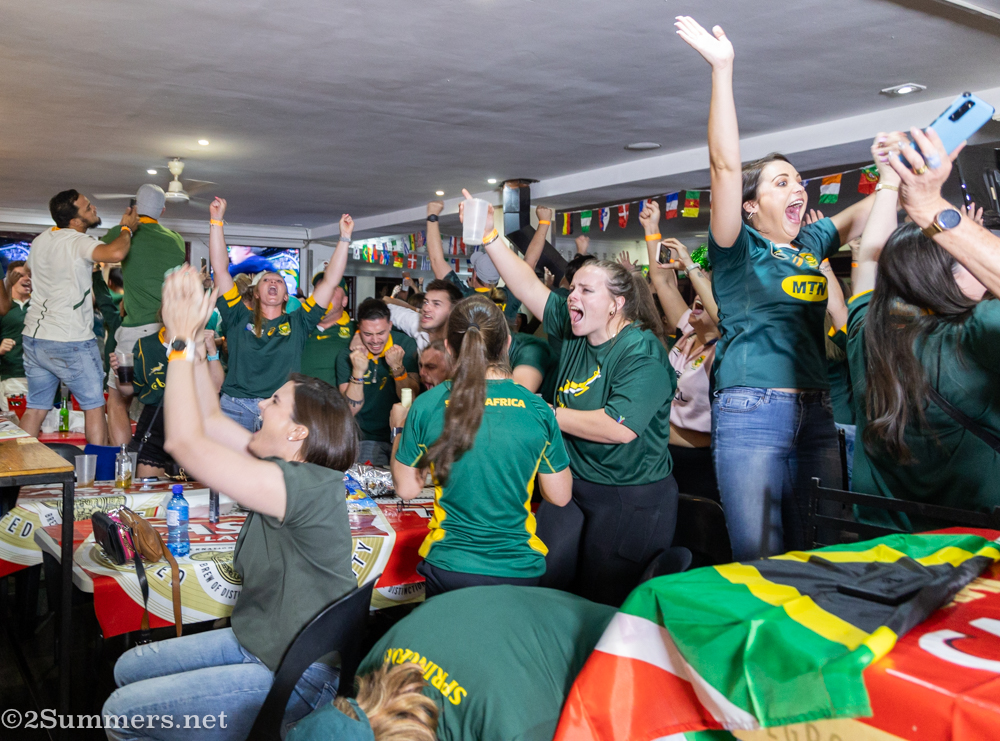
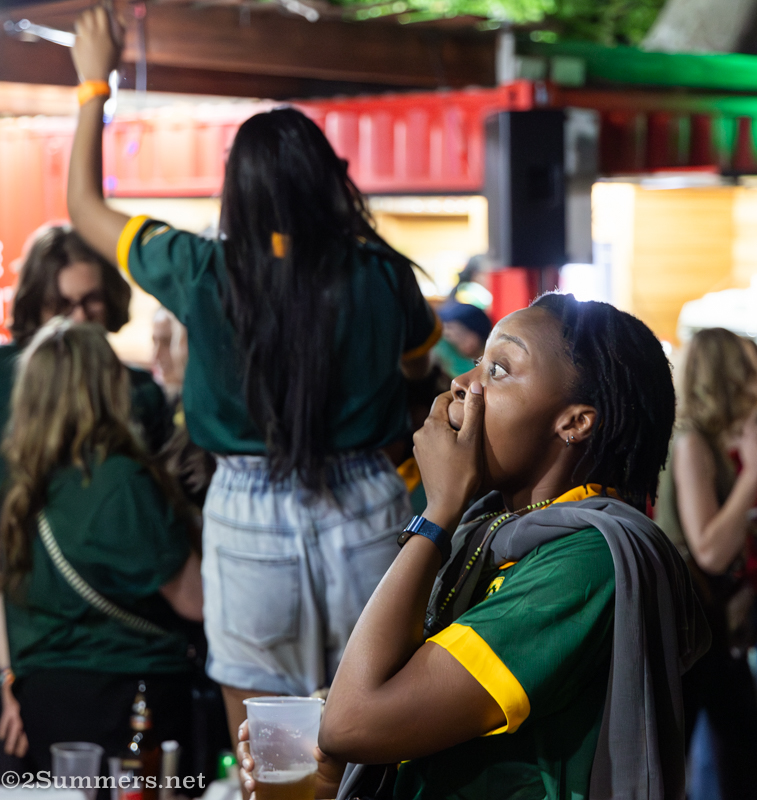
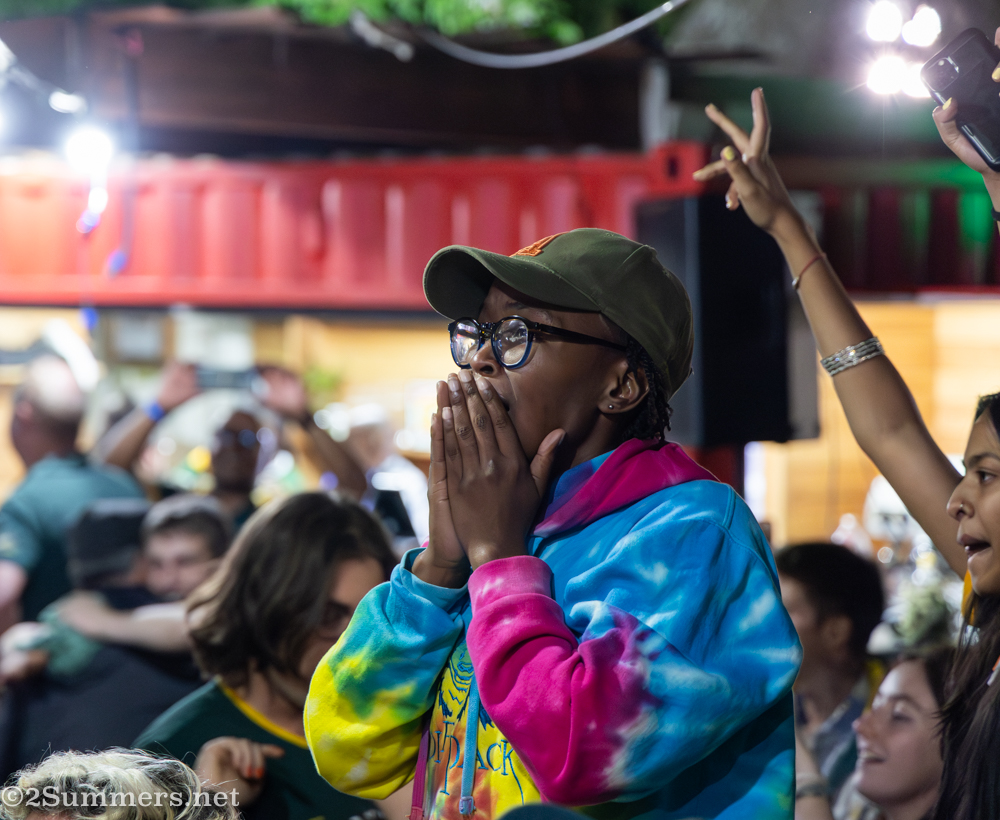
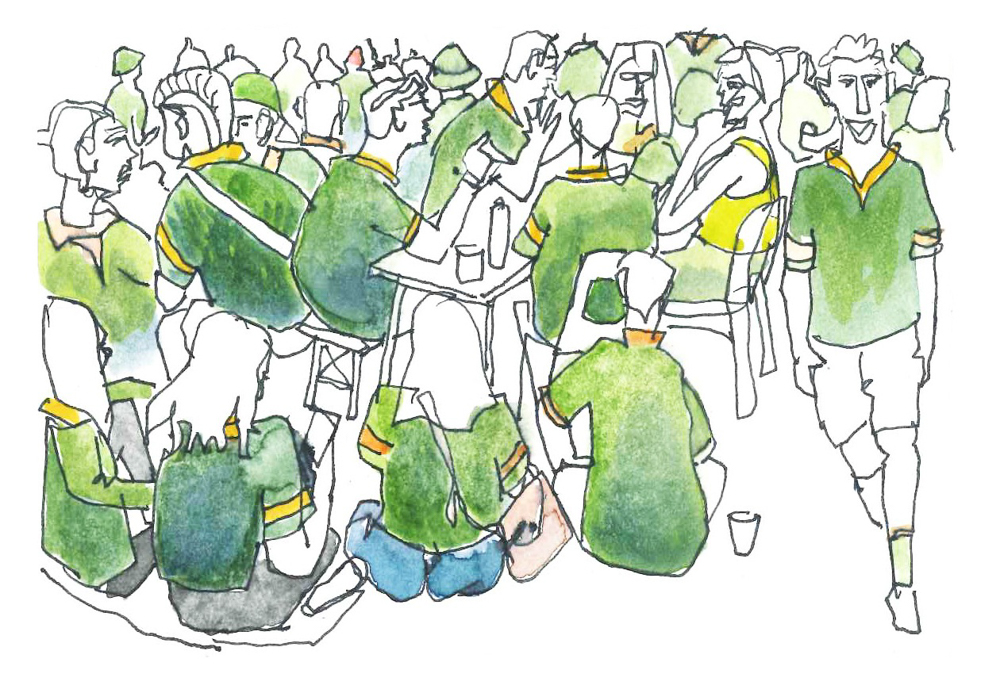
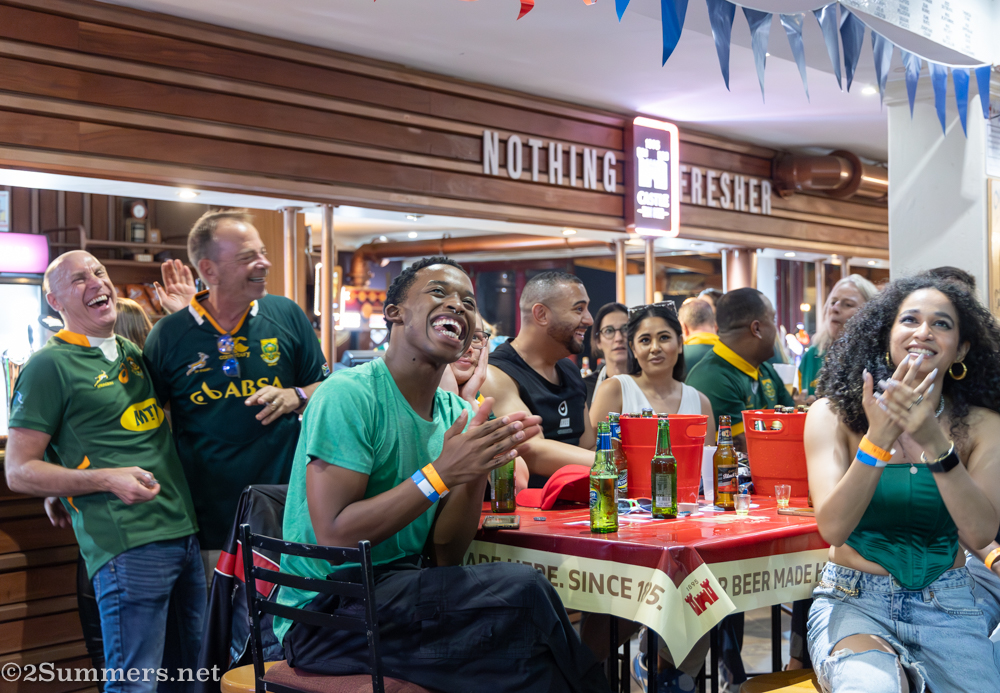
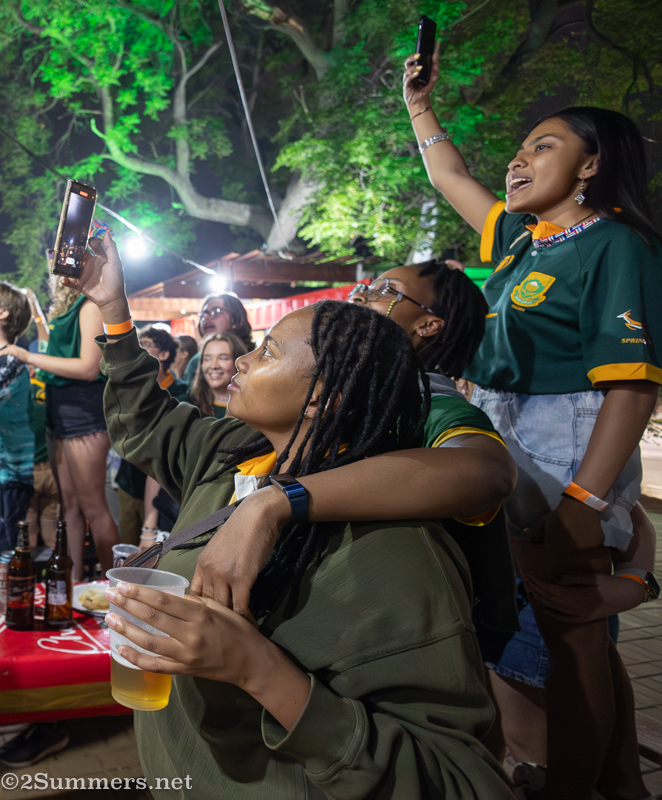
South African fans at the Pirates Club cheer on the Springboks (South Africa’s national animal and the name of the national rugby team) after their first score of the match.Nervous fans.Same fans a few minutes later.The moment of victory. The Boks barely scraped it out, winning 12-11. All three of South Africa’s knockout round wins – against France, England, and New Zealand, respectively – were by one point.Also right after the win.I saw quite a few people looking jubilantly stunned like this.Thorsten’s sketch of the fans at Pirates gives a good feel for the crowd. I’d say there were at least 500 people there, watching the game on at least a dozen screens.
Let me put this win into terms that my fellow American sports fans can understand: For South Africa, winning the Rugby World Cup is like winning the Superbowl. Except the whole country won, not just one city. And it’s a victory over the entire world.
Can you imagine every person in America coming together and celebrating one thing – anything – at the same moment? I certainly can’t. But that’s what happened in South Africa on Saturday night.
If you’re South African and don’t live under a rock, you’ve probably seen Springbok captain Siya Kolisi’s interview after South Africa’s victory, in which they beat the All Blacks for the second time in a rugby World Cup final. It was South Africa’s second consecutive World Cup win and its fourth total World Cup win, which no rugby team has ever achieved before.
“People that are not from South Africa don’t understand what this means for our country. It’s not just about the game on the field,” Siya said. “Our country goes through such a lot, and we are that bare hope that they have. We’re just grateful that we can be here and I want to tell the people of South Africa: Thank you so much.”
Siya also said, “This team shows what diversity can do. For our team, for our country as well. As soon as we work together, all is possible.”
You might think that sounds idealistic. I might think so too if I hadn’t watched this game with hundreds of South Africans. But luckily I did, and the Springboks made me believe, at least for one night, that all is possible.
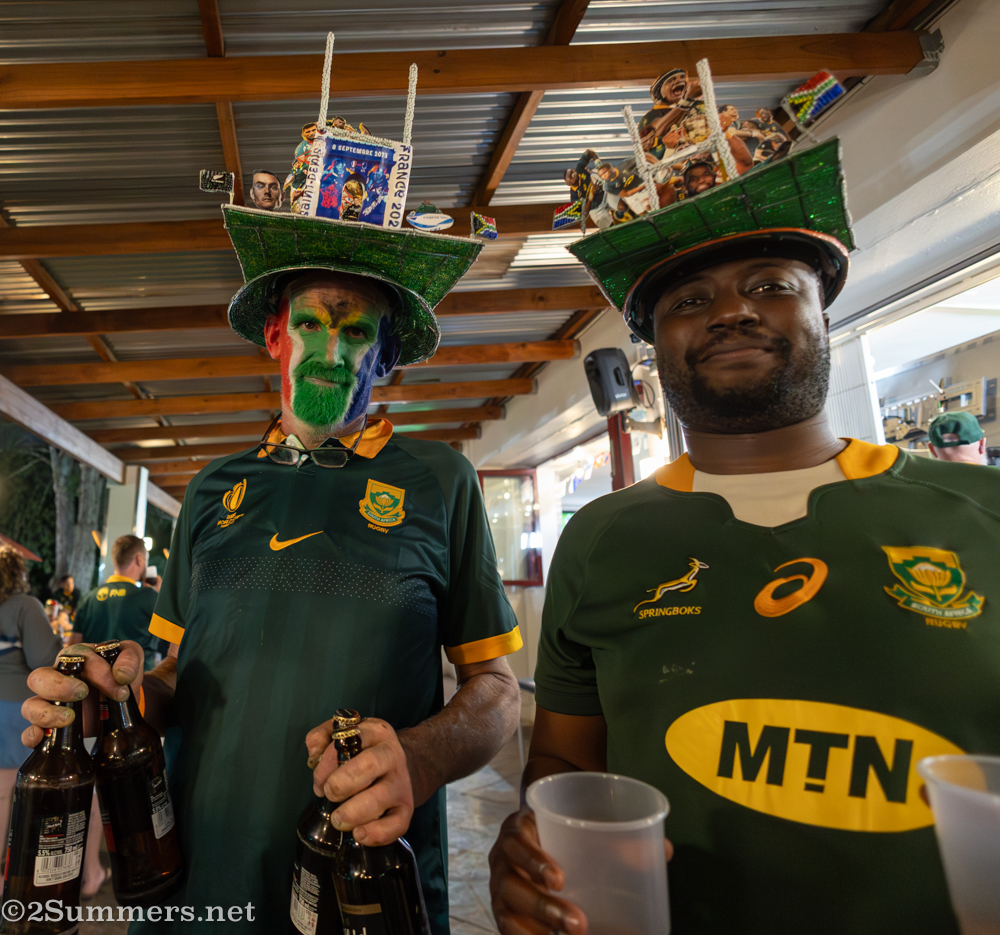
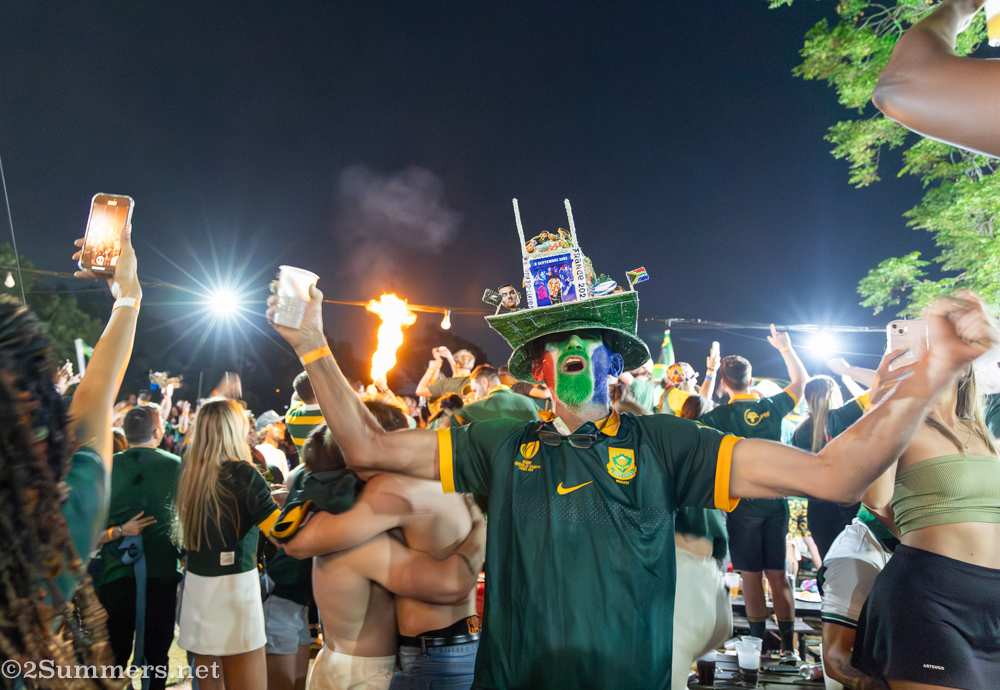
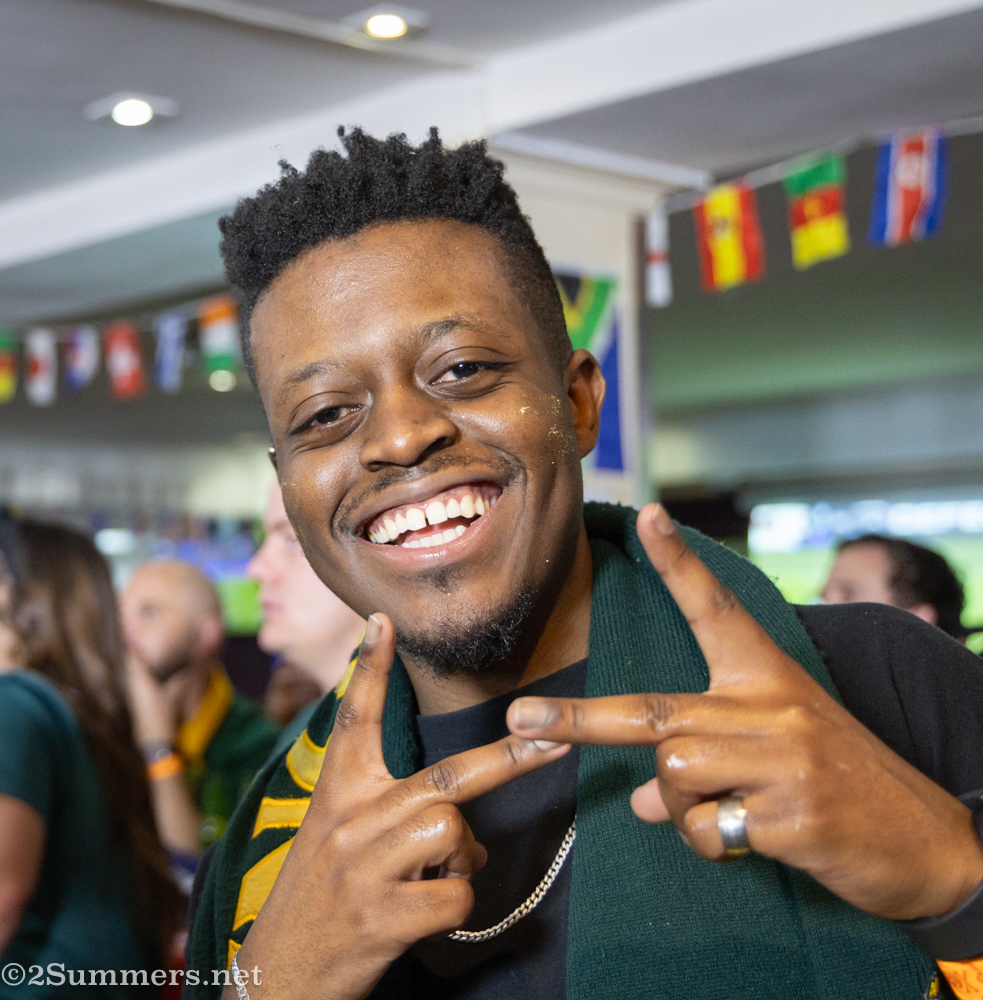
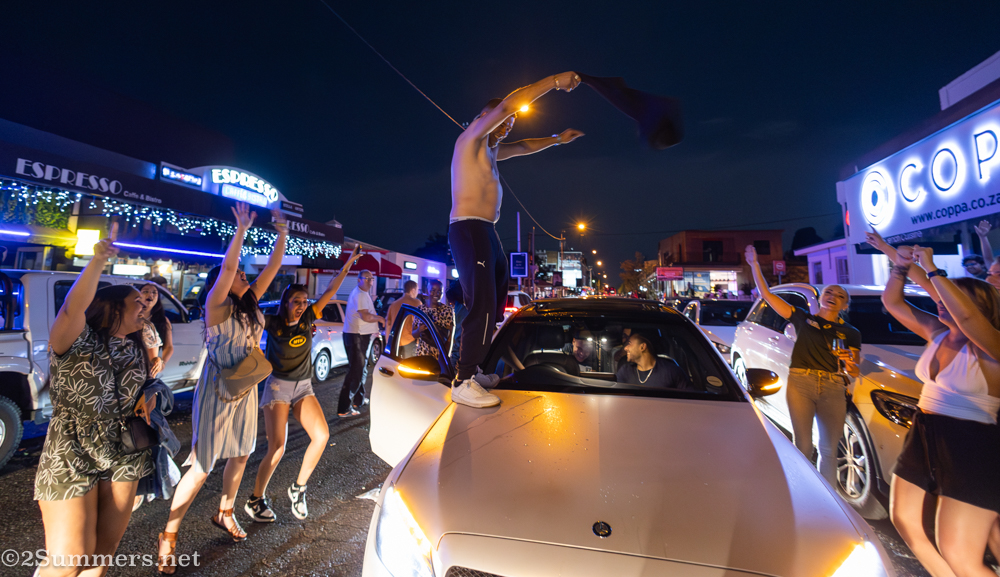
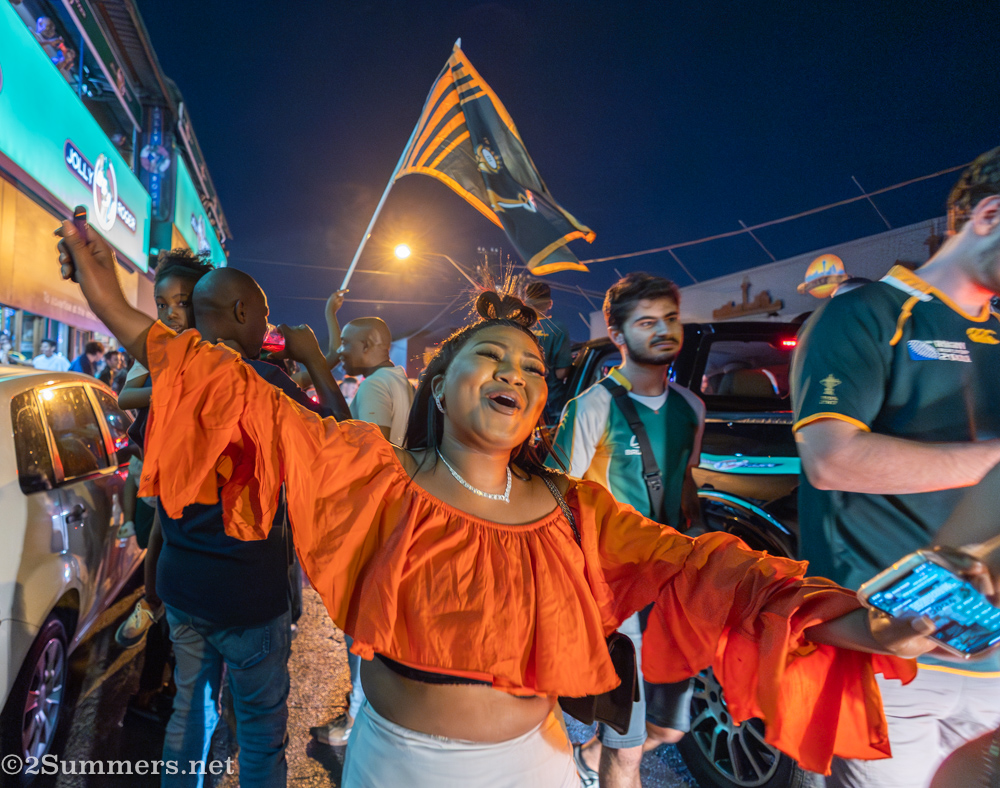
A rainbow nation of Springbok fans.Superfans wearing the most spectacular makarapas.Makarapa man after the win. I’m not sure where those flames were coming from but I don’t think anything burned down.Just a nice guy who asked me to take his picture. Sorry I didn’t get your name, dude. I hope you see this.4th Avenue, Parkhurst, just up the street from Pirates, after the win. Hopefully the car made it out unscathed.More jubilation.
Even if you’re not South African, maybe you’ve seen the film Invictus, which is about South Africa’s 1995 World Cup win over New Zealand. If you have, then you might understand why rugby truly is more than just a game for South Africans.
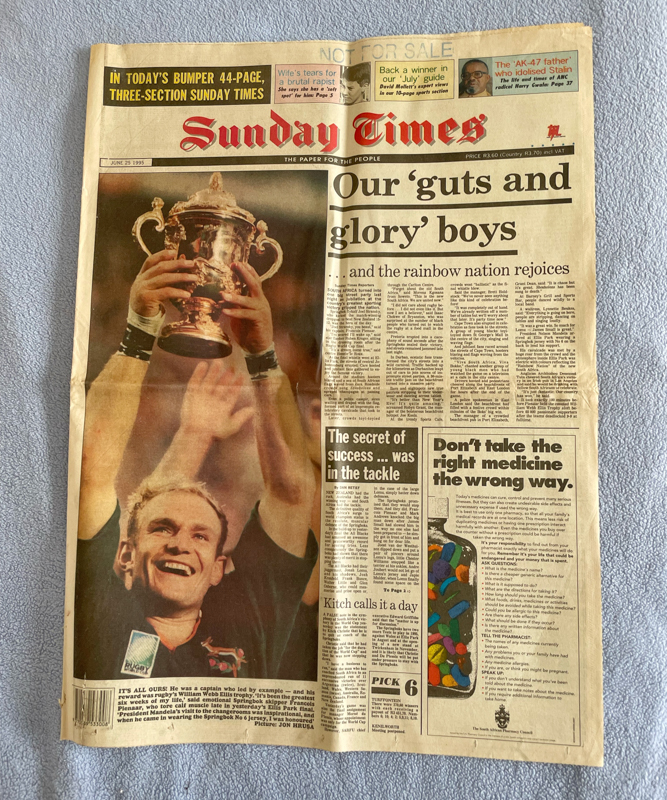
Jon Hrusa, my late partner, took this photo of Springbok captain Francois Pienaar holding the trophy after South Africa’s World Cup win in 1995.
South Africa first won the rugby World Cup in 1995, the year after democracy, which was the first time South Africa was allowed into the tournament. South Africa also hosted the Rugby World Cup that year. Under apartheid, which ended in ‘94, rugby had been a segregated, all-white sport in South Africa. But Nelson Mandela and the ‘95 Springboks changed that. Rugby became a sport for all South Africans and the country never looked back.
Every sports fan in the world thinks their sport is more than a game, that their team is greater than all the other teams. But in South Africa it’s just undeniably, objectively true.
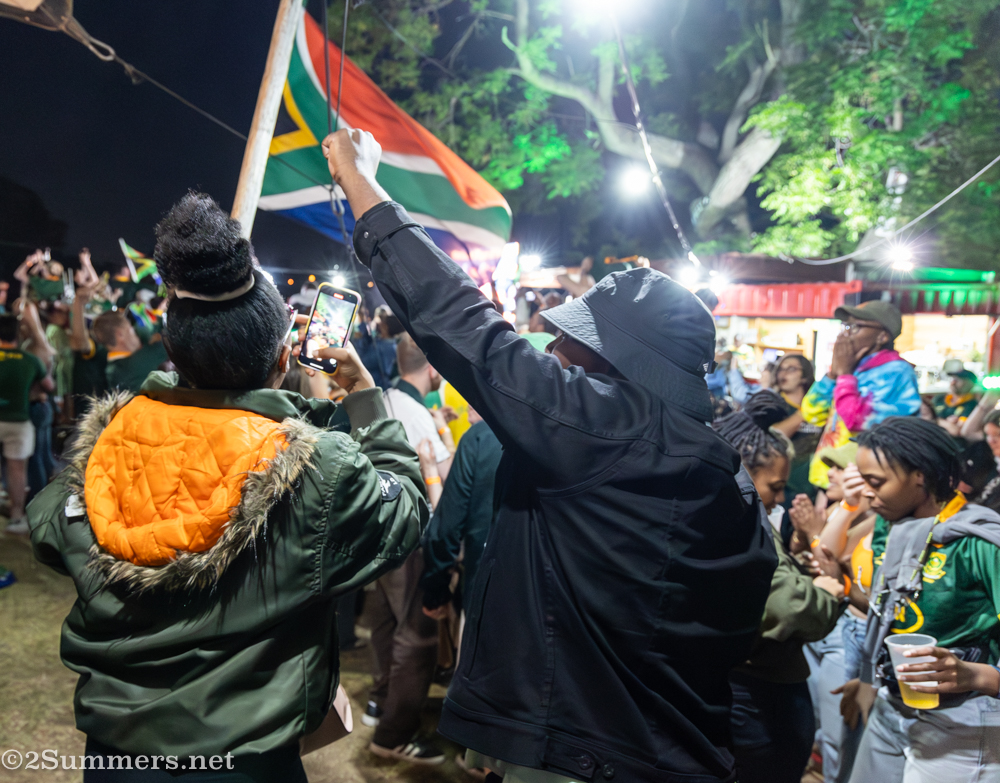
South Africans singing the national anthem before Saturday’s match. I’m now motivated to finally learn all the words to the national anthem, which includes five different South African languages.There were so many South African flags flying on Saturday but for some reason this is the only flag shot I’m happy with.
I was visiting my family in America in October 2019, the last time the Springboks won the World Cup, so this was my first time in the country for a game like this. I thought I knew what to expect; I’ve watched my hometown teams in America win the Superbowl and the World Series.
But nothing could have prepared me for what I saw on Saturday: hundreds of fans watching together with rapt attention, hardly anyone booing or screaming epithets at the refs when things didn’t go the Springboks’ way (can you imagine that in an American sports bar?!), strangers not just high-fiving but full-on embracing in the tightest of bear hugs, people sobbing with joy, singing and dancing in the streets. It was the most emotion I’ve seen in South Africa since the day Mandela died.
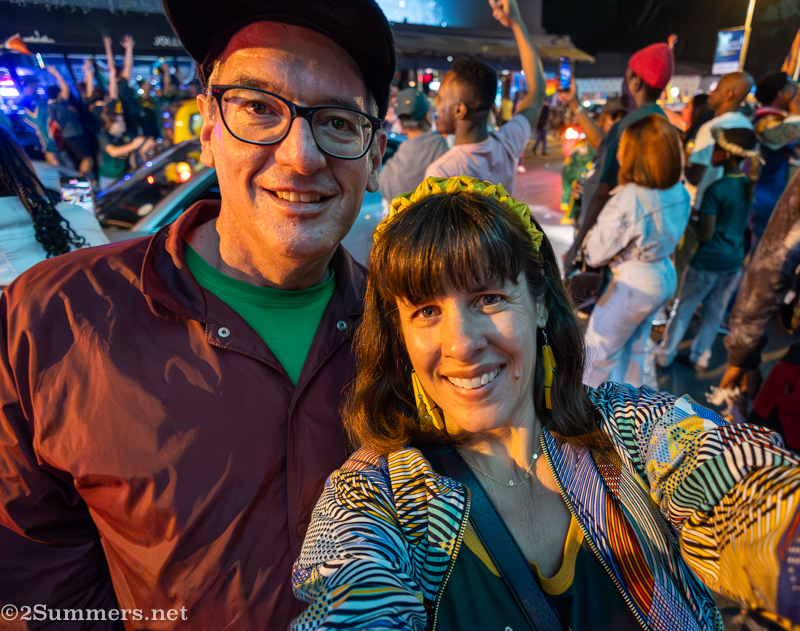
Thorsten and I in the middle of the joyful mayhem.
I’ll leave it at that – I don’t know enough about rugby to say more. But I’ve got the t-shirt now and I’ve officially become a fan. Thank you, Springboks! Looking forward to the parade.
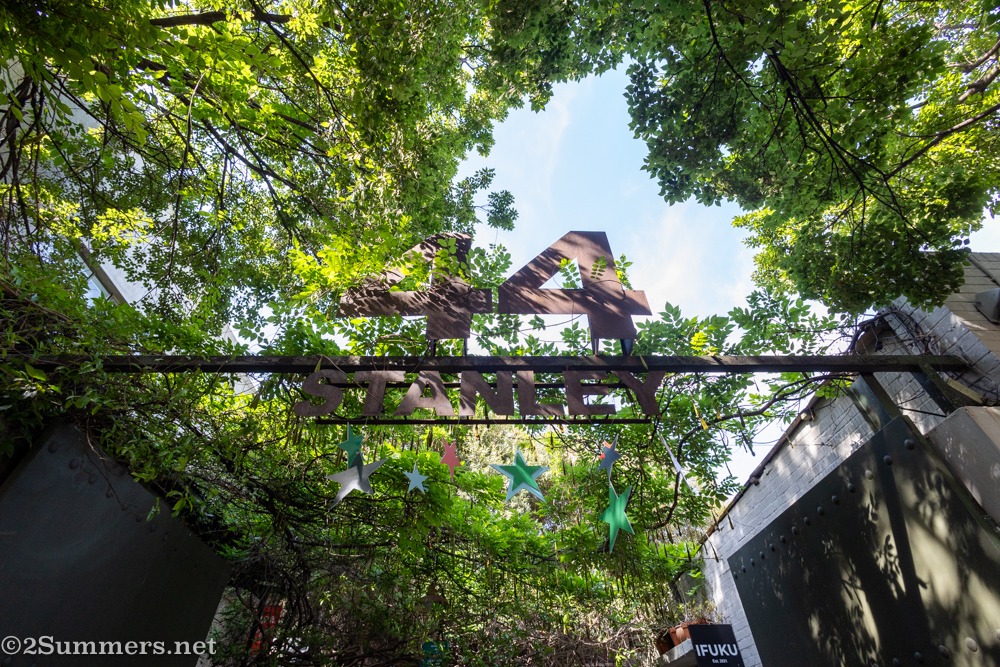
I guess it’s wrong to say I’ve never blogged about 44 Stanley; I’ve mentioned it countless times over the years (see here and here) when writing about specific restaurants or shops that are there. But I’ve never written a dedicated post about 44 Stanley as a destination and it’s about time I did – especially now, with the holidays upon us.
In 2020, I published a blog post with tips for Americans living in South Africa who wanted to vote in the U.S. presidential election. I thought about simply resharing that post this year. But then I realized: 1) I want to write a U.S. election post that will be fun and informative for everyone, not just other Americans; and 2) Believe it or not, the U.S. presidential election stakes are even higher in 2024 than they were in 2020. So I’m introducing you to some really cool Americans in Joburg – one who I’ve known forever and two who I just met – and tell you a bit about who they are, why they live here, and why they vote.
Use the share button below if you liked it.
It makes me smile, when I see it.