I recently learned a bonkers statistic: Around 40% of all of the hominid fossils ever discovered were unearthed in the Cradle of Humankind. In other words, close to half of all the known fossils from our human ancestors – in the entire world – came out of the ground right here in Gauteng Province. This UNESCO World Heritage Site, less than an hour from Joburg, is more than a bunch of bucolic green hills – it’s one of the most important archeological regions on earth.
The Cradle of Humankind: Pretty, serene, and stuffed with fossils.
I’ve been to the Cradle of Humankind many times, mostly to go to the Maropeng museum and the Sterkfontein Cave/museum (which, sadly, is indefinitely closed). But I hadn’t been to the Cradle since before the pandemic, and there are several significant archeological sites there that I had never visited. So when I was invited a few weeks ago to take a half-day “Human Origins Tour” in the Greater Cradle Nature Reserve with expert guide Howard Geach, I was excited to check it out.
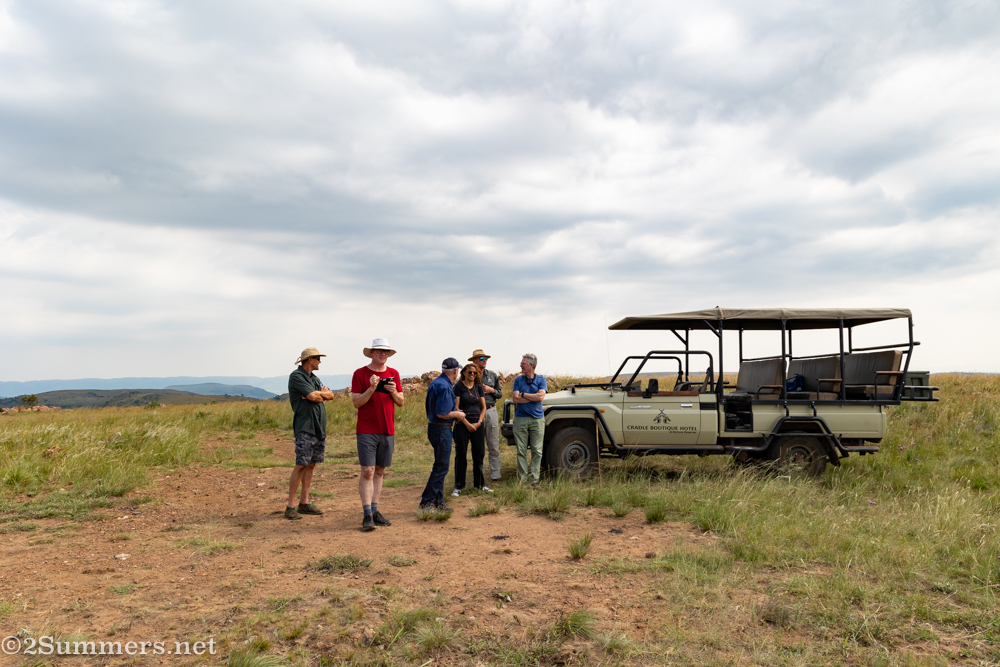
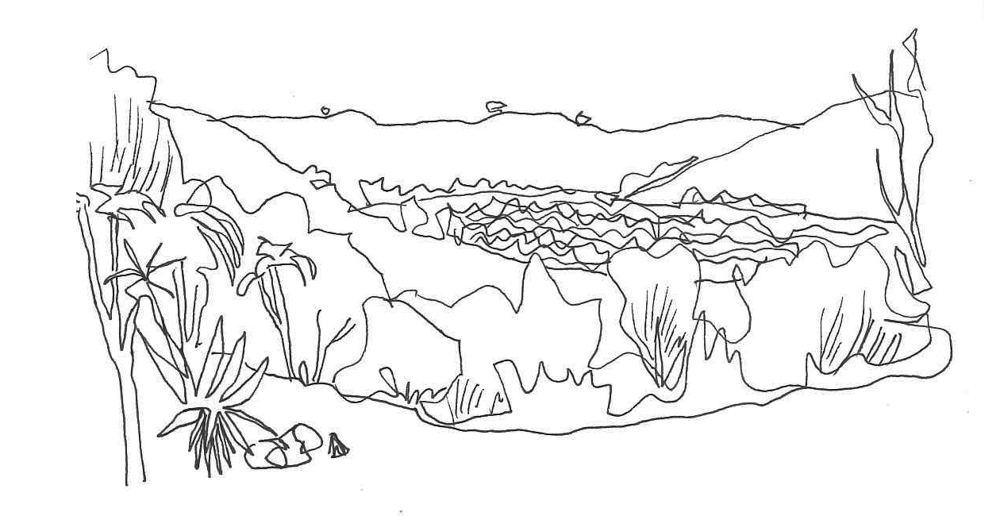
In the Cradle Reserve with our Human Origins Tour group. Thorsten (sketching), came along, as did Thorsten’s father, Wolfgang, who absolutely loved the tour.My favorite of Thorsten’s Cradle landscape sketches. (See @TheThinking_Hand on Instagram for more of Thorsten’s work.)
Howard, who spent many years working in the mining/geological fields before joining the tourism industry, has encyclopedic knowledge of the geological and paleontological (is that a word?) history of the Cradle. I won’t even try to recount everything we learned on the tour but here is a quick recap.
A Morning in the Cradle of Humankind
Howard and his brother Peter fetched us in Joburg at 8:00 a.m. and drove us to the Cradle Boutique Hotel, where the tour began.
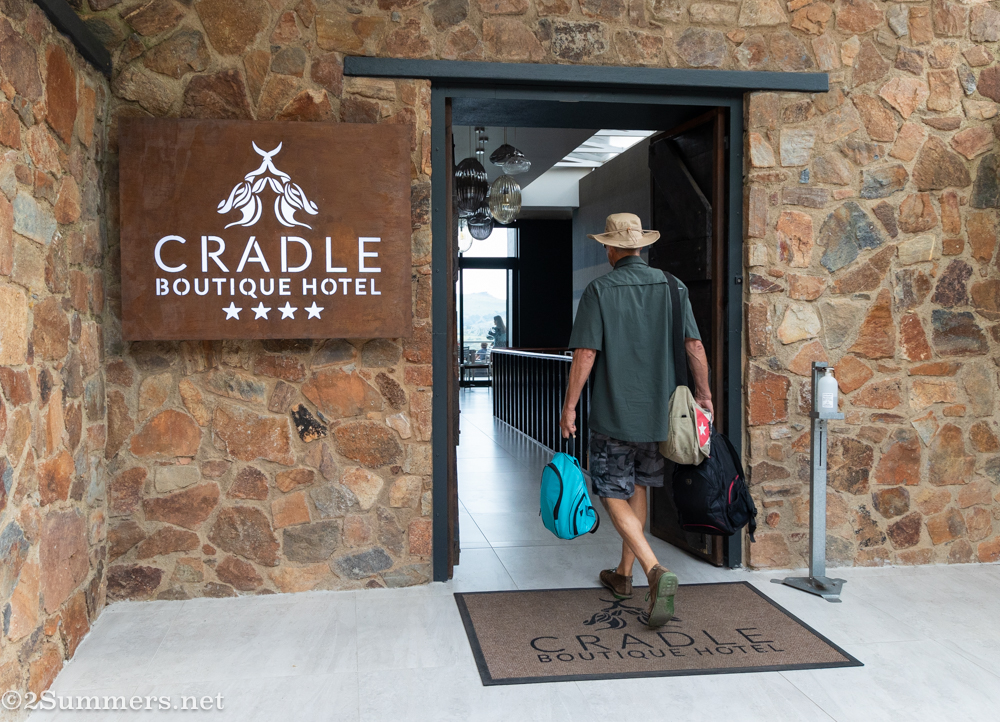
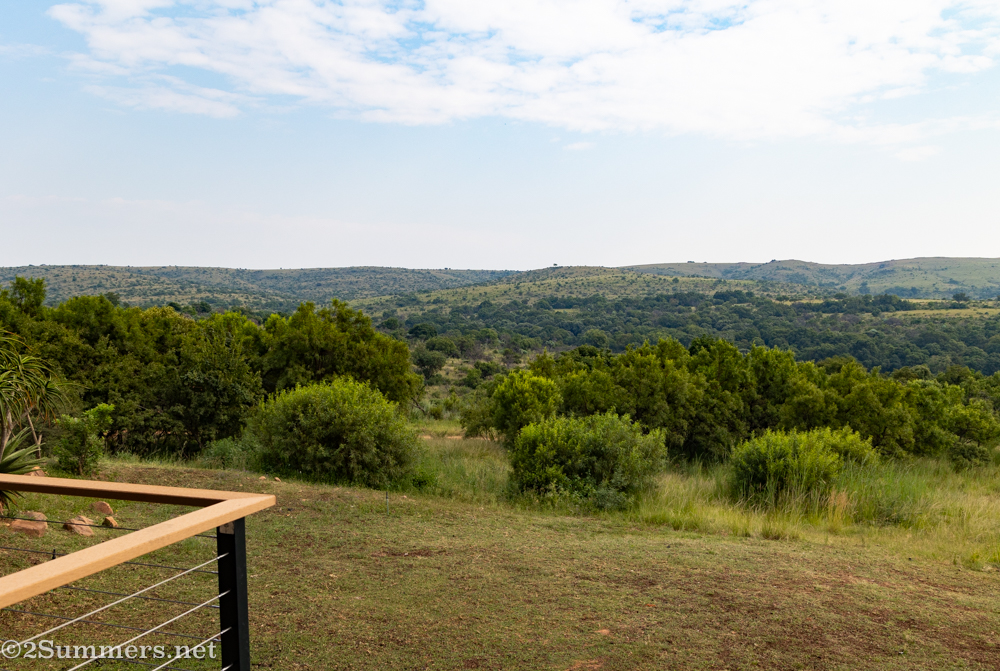
Peter heading into the Cradle Boutique Hotel. I have never stayed or eaten at this hotel but it looks really nice and has a great view of the surrounding grasslands.View from the hotel restaurant.
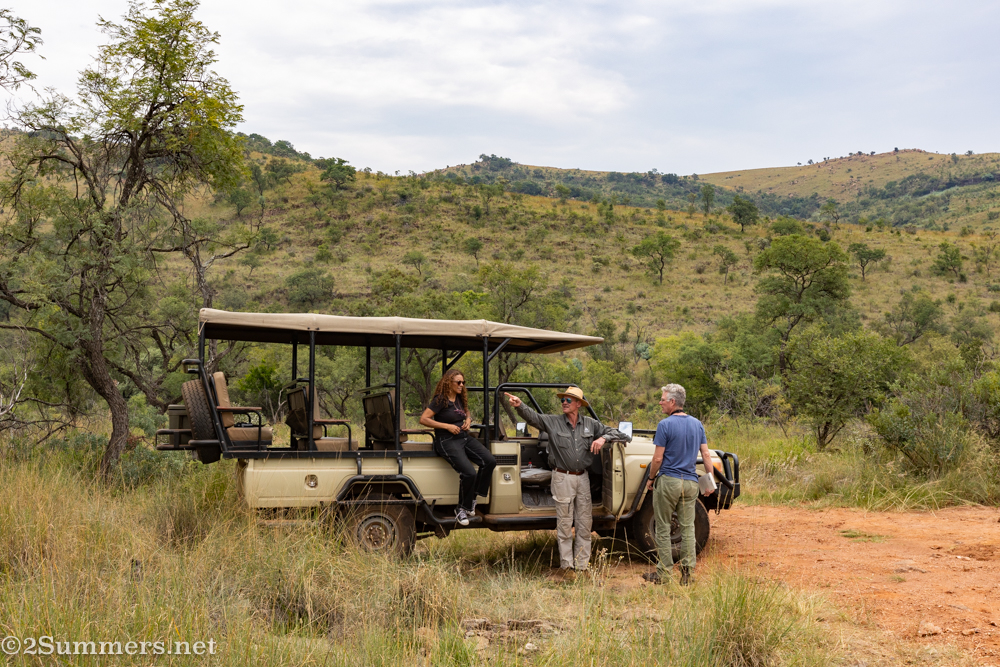
Hugh and Monica, the other tour guests, eventually arrived and we headed into the bush in an open safari vehicle.
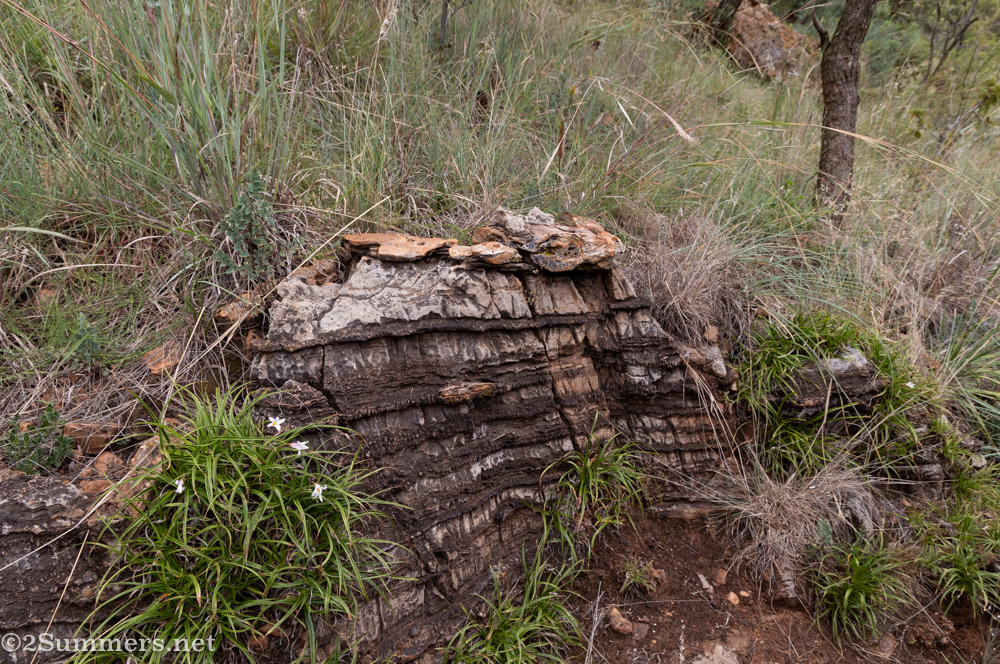
We got out at various points and Howard explained the history (going back a couple of billion years) and geology of the area, which resulted in the discovery of so many fossils. In the most simplistic terms: The type of rocks and environmental conditions that existed here millions of years ago were perfect for preserving bones, and that is why there are still so many fossils lying around.
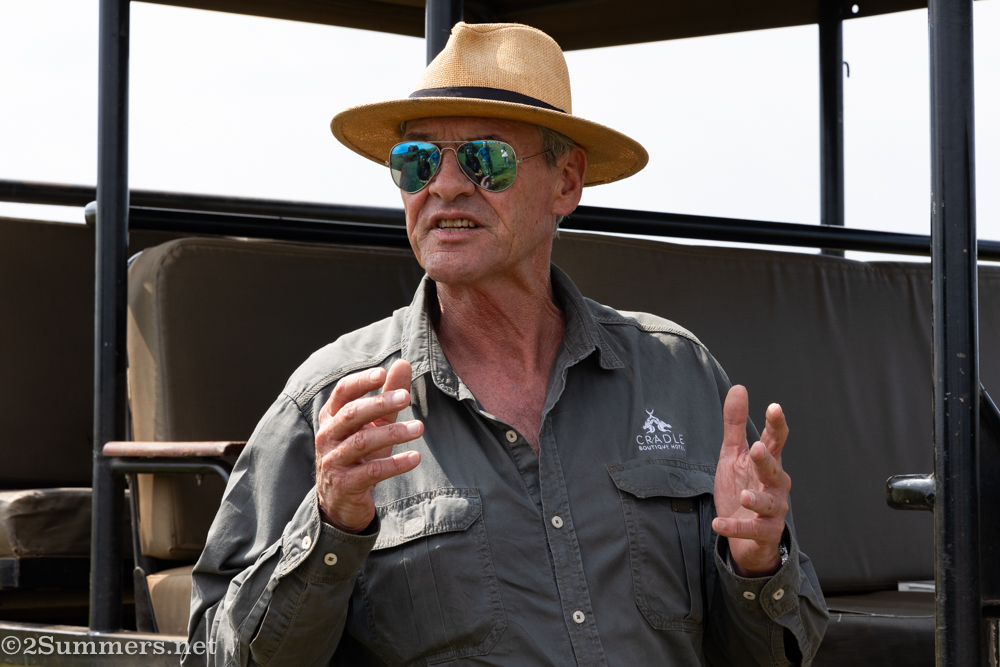
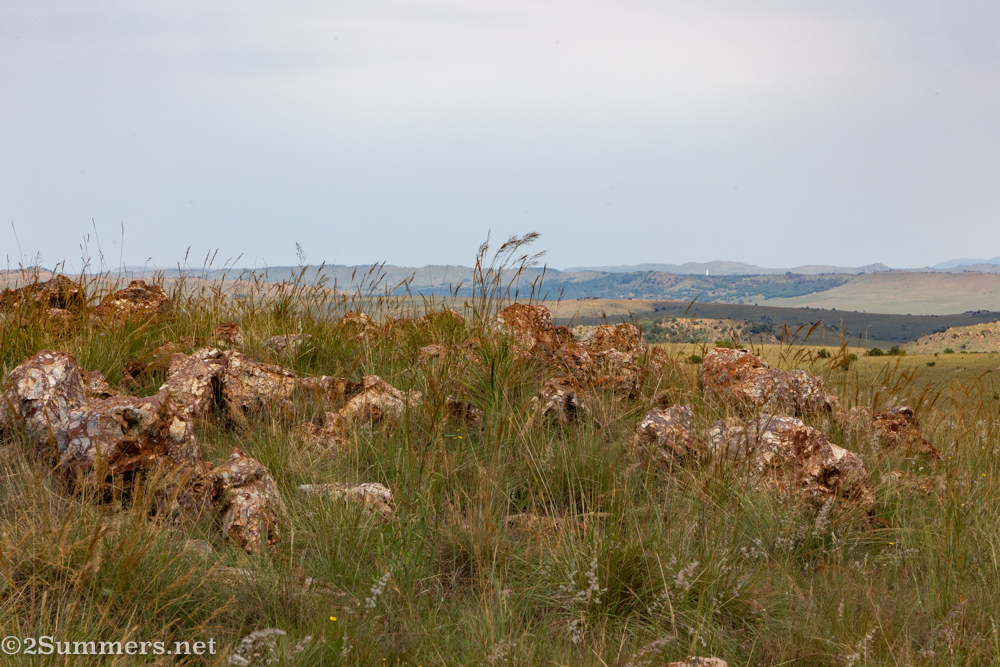
Howard explains fossils.Some very old rocks.
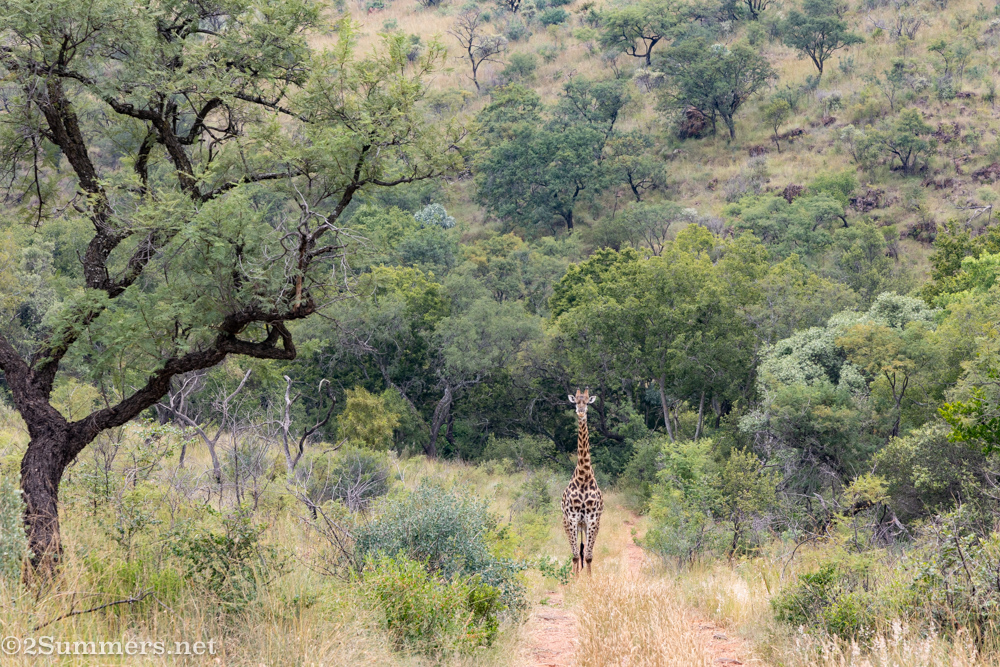
Even without the paleontology, it’s wonderful to pop out of Joburg for the morning and ride around the bush – spotting giraffes and blesbok – taking in the country air from an open Land Cruiser.
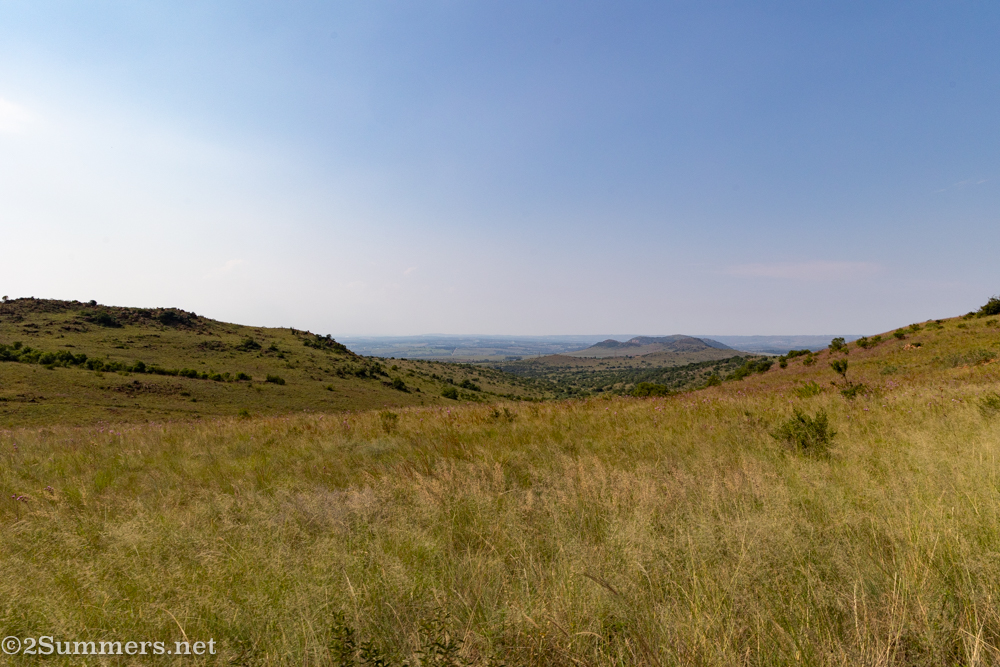
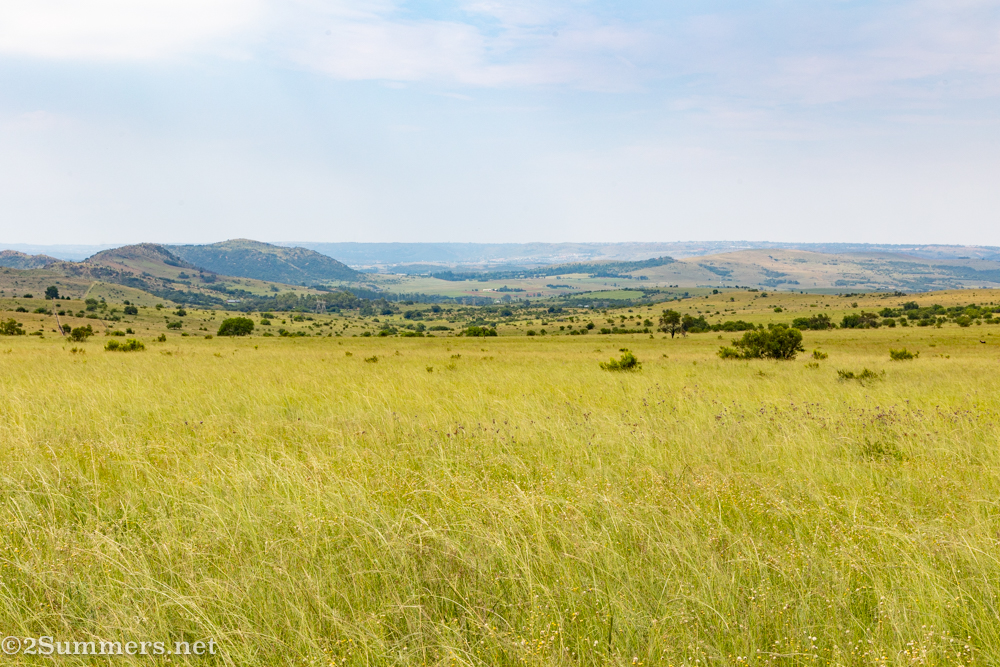
These hills look very primordial.A curious giraffe.I can’t remember the name of the sprouty-looking plant on the left (UPDATE: It’s a xerophyta arendorfi, commonly known as Baboon’s tail), but it is super rare and this is the only place on earth where it grows. We were lucky to catch it flowering.
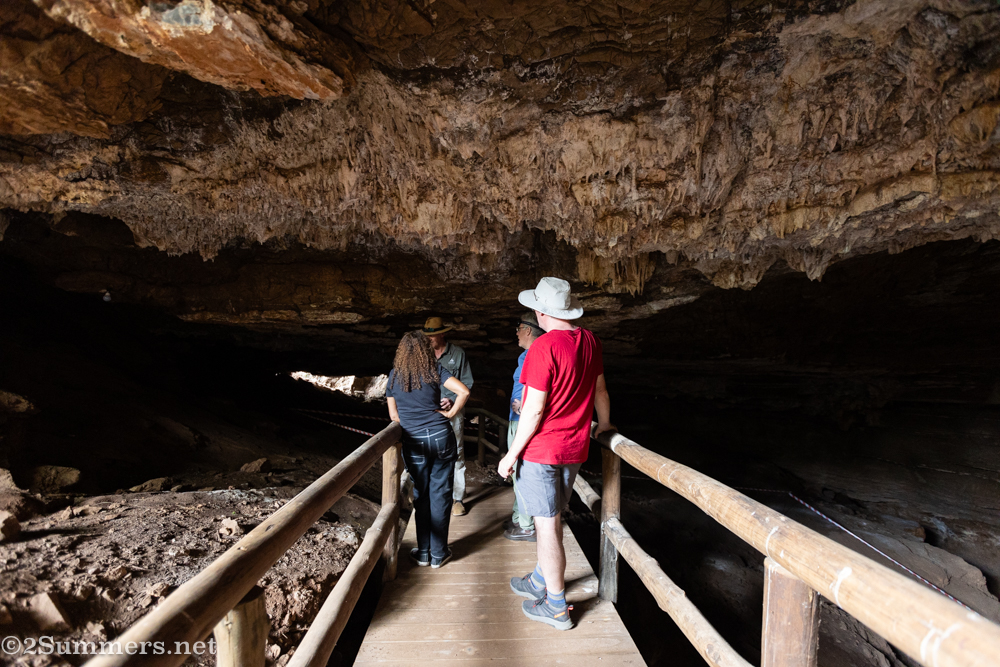
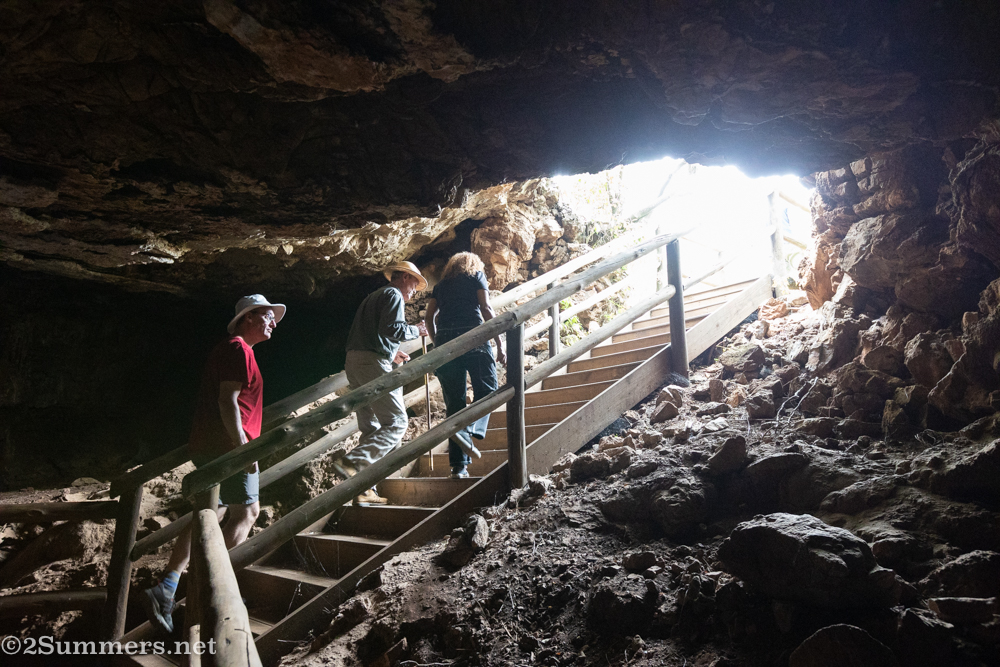
The tour has two main events: 1) A visit to the Gladysvale Cave, where hundreds of thousands of bones (mostly from ancient antelope) have been found – including two teeth from a couple-of-million-year-old hominid called Australopithecus africanus – since rock-star paleontologist Lee Berger began excavations there in the early 1990s.
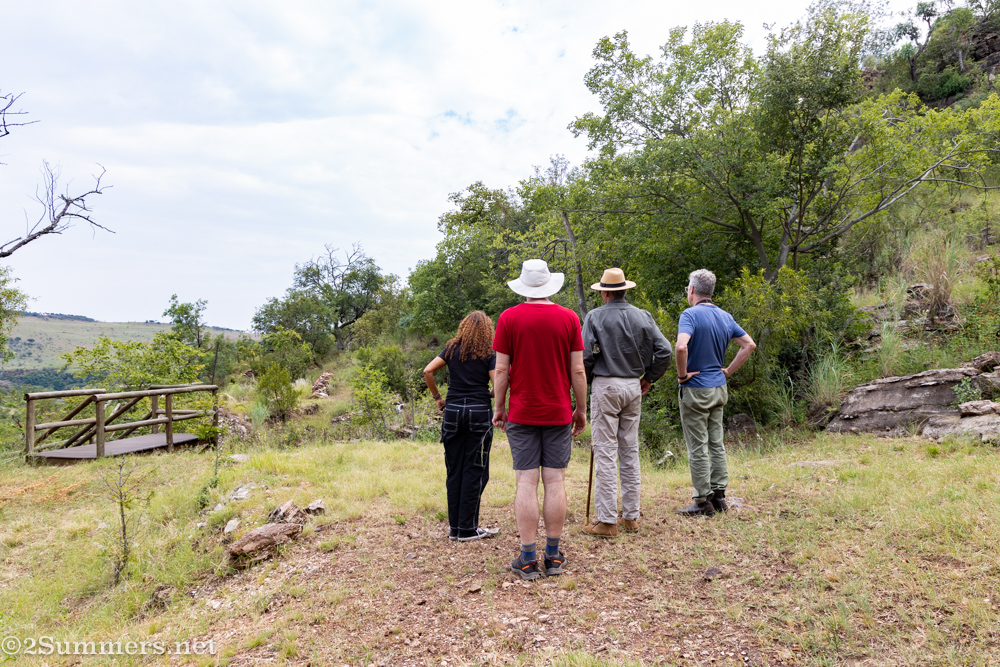
Hanging around outside the Gladysvale Cave.Spectacular rock formations inside the cave. The cave is filled with breccia, a type of rock that is perfect for preserving fossils.Exiting the cave.
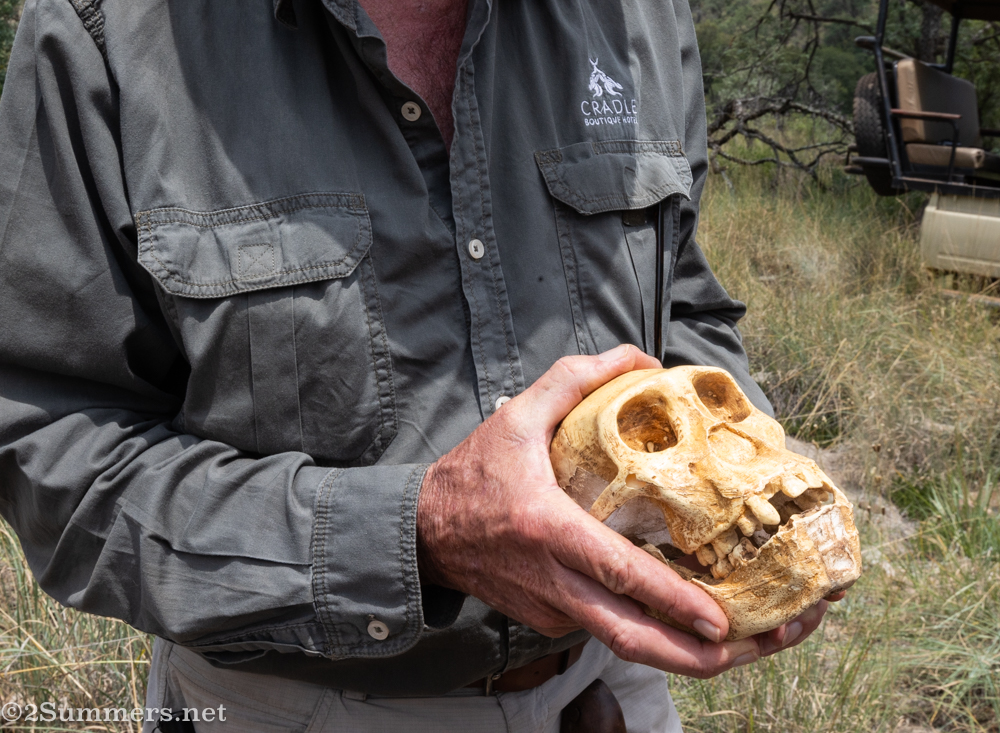
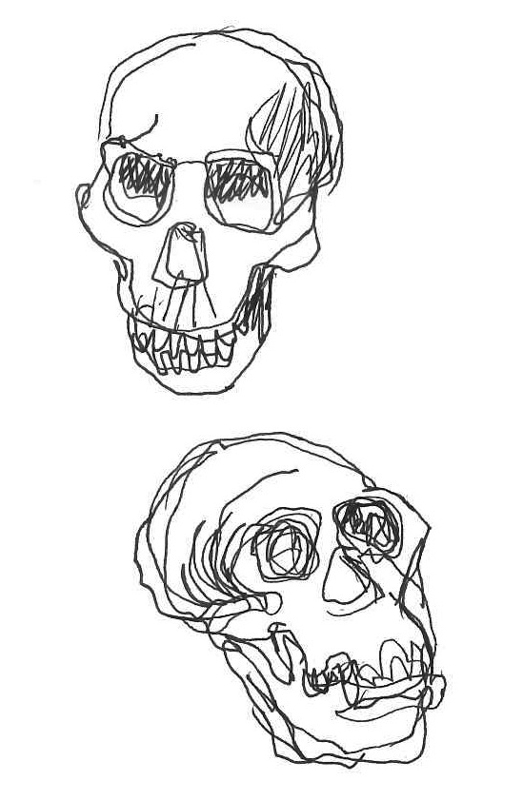
Howard shows us a replica of an Australopithecus sediba skull.
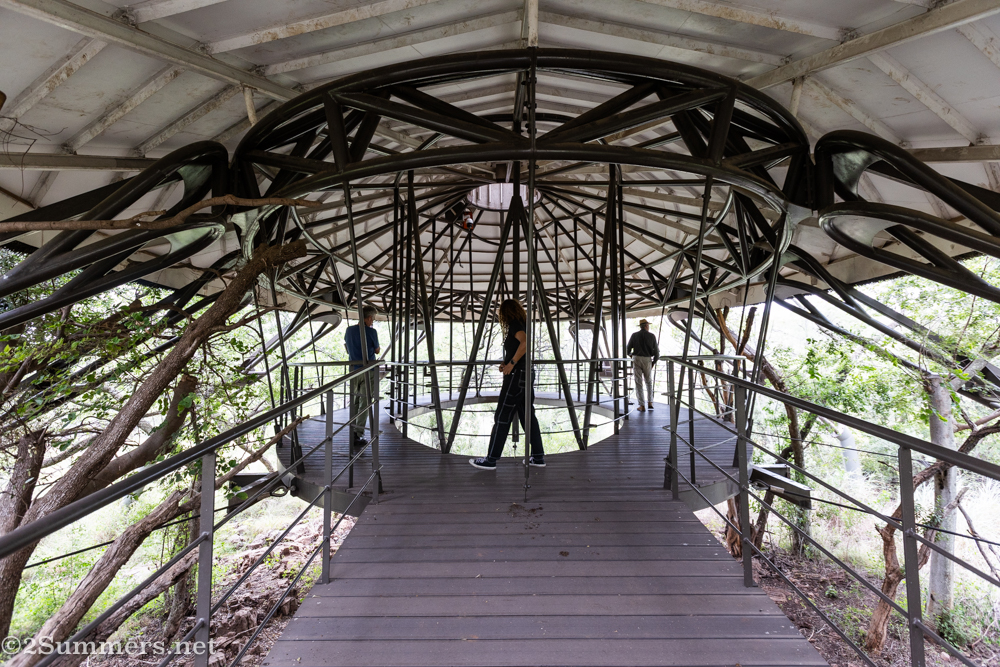
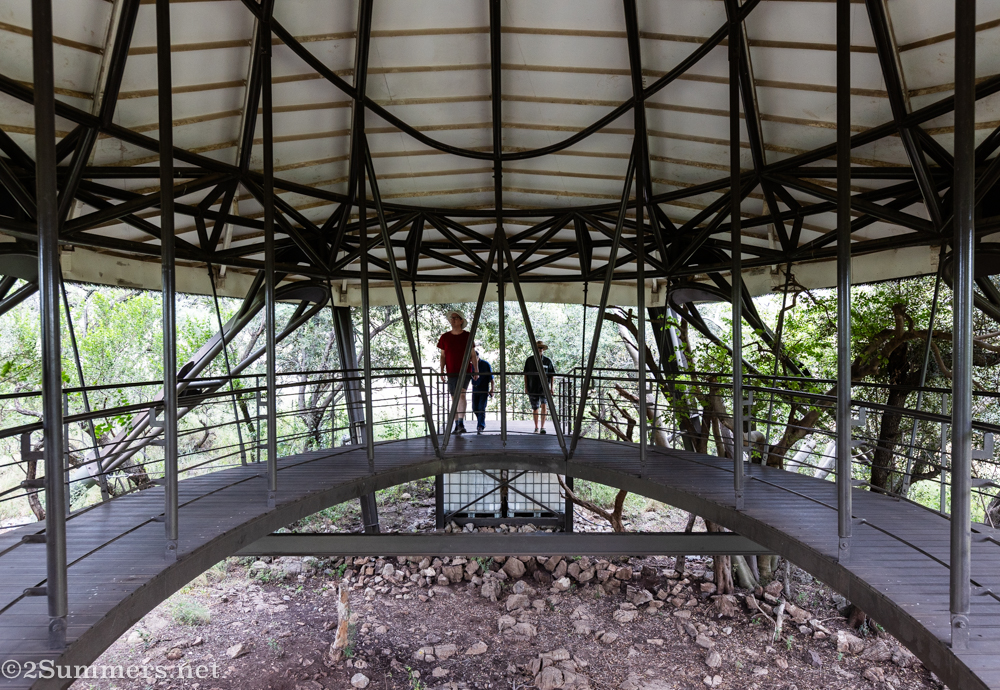
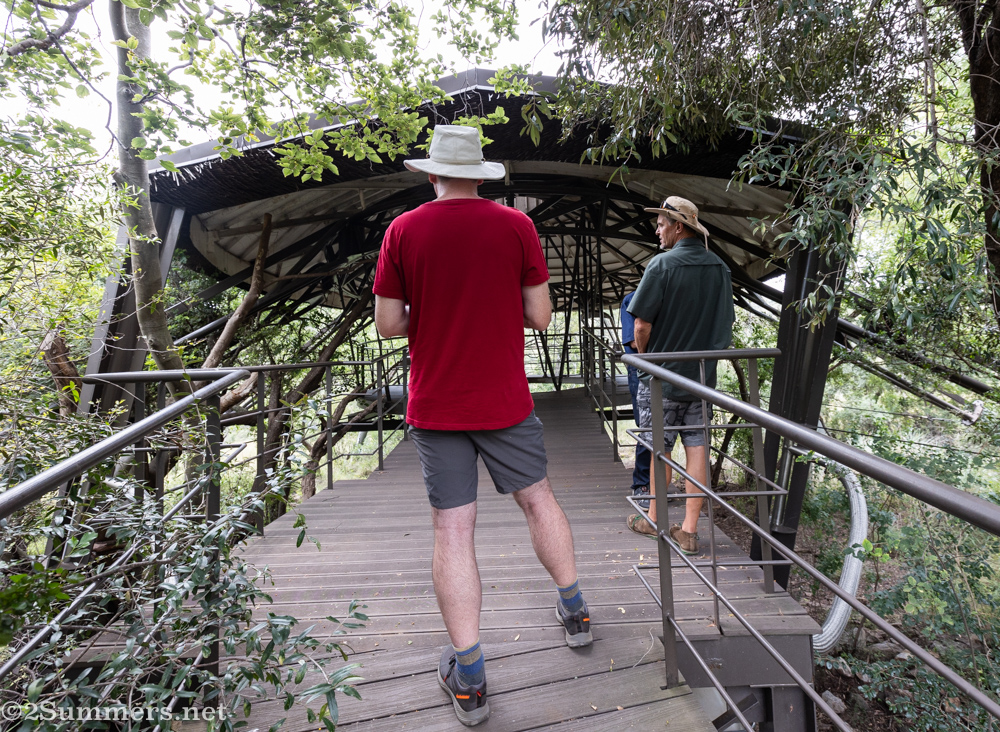
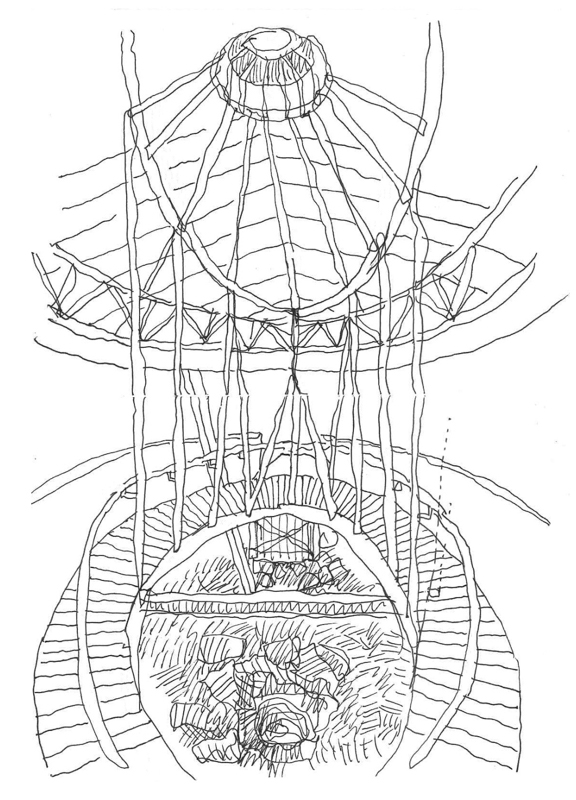
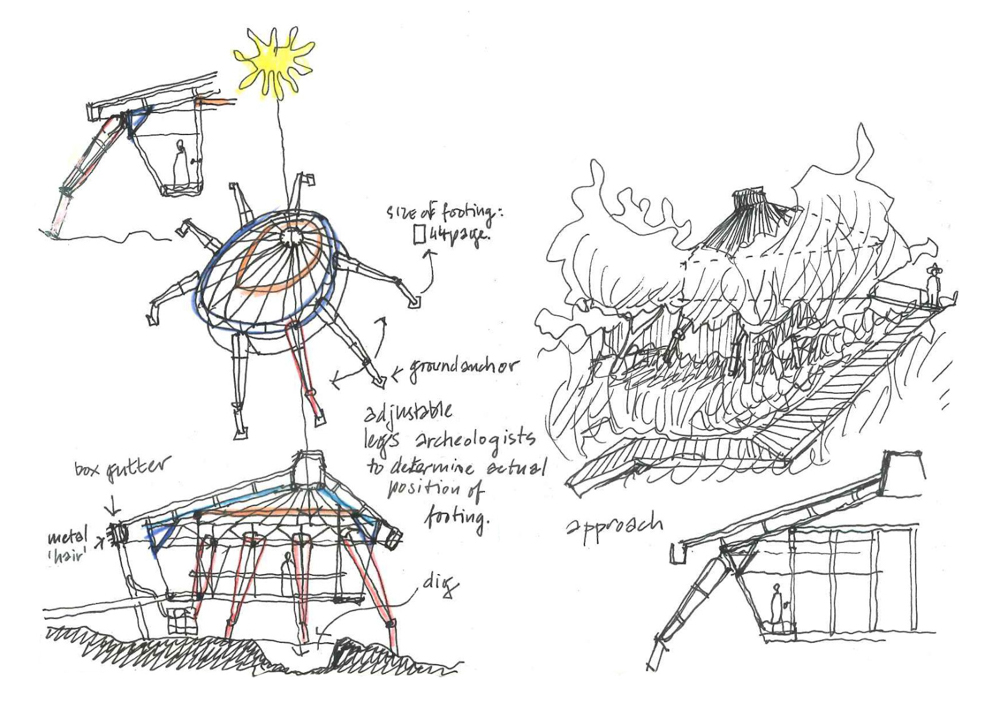
Malapa is particularly fun and interesting to visit because of the spider-shaped viewing platform, designed by architect Krynauw Nel, that crouches above the site. Gazing at a pile of rocks and dirt, which is what most archeological excavations look like, is not very exciting for a non-archeologist like myself. But gazing at a pile of rocks and dirt from inside a crazy, arachnid-shaped viewing structure is pretty darn cool.
The crazy viewing platform.This frame shows some of the (very important) rocks and dirt beneath the platform. The platform was specifically designed to allow people to visit the site without disturbing the ongoing excavations.Thorsten sketching the platform.Viewing platform sketch.The architects among you will appreciate this sketch. In Thorsten’s words (stolen from his Instagram): "The connection of the legs to the main structure had to be adjustable so that the exact position of each footing could be confirmed by the archeologists."
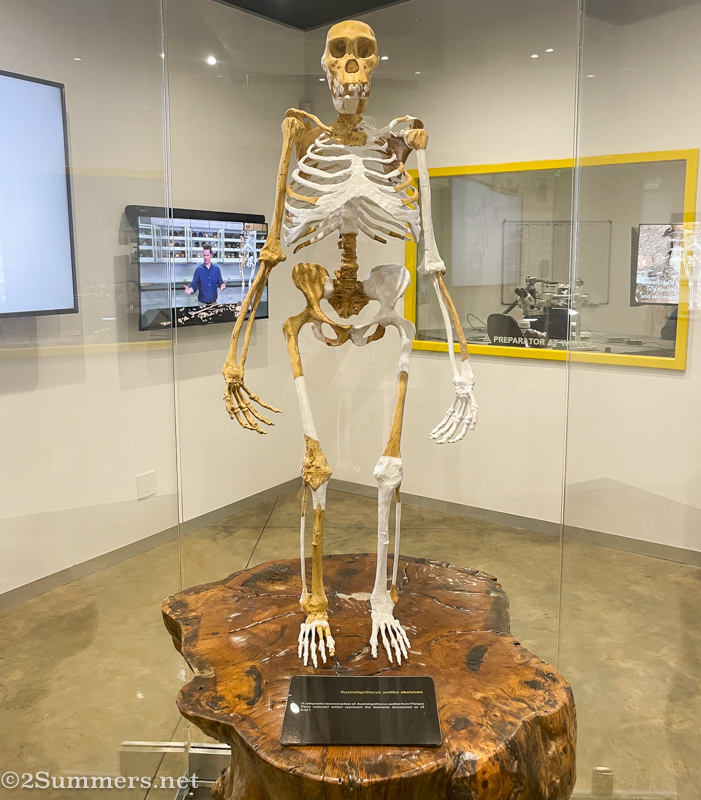
After Malapa, we headed back to the Cradle Hotel to check out the Malapa Museum. The museum has several nice exhibits about the history of the area and the ongoing excavations on the Cradle Reserve, and has a window into an actual lab where techs are working on fossils.
A sediba replica in the Malapa Museum. The paleontology lab is in the background.
We were back home by early afternoon. Thanks to Howard and Peter for a great morning out in the Cradle.
Skull sketches.
This fascinating part of the Cradle of Humankind can only be visited on a guided tour. Tours cost R1985 per person (about $100) for a minimum of two guests or R1500 (about $80) for four or more guests. The tour includes a snack. To book a Human Origins tour with Howard and Peter, email info@aah-afrika.co.za or call Liz at +27-76-438-5353.
Our Human Origins Tour of the Cradle of Humankind was complimentary. Opinions expressed are mine.
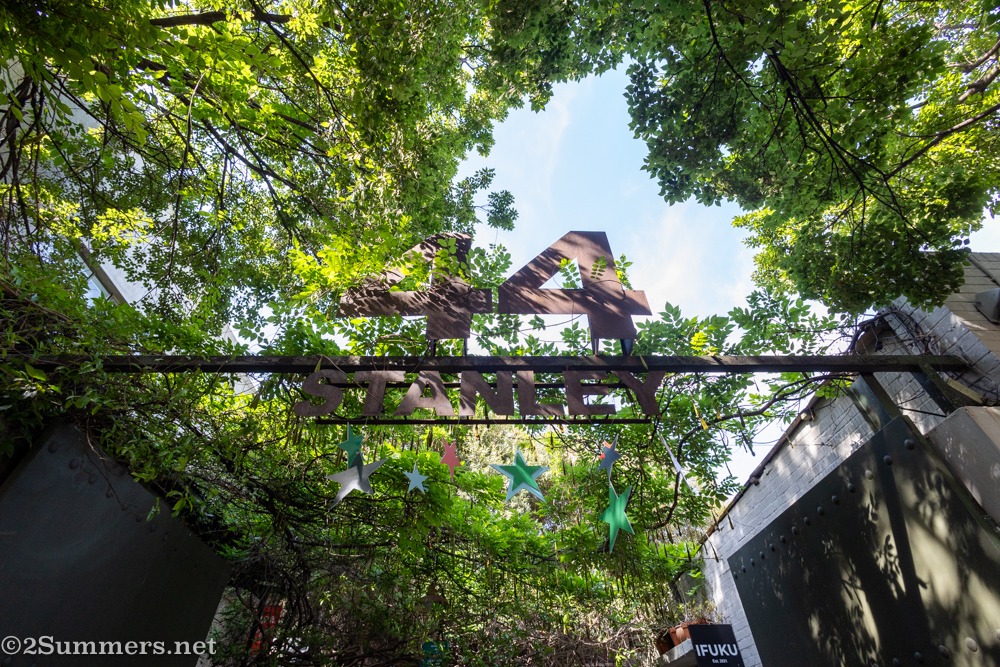
I guess it’s wrong to say I’ve never blogged about 44 Stanley; I’ve mentioned it countless times over the years (see here and here) when writing about specific restaurants or shops that are there. But I’ve never written a dedicated post about 44 Stanley as a destination and it’s about time I did – especially now, with the holidays upon us.
Use the share button below if you liked it.
It makes me smile, when I see it.