When my friend Michelle, with whom I traveled around Spain during my recent European trip, first suggested we should check out the Picos de Europa, I had the same response that you might be having: the Who de What?
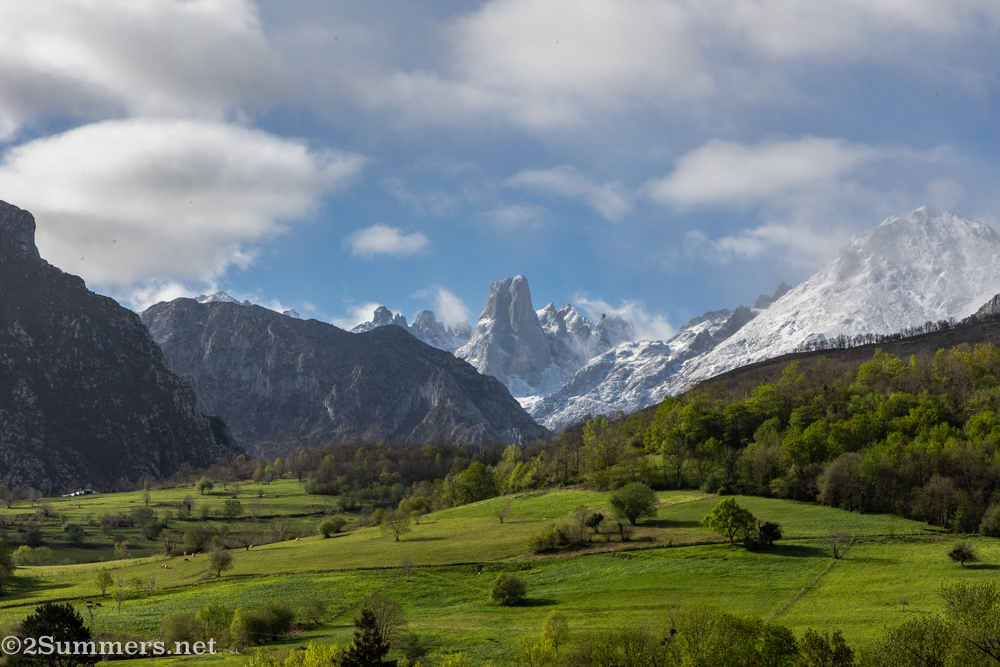
Naranjo de Bulnes (center) is the most famous "spike" in the Picos de Europa.
Despite the self-aggrandizing and slightly scary name, which translates to “Spikes of Europe”, I had never heard of these mountains. Maybe you haven’t, either.
What Are the Picos de Europa?
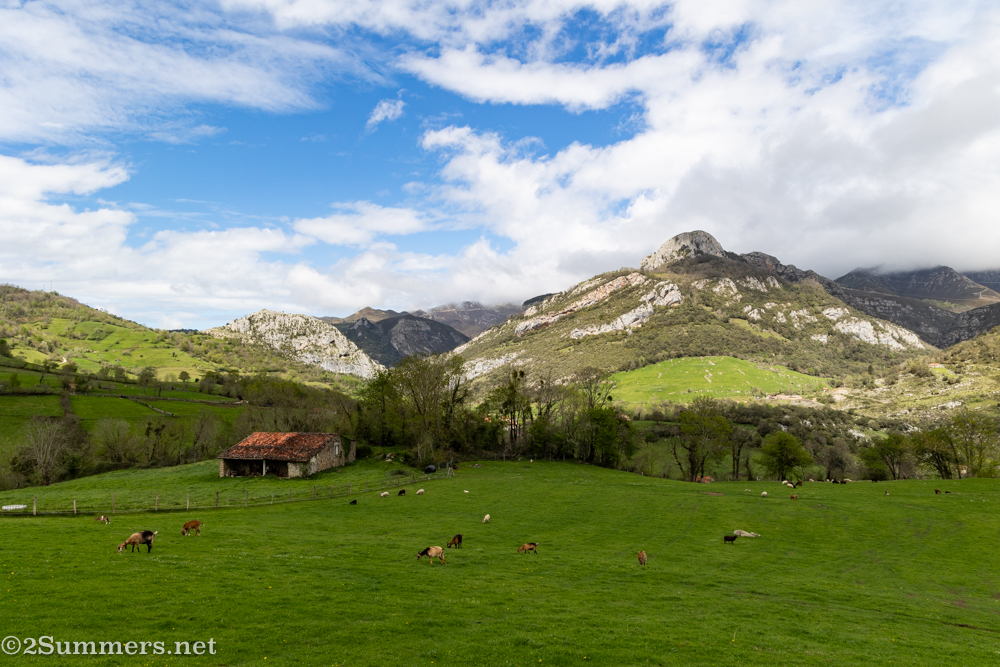
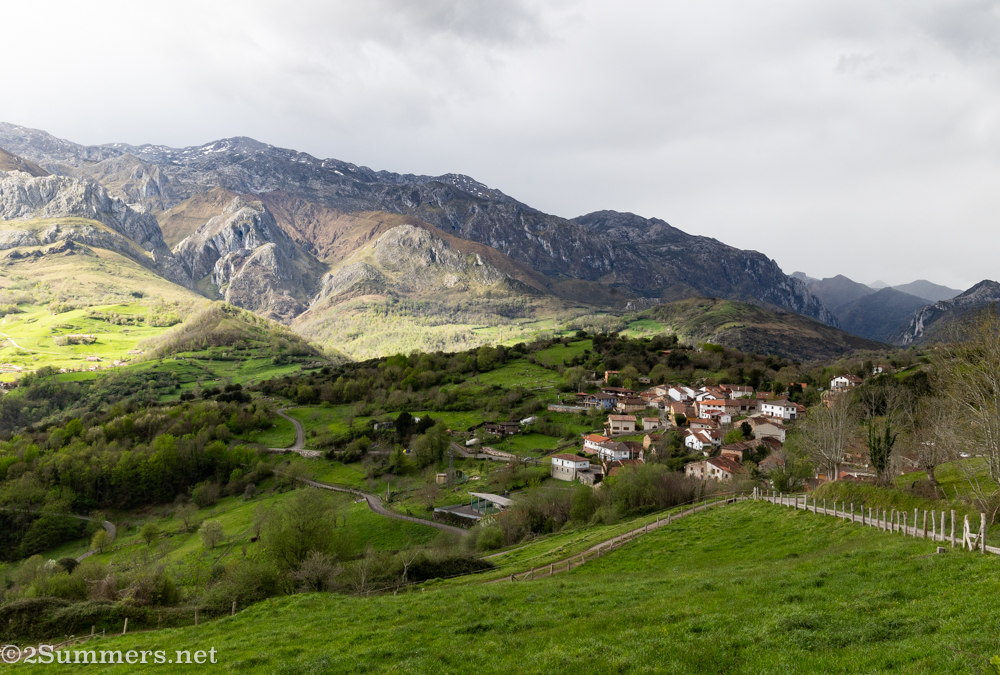
The Picos de Europa are a mountain range along the northern coast of Spain, close to the Bay of Biscay, which apparently got their name because the “spikes” were the first sight of Europe for Spanish ships arriving from the Americas. The Picos are part of a national park but also populated by numerous small towns and traditional farming villages. The mountains are huge and made of forbidding gray limestone, often snow-capped, and surrounded by emerald-green hills dotted with herds of livestock. These green fields perpetually tinkle with the music of cowbells.
We visited in April, when the highest peaks still had snow and the hills below were almost fluorescent green. It was beautiful to the point of ridiculousness.
The Picos are spread over three different regions of Spain: Asturias, Cantabria, and Castilla y León. We stayed in Asturias, in a municipality called Cabrales, which has its own unique culture and cuisine (more about that later).
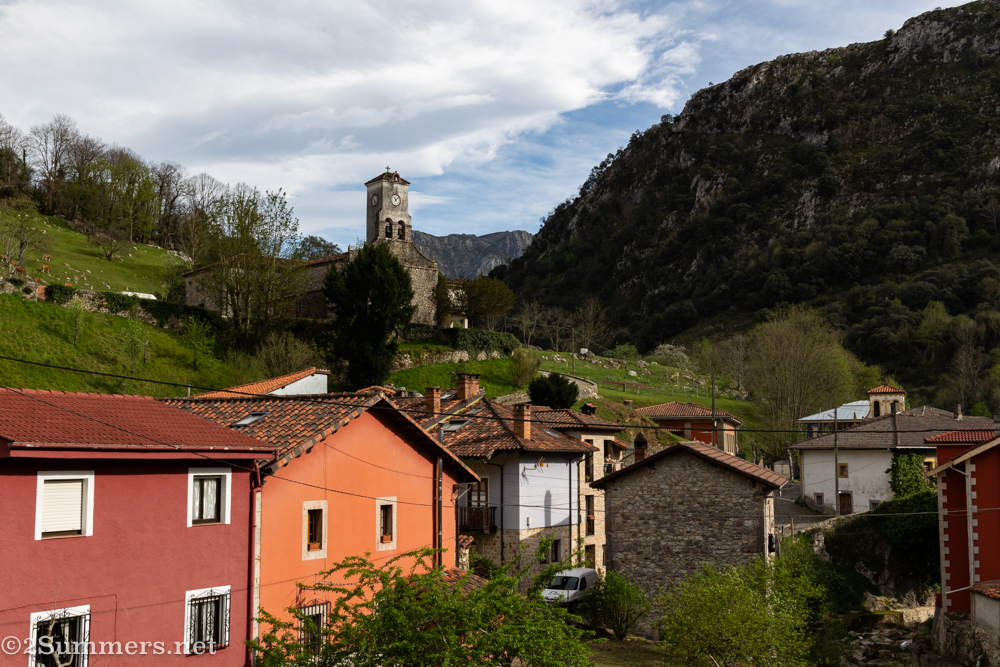
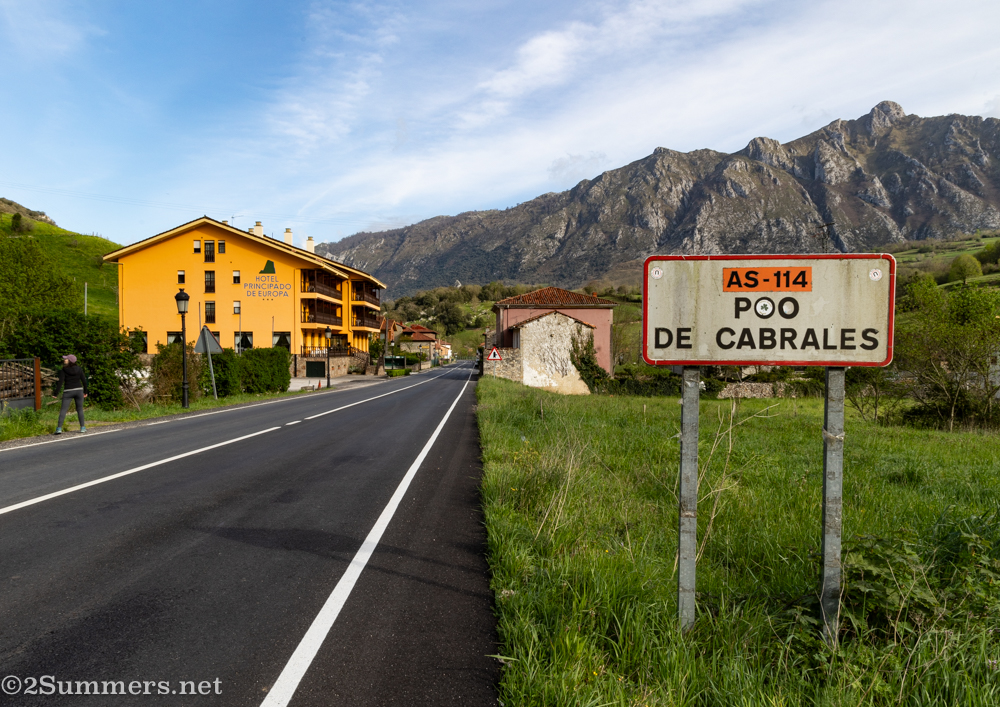
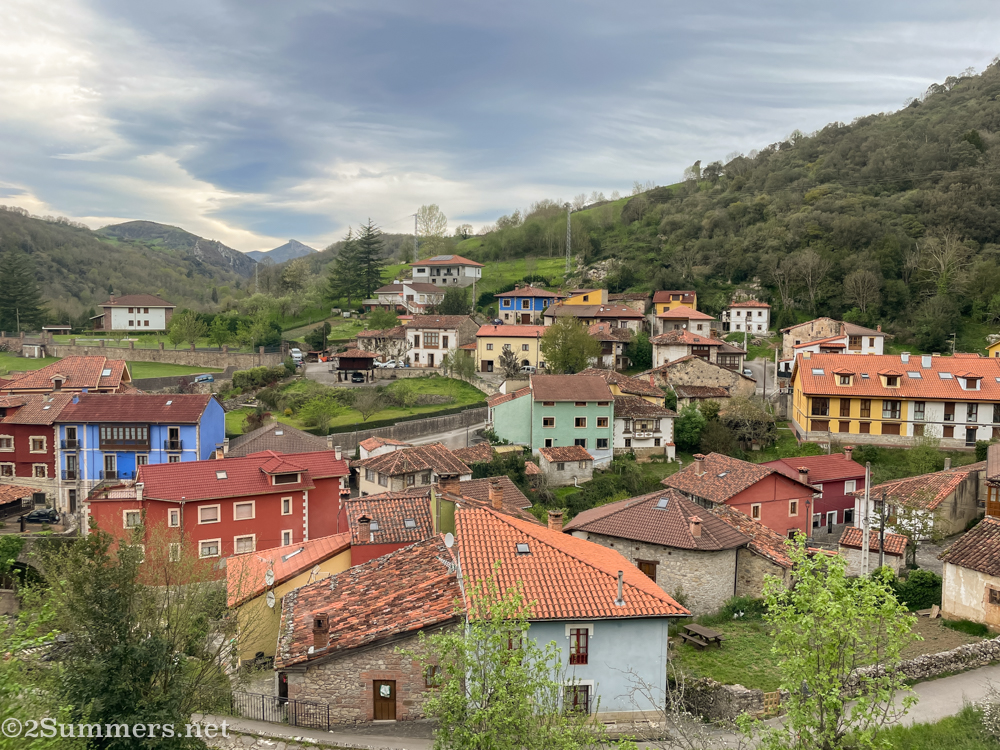
The village where we stayed, Carreña de Cabrales, was also beautiful and quaint to the point of ridiculousness.I want to mention – how could I not? – that one village over from Carreña is a village called Poo.
The Picos are known for their hiking trails and for some important Christian pilgrimage sites. There were a fair number of other tourists around when we visited, but they seemed to be mostly Spanish tourists. I’m sure the Picos de Europa get more crowded during the summer, but in April it still felt like an off-the-beaten track tourist destination.
We stayed in the half-yellow, half-white apartment building on the right. It was a simple apartment – nothing special and not particularly old. But we loved staying in this ancient town, surrounded by hiking trails and farmers herding their goats and sheep on the streets. There didn’t seem to be many other tourists staying in our village.
What We Did in the Picos de Europa
1) Hiking the Ruta del Cares
Our main goal in the Picos de Europa was to do as much hiking and walking as possible. So on our first full day, we drove about 20 minutes to the village of Poncebos to walk the Ruta del Cares, the Picos’ most popular hiking trail.
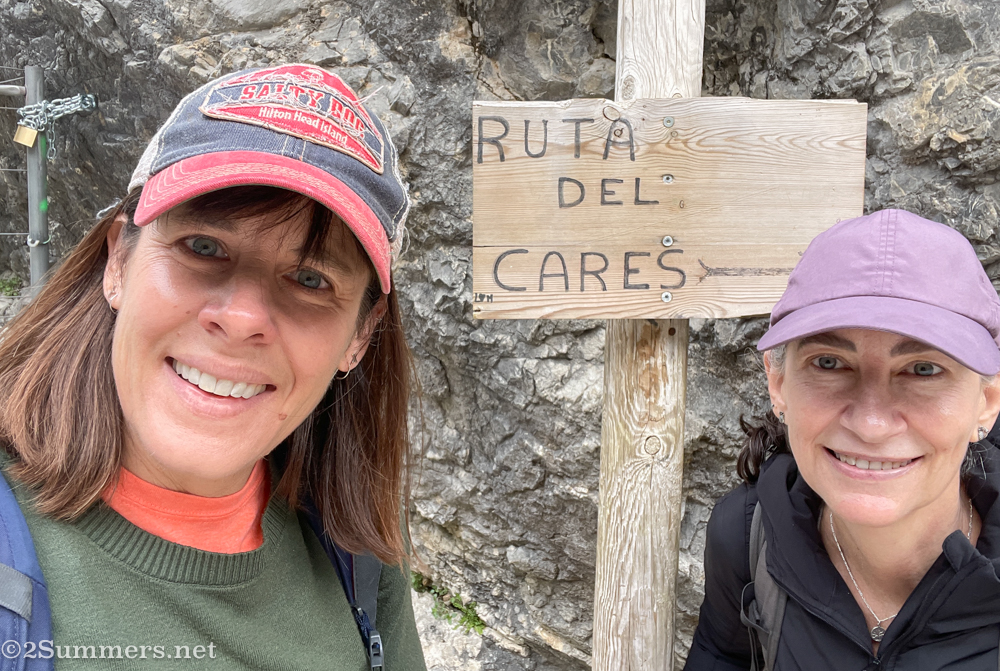
I love this hand-written sign at the start of the trail. Look how fresh and not-exhausted we were!
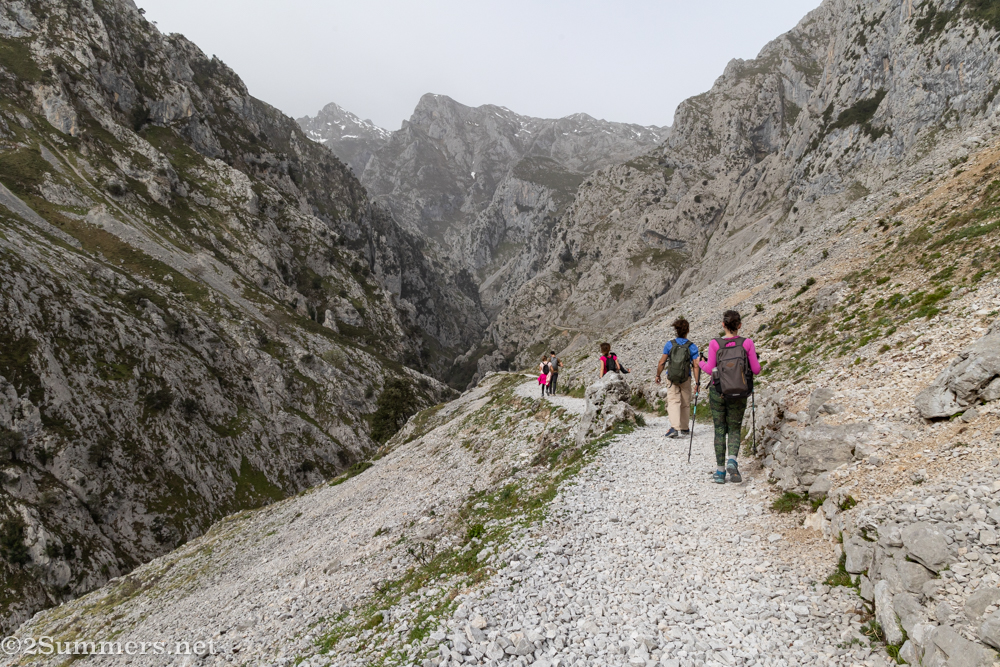
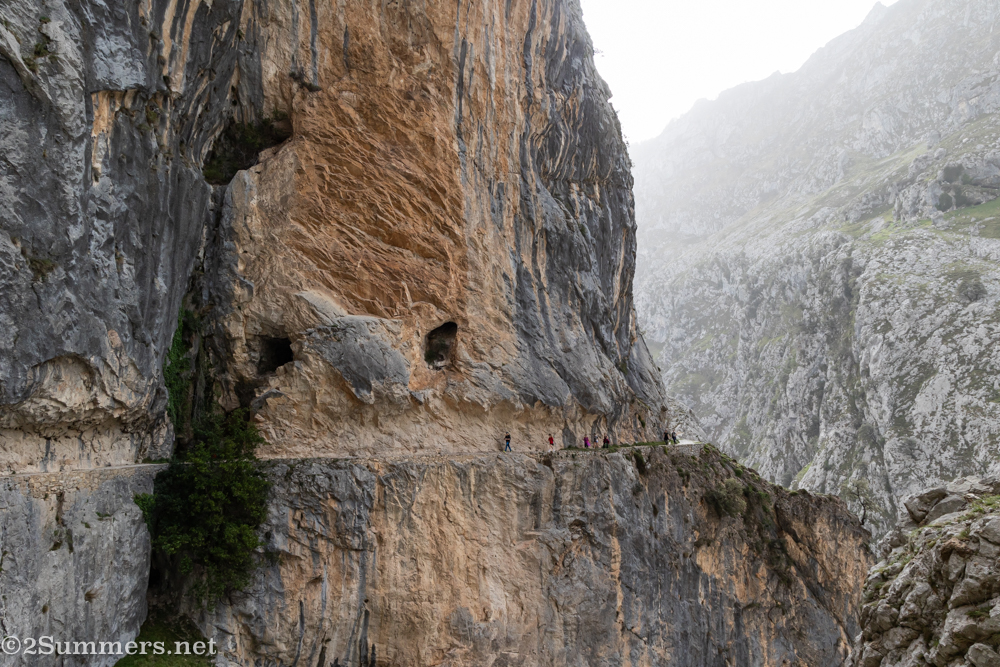
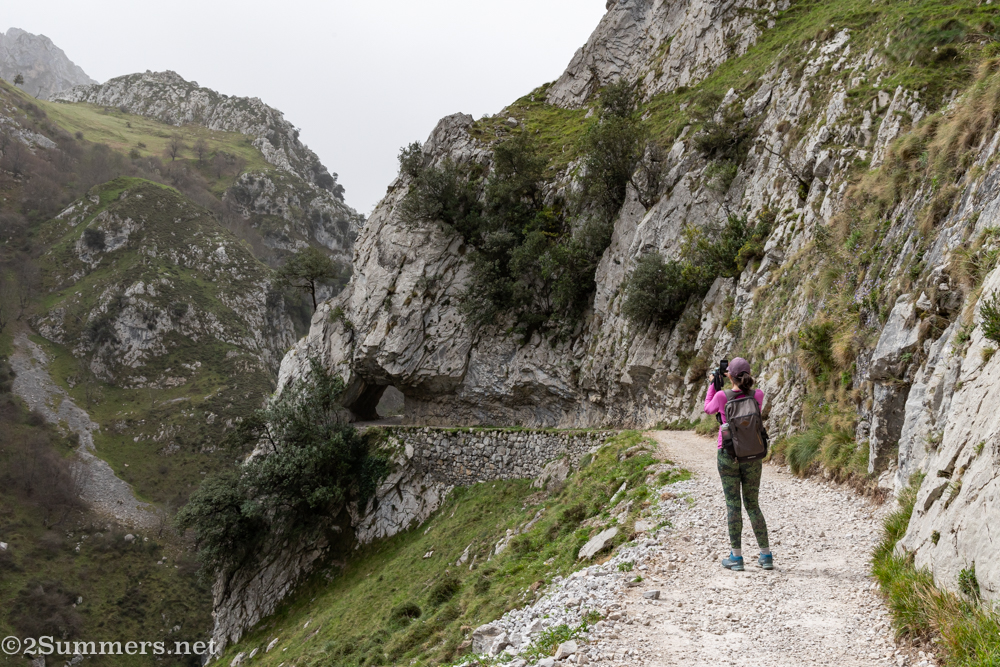
The Ruta del Cares is 11 kilometers each way, carved into the rocks that wind along the Cares River gorge. We walked the full length of the trail – 22 kilometers (13.6 miles) total – and it was one of the most exhausting experiences of my life. It was insanely windy and there were many moments when I feared I would be blown off the side of the mountain. A month after the hike, my feet are still recovering from walking steeply, endlessly downhill over uneven rocks.
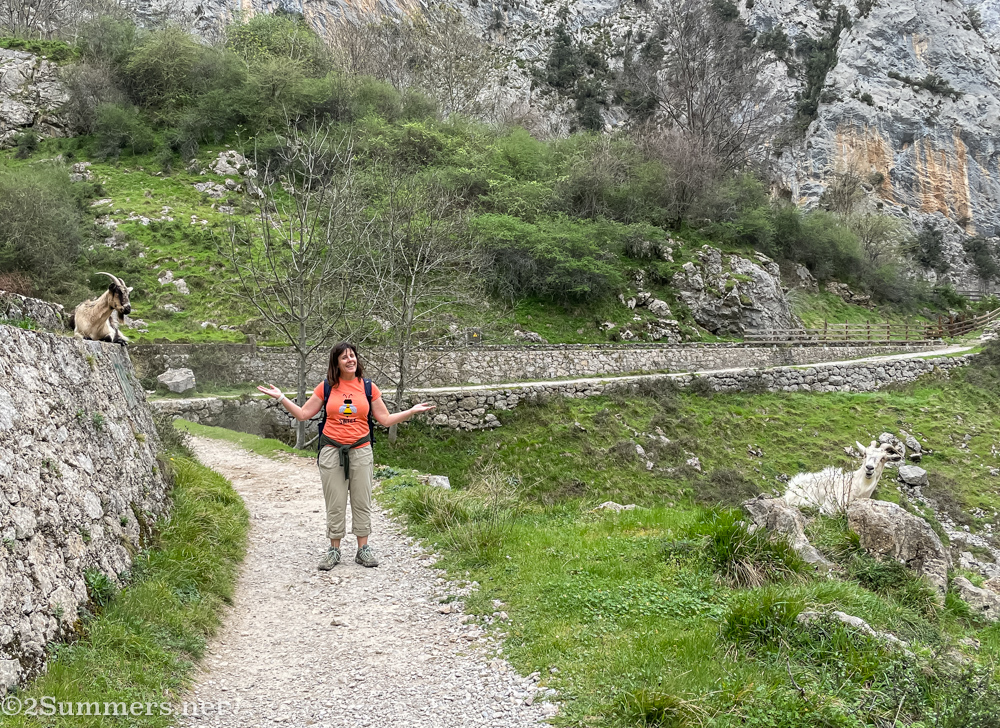
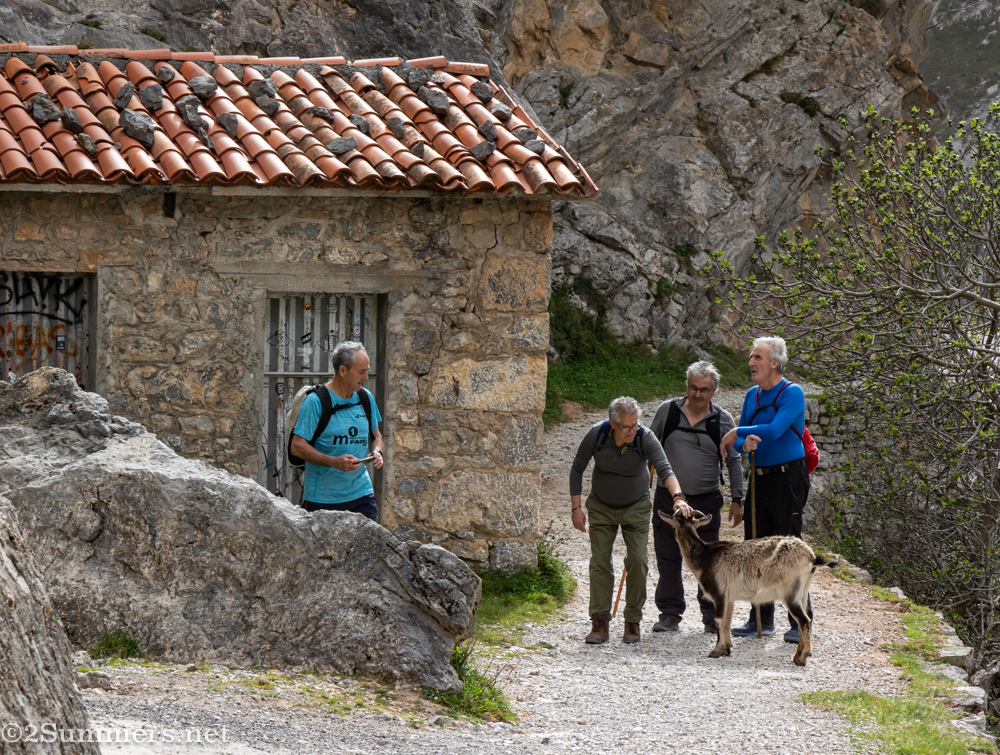
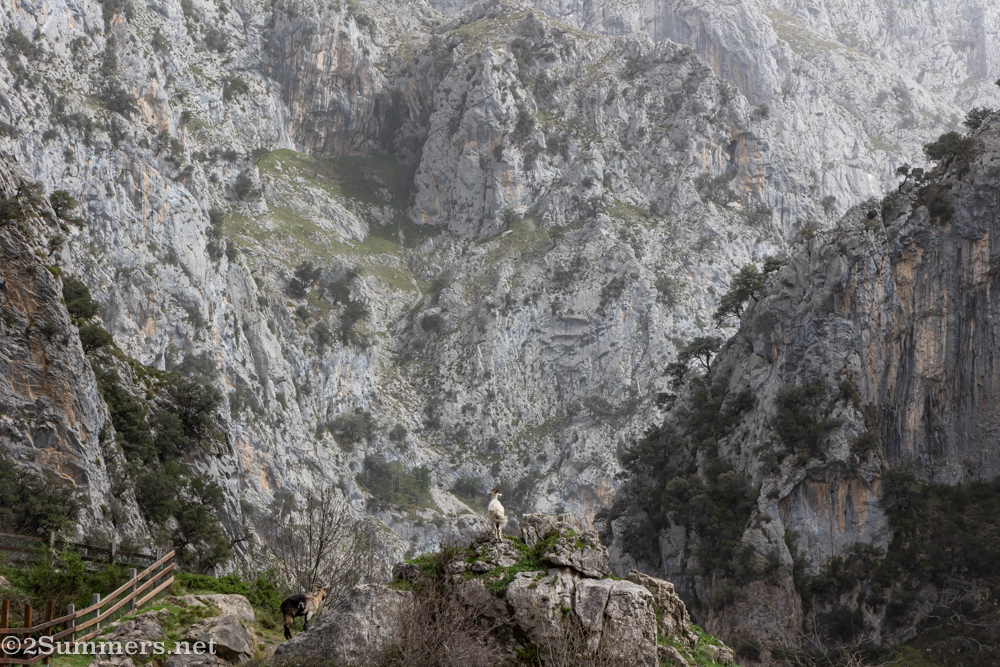
All that said, this hike was an experience of a lifetime and I’m so glad we did it. The scenery was dazzling, the trail itself is a feat of engineering wonder, and we made friends with a lot of charming goats.
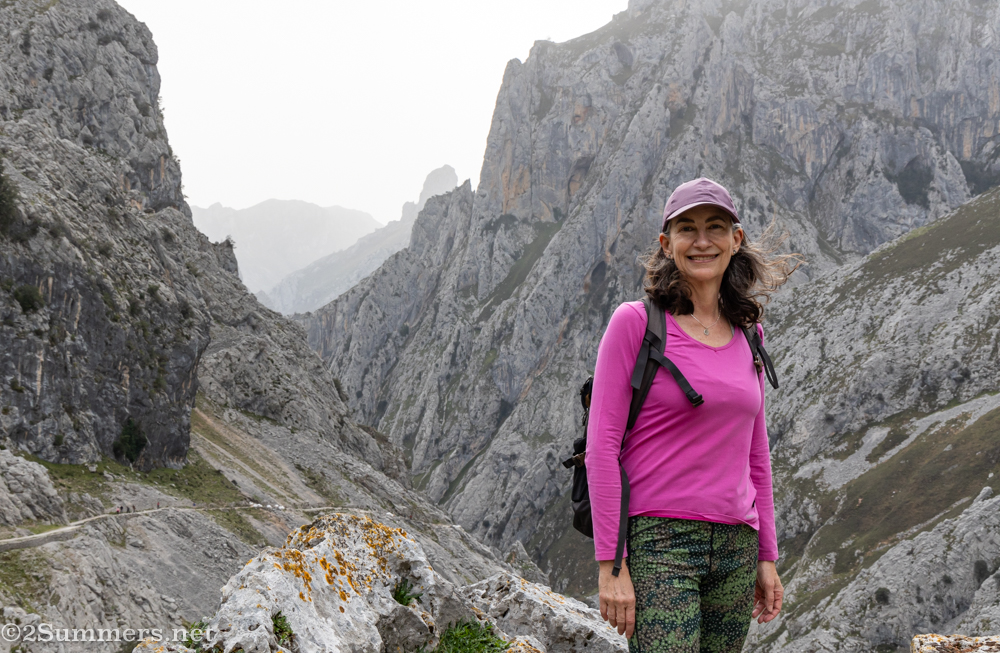
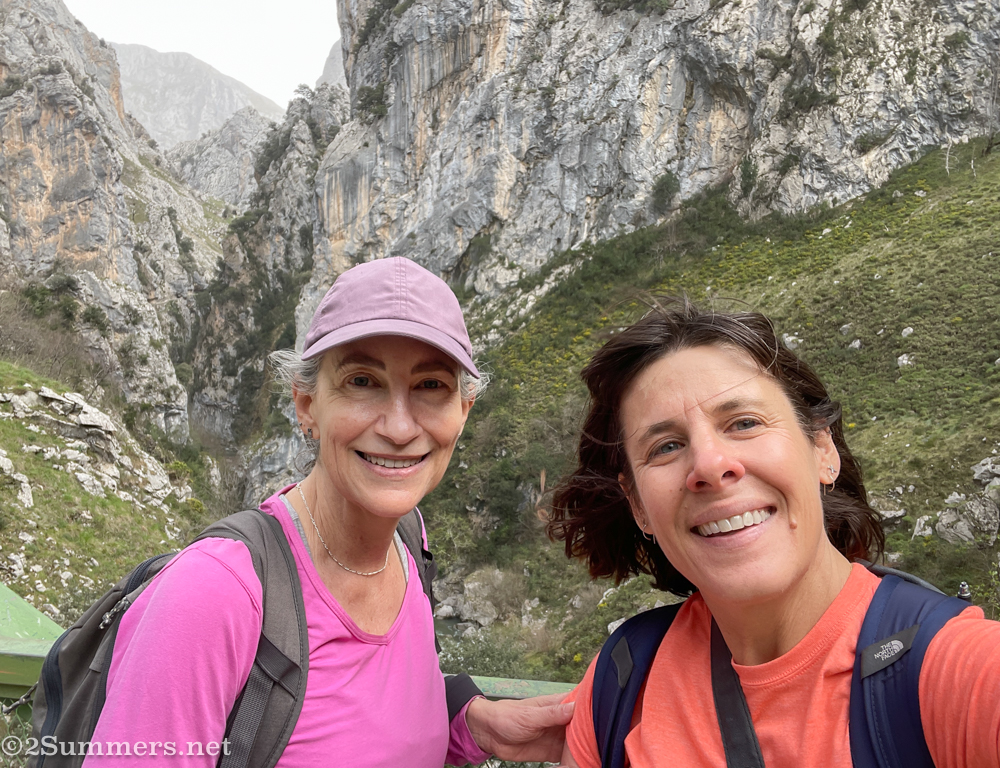
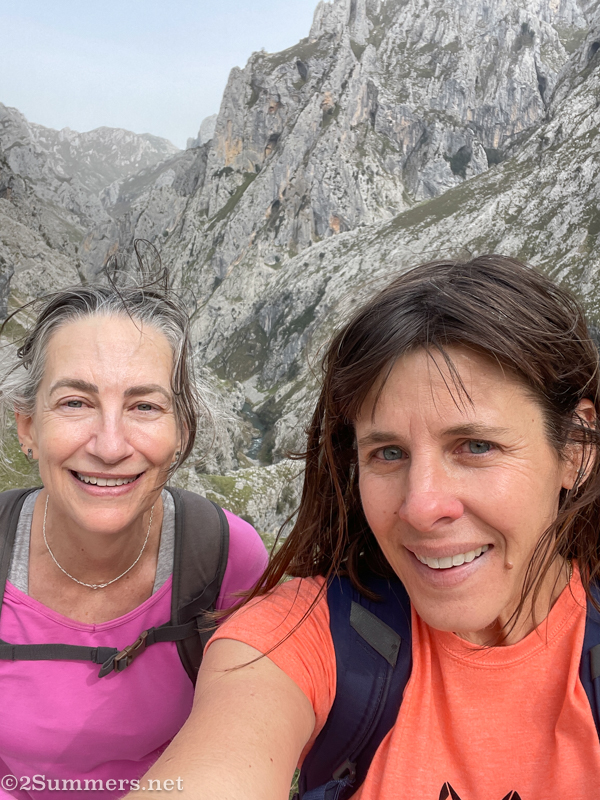
My goat buddies and me. (Photo: Michelle Stern)There were a lot of other people on the trail, which I actually liked. It was comforting to know that there would be plenty of witnesses around if Michelle or I were blown to our deaths. Just kidding. Sort of.Michelle’s pink shirt contrasted nicely with the stark gray mountains. See the tiny people hiking on the ribbon of trail behind her?It’s hard to comprehend the building of this trail, which took place more than 100 years ago. The river below powers a hydroelectric plant.Men bonding with goats. The goats on the trail love people and will eat grass right out of your hands (or just lick your hands if they’re empty).Here we are at about the halfway point, looking windblown but still pretty chipper.We walked through many tunnels carved into the rock.Goats enjoy the jaw-dropping view.Last selfie on the trail, red-eyed from the relentless wind, before we lost our will to live and spent the last 90 minutes trudging along and screaming swear words into the gale until we finally, FINALLY, reached the car park.
A couple of notes about the Ruta del Cares:
The entire hike took us about seven hours.
There are no bathrooms along the 11-kilometer route and almost nowhere to even hide out of sight of you need to pee. I’m not sure what advice to offer on this point but just something to be aware of.
We brought our own packed lunches to eat at the halfway point, in the village of Caín, but there are also a couple of restaurants there.
We were really lucky to have a dry day for this hike, as it rained a lot when we were in the Picos. I would not attempt this hike in rainy weather.
2) Village walking
The weather was pretty spotty during our other two full days, and we were too tired to attempt another daylong hike anyway. So we did a couple of shorter, 6-7 kilometer hikes: one from our own village of Carreña and one from the nearby town of Arenas. We found these hikes using the AllTrails app, which I highly recommend. The downloadable AllTrails maps are excellent and we definitely would have gotten lost without them.
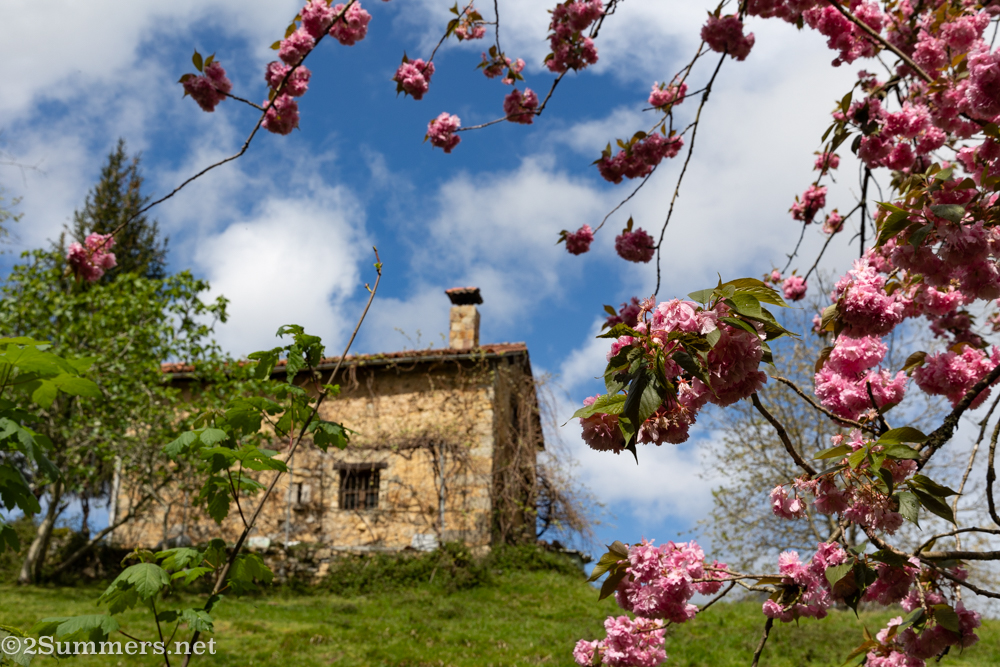
One of many stunning views from a shorter hike we took. We never saw any other hikers, just the odd elderly farmer tending their livestock.Spring in the Picos de Europa.
3) Funicular to Bulnes
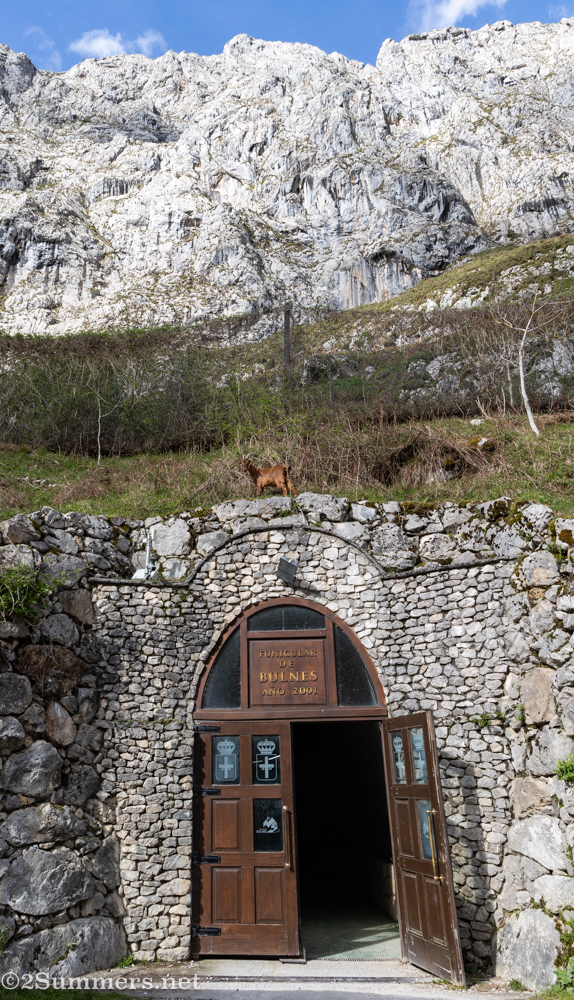
Late one afternoon we caught the funicular up to Bulnes, a tiny village high in the mountains that can’t be reached by car. Before the funicular was built in 2001, Bulnes was only reachable on foot. (You can hike up to Bulnes but we didn’t have the time or energy for that. Read more about the hike in this blog post.)
Entrance to the Bulnes funicular, which is completely underground. Can you spot the goat?
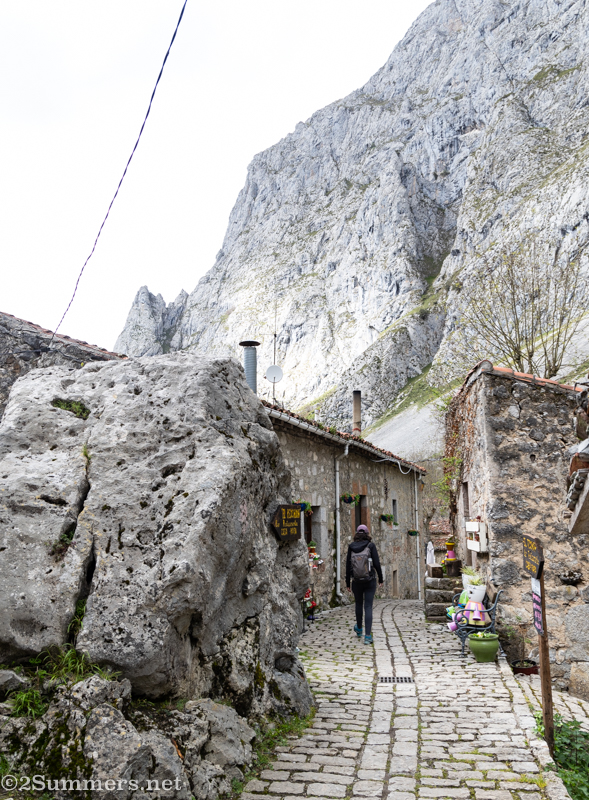
Bulnes is clearly very old, although I haven’t been able to figure out exactly how old, and apparently has less than 30 inhabitants. There are one or two bars and restaurants up there, but we arrived late in the day and only had time for a quick walk around before catching the last funicular back down. (The funicular costs about €22 round trip, which seems outrageously expensive for only 14 minutes total, but it was worth it for the novelty factor.)
Walking in Bulnes.
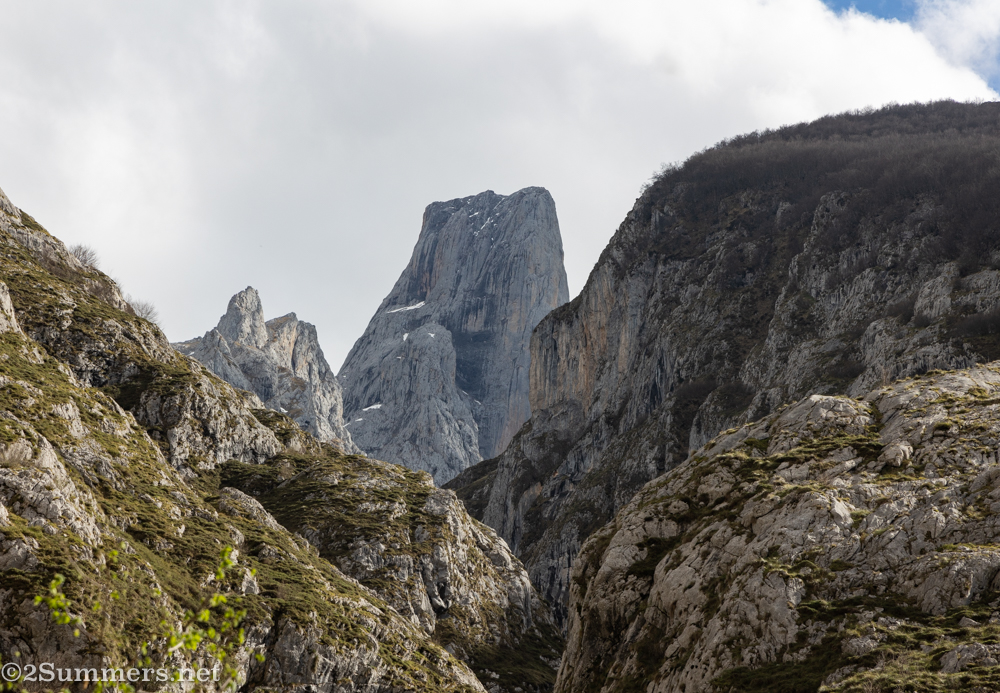
The main highlight of Bulnes is a short walk above the town that brings you to an excellent viewpoint for Naranjo de Bulnes – that famous spike.
View of Naranjo de Bulnes from Bulnes.
4) Trip to Covadonga
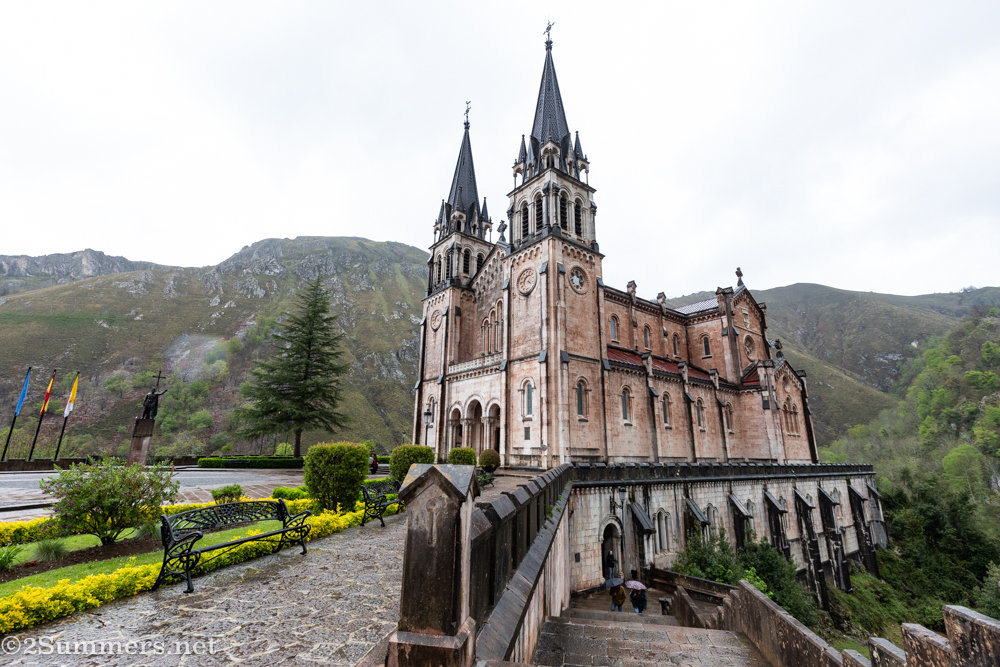
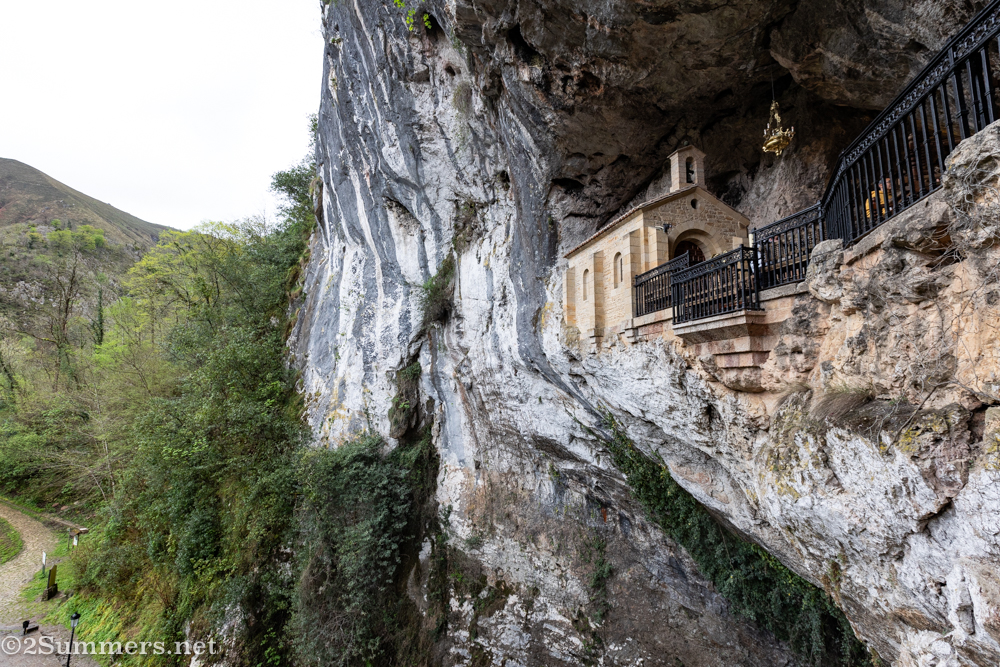
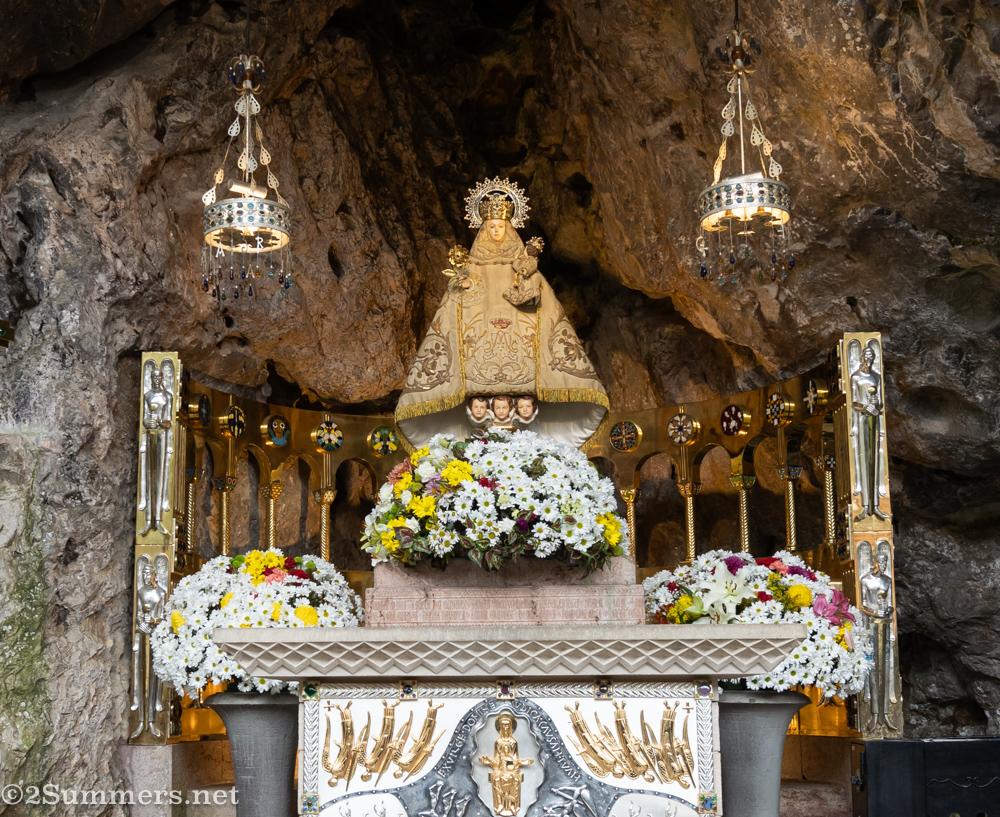
Another afternoon we drove about an hour to Covadonga (I love that name), a historic and religious site in the Picos. Covadonga has several claims to fame; it’s the site of the Battle of Covadonga in the year 722, when Don Pelayo, the Visigothic king of Asturias, defeated the Arabs and kicked off the Christian reconquest of Spain (or something along these lines – I haven’t delved too deeply into the complicated religious lore of Covadonga). There is a beautiful basilica in Covadonga, dedicated to Our Lady of Covadonga, and a spectacular holy cave containing the remains of Pelayo and the next Asturian king, Alfonso I.
The basilica at Covadonga, built between 1877 and 1901. There’s a statue of Pelayo off to the left. (Pardon the big rain drop marring the image above Pelayo’s hand; it was raining during most of our time in Covadonga.) The basilica was beautiful on the inside too but photos weren’t allowed.The Covadonga cave.The iconic Virgin of Covadonga – holding Baby Jesus, with three cherub heads floating beneath her gown – who I believe is protecting the remains of Don Pelayo. Incidentally, Covadonga also has the most enthralling religious gift shop I’ve ever visited, with countless magnets, posters, t-shirts, books, calendars, candles, earrings, necklaces, figurines, and very expensive statues of the Virgin of Covadonga for sale. I have no idea why I didn’t: a) take pictures; or b) buy something.
I highly recommend a visit to Covadonga – there are lots of hikes in the area and some beautiful gardens to wander through (assuming the weather is better than when we went). We also had lunch at a great restaurant called El Repelao that serves the best molten chocolate cake I’ve ever eaten.
5) Eating Asturian food
Speaking of lunch, the food of Asturias – and Cabrales in particular – deserves special mention in this post. Asturian food is totally unique and eating it was one of my favorite things to do in the Picos de Europa.
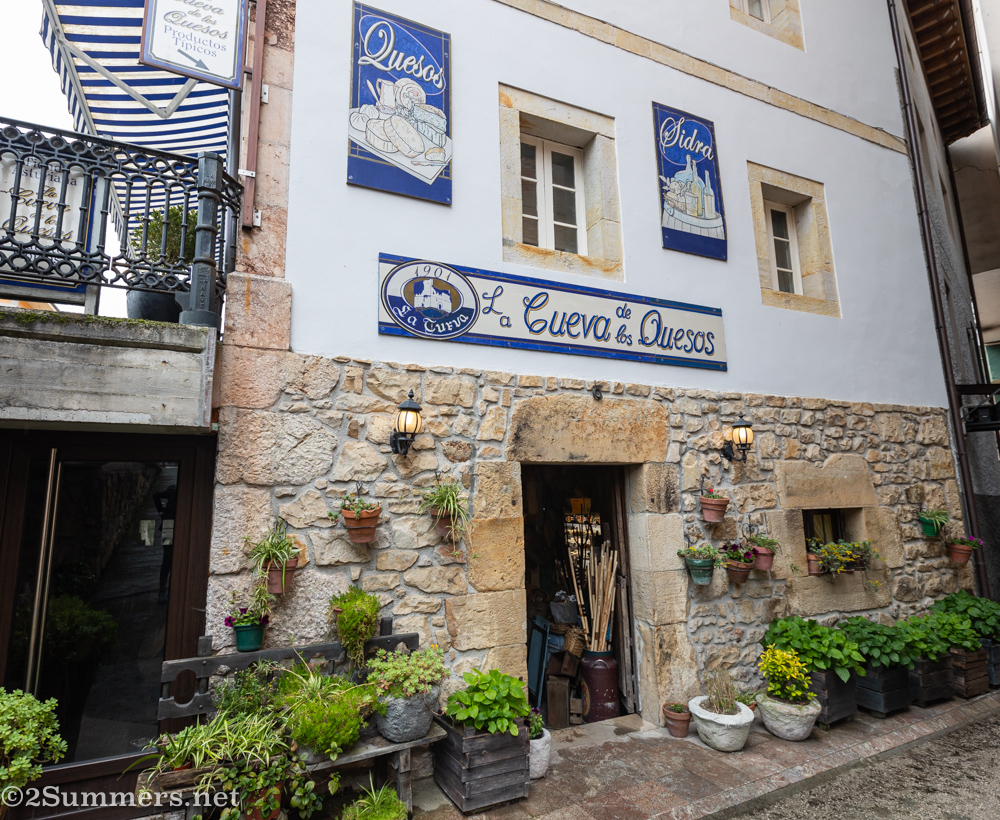
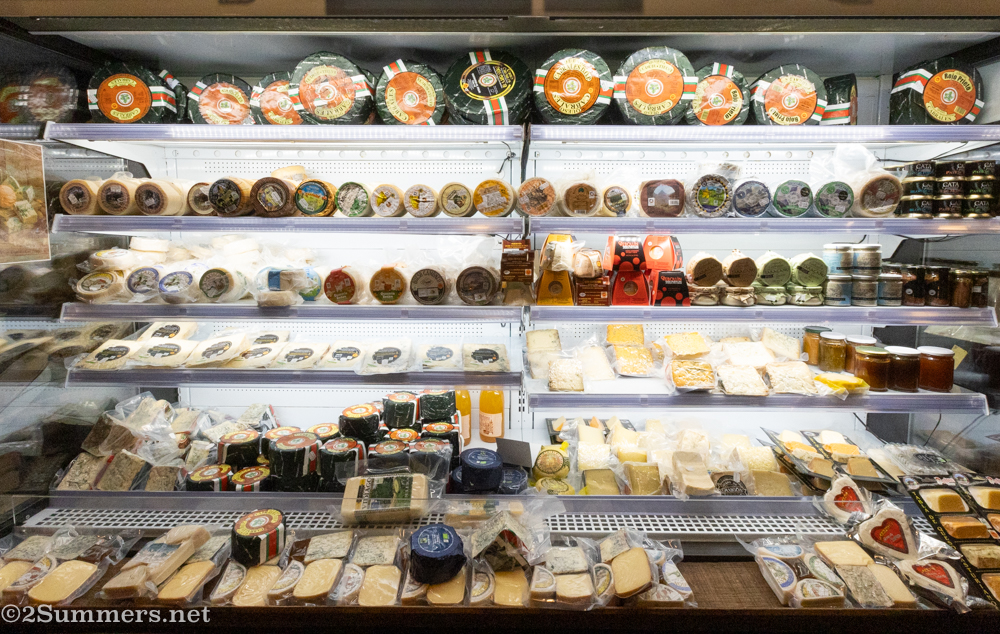
Let’s start with the cheese. Cabrales cheese is one of the most famous foods of Asturias, made only from the milk of sheep, goats, or cows living in the Cabrales region (where we stayed). Cabrales cheese is strong, similar to blue cheese, and is aged in the limestone caves of Cabrales. Michelle and I ate a lot of Cabrales cheese and had a hilarious experience shopping for it at “La Cueva de los Quesos” in Arenas.
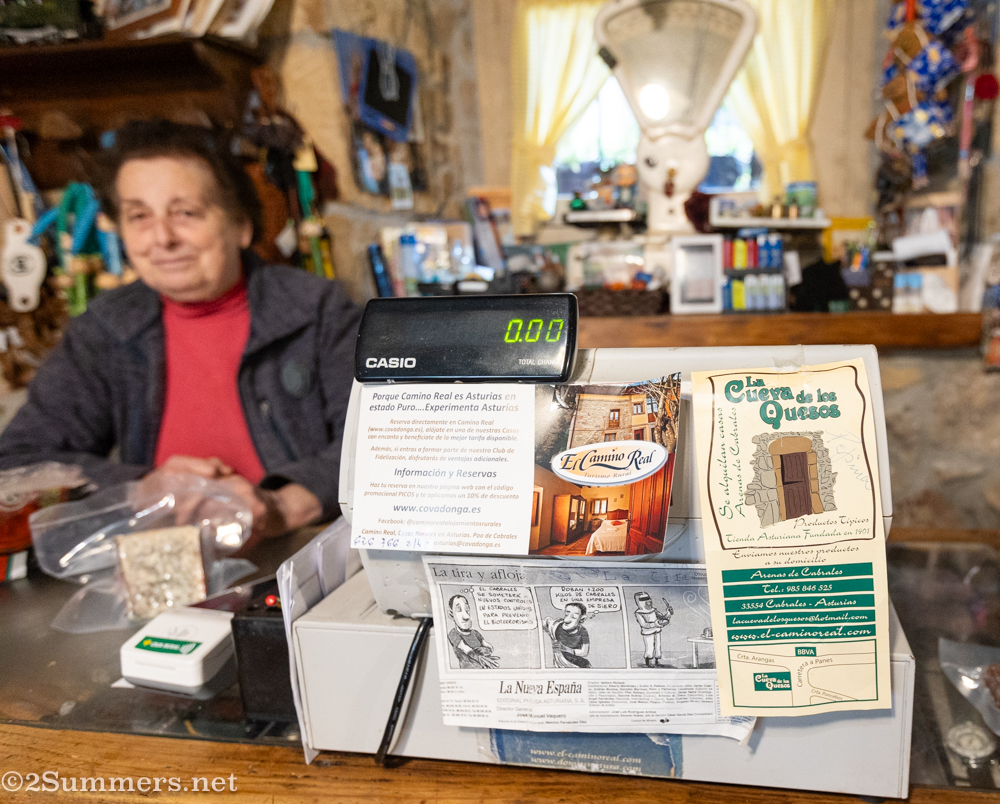
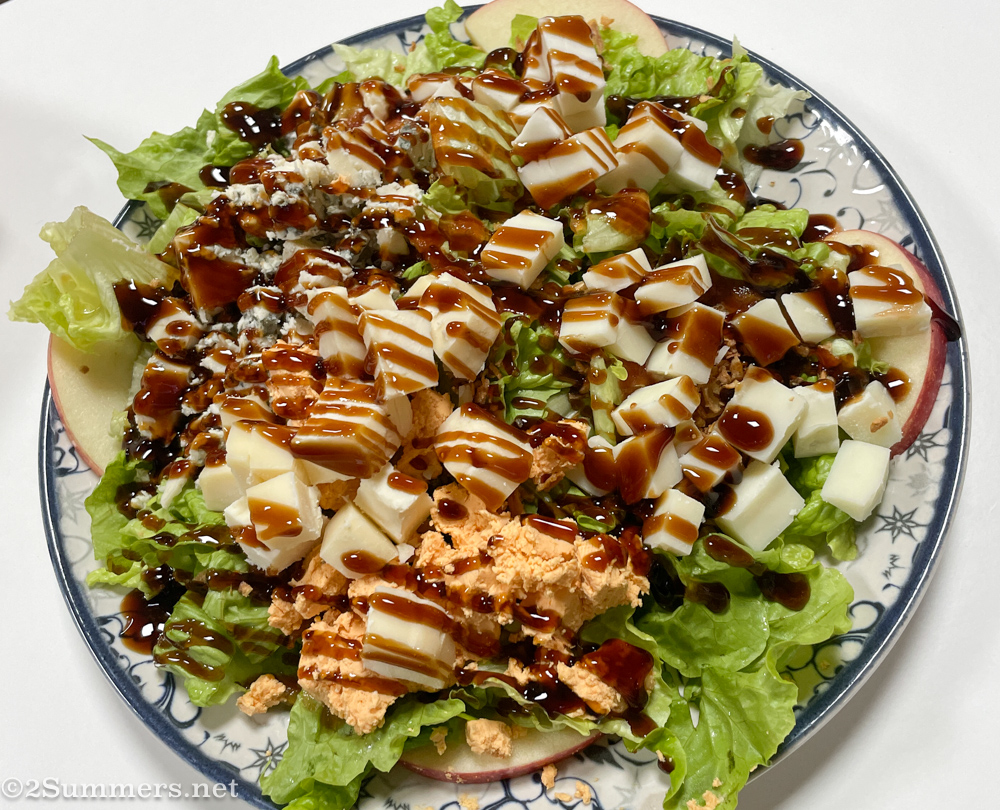
La Cueva de los Quesos.So much cheese! There are many different kinds, obviously, but the famous Cabrales cheese is in the green wrappers on the top shelf. Cabrales cheese is traditionally wrapped in maple leaves, which I think is why the modern wrappers are green.Sneaky photo of the Queen of La Cueva de los Quesos, who let me take countless bad photos of her with my iPhone (it was very dark in La Cueva) but for some reason did not want to be photographed with my camera so I took this one surreptitiously. I never got the Queen’s real name – she spoke rapid-fire Spanish, possibly mixed with Asturian, and neither Michelle (who actually speaks Spanish) nor I could understand a word – but she was hysterical and delightful and managed to sell us a lot of stinky cheese, which we took home with us to our respective continents and are still eating today.A "cheese salad", featuring several different kinds of Asturian cheese, which we had at Restaurante Casa Corro, our local restaurant in Carreña. It was weird and delicious.
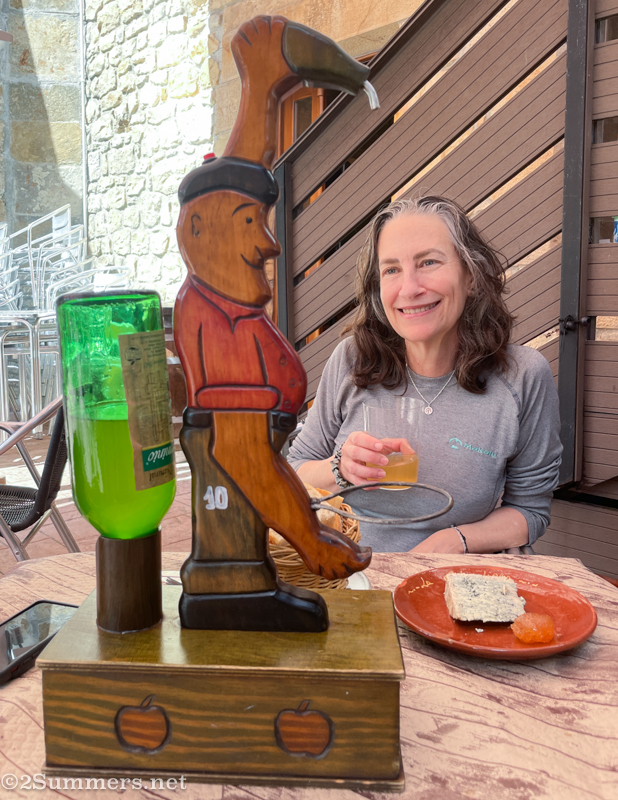
Cider, or sidra, an ancient fermented apple beverage, is the official drink of Asturias. I found sidra to be an acquired taste – a bit on the acidic side – but the best part about it is the way it’s served. Sidra is meant to be splashed into a glass from high above, in small amounts, and drunk quickly while it’s still foamy. We saw it poured many different ways in different parts of northern Spain, but only in the Picos de Europa did we see these hilarious wooden cider-pourers.
You press the red button on the man’s head and the cider comes splashing down into the glass. Unfortunately I don’t have a photo of the cider-pouring man in action. Note the plate of Cabrales cheese, served with traditional jelly, off to the side. This particular delicious meal was served at La Cabraliega in Arenas.
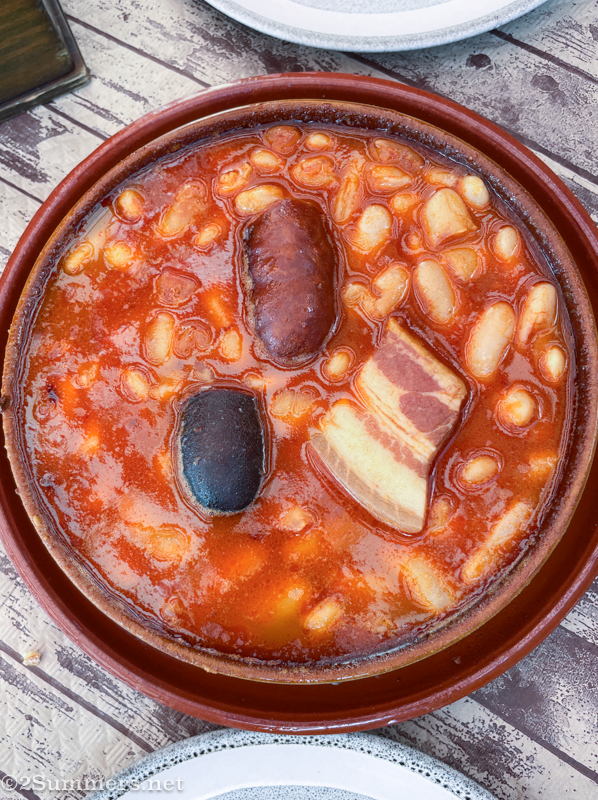
My final favorite Asturian food was fabada, a hearty white bean dish made with three different types of pork. (Spaniards really love pork.)
I think the photo, also from La Cabraliega, speaks for itself. The three types of pork are chorizo, bacon, and blood sausage (which I skipped). The leftovers of this dish tasted great for breakfast the next morning.
Whew! I had more to say about the Picos de Europa than I realized. I really loved it there and definitely recommend including the Picos in your northern Spain itinerary.
Note on transport: We rented a car for our time in the Picos de Europa, which allowed us a lot of freedom and flexibility (as well as many harrowing hairpin turns on narrow mountain roads) in our itinerary. It is possible to explore the Picos by bus, especially because there are so many beautiful trails reachable on foot in every town, but it would require more organization and planning.
Stay tuned for more occasional posts about my wanderings through the Iberian Peninsula. For an overview of my entire European trip, read this post.
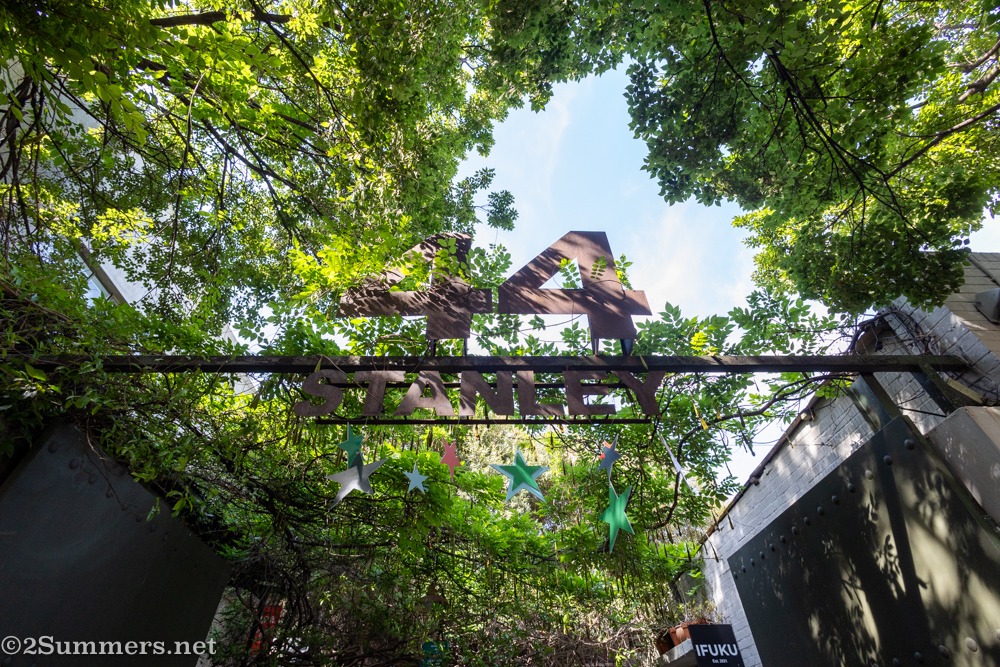
I guess it’s wrong to say I’ve never blogged about 44 Stanley; I’ve mentioned it countless times over the years (see here and here) when writing about specific restaurants or shops that are there. But I’ve never written a dedicated post about 44 Stanley as a destination and it’s about time I did – especially now, with the holidays upon us.
Use the share button below if you liked it.
It makes me smile, when I see it.