We round a bend and see a white rhino, browsing through the tall yellow grass.
“I’ve taken so many rhino photos already,” I announce sanctimoniously. “I’m not even taking my camera out.”
I spent the weekend at the De Hoop Nature Reserve, a seaside wilderness in the Overberg region of the Western Cape. It will take me a day or two to get my photos together and write a full post, so here are a few Instagrams to whet your appetite.
It’s time for my last Namibia post.
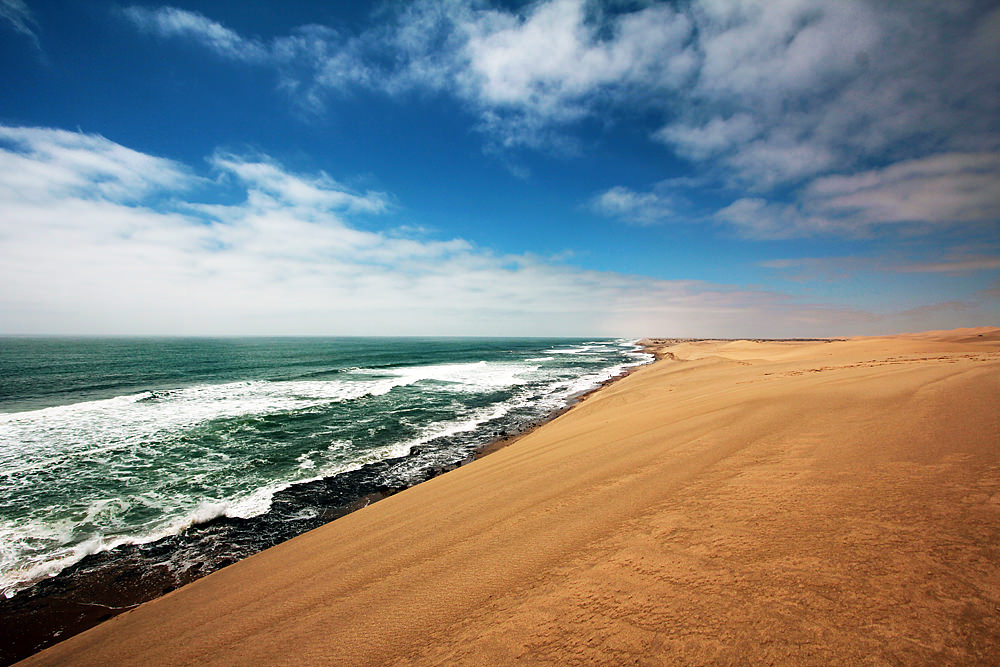
Sand meets sea near Walvis Bay, Namibia.
Deserts have always fascinated me, so spending time in the desert was my number-one priority in Namibia. After meeting up with my friend Michelle in Windhoek, we hopped into our rented hatchback and headed for Swakopmund, a popular Namibian holiday destination on Africa’s Atlantic coast.
On my recent visit to Etosha National Park, I learned that you can’t just rock up to a game park, drive around, and expect to take fabulous wildlife photos. Good wildlife photography is a lot of work and requires equipment that I don’t have, like binoculars and a telephoto lens. It’s also difficult to take good wildlife photos while simultaneously driving a car.
While in Namibia recently, I spent three days in Etosha National Park. Etosha is considered one of the best places in Southern Africa for game-viewing. (Although if you are really into seeing animals, December is not the best time to go to Etosha. There’s a lot of water in the park at this time of year so the animals aren’t forced to come into the open and drink at the waterholes, as they are during the dry season. In December you have to look a bit harder.)
When it comes to beautiful views in Namibia, most people think of sand dunes. I didn’t make it to Sossusvlei – Namibia’s most famous sand-dune viewing destination – on my recent trip, although I did check out the dunes around Swakopmund and Walvis Bay (coming up in a future post).